
3 years after Khalil Singleton's murder, the promise of change unrealized
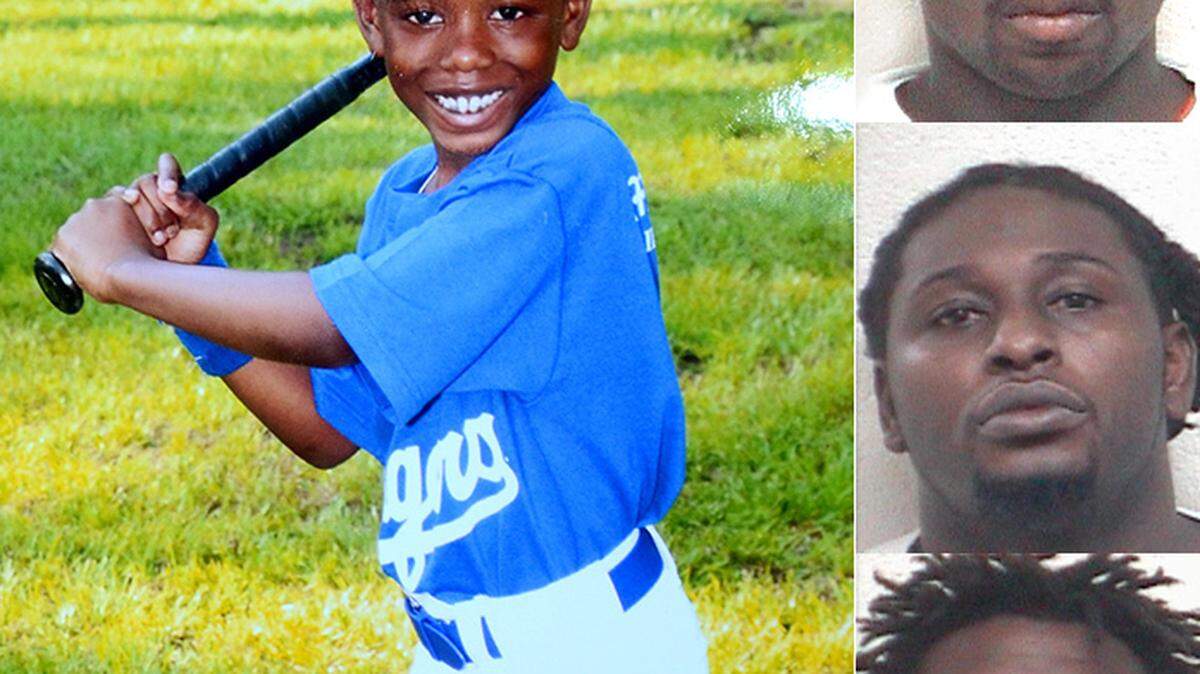
Aaron Young Sr.'s murder conviction Wednesday marked the end of a nearly three-year legal and emotional ordeal that followed the shooting death of 8-year-old Khalil Singleton on Sept. 1, 2012.
Young Sr., the third and final defendant to be tried, received a 30-year prison sentence, the same sentence his son received in February.
Tyrone Robinson, who is believed to have fired the fatal shot, was convicted in 2014 and received a life sentence.
Singleton's death that Labor Day weekend Saturday sent shockwaves through a stunned community as his family grieved.
Rallies decrying violence on Hilton Head were organized.
An ad-hoc activism group was created.
Town government and law enforcement promised new approaches.
Changes seemed to be coming.
But three years after Khalil Singleton's death on Allen Road, those changes are hard to find.
THE FAMILY
While Wednesday verdict brought a small sense of closure to the Singleton family, but it would never bring back Khalil, his father Kareem said after Young Sr.'s trial ended.
It also brought a sense of relief, Kareem Singleton said, that was welcome after he had to relive the toughest moment of his life three times in the span of a year. He and Khalil's mother, Katrina, relied on their faith and family to get through each trial.
"Today's a bittersweet day," he said. "Now we can just continue to try and move forward and continue to keep my son's memory alive ... . He's in my heart every day."
Despite the loss, life goes on for the Singleton family.
Katrina Singleton, a constant presence throughout the trials, missed Wednesday's verdict to take Khalil's older sister Kerena to college for her freshman year, Kareem Singleton said.
But even that milestone was another reminder of what was taken away.
"All of the opportunities I had to grow up and just grow with my son, I can't do any of those things now," Kareem Singleton said. "I'm still thankful and grateful to God for giving my son to us for as long as we did have him, but all of the other things we were looking forward to, that's been taken."
The father said he carries his son's memory with him daily, remembers the boy who idolized him and loved everything he did.
Even something as routine as a trip to Walmart brings up memories of his slain son, he told Circuit Court Judge Thomas Cooper after the final guilty verdict.
Singleton said his son always made a beeline for the store's toy department as soon as he got hit the door.
Now, just passing by that section or seeing parents and families there stir up loving memories of their time together.
"I don't care what situation you're in, if you've got any children, grasp on to them and hold on to them," he said.
"You never know. I'd never wish what I'm going through and what my family is going through on anyone."
THE COMMUNITY
While the life of Khalil Singleton hasn't been forgotten, the changes his violent death promised in the community appear to have faded.
Five days after the child was killed, residents organized a march and rally in which participants carried signs reading "Stop The Violence And Unite," or "We Won't Sleep 'Till The Guns Off Our Streets."
Out of that rally came the Hilton Head Community Action Committee, which worked to get children involved in Boys & Girls Club and Island Recreation Association programs. It set up transportation programs for children through local churches.
Nearly three years later, the committee is no longer active.
Beaufort County Sheriff P.J. Tanner said Thursday the group only lasted a few months, hobbled by the lack of a clear plan to guide it.
"Those tight groups form normally when something tragic or horrific happens, and then your first two or three meetings are focused on 'this is why we're here and this is what we are going to try to accomplish,'" he said. "Then other agendas get thrown in as you meet more and meet longer and you don't have a clear agenda."
Hilton Head town councilman Marc Grant, who helped set up the committee, said he still talks regularly to pastors about solutions to get residents more active in community groups. They also discuss ways to keep children and teenagers off the streets and to make sure they're "doing something productive."
But the violence that plagued Hilton Head Island in the early fall of 2012 still persists.
Last month, after 17-year-old Dominique Williams was shot and killed at Coligny Beach Park, local leaders found themselves asking the same question they had three years prior: How can we stop this?
An answer doesn't seem to be within reach.
Grant said he believes the solution will have to come from inside the community, by holding meetings and getting residents to be more active
"Every facet of this island has problems and bad occurrences," he said. "It's not just related to Ward 1. We're going to work in the community to solve these problems."
LAW ENFORCEMENT
About two months after Khalil's death, Hilton Head's public safety committee discussed stronger sentencing, new surveillance technology, and better communication between law enforcement and residents.
The meeting followed three violent incidents -- Khalil's death, gunfire in a Hilton Head apartment complex, and a man beaten to death on Spanish Wells Road.
That December, a 19-year-old was shot and killed on Marshland Road, near the spot where the child was shot to death.
But few of the items discussed by the committee became reality.
14th Circuit Solicitor Duffie Stone said he still hopes for sentencing reform, a cause he championed in 2012 after Khalil's death. Robinson and Young Sr. were both convicted felons, Robinson a "career criminal" who had a long history of crimes on Hilton Head, he said.
Robinson had an extensive criminal record, but only served about half of his final prison sentence prior, Stone said.
He hopes sentencing reform will force career criminals like Robinson to remain behind bars.
"I think you need to take them off the streets," he said. "I don't think you can fix a Tyrone Robinson. People were very upset that he was out. But it requires a legislative fix, and it probably will take the community's support to get real, meaningful sentencing reform."
Tanner said Hilton Head's town council voted against purchasing the license plate reader he had asked after the child was killed. The device would have aided in the search for wanted or stolen vehicles, he said.
A special enforcement unit Tanner initially proposed in 2013 was tabled by town council after it decided it came too late in the budget process.
In 2014, a new proposal was approved, moving the Sheriff's Office traffic patrol to a special enforcement unit.
The five-person team beefs up manpower on other patrols, targeting high-traffic areas like malls and bars and residential areas with frequent crimes, Tanner said.
Tanner said there wasn't much change in how cooperative people now are with law enforcement. Most county residents are very cooperative, he said. Some simply don't talk to police.
"In some cases, we would probably like some of those who don't think their information is of value and they keep it to themselves...we would rather them bug us with whatever information they have and let us evaluate whatever that is," he said.
The Sheriff's Office substation on Hilton Head has also been renovated. Interview rooms were upgraded and holding cells added to the office in Shelter Cove, Tanner said.
A lack of holding cells required shuffling each of the three Singleton suspects through different rooms in the substation and kept under guard at all times, a practice criticized by defense attorney Robert Ferguson this week.
THE PROSECUTION
In the cases against the Youngs, a little-used, century-old legal theory factored heavily in their convictions--a theory that Stone plans to use in future cases to hold people participating in shootouts accountable, regardless of who fired the fatal shots.
Stone and the prosecution team discovered the theory of mutual combat, which states that people engaging in combat with deadly weapons are presumed to understand the consequences of their actions, while conducting legal research to try and find a way to hold the Youngs responsible for Singleton's murder even though they did not fire the fatal bullet.
"We felt like it was important to hold them accountable," Stone said. "The community wanted to hold them responsible as well, and you can tell it by the jury's verdict."
The case at the foundation of the legal theory dated back to 1918 -- a union fight where a knife was pulled and a man murdered. That trial used case law established as far back as 1843, Stone said.
Stone said he has "every intention" of applying mutual combat to similar situations. The Solicitor's Office also used the mutual combat theory to the June 2012 Midnight Soul Patrol shooting on St. Helena Island, charging two men with murder and attempted murder. Only one of the two men charged were later convicted.
However, the convictions of the Youngs were unprecedented because they required the use of another legal theory -- transferred intent, in which a person intends to harm one victim (in this case, Young Jr. shooting at Robinson), but then unintentionally harms a second one instead (Robinson's shooting of Singleton).
Each conviction will likely result in a review by the S.C. Supreme Court after the appeals process, but Stone said he is confident in the legal footing and believes they will be upheld.
"If three people are shooting at each other and one is killed, everyone is responsible," he said. "I think it would also clearly be the case that if you shoot an innocent bystander, everyone is responsible."
Follow reporter Matt McNab at twitter.com/IPBG_Matt.
This story was originally published August 13, 2015 at 4:34 PM with the headline "3 years after Khalil Singleton's murder, the promise of change unrealized."