
Chaotic courtroom scene follows murder conviction in death of Khalil Singleton, 8, on Hilton Head
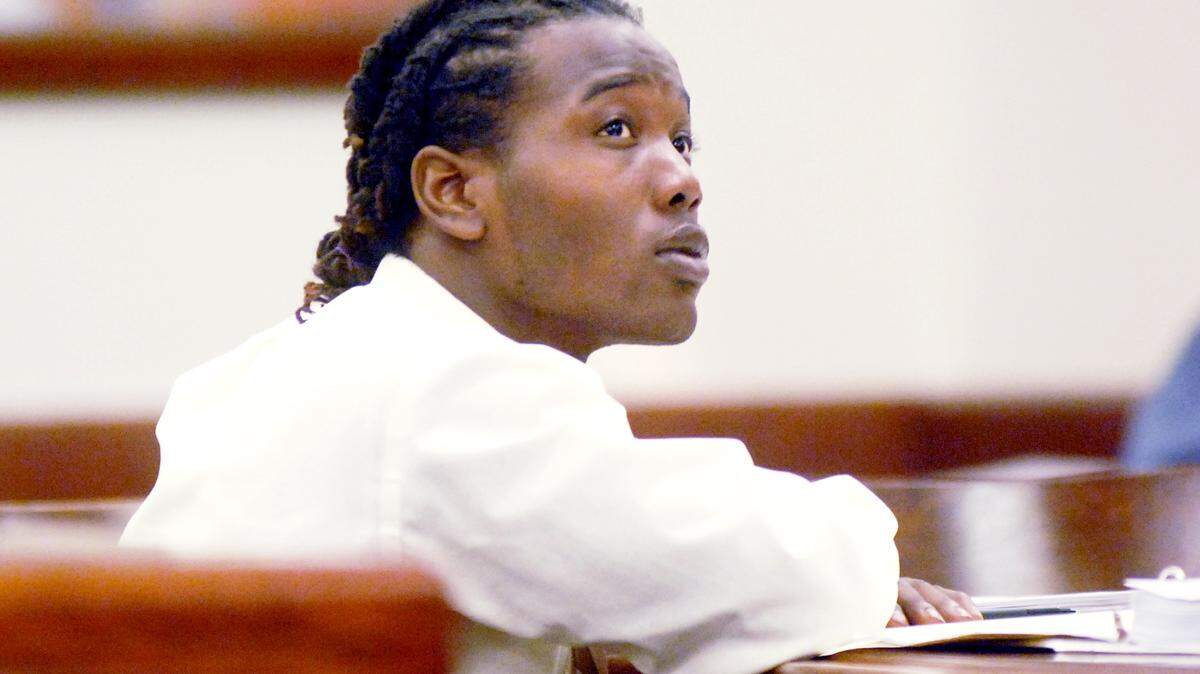
To his family's shock and despair, 21-year-old Aaron Young Jr. was found guilty of murder and attempted murder Wednesday, leading to an emotional, chaotic courtroom scene before he was sentenced to 30 years in prison.
Young, of Hilton Head Island, was found guilty of the murder of 8-year-old Khalil Singleton and the attempted murder of Tyrone Robinson by a jury of 10 women and two men after about three hours of deliberation. The verdict set off a firestorm of emotion from his family.
Young's sister had to be removed from the courtroom after the verdict was read, because she began to loudly sob and scream that he was not guilty.
During the sentencing, Young's grandfather Benny Young lashed out against law enforcement, telling Judge Thomas Cooper that Singleton would still be alive if authorities had dealt with Robinson. As his speech grew more heated, Cooper warned Young's family he would jail them overnight.
"This isn't Marshland Road; this is a court of law," the judge told the family, referring to the area on Hilton Head near where the shooting occurred.
The outburst prompted Young Jr. to rise from his chair and say to Beaufort County Sheriff's Office Capt. Bob Bromage, one of the investigators in the case, "You remember my name. You remember my face."
Three corrections officers then pulled him from the room.
Young's father, Aaron Young Sr., dropped his head after the verdict. Young Sr. has also been charged with murder and attempted murder in Singleton's death, but he does not yet have a trial date, 14th Circuit Solicitor Duffie Stone said after the trial.
A relative of Young Jr.'s apologized to Singleton's family before exiting the courtroom. Singleton's family declined to speak during the sentencing and stayed quiet through the verdict, embracing and crying after it was read.
Singleton's father, Kareem Singleton, called the conviction "bittersweet," saying it had been difficult reliving the events of Sept. 1, 2012.
"I take no pleasure in watching him to go to jail," Singleton said. "I'd rather have my son back, but I thank God for the verdict."
Young Jr. exchanged gunfire with Robinson on Hilton Head on Sept. 1, 2012. Robinson, who is believed to have fired the shot that killed Singleton, was convicted and sentenced to life in prison in September.
Young Jr. was convicted under the theory of mutual combat, which holds all parties engaging in combat responsible, regardless of who fired the fatal shot. Jurors asked Cooper to reread the definition of mutual combat early in their deliberations.
Stone said the Solicitor's Office had been working for two years on the case to build that message -- that those who engage in such shootings would be just as culpable as the person who fired the fatal shot.
It hadn't been used in Beaufort County in over four decades, defense attorney Roberts Vaux told Cooper during sentencing. Vaux asked the judge for the more lenient 30 years of imprisonment over a life sentence because Young Jr. had not fired the fatal shot.
Young Jr. was brought back into the room after the chaos subsided, but he did not speak. Cooper sentenced him to 30 years, with credit for time served.
CLOSING STATEMENTS
During the trial, Young Jr. declined the opportunity to testify, and his defense rested without calling any witnesses.
In his closing argument, Stone said the "running gun battle" between the Youngs and Robinson that crisscrossed nearly seven miles of northern Hilton Head Island led to Robinson fatally shooting Singleton.
"The bullet cut his heart, and he bled to death," Stone told the jury.
Stone said both Robinson and Young Jr. were responsible after arming themselves and taking their fight into the streets.
"A child is dead," Stone said. "They are both equally responsible. That's the law, that's what we know. Khalil's only crime was playing in the neighborhood with his friends."
Stone said that in Young Jr.'s video interview, he told investigators he tried to shoot Robinson, but the gun jammed. He added that Robinson told two people he had been shot at.
"The defense will tell you there is no evidence he ever pointed a gun at Robinson," Stone said. "Generally, guns jam when you try to pull the trigger."
Stone also asked the jurors to remember the emergency call Singleton's family made.
"Think back to the 911 call and Khalil's family trying to breathe life into him," Stone said. "Do you think they care where the fight started or what Tyrone did to deserve it?"
Singleton's family teared up during that part of Stone's statement.
"Parents lost a child," Stone said. "There were children down there. That's what this case is about."
In his closing argument, Vaux cited testimony from Jontu Singleton Sr., who said he did not see Young Jr. point a gun or shoot at Robinson while they rode together in Aaron Young Sr.'s truck. Vaux also recalled how Jontu Singleton said he had gone to see his son on Allen Road once the Youngs dropped him off -- something no one would do if there was a "running gun battle" unfolding around him.
Vaux said Young Jr. was guilty of vandalism for shooting Robinson's car, but the circumstantial evidence prosecutors presented wasn't enough to convict him of murder or attempted murder. He said no one had testified to seeing Young Jr. point a gun or shoot at Robinson.
Vaux added that there was no blood or DNA evidence linking the Youngs to the scene, and prosecutors and investigators failed to provide statements from Singleton's family, Aaron Young Sr.'s girlfriend or witnesses who saw and heard the "running gun battle."
Prosecutors also failed to call Robinson to the stand, to corroborate that he was talking about the Youngs when he told neighbors he was being shot at.
"Where is Tyrone Robinson?" Vaux asked. "Why didn't the state call him as a witness? He could identify Aaron Young Jr. on the witness stand as the person who shot at him. The silence is deafening. The solicitor didn't call him because he was scared of what Robinson was going to say."
Stone said after the trial he did not call on Robinson because he could not vouch for his credibility on the stand. He also said Robinson was still appealing his conviction, and may have declined to testify because of the pending appeal.
Vaux said the Youngs didn't start the fight with Robinson and were defending themselves, shooting Robinson's car as a way to vent their anger. He added that the odds were in their favor, since Young Jr. was armed with a pistol with a 32-round clip, and Robinson was armed with a six-shot revolver.
"(Young Jr.) wouldn't have retreated if he wanted to kill Robinson," Vaux said. "Tyrone Robinson started this mess, and he ended it when he shot the child."
Follow reporter Matt McNab at twitter.com/IPBG_Matt.
Related content:
This story was originally published February 25, 2015 at 7:32 PM with the headline "Chaotic courtroom scene follows murder conviction in death of Khalil Singleton, 8, on Hilton Head."