Visiting a Bluffton gated community? Some are quietly storing your private data
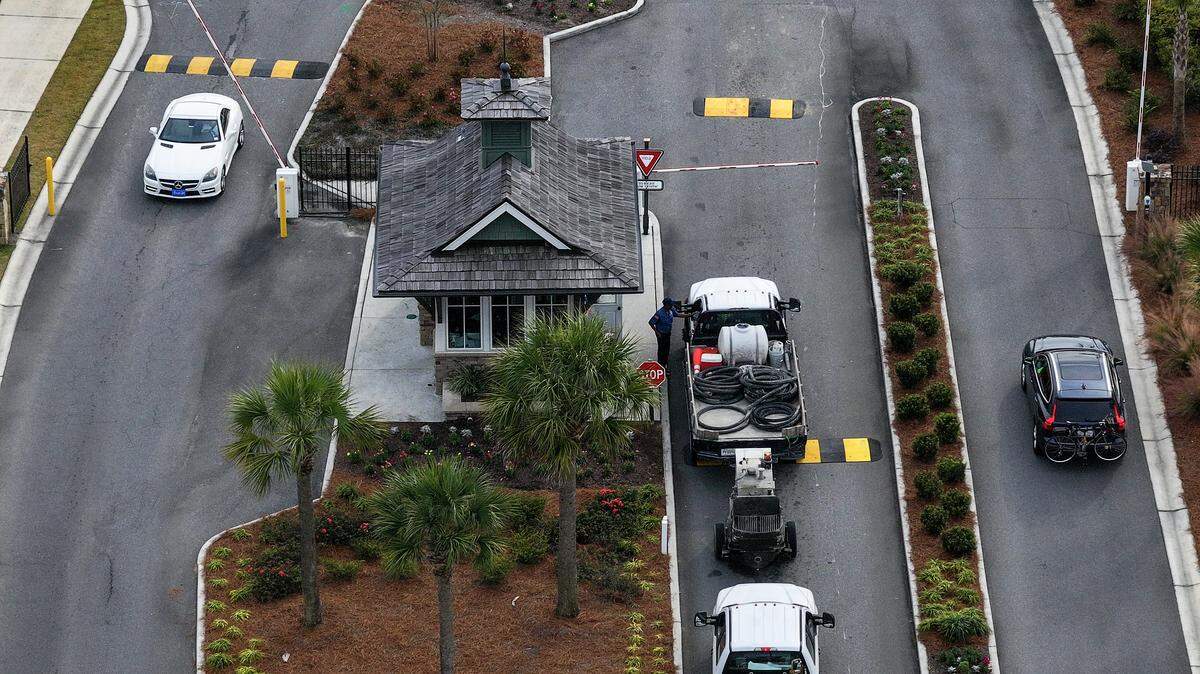
In gated communities of Hilton Head and Bluffton, residents’ desires for peace, safety and security often clash with their need for personal freedom and individual privacy.
It’s a push-and-pull that residents of gated communities sign up for when they buy a home and agree to live by a community’s covenants and restrictions. However, some gated communities in Bluffton are using a security measure that raises questions about the privacy rights of people who don’t live in the neighborhood, such as guests, vendors and contractors.
At least two Bluffton communities, Hampton Lake and Belfair, are taking the extra step of scanning and storing the driver’s license information of people who visit the neighborhood, nearly all of whom have been invited to the community. Oldfield in Okatie is also scanning and storing license information, The Island Packet has learned.
No neighborhood in Hilton Head is scanning IDs, according to conversations with officials and security staff at each of the communities.
The practice is legal, since South Carolina has no laws regulating the practice of scanning IDs, except for alcohol sales. The state also lacks comprehensive data protection legislation, raising questions about the security of the information stored and who is liable in the event of a data breach.
Those who find the practice invasive or worrisome have little recourse or access to information on how their information is stored or protected.
The Packet tried to ask these questions, and others like why communities felt this extra step was necessary, what assurances they could give people outside the gates, and whether they were concerned the policy could begin to affect the neighborhood’s reputation and desirability.
Instead, none of the communities involved wanted to talk about it.
Hampton Lake: Security protocols ‘not public information’
When asked about Hampton Lake’s practice of scanning and storing IDs, General Manager Adam Martin at first defended the move by calling it “very common.”
But when asked how identification information is stored at Hampton Lake, Martin ended the interview and asked that any questions be sent by email.

The Packet asked Martin via email what security measures are in place to prevent unauthorized access to guests’ personal information, and if visitors can decline to have their information stored.
Martin did not answer the questions, instead sending a statement that said its gate access policies are legal in South Carolina and that he would not discuss security measures carried out on its private property. Martin’s statement went on to say it’s “not public information,” even though it is the public that is most affected. No disclosure or explanation could be found on Hampton Lake’s publicly accessed community website.
A security guard at the main Hampton Lake gate said the policy was something the residents there wanted, and that the information is kept on file for the duration of the visitor’s pass that was called in. Guest passes can be good for up to 30 days in Hampton Lake.
Hampton Lake is also one of the few communities in Beaufort County using unmanned speed cameras to issue speeding fines in its neighborhood. Long Cove Club in Hilton Head and Oldfield in Okatie are also using speed cameras to enforce speed limits.
When The Island Packet called Oldfield security, a security staff member directed us to call “Chief Eric” but declined to give a last name. Upon calling Chief Eric, he informed us that he was in a meeting and that he would call back the next day. The Island Packet called back several times, but the calls were rejected before they could go to voicemail.
A security guard at the Oldfield gate explained that when a guard scans a guest’s driver’s license, their information is stored in a system that connects to the traffic cameras that can issue speeding fines of up to $400.
The Island Packet reached out to Belfair Community Association Manager Tom Angelo to ask about Belfair’s procedures, but that message has not been returned.
A security guard did explain that visitor information is tracked using a cloud-based gate access management software called TekControl. If a guest wants to get through the gate, the guard first looks up their information in the system to confirm that a guest pass exists. If it does, the guard will scan the drivers’ license, which automatically inputs a guest’s first name, last name and license information into the computer system.
What do Hilton Head gated communities do?
The vast majority of gated communities on Hilton Head check IDs of guests, vendors and contractors, but none scan or store personal identification information, according to conversations with security staff and officials at each of the communities.
Visitors typically need to know someone in the community and ask them to call in a guest pass.
At Sea Pines, guests must pick up a physical pass at the welcome center before entering the community. At the gate, they must show the pass but do not have to show ID.
Gate agents at Long Cove Club, an expensive gated community on the south end, visually check, but do not scan, guest IDs to verify that the information on the ID matches the information on the pass, according to Chief of Security Willie Rice. The same practice is used at Hilton Head Plantation, Wexford and most other gated communities in Hilton Head.
How SC laws compare to other states
Some states have laws that regulate the ability of businesses and private entities to electronically scan IDs, but South Carolina is not among them. The only exceptions are alcohol-sales related: Businesses selling alcoholic beverages between midnight and 4 a.m. and collegiate sports venues are required to use “forensic digital identification systems” to scan ID barcodes, according to the South Carolina Department of Revenue.
Alcohol delivery drivers are also required to use age verification software technology to confirm a customer’s age.
At least 17 states regulate the scanning of barcodes on physical IDs, according to research from the American Civil Liberties Union.
New Hampshire is the only state that explicitly prohibits most instances of IDs scanning, according to IDScan.net, an identity verification platform serving customers like Hertz and AMC Theatres.
When it comes to data security legislation, South Carolina also falls behind. At least 25 states have laws that require organizations that collect personal data to develop “reasonable” safeguards against unauthorized access, according to the National Conference of State Legislatures.
In Florida, a state full of retirees and gated communities, state law limits the reasons for which “private entities” are allowed to “swipe” an individual’s drivers’ license.
For example, if a customer is buying an age-restricted product, Florida businesses are allowed to swipe, but not store, the customer’s personal information.
The law applies to any “nongovernmental entity,” including nonprofit organizations and homeowners’ associations.
However, an HOA scanning the IDs of guests could still be a “gray area,” according to Eric Perez, co-founder Florida law firm Perez Mayoral, which specializes in representing homeowners in disputes against associations.
Perez noted that Florida law allows entities to store information “for the purpose of preventing fraud or other criminal activity against the private entity.”
“That’s potentially an argument an association could make to store the information,” Perez said.
However, unless the visitor has been flagged as a person of interest because of a history of fraud or criminal activity, Perez said he doesn’t see that as a “strong argument.”
Perez said he did not find any case law regarding ID scanning, but that if a homeowner were to take the issue to court, the court would need to review the association’s governing documents to see if the rule is explicitly declared.
“Ninety-nine point nine percent of the time, it must be written into the covenants or the statute for an association to be allowed to do something,” Perez said.
In the event of a data breach, Perez noted that the association may be held liable if a court can prove the security measures were “negligent.”
“If they had a software or a system in place that saved it and encrypted it ... they could argue they have complied with their duty to safeguard the information,” Perez said.
This story was originally published December 9, 2025 at 11:24 AM.