Arrests made after former deputy pointed gun at Hilton Head teens
The now-fired Beaufort County deputy who repeatedly pointed his gun at a group of teenagers while off duty during a tense encounter last month on Hilton Head Island was arrested just before 8 a.m. Tuesday, along with a neighbor who was involved in the incident.
The South Carolina Law Enforcement Division charged former Master Sgt. William “Billy” Squires, 41, with aggravated breach of peace, a misdemeanor, and four counts of pointing and presenting firearms at a person. He was released on a $40,000 cash bond early Tuesday afternoon.
Under South Carolina law, pointing and presenting is a felony punishable by up to five years in prison.
Brian Stahlheber, one of Squires’ neighbors in the Squiresgate subdivision, was also charged Tuesday morning with aggravated breach of peace and giving false information to law enforcement, both misdemeanors. Stahlheber is named in a recently filed civil lawsuit by one of the teenager’s parents.
Charging documents from SLED say both Squires and Stahlheber were under the influence of alcohol during the Sept. 28 incident.
SLED was tasked with investigating after Squires, wearing a Beaufort County Sheriff’s Office vest with khaki shorts and slip-on shoes, confronted a group of three boys walking through the neighborhood that evening. Believing the teens had a gun, Squires ordered them to the ground and had several neighbors restrain them on the pavement. Police did not find a firearm in the teens’ possession.
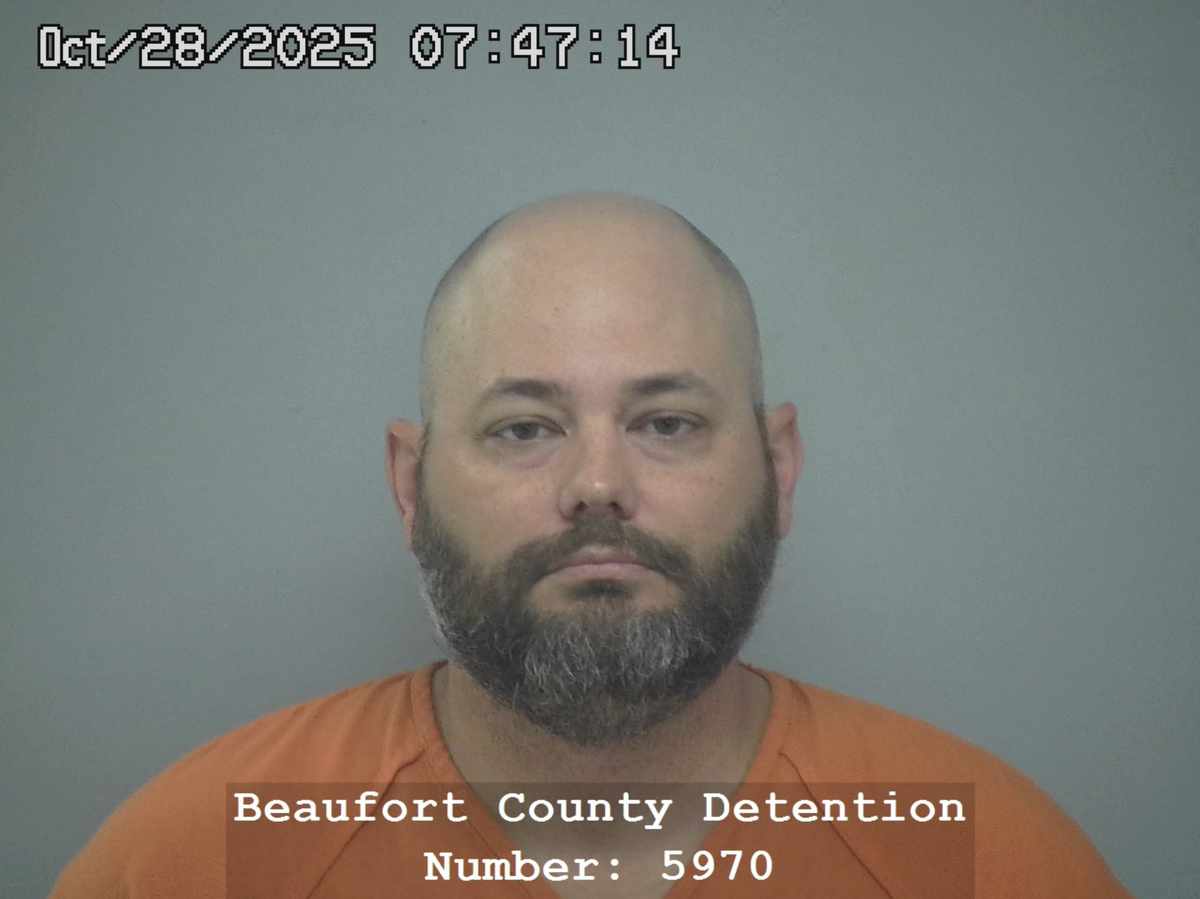
Squires was put on unpaid leave immediately following the incident and was fired Oct. 3 after BCSO’s internal affairs investigation found he committed multiple policy violations, including insubordination. Announcing the termination in a press conference, Sheriff P.J. Tanner said he was “appalled” by the deputy’s actions in the viral video.
State police made their arrests exactly a month after the neighborhood dispute. The event sparked outrage over the former deputy’s actions and received national attention as the teens’ cellphone recordings spread across social media.
Inside the courtroom
Before 10:30 a.m. Tuesday, both Squires and Stahlheber separately went before a judge for their bond hearings, a proceeding that determines if a defendant will be released from jail before their trial, and if so, under what conditions.
For Squires, a $40,000 cash bond was set for pointing and presenting firearms at four people, and a $25,000 personal recognizance bond was set for aggravated breach of peace. Unlike a cash bond, a personal recognizance bond allows a defendant to be released from jail without paying a bail amount. Instead, the defendant agrees to appear at all future court dates and to comply with any conditions set by the judge.
For Stahlheber, a $65,000 personal recognizance bond was set for giving false information to law enforcement, and a $25,000 cash bond was set for aggravated breach of peace.
As part of their bond conditions, Judge Thomas A. Holloway prohibited Stahlheber and Squires from possessing firearms and ordered them to not make contact with the four victims in the case. The victims or their families were not present at the hearing.
SLED Special Agent Peter Rudofski said Stahlheber had no former criminal history and that he self-surrendered to law enforcement on Tuesday morning.
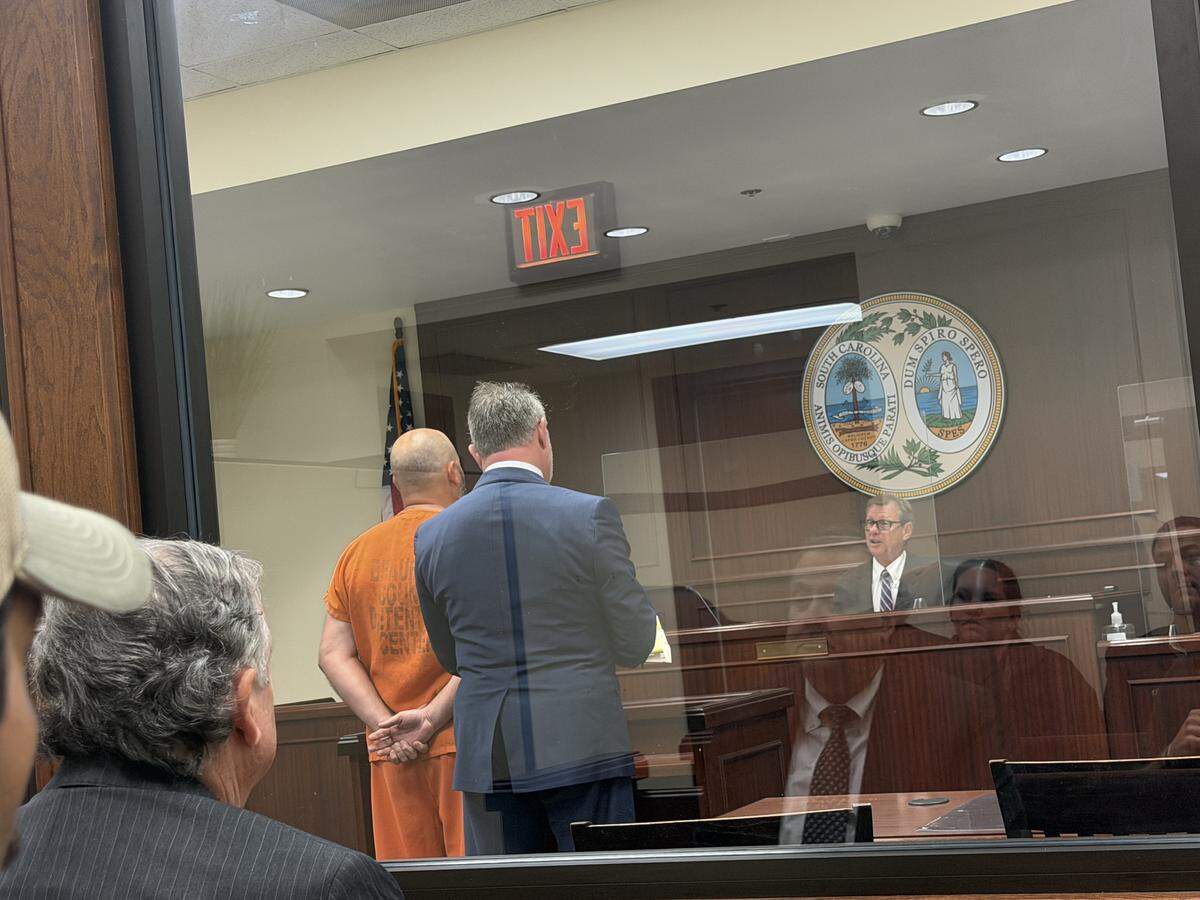
Jim Brown, Squires’ defense attorney, asked for a personal recognizance bond by arguing that the former deputy’s charges “were not violent crimes.” Pointing and presenting is a Class F felony in South Carolina, the “lowest-class felony we have,” he said.
Squires had no prior disciplinary action during his 19 years at the sheriff’s office, “despite what has been published in the press,” Brown said.
Brown referred to a video he had “not seen published yet” captured by Stahlheber’s Ray-Ban Meta Glasses, a brand of smartglasses containing two cameras, speakers and a microphone.
The video captured “a threat from these juveniles made to (Stahlheber)” before Squires became involved, according to Brown. Details of that video were not included in Squires’ arresting documents, Brown said, and that information contradicted his warrants’ claim that his actions were taken “without a reasonable basis.”
Brown said he had been in contact with SLED since the start of the investigation and that Squires complied by providing a statement to BCSO’s internal affairs department.
In response to Brown, Rudofski clarified it was a written statement sent to SLED by Squires’ attorney. His statement “did detail the events” of the incident, Rudofski said, “but it was missing a prior event with the juveniles” before Squires approached them with his gun drawn.
Answering Brown’s claim about the smartglasses video, Rudofski said “everything was provided to the judge” on Monday when the warrants were written. That video captured the “same interaction” as the cellphone videos recorded by the teens, he added.
In both hearings for Squires and Stahlheber, representatives for SLED and BCSO declined to offer arguments for setting bonds.
Judge Holloway said he initially intended to set cash or surety bonds for all five of Squires’ charges. But considering Brown’s arguments “and the lack of arguments made against those positions,” he granted a personal recognizance bond for Squires’ count of aggravated breach of peace.
Brown pushed back against a request from a SLED victim advocate that, in addition to his provision banning him from possessing firearms, Squires should also have “no access” to firearms. That would “impinge on the rights of the rest of his family,” Brown said, also citing the wave of threats aimed at Squires’ family since the incident.
“It is unequivocal, from the first time I talked to law enforcement, that they have had threats to him and his family — nationwide,” Brown told the judge.
New details emerge
On Sept. 28, Squires was captured in a set of videos pointing his loaded service pistol at the teens and threatening to shoot, grabbing one boy by the arm and struggling with him on Squiresgate Road. But a series of events involving both Squires and Stahlheber led to the viral incident, according to new SLED affidavits.
While under the influence of alcohol, according to the affidavit, Stahlheber approached the teenagers on a four-wheeler to “question” and “harass” them. In a “brief roadway conversation” with Squires, Stahlheber told the off-duty deputy he thought the teenagers had a gun, according to the affidavit. The document says “no criminal conduct was observed from the juveniles.”
Squires, driving his department-issued undercover, white Toyota Tundra, engaged the teenagers, asking what they were doing in the neighborhood. The teenagers told Squires they were just passing through and to leave them alone. Squires then went inside his home, put on his department-issued vest and picked up his gun and approached the teenagers with his gun drawn.
The videos show Squires, wearing a sheriff’s office vest with shorts and slip-on shoes, approaching the group of boys and ordering them to “get on the ground.” When the boys told bystanders to call the police, the deputy responded, “I am the police.”
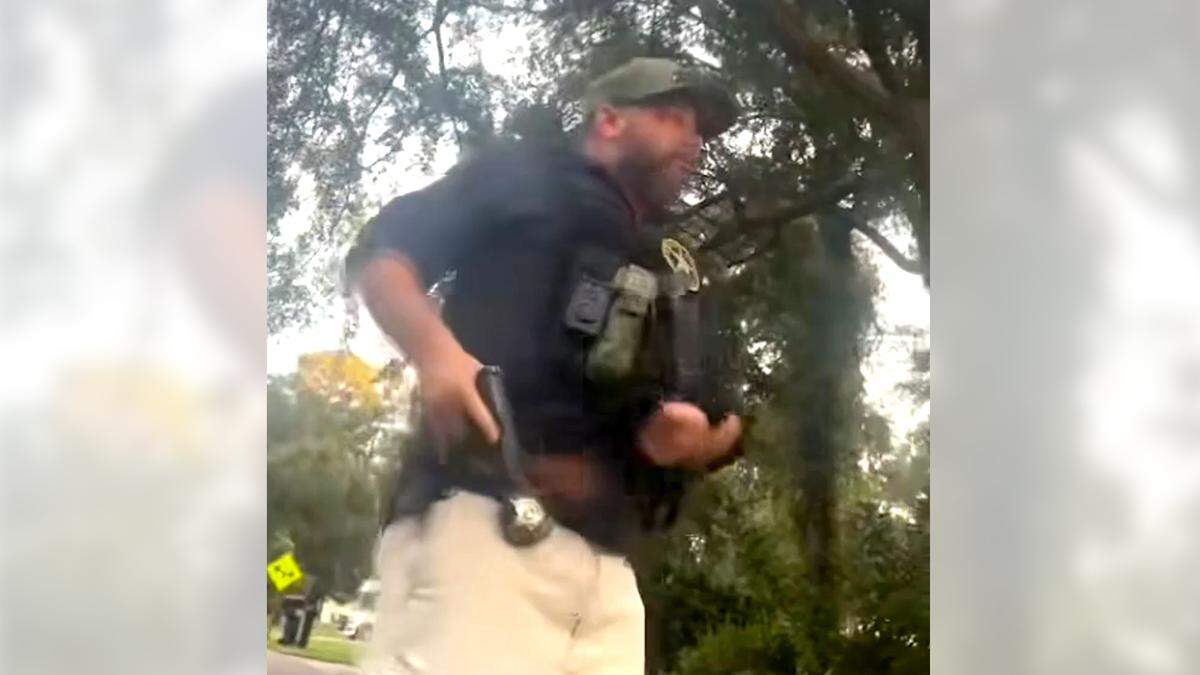
Squires “escalated the situation” by drawing and pointing his gun without “reasonable basis or legal justification” at four individuals, according to the affidavit.
The deputy then struggles with two of the boys as he takes a black backpack from them. As the boy with the camera repeatedly tells the man to stop and not shoot, the deputy approaches him with his gun drawn again.
The deputy was seen pulling one of the boys by his shirt after the boy tried to leave the area. The video ends as the boy with the camera makes multiple pleas for help and screams for his mom.
At some point, Stahlheber physically restrained one of the teenagers by applying choking pressure, according to the affidavit. Later in an interview with a Beaufort County Sheriff’s Office sergeant, Stahlheber falsely reported that the teenagers flashed a handgun magazine. He later admitted to police he never saw a weapon, but only assumed there was one.
Attorney: Deputy’s charges are ‘lackluster’
Jared Newman, a Port Royal attorney representing one teen’s family, called Squires’ charges “lackluster and milquetoast.” He emphasized that the former deputy was not charged with assault or kidnapping, despite the cellphone videos showing evidence of those offenses.
Speaking to reporters in the jail’s lobby, Newman underscored Squires’ mistake of taking the incident into his own hands.
“Off-duty is off-duty,” the attorney said, recalling his own past experience as a sworn officer where he chose not to involve himself in a neighborhood incident while off the clock.
Newman disputed Brown’s claim that Squires had been cooperative throughout the investigation, citing the deputy’s refusal to take a breathalyzer test.
“I don’t know how cooperative that is,” Newman said.
Brown declined to speak to reporters outside the detention center.
This story was originally published October 28, 2025 at 9:30 AM.