
The mystery of these much-maligned creatures: They walk on their ribs!
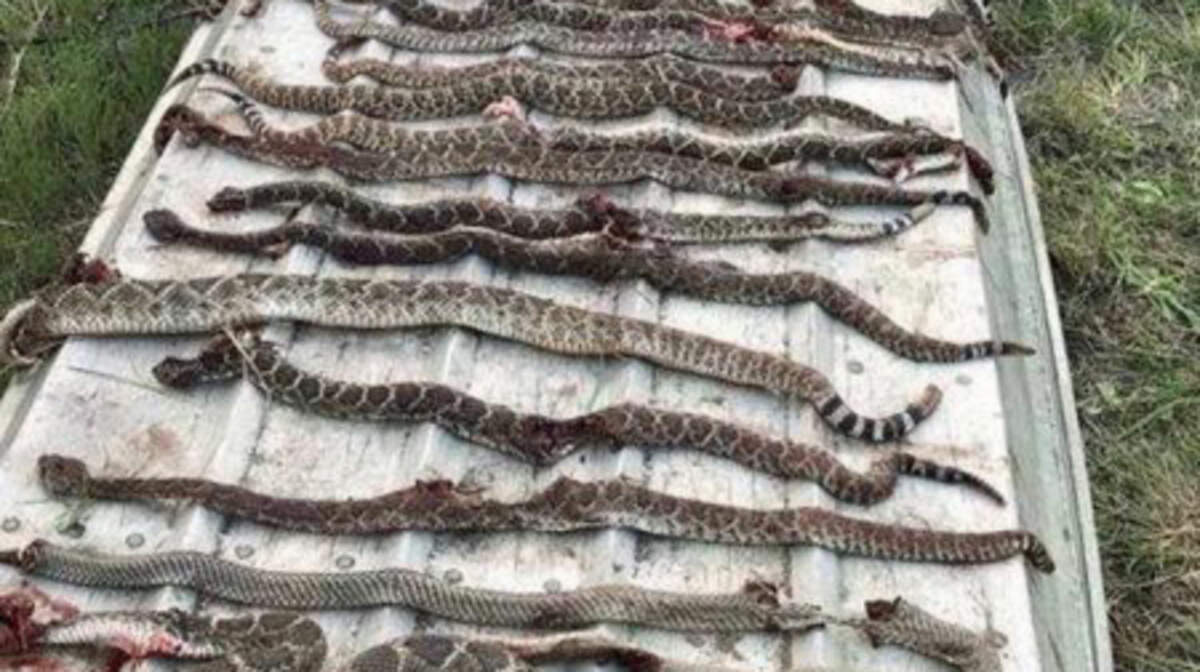
Silent and secretive creatures, they appear and disappear with soundless mystery.
The secret of this mystery is that a snake walks with its ribs — many ribs fastened to a section of the backbone, with each section connected by ball-and-socket joints, giving great freedom of movement.
Tips of opposite ribs are attached with muscles to one of the cross-wise scales of the abdomen, allowing the snake to move the scales independently and acting as feet, with their sharp edges catching on any small roughness in their path while pushing the snake’s body ahead.
“I don’t like old sneaky snake, he laughs too much you see, when he goes wigglin’ through the grass, it tickles his underneath.” — Tom T. Hall, lyrics of 1974 Sneaky Snake song.
God surely knew what he was doing when he created every living creature on earth. “And God said ‘Let the land produce living creatures according to their kinds: livestock, creatures that move along the ground, and wild animals, each according to its kind.’” Genesis 1:24 (NIV)
The majority of folks look upon snakes with unreasoning fear and dread, whereas a young child looks at a snake with interest instead of alarm. In most cases there is little reason to fear snakes, but education is key.
A chilling experience
Most people prefer not to talk about snakes, but they’re part of the Lowcountry.
Anyone raised in the country is familiar with snakes, having had a kindergarten education about them. I was one of these, with a fleeting knowledge of what one would look like if it were poisonous. That didn’t mean I wouldn’t let out a yelp when surprised by one, which is what happened when we first built our home on Tanner Hill.
The front yard, once a spot where my daddy’s cows grazed, was virtually covered with sand spurs, which a good grass cutting would take care of temporarily. But on the outer edge of the yard stood a wild persimmon tree loaded with fruit in late summer, some already fallen in the tall grass. I wanted to gather some.
So, silly barefoot Jean attempted to side-step the spurs to get to the tree. So far so good ‘til I spied right in front of me in the grass: a black snake. With a yelp I turned to run back, spurs or no spurs, but out of nowhere a glass snake had appeared in my path. I just froze, dead in my tracks, and hollered. Husband Harry, working in the yard, saw my predicament and started laughing, which infuriated me. Feeling sorry for me, he came to my rescue, lifting me to safer ground with no spurs.
Lesson learned: wear shoes in unknown territory!
A little knowledge helps
About 2,400 kinds of snakes are known, but only eight are dangerous to humans. That’s where learning to tell the difference between the harmless ones and the poisonous ones puts a person more at ease. For instance, a coral snake is very poisonous. It has a harmless look-a-like, the scarlet king snake, with some of the same coloring. A saying to keep in mind: “Red touch yellow, kills a fellow, red touch black, venom lack (or safe for Jack).
While this is often a reliable way to determine whether the snake is venomous, it is not fail-safe. The best advice when you encounter a snake that has red, yellow, white and black banding is to totally avoid it. As Ralph Waldo Emerson wrote, “Common sense is genius dressed in its working clothes.”
From spring through October, snakes are most active and visible. After that, during the colder winter months, they are less active. In warmer Southern states, they go through a period called brumation, an extreme slowing down of their metabolism. Hibernation, a deep sleep process, occurs in the colder, snow-covered states.
Interesting snake facts
Snakes are uncanny in appearance and habits. They never close their eyes because they have no eyelids. That gives them a cold, glassy stare.
Another creepy sight: Watch a snake crawl out of its old skin, appearing clean and glossy in its new dress. This process, called molting, happens several times a year.
The United States and Canada are home to four types of poisonous snakes: rattlers, coral, water moccasins and copperheads.
The hog-nosed snake, also known as the puff-adder, looks bad but is harmless.
The hero among American snakes is the king snake, 4-5 feet long and marked with a striking pattern of yellow or white bands that looks like a chain on a black background. The king snake actually hunts poisonous snakes, coiling itself quickly around its astonished adversary, tightening its grip until the victim is strangled.
Snakes kill many rats, mice and other rodents that destroy crops, but a healthy snake can do without food for a year or more.
Most snakes hatch from eggs, but others, like the common garter snake, gives birth to live young. Both groups of young are referred to as a brood.
Most active when temperatures are between 80 and 90 degrees, snakes are more visible to humans during the day, but will crawl at night in search of their prey.
“Oh, the snakes crawl at night, that’s what they say. When the sun goes down, then the snakes will play.” Charley Pride, 1965, lyrics of “The Snakes Crawl at Night” song.
Like Helen Keller said, “Life is a succession of lessons which must be lived to be understood.”
Our mind always has room for more knowledge, especially when learning about snakes.
This story was originally published October 15, 2020 at 10:06 AM.