
Want to turn your Lowcountry backyard into a tropical paradise? Here’s what to plant
Put a little pizazz in your yard. Go tropical!
While keeping dependable evergreen old timers like oak trees, vibrant green pines and deciduous sweet gum trees that offer us shade during hot summer months, stately, green, frilly-fronded, fibrous-trunked Palmetto tree will make old standby’s look homely when you plant one or two of these tropic beauties. After all, South Carolina is called the Palmetto State.
The southeastern part of the United States provides a welcoming warm, moist, temperate climate for various types of palm trees. The palm, designated as South Carolina’s official state tree — also shared with Florida as its state tree — is the Sabal palmetto, also known as the cabbage palm. It can grow up to 65 feet.
It’s a popular landscape plant, tolerant of salt spray and drought, moderately cold hardy, but requiring hot and humid summers to thrive well. This description of cultivation requirements seems to fit our area of the Lowcountry perfectly.
We have two such palmettos in our yard. In early summer, as many as a half dozen spikes emerge from the heart or cabbage head in the middle of the palmetto branches which support the fruit of black drupes or berries with a single seed. Birds and squirrels enjoy a feast until all the berries are gone.
A common, often-seen palm in undeveloped wooded area is the wild Green Saw Palmetto palm, sometimes called “scrub” palmettos, or European Fan palms. Not growing very tall, they grow in clusters with an established root system. These palmettos can be seen in the underbrush near or lining the banks of salt water creek beds, preferring sandy soil with mulch moisture. A good many of this type palm surround two sides of our property, particularly the side that borders a small tributary of a salt water creek.
One of the hardiest and scraggliest looking palm are the Needle palm trees which tend to be very popular for landscaping in our area because they require strong heat to thrive — the hotter the better. We we have had plenty of that to offer this summer.
A popular variety which gives your landscaped garden an instant tropical look is the Sago palm, which isn’t actually a true palm but a Cycad, a group of plants that lived during prehistoric times. They are a long-lived. While it can take temperatures as low as 5 degrees, its leathery leaves indicate it is really tolerant to drought and can take the heat our summers offer up. The only draw-back is the fact that all parts are poisonous if eaten. That should be taken into consideration before planting if you have children and pets.
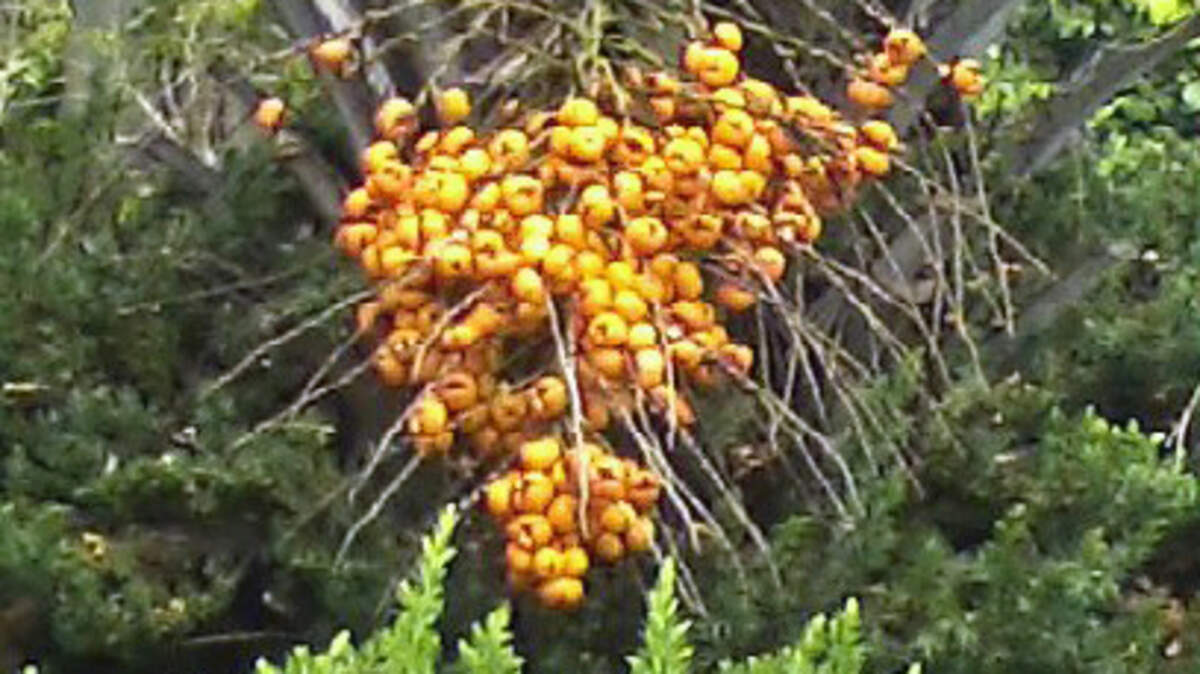
Another popular palm used in landscaping — and one of my favorites seeing as we have five on our property — is the Pindo palm tree, also known as a feather palm. It has classic long palm fronds that curve down and inward towards the trunk of the tree. This palm is very cold hardy, tolerating temperatures as low as 5 degrees and can grow to 20 feet, but usually tops-out from 12-15 feet. It can be used as the centerpiece of a garden area surrounded by other greenery as well as summer perennial blooming flowers. The fruit of this tree is edible, with a taste mixture of pineapple, apricot and mango. It is sometimes used to make jelly because of the generous amount of pectin the fruit contains. It is sometimes called the “jelly palm.”. But if you plan to make jelly, you’ll have to beat the deer and squirrels to it first, and fast as it ripens, because they love the fruit.
Deer have a very keen sense of smell, so as evening comes the dew settling on the fruit cooling it from a hot summer day allows the sweet mango scent of the fruit to permeate the air. Once the deer get a whiff, they’ve been known to stand on their hind legs to partake.
The Pindo palm is as good as it gets. It supplies beauty with its presence as well as fruit to make jelly, with the seed of the fruit usable as a coffee substitute when roasted and ground.
And you can’t beat that with a stick!