
A $100M lawsuit against the U.S., Marines for Parris Island death survives. For now
Correction: This article has been updated to correct the spelling of U.S. District Court of Eastern Michigan spokesperson David Ashenfelter's name.
A federal judge declined to rule Thursday on whether to dismiss a $100 million lawsuit filed against the U.S. government by the family of a fallen Marine Corps Recruit Depot Parris Island trainee who was hazed and abused.
Instead, U.S. District Judge Arthur J. Tarnow took the matter "under advisement," according to David Ashenfelter, spokesperson for U.S. District Court of Eastern Michigan — which means he'll have a tough ruling to make at some point in the future.
If the case is allowed to continue, it could set a precedent and challenge a long-held legal defense the government uses in military injury cases.
If it's dismissed, it could, according to one law expert, send the signal that there's no point in suing the military — regardless of circumstances.
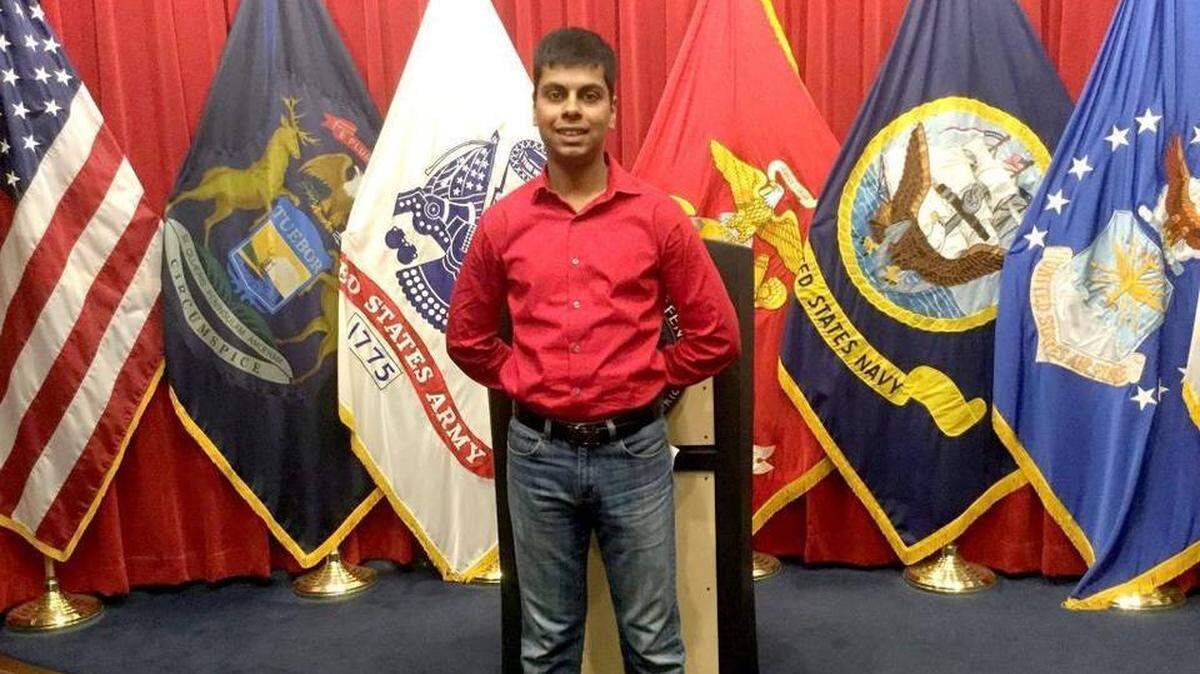
The lawsuit, filed in October by the family of Raheel Siddiqui — who died over two years ago after a fall during boot camp — claims the government and the Corps was negligent in their treatment of the former trainee, and that their actions resulted in his wrongful death.
Tarnow's decision comes a couple of weeks after news that the Siddiqui family is considering lawsuits — which could seek millions of dollars in damages — against Beaufort County and its coroner, Ed Allen, and two South Carolina hospitals.
Assistant U.S. Attorney Zak Toomey, representing the government, cited the Feres doctrine in his motion to dismiss. That doctrine is a long-upheld and often controversial principle that protects the government from being sued by those injured as a result of military service.
Toomey argued that Siddiqui was a trainee on active military duty.
Ghazala and Masood Siddiqui, represented by attorney Shiraz Khan, argued the government's negligence began before their son started training, when he was still a civilian.
Siddiqui, a 20-year-old Muslim-American of Pakistani descent from Taylor, Mich., died March 18, 2016, just 11 days after starting boot camp on Parris Island.
A Corps command investigation found he was ill that day, and was trying to request medical attention; he collapsed during a series of punitive sprints he was forced to perform; then, as he lay unresponsive on the floor, he was struck in the face by his senior drill instructor, Gunnery Sgt. Joseph Felix.
Witnesses say Siddiqui then jumped to his feet, ran out of the squad bay and fell from the top floor to the stairwell below.
Allen and the Corps classified his death as a suicide, which Siddiqui's family disputes.
In a November court-martial, a military judge sentenced Felix to 10 years in prison and a dishonorable discharge for abusing Siddiqui, and for targeting two other Muslim recruits — whom he ordered into commercial clothes dryers during an alcohol-fueled hazing session. Former recruit and, now, Lance Cpl. Ameer Bourmeche testified he received burns from dryer, and that Felix still haunts his dreams.
If the case moves forward, the judge's decision could be interpreted as "carving out an exception (to Feres) when rogue actors" — a drill instructor acting outside the scope of duties, for example — "cause wrongful death," according to Michael Hanzel, a Charleston-area attorney and former Navy lawyer.
And that could create a precedent, Hanzel said, one requiring litigants to define the boundaries of such an exception.
That precedent will be magnified if the case is appealed and heard in higher courts, he said.
"If the judge does not dismiss, it means that the case may proceed, but means nothing about the merits of the case," Brian Magee, a Beaufort attorney and Marine Corps veteran who once served as Parris Island’s lead prosecutor, said ahead of Thursday's hearing. "Also, the government could appeal the decision."
But if the judge dismisses the case, Hanzel said, it could be a deterrent to others considering suing the government.
"Even in these types of circumstances, where wrongful death is in question ... it's still something you can't successfully sue the federal government on," he said.
Siddiqui's death and the resulting fallout triggered a hazing and recruit abuse probe at Parris Island that led to multiple drill instructors being convicted at courts-martial or administratively punished.
In March, Lt. Col. Joshua Kissoon pleaded guilty at a court-martial to multiple violations, for allowing Felix — who was already being investigated for abusing recruits — to train Siddiqui's platoon.
Kissoon will retire from the military early, likely at a lower rank, and was sentenced to pay a $5,000 fine.
The Siddiqui family and Khan have sent notices of intent to file suit to Beaufort County, the Medical University of South Carolina Hospital in Charleston and Beaufort Memorial Hospital, according to officials
On April 6, Beaufort County Attorney Tom Keaveny said the family's expected lawsuit could seek $25 million in damages.
In addition to monetary damages, Keaveny said, the family wants Siddiqui's death certificate amended to reclassify the cause and manner of death, the time of death and the place of death as "pending/undetermined."
The Detroit Free Press, which has been privy to Siddiqui's medical documentation, reports the family has found numerous inconsistencies in them — which make them question their accuracy and validity.
Ashenfelter said the parties argued for about 45 minutes Thursday.
When asked when Tarnow will reconsider the matter, Ashenfelter said he did not know.
This story was originally published April 26, 2018 at 5:39 PM with the headline "A $100M lawsuit against the U.S., Marines for Parris Island death survives. For now."