
Moss played key role in hiring of N.C. attorney
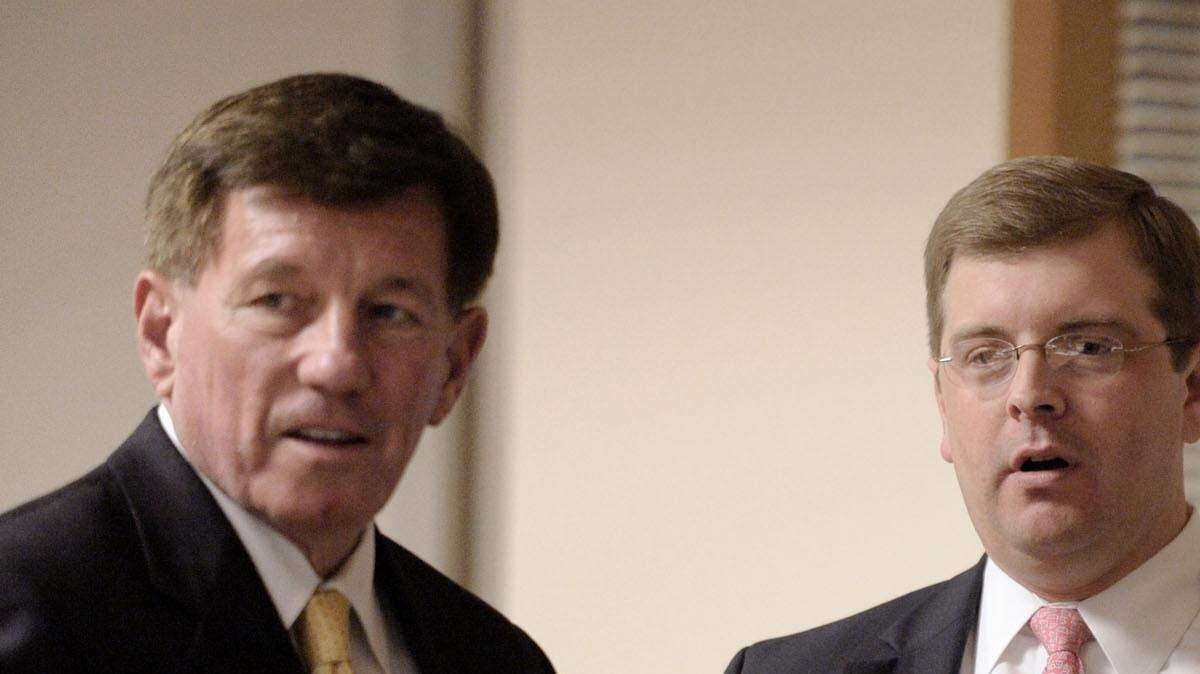
The school board for the Beaufort County School District -- at the recommendation of Superintendent Jeff Moss and others -- hired an attorney last year who was not yet licensed to practice law in South Carolina and who had previously been caught up in a scandal in a N.C. school system.
Drew Davis, the school board's attorney since August 2014, was suspended with pay by his previous employer, the Winston-Salem/Forsyth County school board, amid questions about whether he and other school system leaders failed to promptly report possible criminal acts to local law-enforcement agencies.
Davis denied any wrongdoing and hired an attorney. Ultimately, the school board bought out Davis' contract for nearly $50,000 in November 2010 in a mediated settlement.
"I always acted ethically and professionally during my time in Winston-Salem," Davis wrote in an email to The Island Packet last week. "I was never reprimanded or disciplined by the local or state Board of Education. I was never the subject of any ethics complaints or investigations regarding the issues leading to my departure from the school system there. I was never questioned by law enforcement, and certainly was never the subject of any criminal charge or ethics complaint."
Don Martin, the former superintendent of the Winton-Salem/Forsyth County school system who worked with Davis, said Tuesday that Drew Davis did nothing illegal. The Winston-Salem school board, Martin said, determined that it needed a fresh start and chose to part ways with Davis. The ongoing controversy over whether the school system had reported allegations of teacher misconduct to law enforcement would have made it difficult for Davis to be effective had he continued in the post, Martin added.
A majority of school board members in Beaufort County and Superintendent Moss saw it that way too, choosing Davis as the first in-house attorney the school board had ever employed for $115,000 annually -- even though he had not yet passed the S.C. Bar exam. Davis had only worked in North Carolina so he had never taken the S.C. test. With a few exceptions, passage of the three-day exam is a requirement for those who practice law in the state.
After his hiring, the district paid $2,885 for online classes to help Davis prepare for the exam, which he passed in May. As a result, his pay was bumped to $125,000, according to the district spokesman.
Moss said Davis was the best choice among the 10 qualified applicants who responded to the school district's ad. A Wake Forest graduate, Davis had worked for the Winston-Salem school board for six years, first as an assistant attorney and later as general counsel.
He was the only applicant with experience working for a school district, Moss said.
"We got a lot of (applicants) who were attorneys or did something in the legal field," Moss said. "But they had no connection at all to education ... (Davis) had experiences in a district that was much larger than ours."
While both Moss and Davis previously worked for N.C. school districts, the two men say they barely knew each other when Davis applied for the job.
"I did not know he was the superintendent when I applied for the job," Davis said.
Davis' hiring has come into question as Moss' decision-making and hiring practices have also come under scrutiny. Moss' wife was hired earlier this month to fill a high-paying, newly restructured position for the Beaufort County School District. The hiring sparked outrage, which grew stronger after The Island Packet and The Beaufort Gazette reported that Moss had changed a nepotism rule, clearing the way for the hire. A week after the hiring was first reported, Darlene Moss resigned and the school board announced it would revisit its nepotism and hiring practices.
Further, Moss' significant role in Davis' hiring could potentially create issues should the relationship between Moss and the school board deteriorate to the point where the board is looking to Davis for legal advice against the superintendent.
SCHOOL BOARD APPROVES DAVIS FOR JOB
Unlike the Darlene Moss hiring, the school board voted on whether to hire Davis as its attorney.
In a July 2014 vote, members voted 9-to-1 to approve the hiring, touting it as a way to save money.
Instead of the district paying several law firms $400,000 to $500,00 each year to do its legal work, it would instead hire Davis to work full-time just for the school district, Moss said.
Board member Michael Rivers cast the sole no vote because Davis was not yet licensed to practice law in South Carolina. Board member JoAnn Orischak was absent for the vote.
"So we're told that one of the reasons we should hire him is to save money," Rivers said. "But how can we save money when we have legal work that he can't do? That didn't add up to me."
Some S.C. attorneys say it's not unusual in other states for a school district to hire an attorney who has yet to pass the exam. But they were unaware of an instance of it happening in any S.C. school district.
The lack of licensing hampered Davis' ability to do his new job, Beaufort County district leaders acknowledge. Davis had to wait about eight months before he could take and pass the exam. South Carolina offers the test just twice each year.
And so the district continued to pay outside legal firms to do legal work that Davis could not yet do. District officials were unable to provide an immediate accounting of their legal bills for the time period.
School board chairman Bill Evans contends Davis was still able to do important work, albeit not official legal work, during that time.
"(Davis) started doing very knowledgeable and thorough reviews of the bills we were getting from the law firms. And he would say, 'Wait a minute. We shouldn't be getting billed for this.' And often, he would be right. So there was some savings we started to experience immediately," Evans said.
Davis also met with principals and school board members one-on-one and gave unofficial legal advice on various personnel and other matters, Evans added.
"He would tell us what his thoughts were," Evans said.
The circumstances of Davis' hiring has the local legal community abuzz, said Jim Moss, a longtime Beaufort attorney, who is no relation to Superintendent Jeff Moss.
"So they paid licensed (attorneys) and the unlicensed (one). That's just absurd," Jim Moss said.
District officials also defend the nearly $3,000 paid for Davis' online course work to help him prepare for the exam.
"Drew (Davis) did ask whether I would be willing to cover the cost of an online course," Jeff Moss said. "I didn't view it any differently than the professional development (we pay for) that our principals participate in."
Davis himself said his hiring will result in big savings for taxpayers in the long run.
"We think that the district and the county is going to save a tremendous amount of money over the course of my four-year contract," he said. "So quibbling about less than $3,000 on the front end, that's small potatoes compared to the amount of money the district anticipates saving over the course of my contract."
NORTH CAROLINA TROUBLES
It's not the first time Davis has faced professional criticism.
Several articles about a reporting scandal in which he was involved come up in an Internet search. But Beaufort County school board members say they never saw those stories.
For his part, Davis says he met one-on-one with both Moss and Evans and told them of the issues that had transpired in North Carolina in detail. Davis said both men promised to pass the information along to the full board.
"I would not have accepted the position otherwise," Davis said. "I wanted to make sure the board was aware of the situation ... I didn't want anything coming up six months from now, a year from now that would eviscerate my relationship with the board."
But a year later, school board members, including Evans, are murky on just what they were told.
"I had heard something (last year), that there were some questions about the work he had done in North Carolina, but I didn't know the details," Evans said, adding that he assumed a five-member panel that vetted Davis asked the tough questions.
Board vice chairwoman Mary Cordray, who served on that panel, said Davis himself addressed the problems during his interview. "We were aware that he resigned his position and that his contract was bought out and we knew there were two sides to the story of what happened to him," Cordray said. "I don't remember enough of the specifics ... It was enough to eliminate any concerns we had."
Scroll down to see Drew Davis' response
REPORTING PROBLEMS
So what happened in North Carolina?
Davis recently told The Island Packet that he was treated unfairly by his former employer, the Winston-Salem /Forsyth County school board. He characterized his plight as that of a scapegoat caught up in a politically charged scandal.
At the center of the controversy was a N.C. law that required principals to report to law enforcement illegal acts that happened on school property.
For years, many N.C. school systems, including the Winston-Salem one, interpreted the law to mean that school systems could look into allegations of wrongdoing and only forward the ones they deemed credible along to law enforcement, according to interviews with N.C. public education officials.
Law enforcement found fault with the practice in 2010, claiming school leaders in the Winston-Salem/Forsyth district failed to promptly forward accusations along.
Specifically, in May 2010, a middle school assistant principal reported to Davis, who was the district's attorney at the time, an allegation made by three students that a teacher had touched them.
Davis ultimately advised the assistant principal that the touching was not sexual or inappropriate and he did not forward it along to law enforcement.
"It was very clear that it was a retaliatory response," Davis said, adding that the students had been disciplined the day before by the teacher. "There's no doubt in my mind that the law was followed, that practical and common sense was followed. I stand by the advice I gave to the principal."
The allegations were eventually passed along to law enforcement by a school-resource officer and a subsequent police investigation cleared the teacher of any wrongdoing, according to media reports.
But the case, and another one that also involved a review by Davis, led the local district attorney, Jim O'Neill, to get the North Carolina's Bureau of Investigation to launch a probe into the school systems' handling of other cases of alleged teacher misconduct.
The school board also voted to suspend Davis from his job with pay pending the outcome of the investigation. Then chairman of the school board Donny Lambeth accused Davis of "bad judgment" at the time of the suspicion for failing to forward along the three students' allegations.
"I've personally seen some of the statements students did provide," he told a local TV station. "I have some serious questions about the judgment in this case."
Three years after the investigation was launched, The N.C. Bureau of Investigation identified 18 to 20 criminal allegations made against teachers that school system leaders did not forward to law enforcement, according to reporting by The Winston-Salem Journal. The local sheriff's office conducted follow-up investigations that resulted in three teachers being charged and prosecuted.
Davis said he was unfairly portrayed in the press, but was never charged with any crime nor was his N.C. license to practice law revoked. During his application for admission to the S.C. Bar, he said he answered questions about his time in Winston-Salem by both the Bar's Committee on Character and Fitness and the five justices of the state Supreme Court -- and passed muster.
"I never lost one minute of sleep over any personal concerns that I acted unethically or unprofessionally," he wrote in an email. "Never would I take or fail to take any action which negatively affected the children I serve."
Drew Davis responds
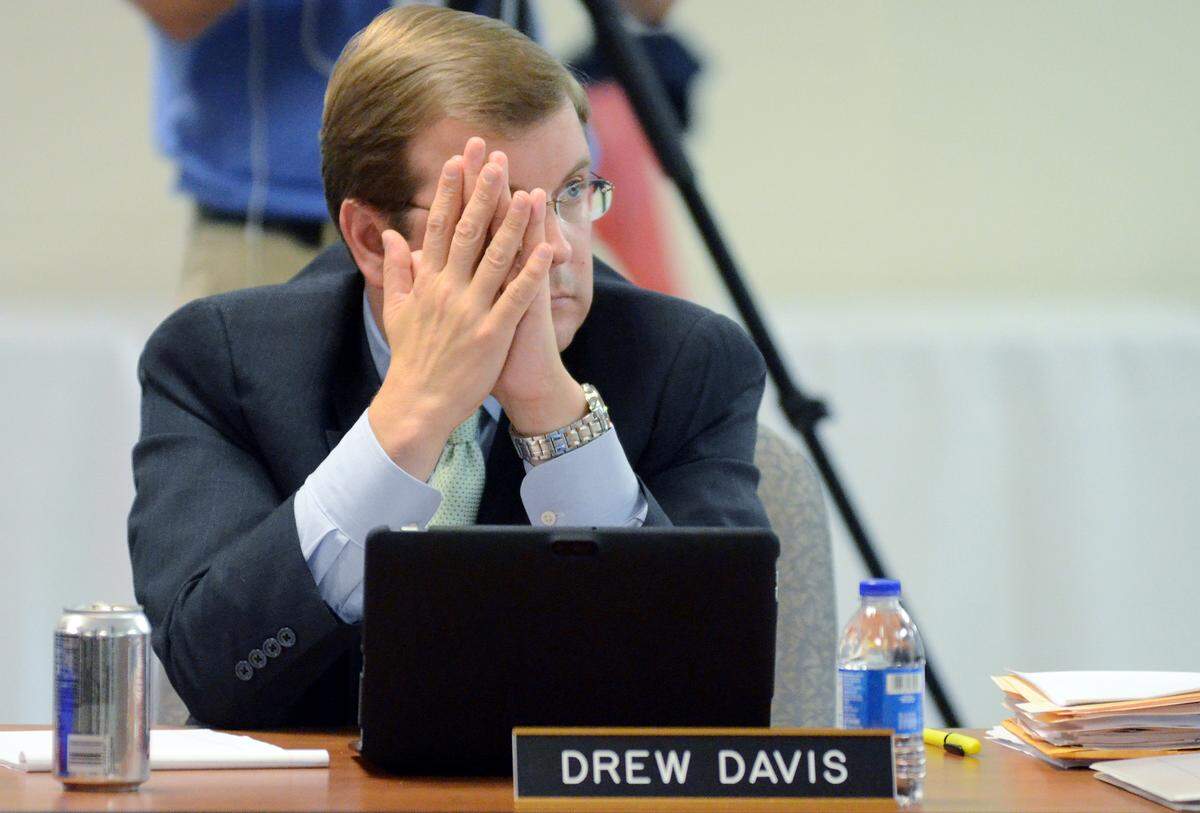
Drew Davis, attorney for the Beaufort County Board of Education, said he never acted unethically during a scandal that rocked his former employer, the Winston-Salem/Forstyth County school system, in North Carolina. School officials there were accused of failing to promptly report to law enforcement allegations of teacher misconduct. Here's each case that Davis' name has been associated with and his response to each:
Drew Davis' hiring process
Follow editor Gina Smith at twitter.com/GinaNSmith.
Related content:
- Board hires new attorney for school district, hopes to save in legal expenses
- Review of sex cases points out problems, Oct. 3, 2010
- Board tells Davis to go, Nov. 10, 2010
- School board votes to suspend lawyer, Sept. 8, 2010
This story was originally published September 26, 2015 at 6:31 PM with the headline "Moss played key role in hiring of N.C. attorney."