
Lauderdale: New book on Beaufort County's Civil War era historic in its own right
"O Massa, God A'mighty comeand de Yankees come wid him."
Those simple words tell a complex story.
It's the story of Beaufort County, but it's also the story of a nation whose wrestling match with inalienable rights began the day those words were uttered.
A black man said this to a fleeing Confederate major who had boasted that God Almighty couldn't take the fort on Hilton Head Island.
The Union navy did in Fort Walker in less than five hours. The slave-based economy it had taken a couple of centuries to build was gone in a day -- Nov. 7, 1861.
Then what?
It's complicated.
The best book yet to fill in the blanks will formally debut this week.
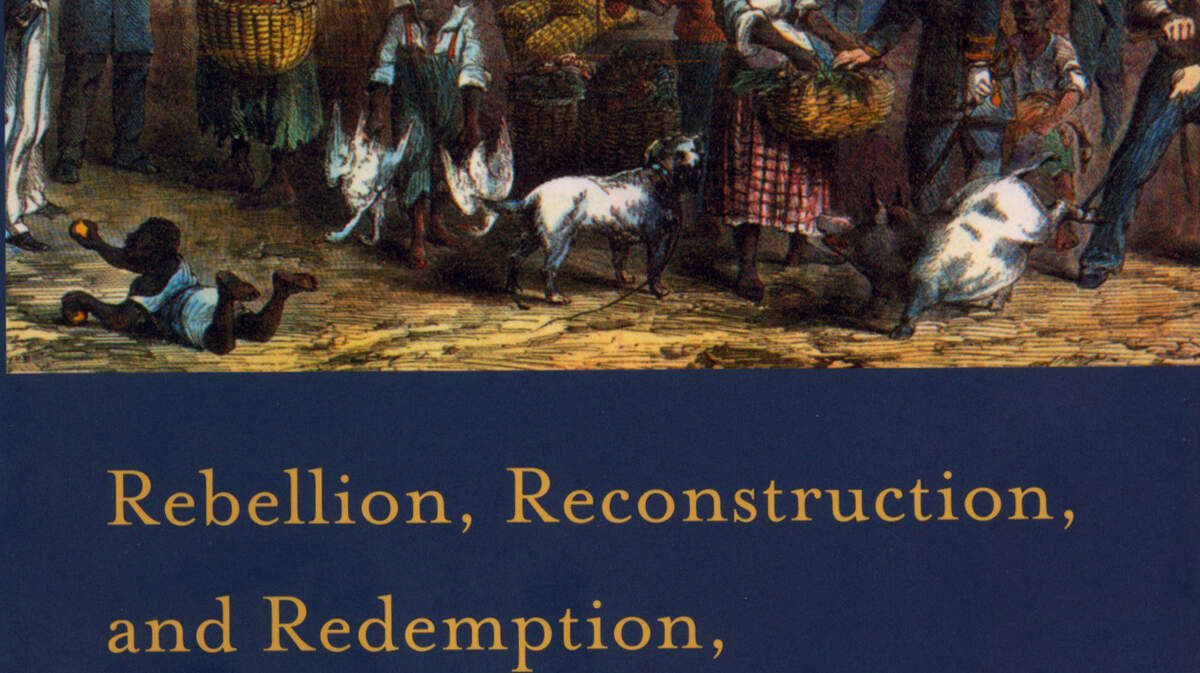
It took two historians -- Stephen R. Wise and Lawrence S. Rowland, both of Beaufort -- 701 pages and 19 years of work to sketch the drama in "Rebellion, Reconstruction, and Redemption, 1861-1893."
It's the second of three volumes on the history of Beaufort County from the University of South Carolina Press.
The cast of characters includes the famous -- Robert E. Lee, Abraham Lincoln, William Tecumseh Sherman, Salmon Chase, Robert Smalls, Clara Barton and Harriet Tubman.
And it includes a swarm of lesser-known contributors to the elusive question of "now what?" -- Rufus Saxton, Ormsby Mitchel, Edward Pierce, Mansfield French, David Hunter, Richard Fuller, Francis Gage and Jean Davenport Lander, to name a few.
It's the story of America struggling to come to terms with America on the flea-infested, sandy, muddy ground of Beaufort County.
DIFFERENT BATTLES
Work began on this volume as soon as the first one came out in 1996.
Rowland says he asked Wise to write three chapters on the Civil War.
"Thirteen years and 17 chapters later I hit the point where I could say I was done," said Wise.
He is director of the Parris Island Museum, and the cultural resource manager for the Marine Corps Recruit Depot. He has written two books on the war he says is officially named the War of the Rebellion.
Both historians used the files of the late Gerhard Spieler of Beaufort, in addition to the wealth of primary sources left behind by the literate and prolific characters who crossed this stage.
"Once I got into it, I realized how much happened here," Wise said. "And the incredible people who passed through trying so hard to bring about a transition throughout the Sea Islands, throughout the South and indeed the nation."
He tells of military campaigns, but our story is much broader.
Wise writes of brave women who came into a disease-ridden war zone to better mankind, as well as members of Lincoln's cabinet, commanding generals and astute blacks known as "contraband."
Wise said he discovered hundreds of Robert Smalls, whose life stories were significant but not as spectacular as the man of the same name who was born into slavery in Beaufort who ended up serving five terms in Congress.
"I learned that Civil War history can be more fascinating than just battles," Wise said. "Individuals came down here and completely turned upside down a society on all levels."
'PROFOUND EVENT'
Larry Rowland's portion of the book survived his office fire in December 2008.
The professor emeritus of history at the University of South Carolina Beaufort and past president of the South Carolina Historical Society thankfully had his manuscript and footnotes saved to a computer. That spared the last three chapters of the book, which help us understand the Reconstruction years and the counterrevolution that "redeemers" staged to bring back white supremacy.
"The social history had already been done very well by historian Willie Lee Rose," Rowland said of her book, "Rehearsal for Reconstruction: The Port Royal Experiment."
"Our book enhances the background of that story with the personalities and the business end of it. It's the political, economic and military history. It's a grand story with a lot more national implications than people know."
Next up is the third volume of the county's history, which Rowland says will take it to 2006. It is to be published in November, he said.
Until then, we have much to learn about the great promise of individual freedom for blacks that started here on Nov. 7, 1861. And we can learn from the great suffering of the whites of Beaufort County, who lost lives, fortunes and land.
"Reconstruction really did begin in Beaufort County," Rowland said. "Reconstruction is a profound event in American history and we would not be where we are today without the story that unfolded here."
Follow columnist and senior editor David Lauderdale at twitter.com/ThatsLauderdale and facebook.com/david.lauderdale.16.
This story was originally published August 7, 2015 at 10:20 AM with the headline "Lauderdale: New book on Beaufort County's Civil War era historic in its own right."