
Down to a science: Beaufort County DNA lab increases efficiency after 5 years
After binding a jewelry store's employees with duct tape last May, two armed robbers drove away from Tanger 1 Outlets with a massive haul.
In their getaway car was merchandise worth more than $800,000 from Bluffton's Kay Jewelers, the Beaufort County Sheriff's Office said.
One of the robbers, though, left something just as valuable for investigators -- his DNA.
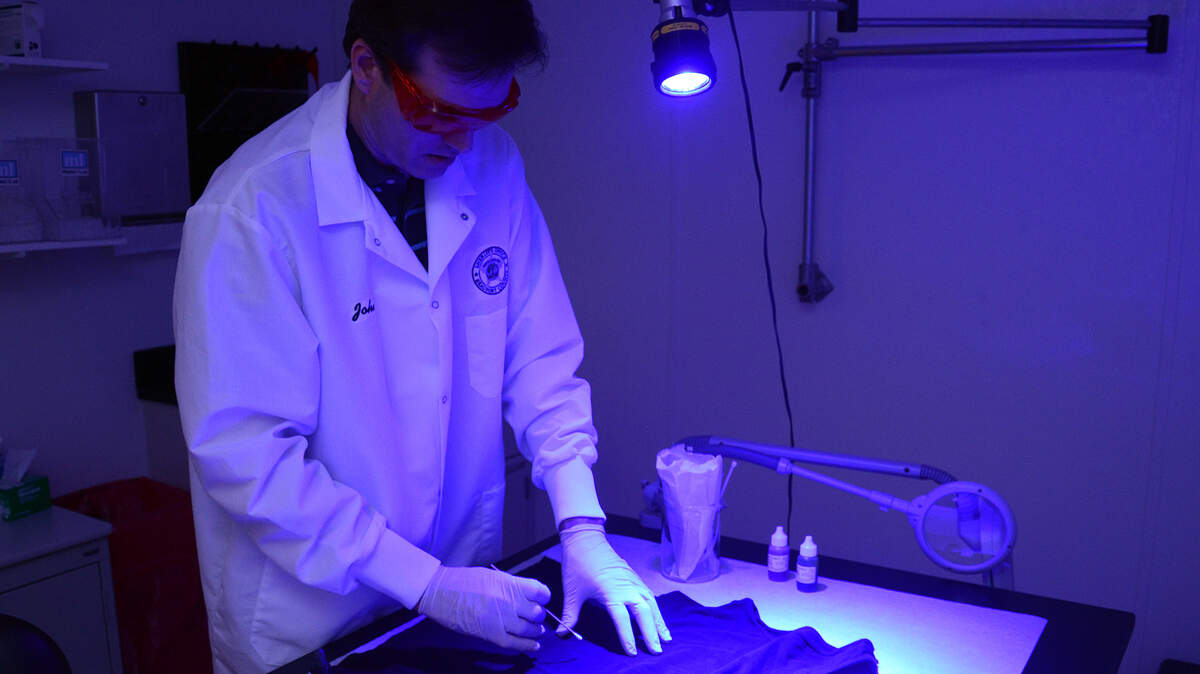
Within 36 hours, the Sheriff's Office Forensic Services Laboratory had analyzed a piece of evidence from the store and entered a profile into the national DNA database. It was the same process the 5-year-old lab has used to identify at least 175 other suspects since 2012, though the results it produced in May 2014 were a bit different, the Sheriff's Office said.
DNA testing revealed the Kay Jewelers robbery suspect was a 41-year-old Atlanta man named Curstantation McRae, who had been an inmate in Georgia for months.
Capt. Bob Bromage, spokesman for the Sheriff's Office, said the results were baffling.
" 'It's saying he's still in custody. How can this be possible,' " Bromage recalls thinking. "You won't see that twice in a career, I'll tell you that."
Investigators learned McRae lived in a Georgia Department of Corrections transitional center for a work-release program, and had left early the morning of the robbery and returned home after curfew, Bromage said.
Investigators allege he robbed the jewelry store in between, with another man who has not been identified.
While it took about a week for Georgia authorities to identify McRae -- who was indicted on federal charges in mid-July -- the speed of Beaufort County's lab is an undeniable boon to investigators, Bromage said.
Outsourcing DNA testing to other agencies can take weeks or months, and the Sheriff's Office had no other leads in the Kay Jewelers robbery.
Bromage said it's impossible to know how many cases have been solved thanks to the lab.
However, police outside Beaufort County are taking advantage of the $900,000 facility as well, suggesting it's doing something right.
Up to 20 percent of the cases it works are for other law enforcement agencies in the 14th Judicial Circuit, lab director Lt. Renita Berry said.
And while the lab is doing significantly less testing than in previous years, staff say that's a mark of efficiency, both in and outside the lab.
Each year, technicians train deputies to better collect DNA evidence, said Berry, who oversees three analysts and two chemists.
Last year, deputies began submitting many more samples per case, meaning each case took longer to work but had a greater chance of resulting in a match, Berry said.
Technicians matched DNA to 64 convicted offenders in 2014, a 14 percent increase from 56 in 2013 and 2012.
That's despite entering 16 percent fewer profiles into the national DNA database and handling just 273 cases, down 38 percent from 2013, according to the Sheriff's Office.
The lab also entered 59 profiles of unknown people into the database in 2014, up from 44 in 2013 and the same number entered in 2012.
No statistics on profiles entered and matches made are available before 2012. The lab was created in 2010 and accredited for the first time in 2011.
Casework also declined in 2014 because the Sheriff's Office was preparing to apply for a new grant from the National Institute of Justices' DNA Backlog Reduction Program, Berry said.
The county received a total of $250,000 from that program in 2012 and 2013, the most recent year available, according to the NIJ website. Bromage says the lab costs about $350,000 annually.
Berry says in the coming years, the lab should be able to increase the number of DNA samples analysts test each month from 40 and decrease the average turnaround for testing from 120 days.
In 2014, cases were also down because staff were adapting to new software and instruments, as well as a new system in which tests are prioritized based on the severity and urgency of the crime.
Homicides, sexual assaults and other violent offenses now come first, lending invaluable evidence to cases involving the most dangerous criminals, Bromage says.
He pointed to the 2013 slaying of Beaufort native Alexander Apps, who was shot and killed in Charleston while letting two men test drive his truck.
One of them, Jquan Scott, pleaded guilty in May to murder, armed robbery, kidnapping, and possession of a firearm in the commission of a violent crime.
When Beaufort County investigators met with Scott early in the case, they checked Apps' truck for traces of evidence. Someone had tried to clean car, but deputies found Apps' blood in the crevices of the seat, Bromage said.
Charleston County investigators also found Apps' blood on a T-shirt and cargo shorts in Scotts' home, according to Bromage.
"You could have all of the other pieces of evidence ... but when you find DNA on his clothing that conclusively links him to the actual crime, the actual murder, it just bolsters the case," Bromage said.
While Bromage said investigators are excited to see their evidence strike a match, Berry says she stays detached.
To her and the lab's other employees, the point is not guilt or innocence, or the name and motive of a match.
She lets the DNA speak for itself.
"It's a wonderful science," she said.
Follow reporter Rebecca Lurye on Twitter at twitter.com/IPBG_Rebecca.
Related content:
- Beaufort County sheriff requests staff attorney, DNA analyst to cut backlogs , April 27, 2014
- Beaufort County gets its own DNA lab, only the second in the state , May 4, 2010
This story was originally published August 3, 2015 at 5:01 PM with the headline "Down to a science: Beaufort County DNA lab increases efficiency after 5 years."