
Return to Port Royal shrimping slow going after fire
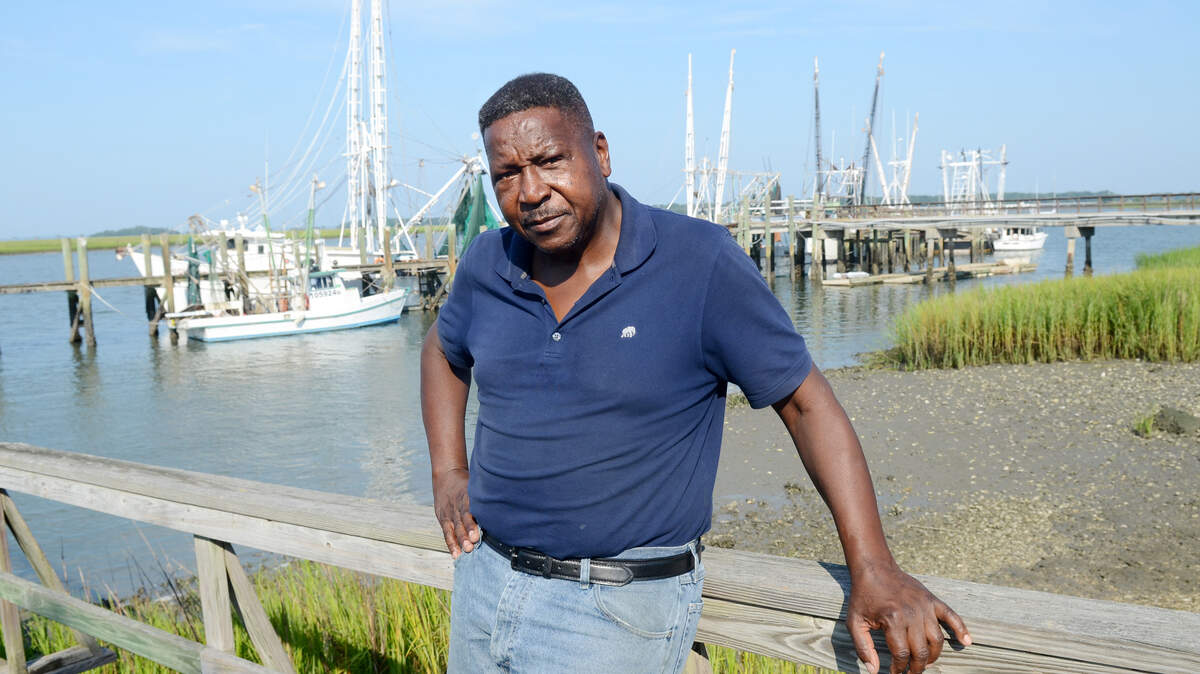
Shrimpers docked at Port Royal's charred seafood market expect to continue working soon, a recent fire seemingly just another tale in a tough business.
But the operation's manager thinks a contingency plan could take some time.
The burned market housed the equipment needed to clean and pack the shrimp. The town received permission from the S.C. State Ports Authority to use a neighboring building for the operation, said dock and market manager Joey Morris, but lack of power and no ice machine are major hurdles.
Morris said purchasing a new ice machine will require an insurance check and for it to be shipped from Florida, casting doubt on at least one shrimper's hope that the operation would be back up in a week or so.
"It takes probably longer than a week to get (the ice machine) up here," Morris said. "They don't keep those things just laying around."
The amenities destroyed by the fire are essential, shrimpers said.
"You want your product to be fresh when you come back to offload it," said Charles Abner, whose 73-foot boat is parked at the dock. "If it's not fresh, it's not good for public consumption. It has affected us to a degree, but not to the point we're out of business."
Abner has another stake in the fire damage. A relative's car he was using was parked in front of the seafood market and burned during the fire. The melted sedan was still there Thursday, waiting on insurance claims adjusters to complete their work.
Investigators ruled out arson and said an electrical issue could have been the cause.
The fire early Sunday morning destroyed the town's seafood market, which had been open to the public only a few weeks. The lost ice machine had provided 7,000 pounds of ice each day.
A vat to wash the shrimp, refrigerator, freezer and scale were also among the equipment consumed in the blaze. A forklift was among the few items spared, Morris said.
The dock serves several local shrimpers and fisherman and at times accommodates boats from out of state. Morris said boats from North Carolina stopped in Port Royal with large loads last fall.
Shrimper Mark Smith said the down time will not affect him, since he is already docked indefinitely while working on his boat's engine.
"It's a blow to the industry overall itself, because we have very little infrastructure to start with," Smith said.
Abner has shrimped since he was in sixth grade and for more than 20 years in Port Royal after spending 20 years trawling the Florida coast.
He characterized the setback as just another in a tough business.
Abner said his boat has caught fire three times. One fire, while the boat was docked, forced him to rebuild the entire interior.
He's faced other difficulties. He was alone on a return trip to Jacksonville from Key West in 2003, setting an egg timer every 15 minutes to stay awake, when his 66-foot boat lost steering and power and required a Coast Guard rescue in rough seas, according to Abner and an Associated Press report.
Fluctuating fuel prices, high maintenance costs, imported seafood and hard-bargaining buyers have also made life difficult, Abner said.
But he remains optimistic.
"It's just a matter of time, I'm going to do very, very good," Abner said. "I smell it coming. This is a business you have to stick with."
Follow reporter Stephen Fastenau at twitter.com/IPBG_Stephen.
Related content
- Popular 11th Street Dockside restaurant struggles to reopen after fire, July 21, 2015,
- Fire at Port Royal seafood market not arson, investigators say, July 20, 2015
- Update: Port Royal seafood market lost in Sunday morning blaze + aftermath video, July 19, 2015
This story was originally published July 24, 2015 at 3:04 PM with the headline "Return to Port Royal shrimping slow going after fire."