
On Morgan Island, only monkeys are allowed
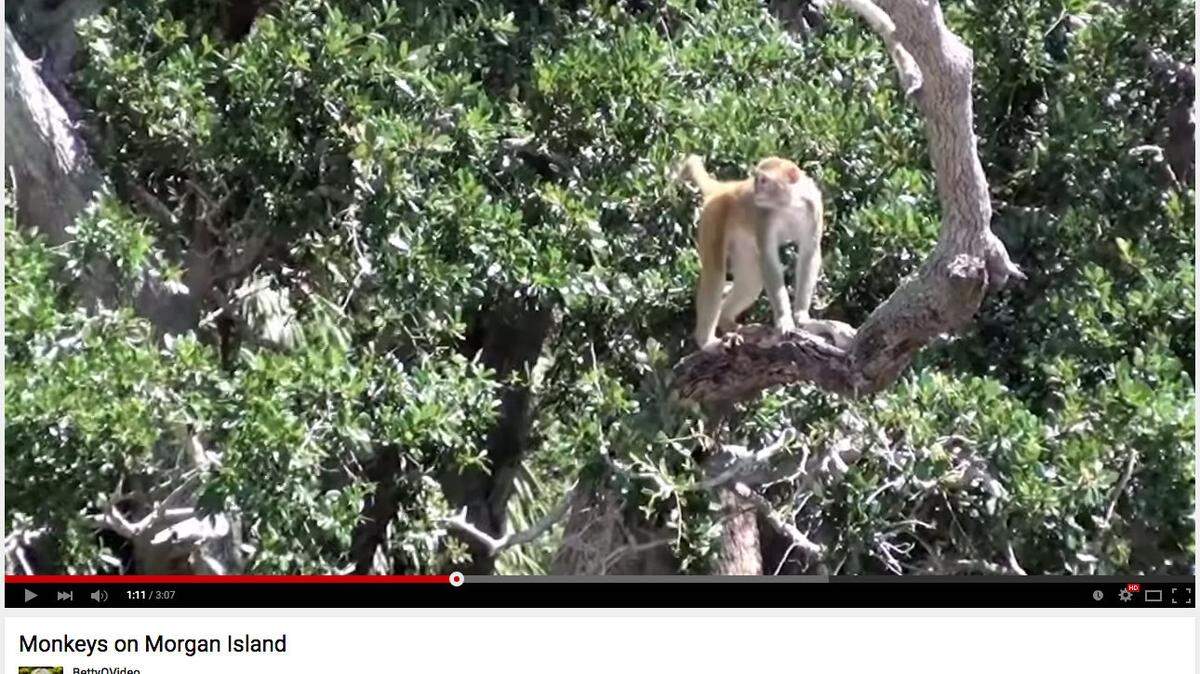
With about 3,500 monkeys roaming the land and hanging from the trees, Morgan Island -- aptly nicknamed Monkey Island -- is home to one of only two Rhesus monkey colonies in the United States. The other is on Florida's Silver River.
The monkeys have lived on the nearly 2,000-acre island, owned by the S.C. Department of Natural Resources and just north of St. Helena Island, since the 1970s.
"I think it's very similar to a lot of its sister islands that are not developed, such as Otter Island and Pine Island," said Phil Maier, director of coastal reserves and outreach at S.C. DNR. "But it certainly is different because it has a colony of Rhesus Macaque monkeys that have been there for years."
They originally were located at a research center in Puerto Rico. After several monkeys infected with a virus escaped and caused outbreaks among locals, the monkeys were moved.
That's where South Carolina stepped in. The state offered the island for research and about 1,400 monkeys were brought to Beaufort County.
Now the breeding colony is used by the National Institute of Allergy and Infectious Diseases, which is part of the National Institute of Health, for research.
That research helps develop life-saving preventions and treatments for diseases affecting public health, according to the institute. But it could not provide a specific example of a treatment the S.C. monkeys have played a role in given the long history of the colony.
"It could be said that its members potentially had roles in many of the public health advances of this generation," according to an institute spokesman.
The frequency and number of animals taken off the island each year for research varies depending on the projects, and they are not returned to Morgan Island, the spokesperson added.
No research is conducted on the island, according to the institute, and the colony is provided some food, water and veterinary care in compliance with federal laws.
But beyond their scientific value, the monkeys also provide endless entertainment for those who boat, kayak or fish nearby -- though law strictly prohibits people from going onto the island.
The monkeys often are seen walking the beaches, sun bathing in the tree-tops and some even going for a little dip in the marshes.
"People will see a lot of the wildlife out there that you would expect to see, like alligators, otters and migratory birds," Maier said. "But those monkeys definitely are an unusual sight not from around these parts."
Follow reporter Sarah Bowman on Twitter at twitter.com/IPBG_Sarah and on Facebook at facebook.com/IPBGSarah.



This story was originally published July 2, 2015 at 11:24 PM with the headline "On Morgan Island, only monkeys are allowed."