
It's been a long march to tell a local story that helped reconstruct America
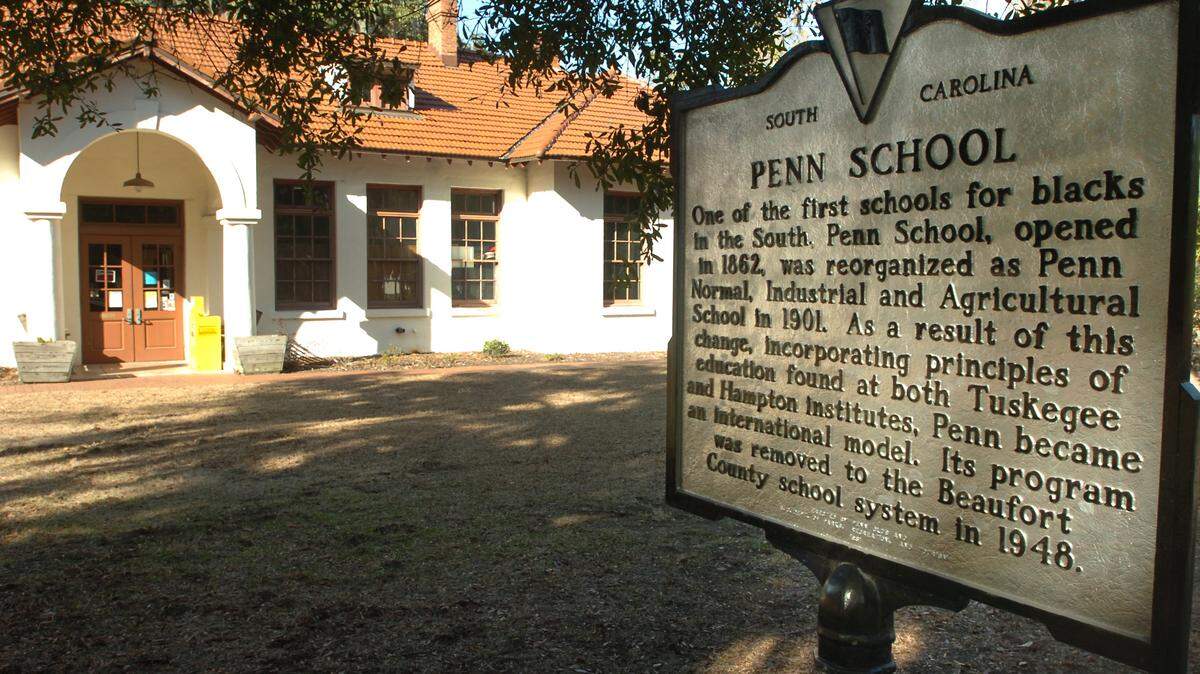
Reconstruction began in Beaufort County.
What have we got to show for it?
"We have nothing compared to what we ought to have," said Beaufort Mayor Billy Keyserling. "To me, it's embarrassing."
It's not that the county lacks sites important to the "untold story" of America's earliest experiments in a society without slavery.
After all, historian Lawrence Rowland of St. Helena Island said, it all started here on the day of the "big gun shoot," when Union troops captured Hilton Head Island and Beaufort on Nov. 7, 1861.
Historian Page Miller of Fripp Island said, "I would say there are hundreds of places in the county related to education, politics, religion, economics of that period."
The period that they call the "second founding of America" was first played out in the streets, fields, churches and homes of Beaufort County.
The county can boast of a place called Mitchelville where freedmen took on self governance, another where black troops were first recruited into the U.S. Army, or where the Emancipation Proclamation was first read to slaves, where African Americans first voted and founded their earliest schools, where wages were first earned. The county is also the home of Robert Smalls, a slave who bought his freedom and became a five-term congressman.
"We've got a lot going on, but we've not done much to package it," Keyserling said.
Story continues after map
As the National Park Service begins a "National Historic Landmark Theme Study on the U.S. Reconstruction Era, 1861-1898," that package becomes more important that ever.
Theme studies identify and nominate properties for preservation. It could lead to a selection of properties that can tell the public a story, and put it in a national historic context.
Being ready when someone comes to see it is a lesson Beaufort County learned on a winter day in 2000.
Still skirmishing
Bruce Babbitt of Arizona had a month remaining in his eight-year run as U.S. Secretary of the Interior when he came to see Beaufort County with his own eyes.
He's a history buff who read Columbia University professor Eric Foner's definitive book, "Reconstruction: America's Unfinished Revolution."

As Miller tells the story, Babbitt picked up the phone and asked Foner if he were going to establish a unit of the U.S. Park Service to interpret Reconstruction, where would it be? Foner said it would have to be Beaufort County. Babbitt wanted to see it. He was shown around by Foner, Rowland, Miller and others.
"This is one of the most remarkable landscapes in the country," Babbitt told locals on Dec. 7, 2000. "What I want to do by my presence is to say to all people who are involved that you have a national treasure here."
One community response was led by Jane Upshaw, dean of the University of South Carolina Beaufort. She urged local leaders to start putting their heads together. The Sea Islands Reconstruction Heritage Partnership was formed, consisting of about 40 local organizations. They met regularly at USCB, piecing together the countywide story.
At the time, Miller was teaching a course in public history at USC in Columbia. Her master's degree students put together a thick report still available in local libraries that documented Beaufort County Reconstruction sites and told of their significance to American history.
In 2003, U.S. Sen. Fritz Hollings quickly got approval of a bill to devote $350,000 to study Beaufort County's Reconstruction historic sites for potential use by the National Park System.
But a House version from U.S. Rep. Joe Wilson, a Midlands Republican who then represented Beaufort County, died in committee.
"We got outgunned by the Sons of Confederate Veterans," Rowland said. "We weren't prepared for a political fight."
File video: The Mitchelville Project
First published in January 2014
Long slog
Mitchelville was a star pupil during the Reconstruction era.
It's a tract on Hilton Head Island where Union troops set up a village where African Americans not even officially freed could partake in the American freedoms many citizens now take for granted.
But, like the Reconstruction era as a whole, getting its story out has been a long slog.
Click or tap graphic for a closer view

Drew Martin/Staff graphic
It took an archeological dig in 1986 to begin to open eyes because nothing was left of the village that petered out after the military base next door left town.
But not until 1998 did the Town of Hilton Head Island start buying sensitive Mitchelville tracts to get them off the market. And in 2010, an organization called the Mitchelville Preservation Project got its nonprofit status to educate the public about the dawning of freedom on Hilton Head.
Money is an issue, as it is for most volunteer-oriented historical groups.
Still, Mitchelville Preservation Project board chairman Randy Dolyniuk said successes have come.
"We have accomplished much with few financial resources. We've sponsored four annual events celebrating Mitchelville with a fifth this month, developed and funded an economic impact study, collaborated with Federal Aviation Administration and Beaufort County for an archeological dig at the (nearby Hilton Head) airport, collaborated with the McKissick Museum at USC to develop an historical exhibit about Mitchelville, changed our emphasis from replication to education, established a permanent Mitchelville exhibit at the Westin, become a member of the National Park Service's 'Underground Railroad,' been instrumental in attracting a national Underground Railroad conference to Hilton Head, and worked on a project to bring similar-minded organizations to collaborate on the Mitchelville story and eliminate duplication."
Meanwhile, volunteers with the Heritage Library on Hilton Head have pieced together a list of more than 600 residents of Mitchelville.
Scenes from Mitchelville: Click or tap here for a photo gallery
And as historians Gregory P. Downs and Kate Masur come to the county on behalf of the NPS "theme study," they'll find many other sites begging for attention.
New hope
The timing is right for a new look at Reconstruction, Miller said.
The nation has just finished five years of looking at the Civil War 150 years later. So it's a good time to answer the question: "Then what happened?"
Local leaders have learned from the skirmish of 2003 that the story-telling must include the world view and experiences of both the defeated whites and the newly-freed blacks.
A leader in the Sons of Confederate Veterans told the Charleston Post and Courier recently that the new look at Reconstruction could be accepted by the group if it is inclusive of what happened to both races.
Keyserling points to a summer institute for 30 K-12 teachers next month at USCB as a step forward with greater future potential. It will be led by USCB professor Brent Morris and use the historic buildings and sites of Beaufort County as a setting to explore "America's Reconstruction: The Untold Story."
Also this summer, the second volume of Beaufort County's history by Rowland and Beaufort historian Steve Wise, is to be released by the University of South Carolina Press. The 736-page book is called, "Rebellion, Reconstruction and Redemption, 1861-1893."
Keyersling and Miller hope the National Park Service will recognize Beaufort County as the best place for America's first historic site devoted to Reconstruction.
But Keyserling knows it will take money and a clearer local vision of what can be.
He and Miller envision a potential hub in the city where the public could get an overview of the story and then branch out to scores of local buildings and sites significant to an era that produced the 13th, 14th and 15th Amendments, abolishing slavery, clarifying that African-Americans were full citizens and granting men of all races their voting rights.
Miller was there when Bruce Babbitt came to see Beaufort County's treasures and urge locals to take advantage of it.
"I think that a lot of us realized then that this was going to be a long haul," she said, "but we were in it for the long haul."
This story was originally published June 12, 2015 at 10:46 AM.