Beaufort mayor admits voting mistake after resident calls out ‘blatant’ conflict

Beaufort Phil Cromer is acknowledging he made a mistake voting for the sale of city land sale involving a $1.6 million donation to the Beaufort County Economic Development Corp. (BCEDC) after a resident pointed out the mayor likely has a conflict of interest because he sits on the board overseeing the BCEDC.
Since its creation in 2018, the nonprofit BCEDC has been the face of economic development efforts in the area, working on behalf of municipalities and Beaufort County whose representatives serve on its board of directors. The towns and cities and Beaufort County provide public funds for its annual operations.
Cromer is Beaufort’s representative on the BCEDC board of directors.
On March 10, members of the Beaufort City Council, including Cromer, voted unanimously, on a first reading, to sell 32 acres in its 199-acre Commerce Park north of the city to Clarendon Farms LLC for $2.27 million. Clarendon Farms, which owns protected land in the vicinity, wants the land on the edge of the Commerce Park as a buffer.
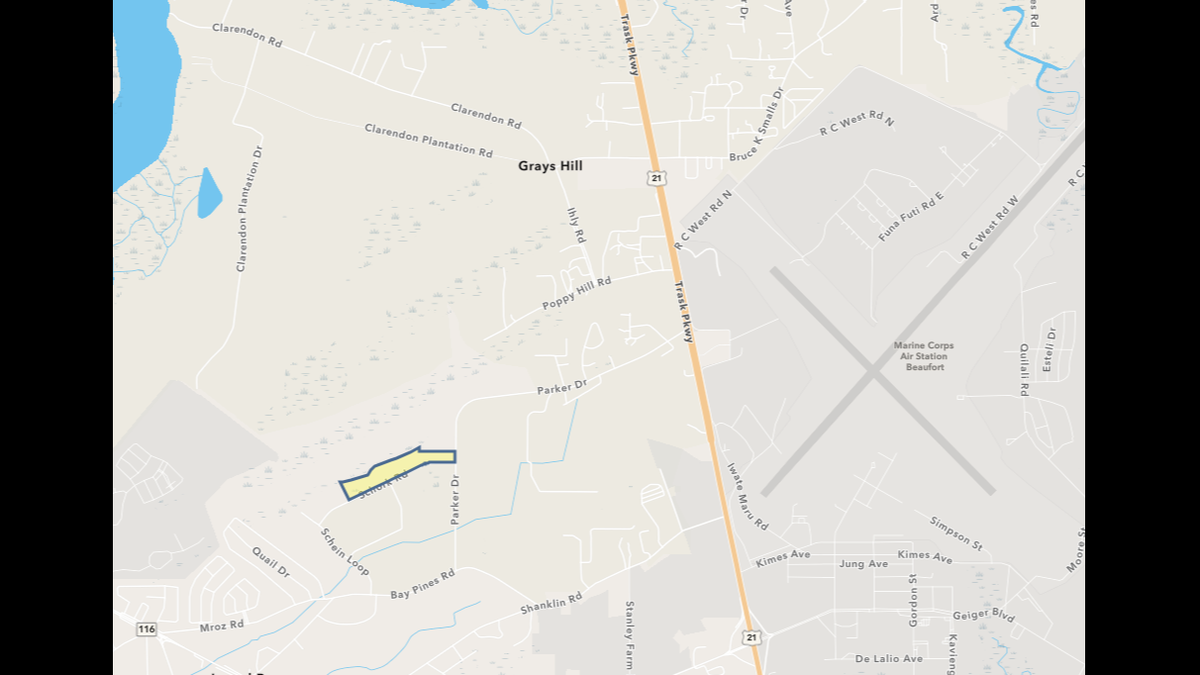
A provision of the sale states that the BCEDC, which markets land in the park for the city, would get $1 million of the proceeds. In addition to that $1 million donation, the BCEDC also would be allowed to use fill materials from a borrow pit Clarendon would receive as part of the sale, a value of $600,000.
Undisclosed conflict
On Friday, Mare Deckard, a concerned citizen from neighboring Port Royal, sent a letter to Cromer and Mike McFee, who serves as the city’s mayor pro tem. Cromer failed to disclose his role on the board that oversees the BCEDC, which received the $1.6 million gift, Deckard wrote.
A key requirement of South Carolina ethics laws is that public officials, members of public bodies and public employees must not use their offices in a way that provides financial gain for themselves, members of their family, or businesses they are associated with, according to the South Carolina Municipal Association.
In those situations, public officials must recuse themselves from voting or even participating in the discussion.
To be sure, Deckard noted in her email, Cromer’s duties with the city and BCEDC board overlap. For example, she noted, each year area municipalities that support the BCEDC vote on financial contributions to the organization.
“However, I am not aware of a situation whereby a sitting municipal mayor, acting in the dual capacity of board member of a separate organization, may participate in a vote to ‘donate’ $1.6 million dollars from a controversial city real estate transaction to the very organization on which he serves as a voting board member tasked with determining the expenditure of this same $1.6 [million],” she wrote in an email to Cromer and McFee.
“Mr. McFee,” Deckard continued, “please know I write you directly for the purpose of putting the city on notice that, in my opinion, there may be an undisclosed conflict of interest question that nees to be addressed.”
Cromer wants vote rescinded
Friday evening, Cromer responded to Deckard’s letter.
“I believe you are correct to bring this to my attention and I agree with your assessment,” Cromer wrote. “I will be contacting the Beaufort City Manager (Scott Marshall) and Executive Director of the BCEDC (John O’Toole) and have my recent vote rescinded for any city-related agenda items previously voted on with regards to the BCEDC matters.”
Cromer told the Beaufort Gazette and Island Packet Monday that he was unaware at the time there was a conflict. He noted he was only the second mayor to serve on the BCEDC board since it was created in 2018.
When he received the email from Deckard saying his vote was a potential conflict, he said, “I said, ‘well maybe it is,’ so I contacted legal counsel and asked them, and they said it probably is a conflict based on an attorney general’s opinion.”
Cromer is not exactly sure if a vote can be rescinded. Even if that is not possible, he says, he will recuse himself from voting on the land sale in the future. “Oh yeah,” he said, “definitely.”
The Beaufort City Council is expected to vote on the proposed land sale a second vote April 14. That vote is final.
Deckard told the Beaufort Gazette and Island Packet that “individuals who have blatant conflicts of interest need to be called out.” She credited Cromer for responding within hours and acknowledging the conflict.
Second vote scheduled
The BCEDC’s involvement in the sale of the city-owned land sparked controversy when it was first discussed March 10, with Councilman Josh Scallate calling the $1.6 million set aside for the BCEDC a “kickback.”
O’Toole, the BCEDC’s executive director, took exception to the use of that term. The $1.6 million, he said, will be reinvested into development activities in the city’s Commerce Park.
It wasn’t the first time Scallate has raised issues with the finances of the BCEDC. In June, Scallate proposed cutting $42,000 in the budget for the BCEDC. Cromer, who was serving on the BCEDC board of directors at the time, supported that cut.
But Cromer and Scallate parted ways regarding the land sale.
Scallate said the money would be better spent elsewhere, like fixing the failing underground support structure at Waterfront Park, the city’s most pressing and expensive problem.
He also said the benefit the BCEDC was getting wasn’t made clear to the public in the supporting documents tied to the sale.
Cromer voted for the land sale. The offer, he said, was generous, giving the city $1.2 million in direct funding that could be used for any project of the city’s chosing, including Waterfront Park.
Deckard, the resident who raised the conflict of interest issue, did not address the merits of the land sale in her letter but views it as a $1 million “commission” to the BCEDC, which she says is not a realtor.
Even without Cromer’s vote, the sale of the Commerce Park property could still pass. On the first vote, it was approved 5-0. Only Scallate has said he doesn’t plan to vote for it in the final vote.
Marshall, the city manager, says he’s never encountered a situation in which an elected official tried to rescind a vote. He needs to investigate if that’s even possible.
Either way, he noted, Cromer’s vote, if removed, would not change the outcome of the unanimous first vote, and the mayor can recuse himself from the second vote.
.
This story was originally published March 30, 2026 at 12:32 PM.