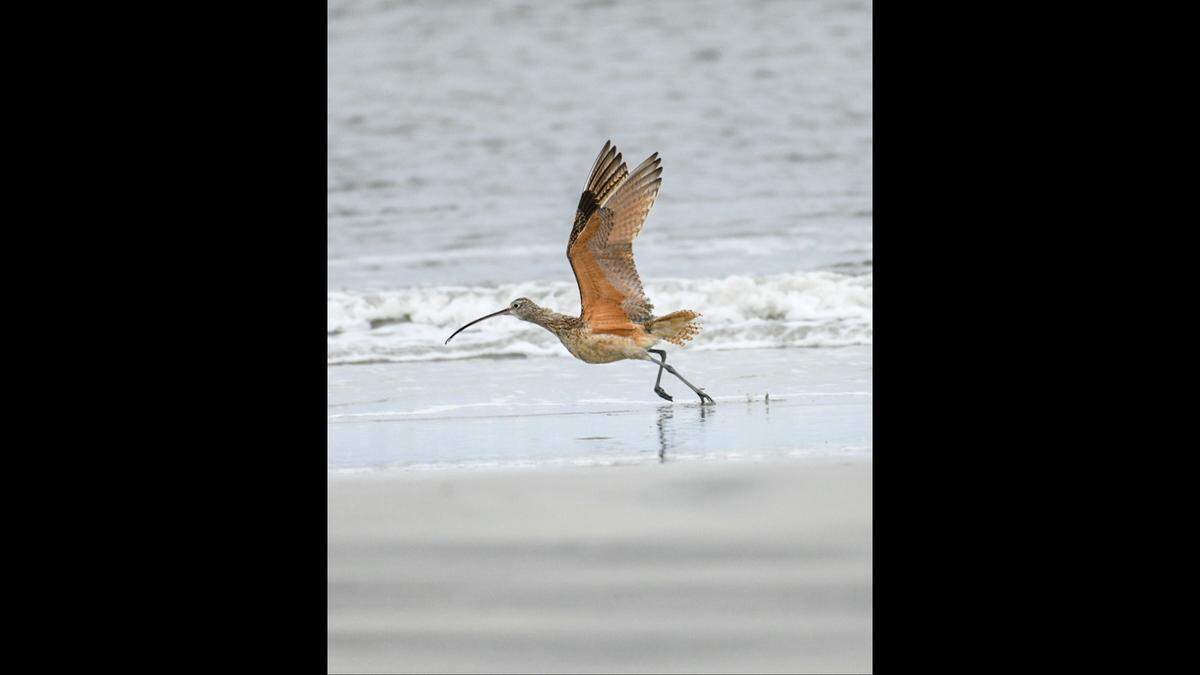
Shorebird with ‘comically long’ beak makes rare Lowcountry stop. ‘Oh. My. Goodness.’
A shorebird with a “comically long” bill thrilled bird lovers for weeks when it unexpectedly turned up on Harbor Island east of Beaufort, before being summarily chased off the beach.
It was a long-billed curlew, which is a rare sight in coastal South Carolina these days, says Jenn Clementoni, who heads the South Carolina Bight Birding Center in Port Royal.
Clementoni had been waiting five years to see one on Harbor Island, where she lives.
The unusual winter visitor first turned up on the 1,400-acre barrier island around Christmas.
Clementoni captured the bird in action as it strutted past seagulls on spindly legs like it owned the beach, stabbing the sand with its long curved bill as it hunted for food. She was shocked and thrilled to document its visit which included one photo of it gobbling up a shrimp.
“Long. Billed. Curlew,” the stunned Clementoni can be heard saying as she filmed. “Oh. My. Goodness.”
Clementoni and others were disappointed when an unleashed dog chased off the stranger Feb. 19.
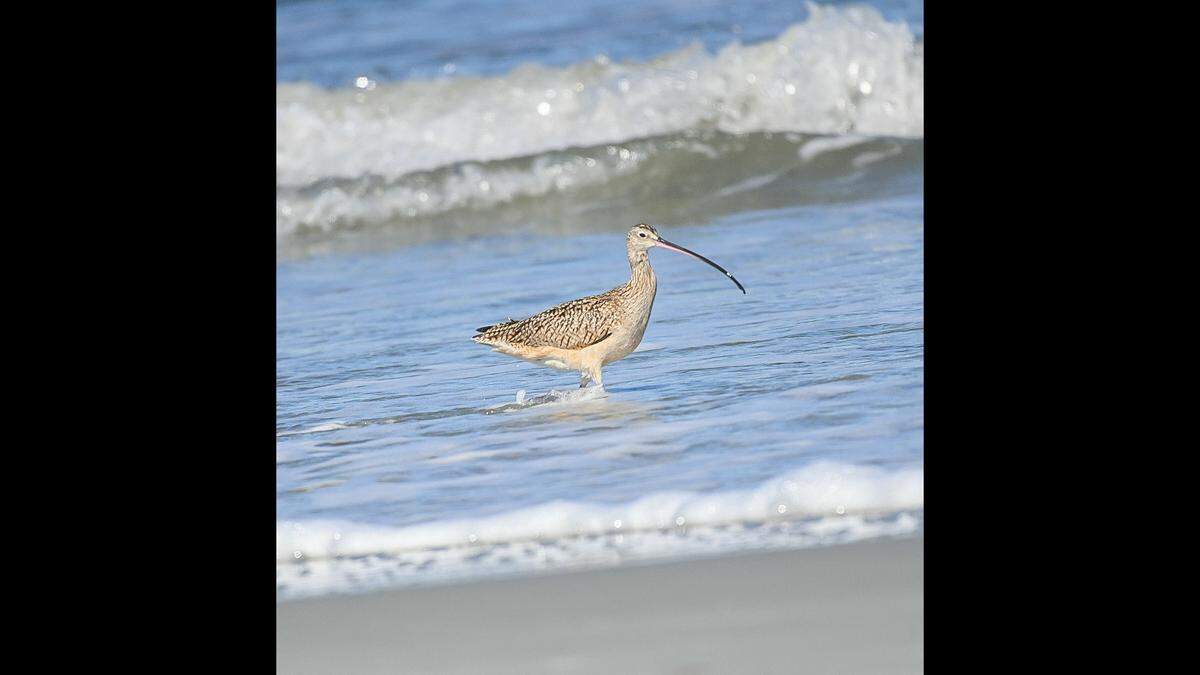
To the untrained eye, long-billed curlews can be mistaken for smaller Hudsonian whimbrels, which also have long bills.
But long-billed curlews are the largest shorebird in North America, boasting bills that can grow up to 8 inches. The long, downward-curving bills are used to probe mud and sand for shrimp and other crustaceans as the birds prowl in shallow water.
.jpeg "curlew and shrim_fitted (1).jpeg")
Long-billed curlews spend summers in areas of western North America with sparse, short grasses, according to the world-renowned Cornell Lab of Ornithology, which is tied to Cornell University in New York. They winter on the coast and inland Mexico.
They were once common along the Atlantic coast in winter, including South Carolina. John James Audubon, the father of American ornithology, painted a water color of the long-billed curlew set against the Charleston skyline in 1831.
Today, sightings of wintering long-billed curlews on the coast of South Carolina are infrequent, Clementoni said.
“They’re West Coast birds primarily,” said Clementoni.
To her knowledge, the sighting of the Harbor Island bird is still the only one that’s been reported in the state this year, Clementoni said.
Three years ago, one was spotted on Parris Island. A small population also is known to winter on Edisto Island, which is just north of Harbor Island, Clementoni said.
For years, she said, she’s almost been willing one to show up on Harbor Island. When one did, Clementoni sent out a “life bird alert.” That’s when birders notify others when they see a species they have never seen before.
Maybe the long-billed curlew on Harbor Island got blown off course, Clementoni says. Maybe it’s young.
“Sometimes, with young birds, they can miss migration cues,” she said. “They usually use the stars as cues for migration.“
The bird remained in the area in the weeks that followed, with Clementoni calling its arrival and brief stay on the local island “a true gift to many.”
But the curlew hasn’t been seen since Feb. 19, when a person unleashed a dog that gave chase to beach birds including the long-billed curlew, Clementoni said. While the incident caused frustration among area birders, Clementoni is calling it a “teachable moment” about the Beaufort County’s leash law. The law, which requires dogs to be leashed at all times except on personal property, is for the protection people and pets but wildlife as well, Clementoni said.
“When birds see a dog, it’s like us looking at a dinosaur,” she said.