St. Francis Center’s iconic sign is gone. But it’s still open — despite the rumors
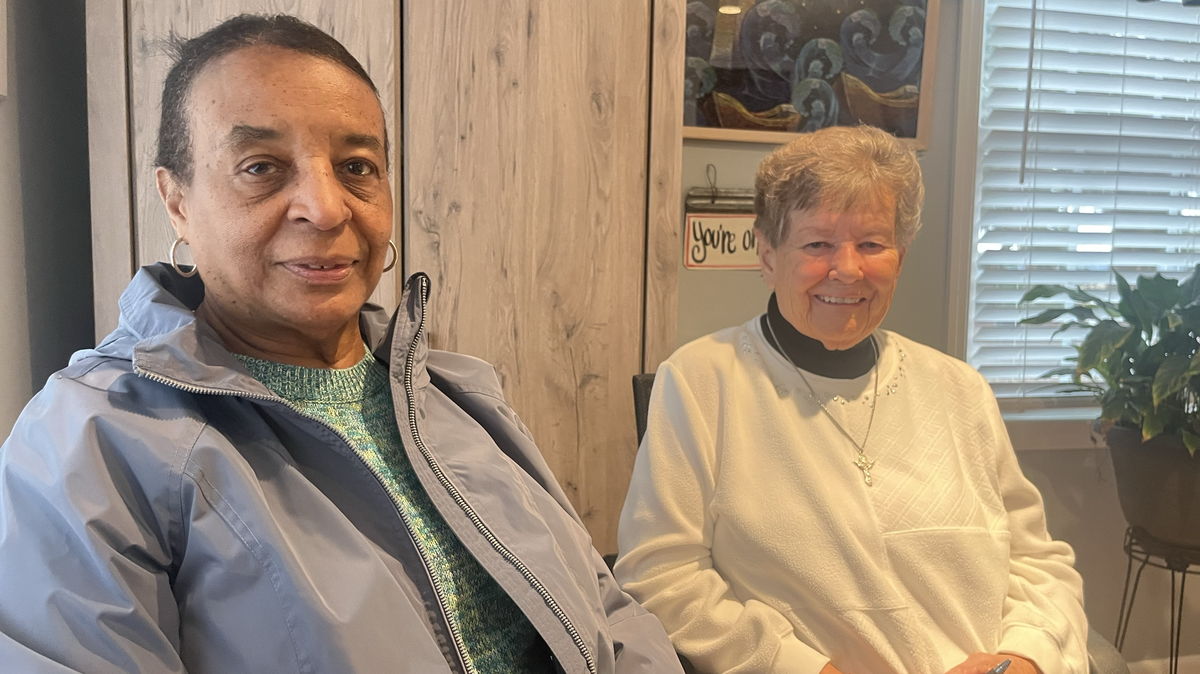
The mission of the St. Francis Center on St. Helena Island, a ministry of Catholic sisters with help from dozens of volunteers, is keeping residents and migrant workers of northern Beaufort County on their feet with donations of food, clothing and money for home repairs.
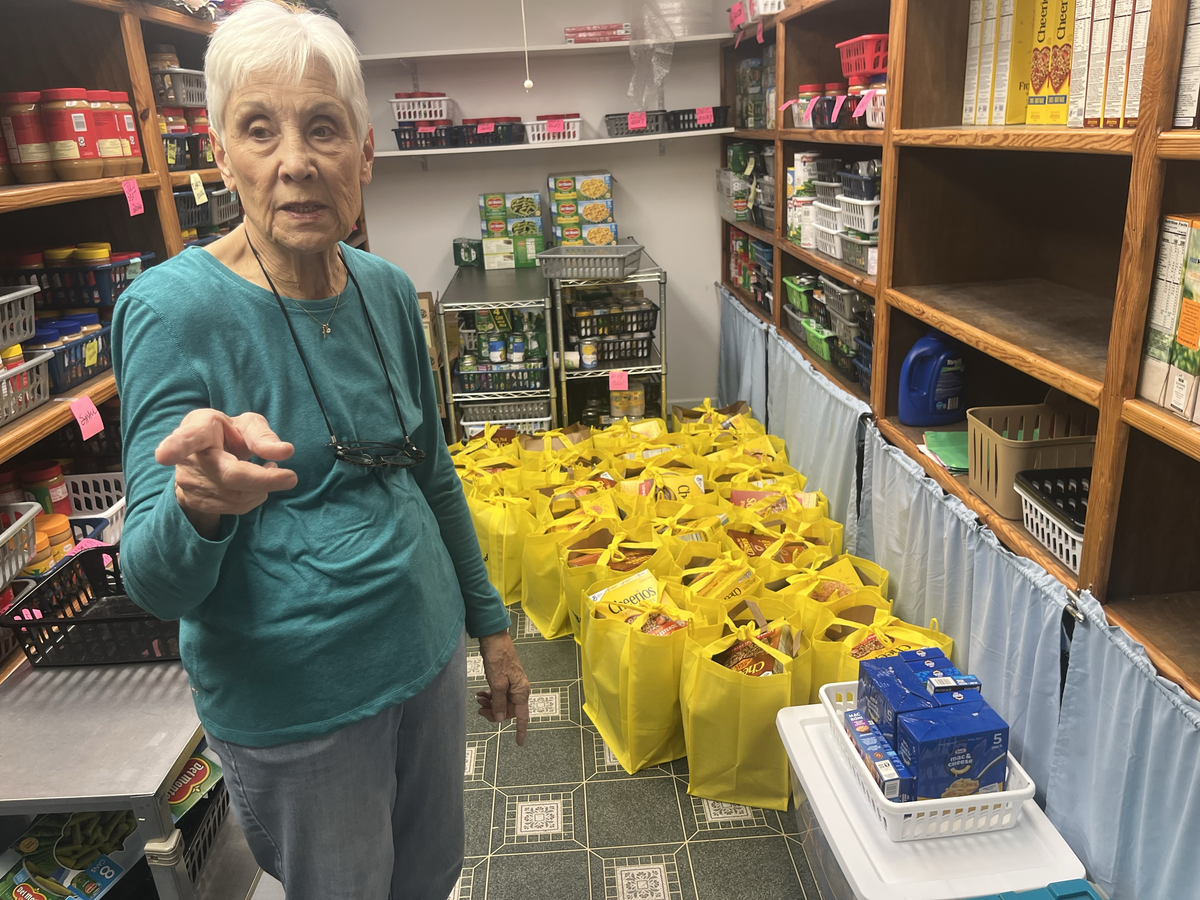
More than 10,000 families and individuals benefitted from its food pantry last year alone.
“If there is a need, we really try to help to cover the need,” said Sister Canice, whose calling to serve the poor brought her to the center 13 years ago. “And there’s so many needs out here. If we close down, that’s it.”
Sister Canice and others at the center are assuring the public the island’s charitable institution is not closing its doors in the wake of an unusual situation that resulted in its iconic sign, posted for 16 years along Sea Island Parkway, mysteriously disappearing the second week in January.
Once the sign came down, calls came pouring in to Sister Canice. Clients began wondering, is the out-of-the-way charity located on the banks of a St. Helena salt marsh finished? The answer, says Bill Libert, a member of the center’s board of directors, is, “We are wide open. We are doing business and we have no plans for closing.”
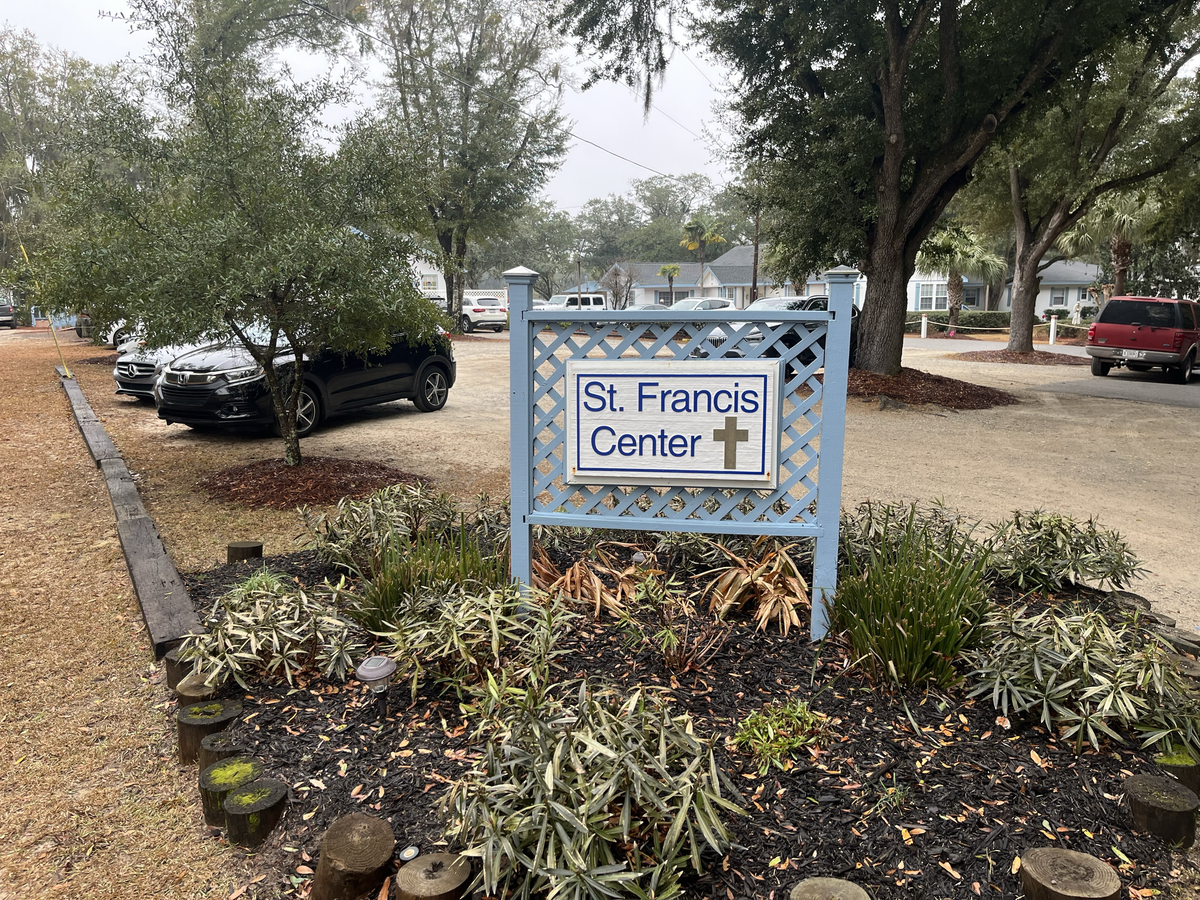
Why the St. Francis Center sign came down
St. Francis is run by three sisters with the Sisters of Saints Cyril and Methodius and 80 volunteers from all walks of life and denominations. It relies entirely on financial and food donations from individuals and area churches.
The collaboration results in an organization that punches above its weight, spending some $500,000 yearly. The funds don’t just go for food and clothing. Housing assistance is provided to keep people from becoming homeless. Ramps are built to keep the elderly in their homes. Air conditioning units are purchased to keep those without from possibly dying in the sweltering Lowcountry heat. The center meets the native islanders and a significant immigrant population drawn to the area by agricultural work where they are at.
But a recent letter prompted confusion regarding the status of the important non-government social safety net.
It came from the estate of Lucinda Simmons just after Christmas on Dec. 28. Simmons regularly took advantage of the center’s services herself. She lived in a house near the center and had allowed St. Francis to display the sign on her land at 588 Sea Island Parkway rent-free.
But Simmons died in 2021 and effective Jan. 31, her estate said in the letter, St. Francis would be charged $300 a month, or $3,600 yearly, to display the simple sign that had alerted the public to turn off of busy Sea Island Parkway onto Mattis Drive to reach the center since 2010.
The St. Francis sisters were having none of it and wouldn’t sign the contract. Instead, the sign was removed with Sister Canice and Libert concluding paying rent would come at the expense of the center’s mission of helping people.
The 6-foot-tall sign, located on a 3-square-foot plot, featured the charity’s name and a cross and served as a beacon of sorts and removing it wasn’t taken lightly. Frankie Middleton of Port Royal, a supporter of the center, notes a number of newcomers rely on the center, including migrant workers who don’t speak or read English and may not own a smartphone with GPS capability.
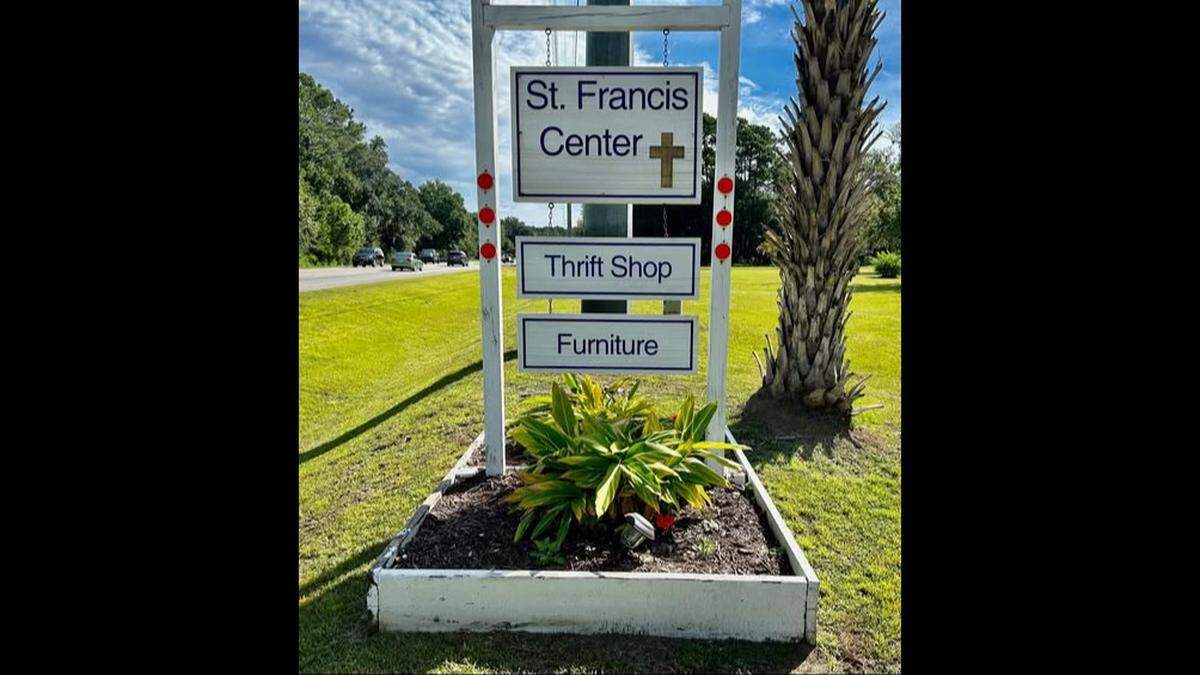
“Having that sign out there is pretty essential to delivering services,” Middleton said. “I know the work they do, and I want it to continue at the same level they’ve done for a long time.”
Where will the sign go now?
The center is now on a mission to find a new location for the sign, but it is not as simple as it might seem, Sister Canice said.
Simmons’ estate owns the land across Sea Island Parkway as well so moving it there is not an option.
The center is in talks with another landowner, but its property is located farther from the Mattis Drive turnoff. On the plus side, two 4-foot-tall, 36-by-18-inch signs would be allowed, one on each side of the turnoff. Permits are needed from Beaufort County. A meeting is scheduled later this month, Sister Canice said.
In the meantime, Sister Canice emphasizes, St. Francis is open for business as usual.
The St. Francis Center’s history
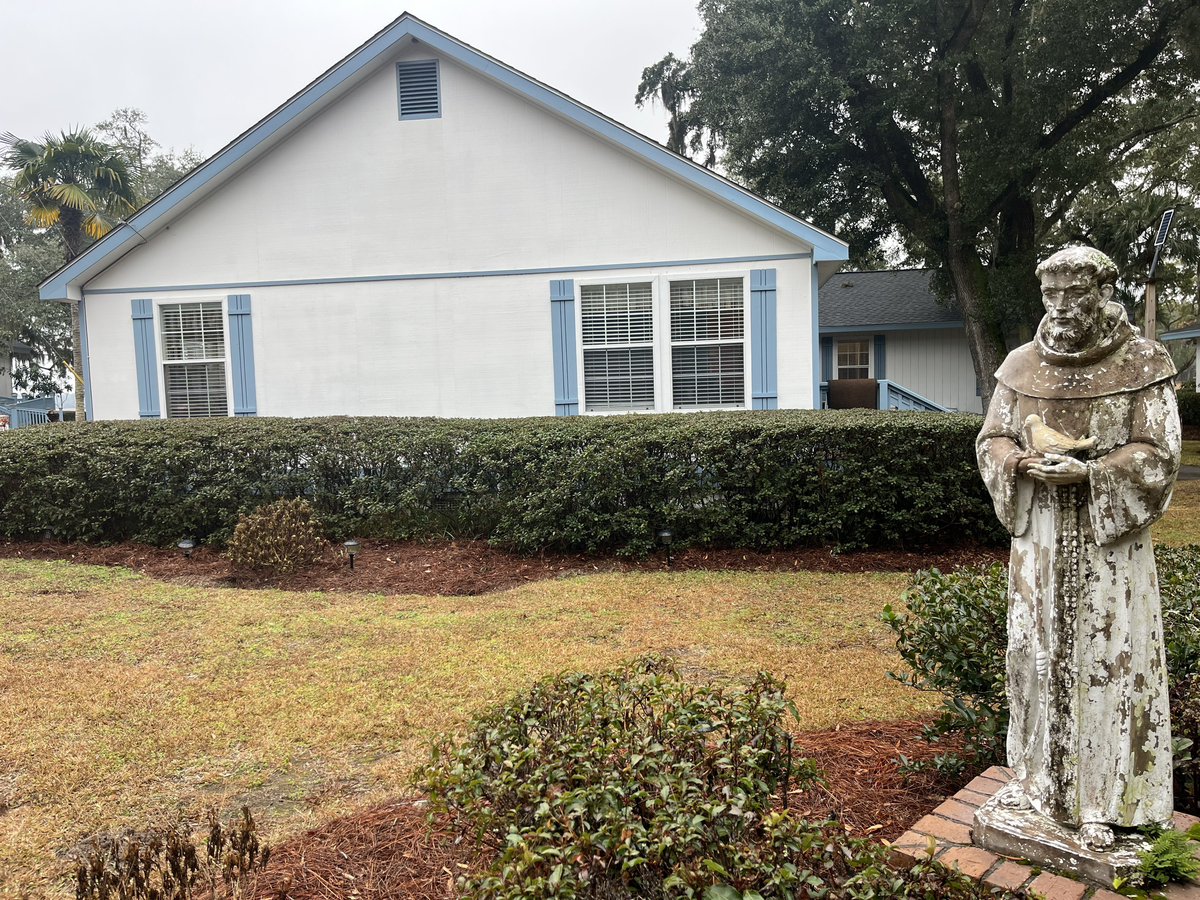
The ministry was founded in 1983 by Franciscan sisters from Wisconsin who were succeeded by a lay couple and then sisters of St. Francis of Philadelphia in 1987. Since 2013, the Sisters of Saints Cyril and Methodius of Danville, Pennsylvania, have run the center, which is located on property dotted with live oaks and palmetto trees near an expansive marsh at the end of the road.
On a recent Thursday, people lined up on the sidewalk waiting to pick through boxes of breakfast cereal and other food items displayed on tables. A volunteer carried grocery bags to cars. A pantry was filled with jars of peanut butter and other non-parishable items. At the thrift store, volunteers inspected and priced items. Rosary beads hung on an over-the-door hooks in the chapel.

Last year, the center’s food pantry serviced 3,671 families and 6,759 individuals. Another 3,800 took advantage of Second Helpings, a non-profit that delivers food collected from grocery stores for free to places like the St. Francis Center, to feed those in need. The center provided an additional $12,000 in special food and gift cards and $6,500 for migrant workers to purchase food.
“It’s the food and security issue we address on our level,” Middleton said. “They don’t need to be on public assistance. They just show up with a bag.”
The biggest program besides food distribution is home repairs, Sister Canice said.

In the last fiscal year, St. Francis funded emergency repairs for elderly and disabled homeowners including 20 roofs, 16 ramps, 11 floors and eight doors. It provided $42,000 in utility assistance and another $8,360 to provide temporary housing. It’s already provided $30,000 to put up people in hotels this year because of fires and storms.
An initiative called “operation breathe easy” was launched last year involving the purchase of 1,025 air conditioners for the elderly, people with medical conditions and families with children relying on ceiling fans in sweltering heat.
Now St. Francis is on a mission to raise funds to purchase recliners with devices that will allow the elderly to elevate their swollen feet and give them a boost in getting up. In soliciting donations, the center cites Jesus’ admonition in Mark 10:21 for a rich man to sell his belongings and give to the poor when he asked what more he could do to inherit eternal life.
“This organization fills in the gap,” Middleton says.
Sister Canice is the face of the organization. A photograph of her holding a bag of food graces the side of the mobile food trailers that churches park on their property to encourage donations.

She’s known for trying to create simple acts of good she calls “holy moments” and a philosophy that says everybody “should have something nice.” She’s also described as a straightforward leader with a gift for listening and fundraising.
“If I have a name I’ll call them,” she says with a smile about potential givers. “’Hello? This is Sister Canice.’”
In a typical year, the center needs $400,000 to $500,000, and sometimes $600,000, to meet the needs of the community. All of that funding, says Sister Canice, returns to the programs because nobody a the center is paid.
Sister Canice had been the principal at St. Gregory the Great Catholic School in Bluffton for eight years when she was encouraged in 2013 to make a career change. “I heard this voice say, “It’s over.” Three times. Her pastor told her to go see the bishop, who said, “’God says you need to work with the poor.’”