120 years ago, the Beaufort Jewish community built synagogue in the Bible Belt. It still stands
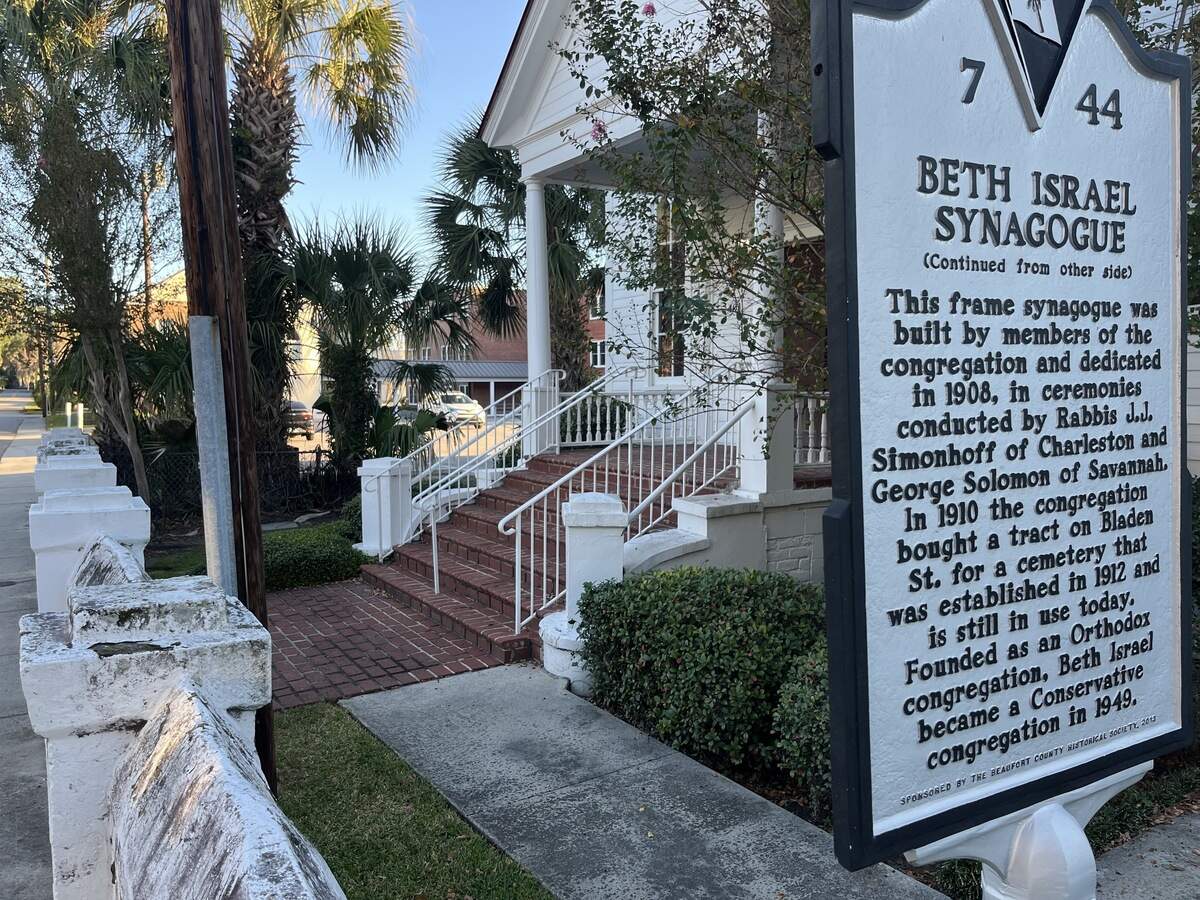
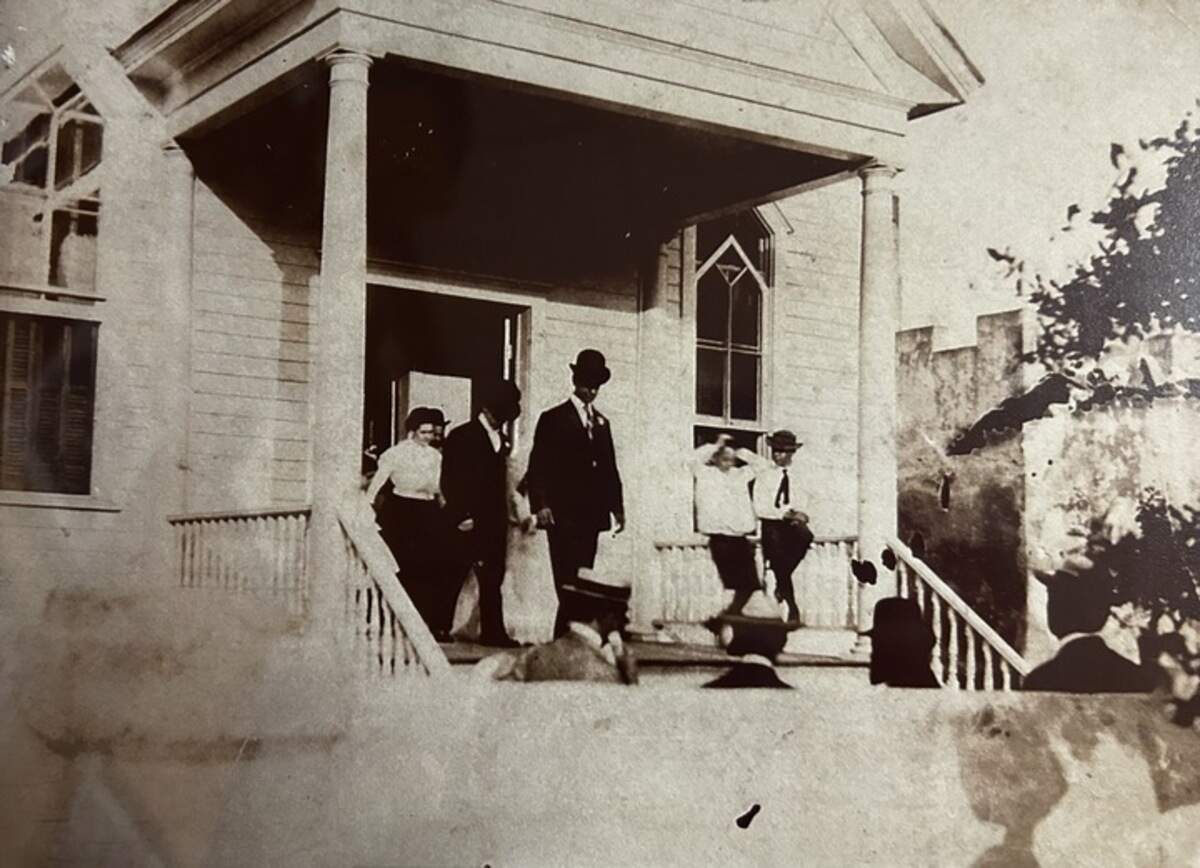
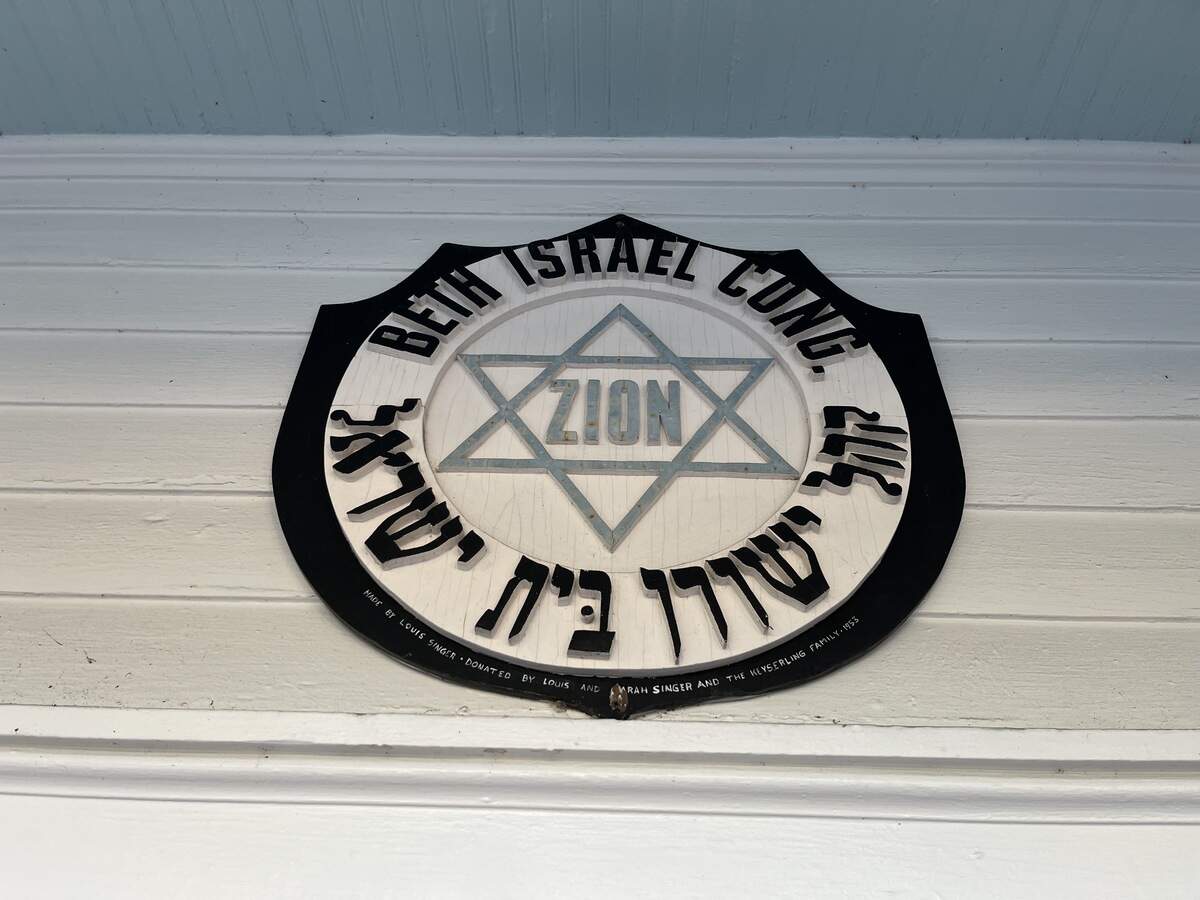
The white wooden building with a pitched roof and red brick steps looks like any Christian church in Beaufort. But a Star of David, not a cross, marks the entrance above the front doors.
It’s no accident that Beth Israel Synagogue at 401 Scott Street has blended into the city’s religious landscape for generations, says Linda Neidich Hoffman of the Beaufort County Historical Society and a long-time Beth Israel member.
Many of its founders hailed from Eastern Europe and Russia, where attacks on Jews, known as pogroms, were not uncommon. They recalled the targeted violence when they set about building a synagogue in the Bible Belt in 1905.
“The synagogue was built to look like churches,” says Hoffman. “They wanted the synagogue to look on the outside like other houses of worship so they didn’t stand out.”
This month, the small but hardy congregation of Beth Israel is celebrating the 120th anniversary of the temple that could pass for a church on the outside. The synagogue has become a historic institution in a southern city where Baptist, Methodist and other Christian denominations are the norm.
“Beaufort and the South in general were very welcoming to the Jews -- the people of The Book, the Bible,” Hoffman says.
The early Jewish families sought a charter from the state of South Carolina to build the synagogue where they could gather and hold worship services. It was granted in 1905. Construction took three years. The temple opened for services in 1908, and they’ve been held continually ever since.
“And that’s pretty remarkable,” says Lydia Mandel, who heads programming at the synagogue. “I, personally, think it’s amazing in these little towns in South Carolina there were synagogues all over the state. And this one is still going.”
That length of time Beth Israel has held continual services makes it one of the oldest houses of worship in the city.
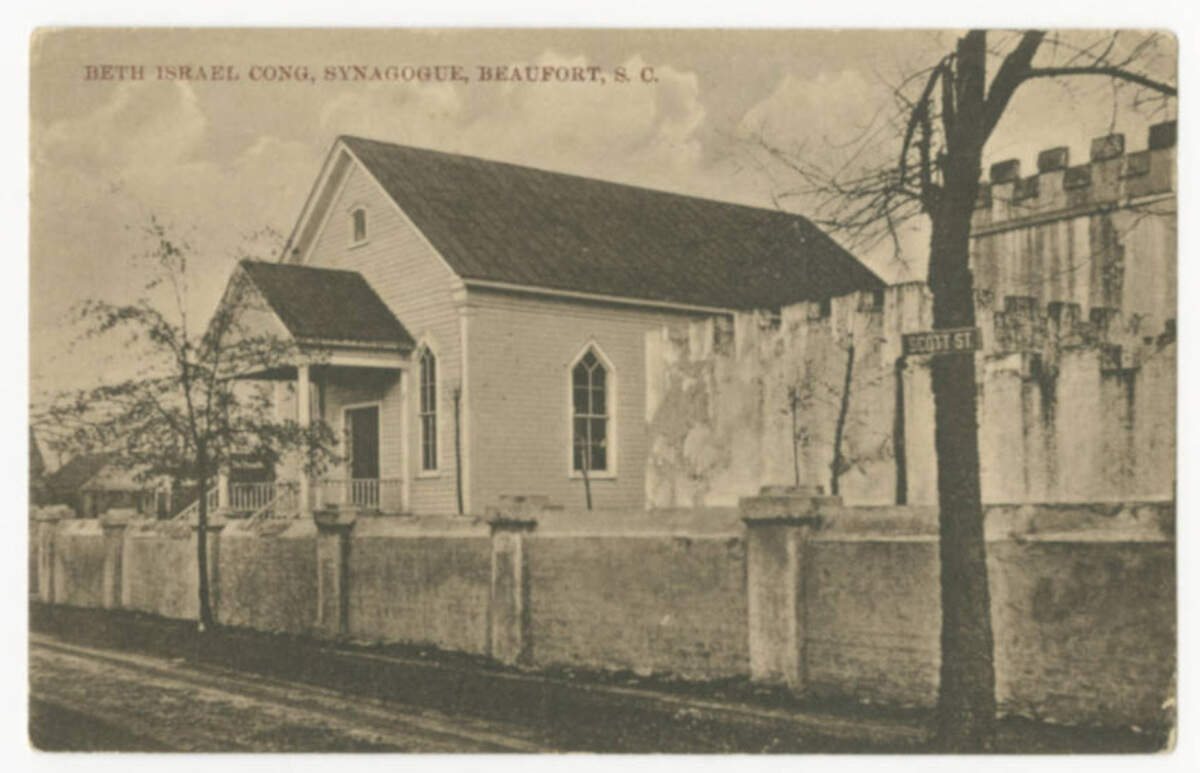
The synagogue, Mandel adds, “is essentially the same wooden building they built in 1908.”
Some members of the current congregation are descendants of the founders who had family names such as Levin, Keyserling, Mark, Schein and Lipsitz.
Congregation members thought of the traditional Jewish blessing, “Ad meah v’esrim” in Hebrew, which is a wish for a long life or “until 120 years,” when they began considering a celebration to mark 120 years.
“We can now wish for another 120 years,” Mandel says.
Beth Israel is a conservative denomination as opposed to orthodox or reformed.
Over the weekend, the congregation was planning to serve a congratulatory cake that says “Mazel tov,” Beth Israel, along with that traditional Jewish favorite of bagels and cream cheese. Serious public discussions about the state of Jews in South Carolina and the early families who founded the Beaufort synagogue were also planned.
Individual Jewish residents were living in Beaufort as far back as the mid-1760s but a continual presence of Jewish families dates to the 1780s.
Many were Eastern European and Russian immigrants from larger cities such as New York who were looking to settle in smaller towns that were similar to villages where they grew up, Hoffman said.
One of the pioneers was Abe Rudowitz of Odesa, Russia, Hoffman’s grandfather, who was looking for a place where he could open a store and hunt and fish and found it in Beaufort. Rudowitz’s son-in-law, Sol Neidich, who was Hoffman’s father, became a well-known physician along with another son of a Jewish immigrant, Dr. Herbert Keyserling. Keyserling’s son, Billy, became the city’s second Jewish mayor, serving from 2008 to 2016. The first was David Taub, who was mayor from 1990 to 1999. Jules “Buster” Levin, another member of the congregation, was the architect of the Naval Hospital Beaufort and Robert Smalls High School.
These days, the congregation is small, about 85 families, and part-time Rabbi Stephen Stern oversees regular Shabbat services every other Friday evening and Saturday morning. But after years of dwindling numbers, the synagogue has undergone a recent resurgence thanks to the arrival of several new young families.
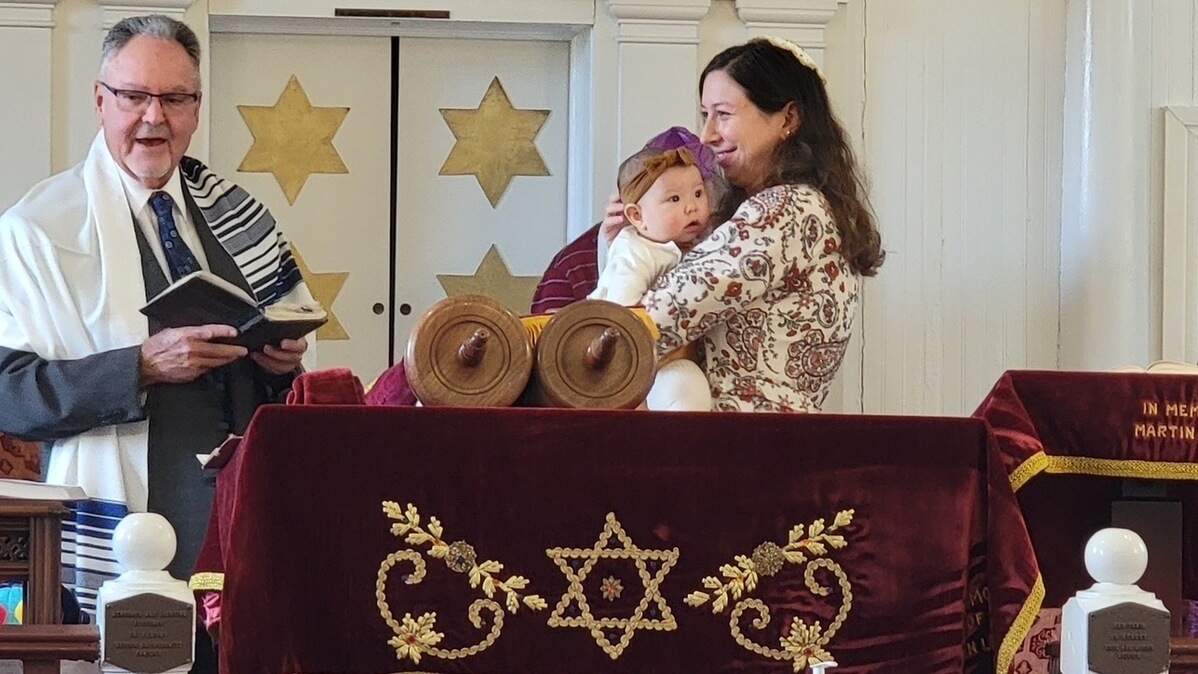
A baby naming ceremony was conducted in 2023. A bar mitzvah followed this year. The congregation is now considering reinstating religious instruction. Some 15 to 20 people regularly attend services, up from a handful five years ago.
Hoffman, for one, is grateful. Declines in Jewish populations in many small southern towns have resulted in synagogues closing, says Hoffman, who remembers the Beaufort synagogue being packed during High Holiday services when she was growing up.
The region’s growth and the beauty of Beaufort is credited with attracting young families invigorating the congregation.
“That old saying, ‘Location, location, location?’ says Hoffman. “We have it.”
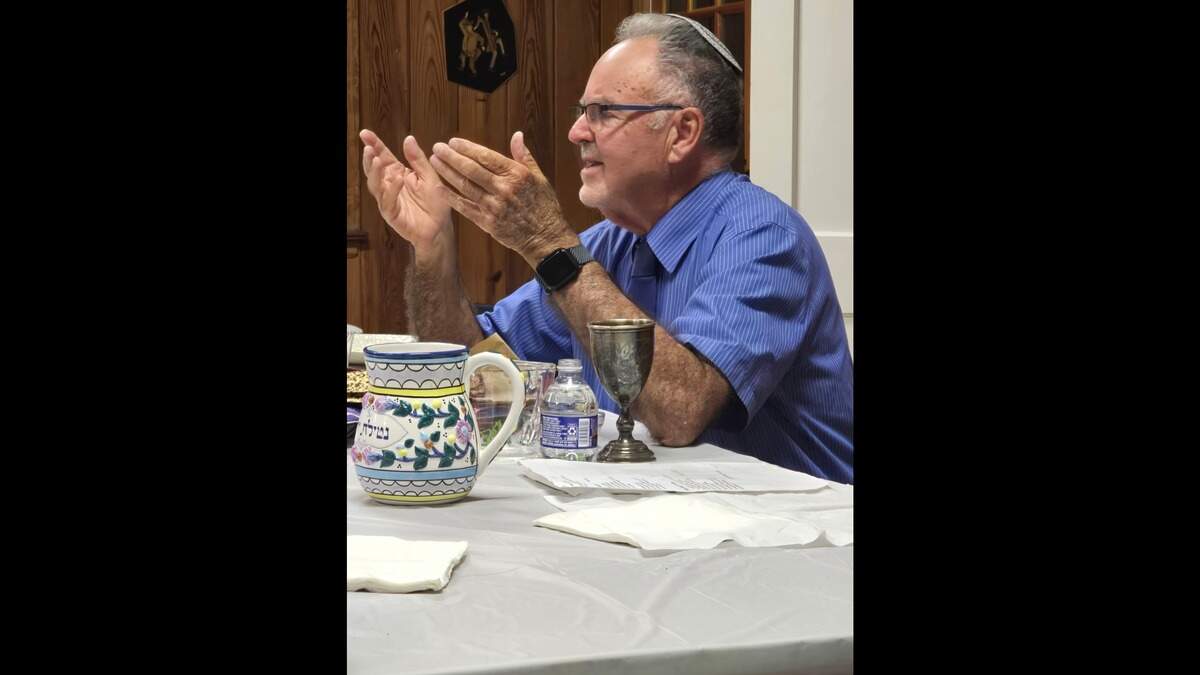
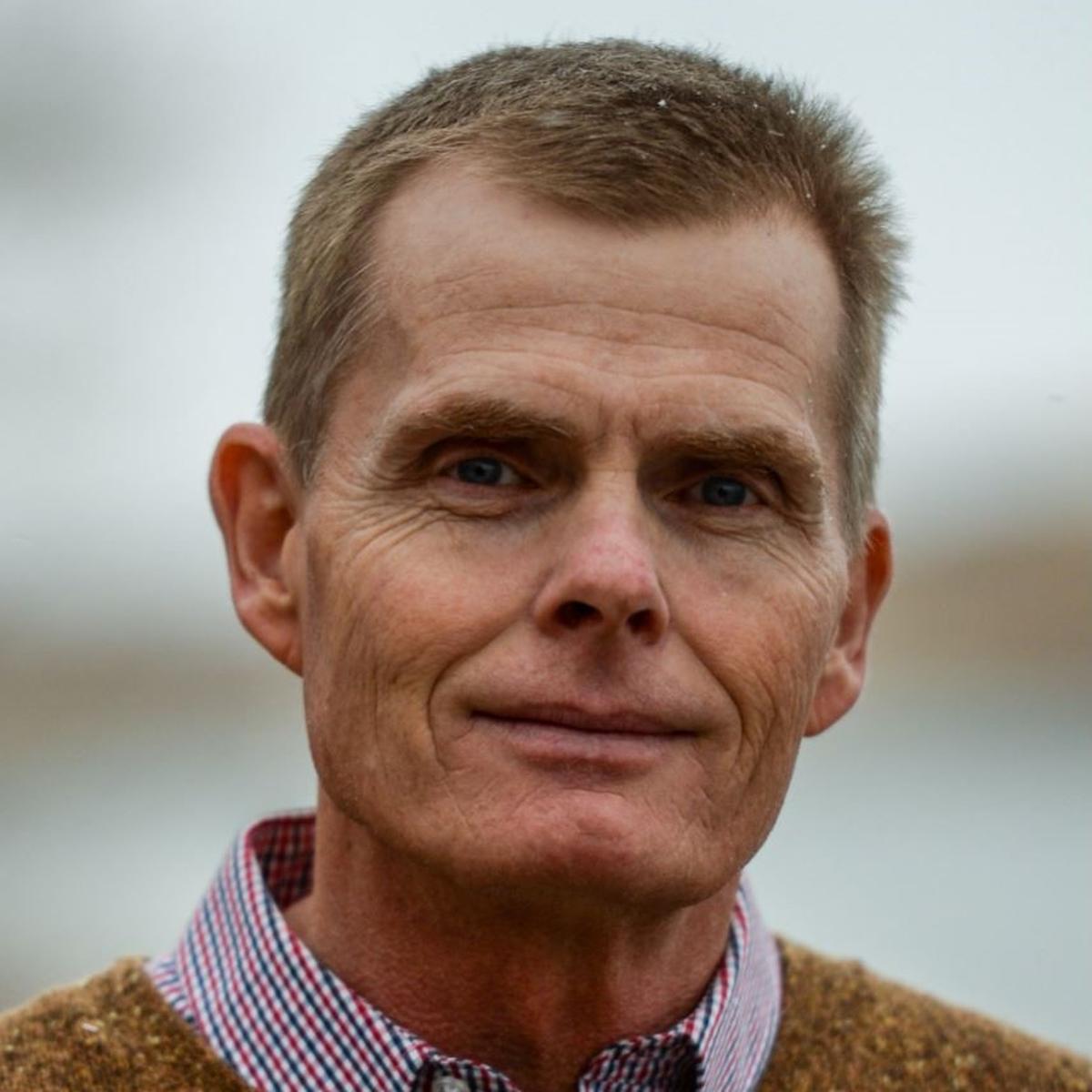
The local synagogue already has what Rabbi Stern calls “heimish,” a Yiddish expression meaning homey, warm, friendly and unpretentious. For 30 years, Stern was the rabbi at a much larger congregation in New York City’s Staten Island before retiring and moving to the South where he took on the rabbi’s duties part-time at Beth Israel. Without the numbers of a larger synagogue, Stern says, each member at the Beaufort synagogue has a sense of responsibility to maintain the synagogue “and put its best foot forward.”
Leading the southern Jewish congregation has been an adjustment for the fast-talking Stern.
“I just had to listen to the southern style, which is speaking slower and singing slower and being open to adapting to whatever the congregation needs,” he says.
But coming from a larger congregation, Stern adds, he’s been stimulated by the energy, camaraderie, tradition and history he’s found at Beth Israel.
At the recent bar mitzvah, the pews were filled.
“Now we’re actually thriving because we have new children, and of course old folks love children,” Stern said.
Learn more
The anniversary of the synagogue’s founding will be celebrated with a two-part program called L’Dor V’Dor, or “generation to generation,” this weekend, and the public is invited.
At 7 p.m. on Friday, Oct. 24, Linda Neidich Hoffman of the Beaufort County Historical Society and a member of the congregation at Beth Israel will speak about the five families that asked for the charter: Lipsitz, Schein, Mark, Levin and Keyserling. Larry Rowland, professor emeritus at the University of South Carolina Beaufort, will also discuss the history of the Jewish community in the area. Heavy appetizers and desserts will be served.
On Saturday, Oct. 25, Tair Giudice, CEO of the Charleston Jewish Federation, will give a talk at noon titled “Where are we now?” which will focus on the state of the Jewish community in South Carolina. Lunch will be provided. Services start at 10 a.m.
This story was originally published October 24, 2025 at 1:03 PM.