Beaufort’s promenade will remain closed for up to 5 years. Here’s 8 options to fix it
Does Beaufort want its beautiful waterfront on the river to be a park or a shipping berth or both? And how much flood defense is required to protect the shops and restaurants downtown from high tides and storm surges?
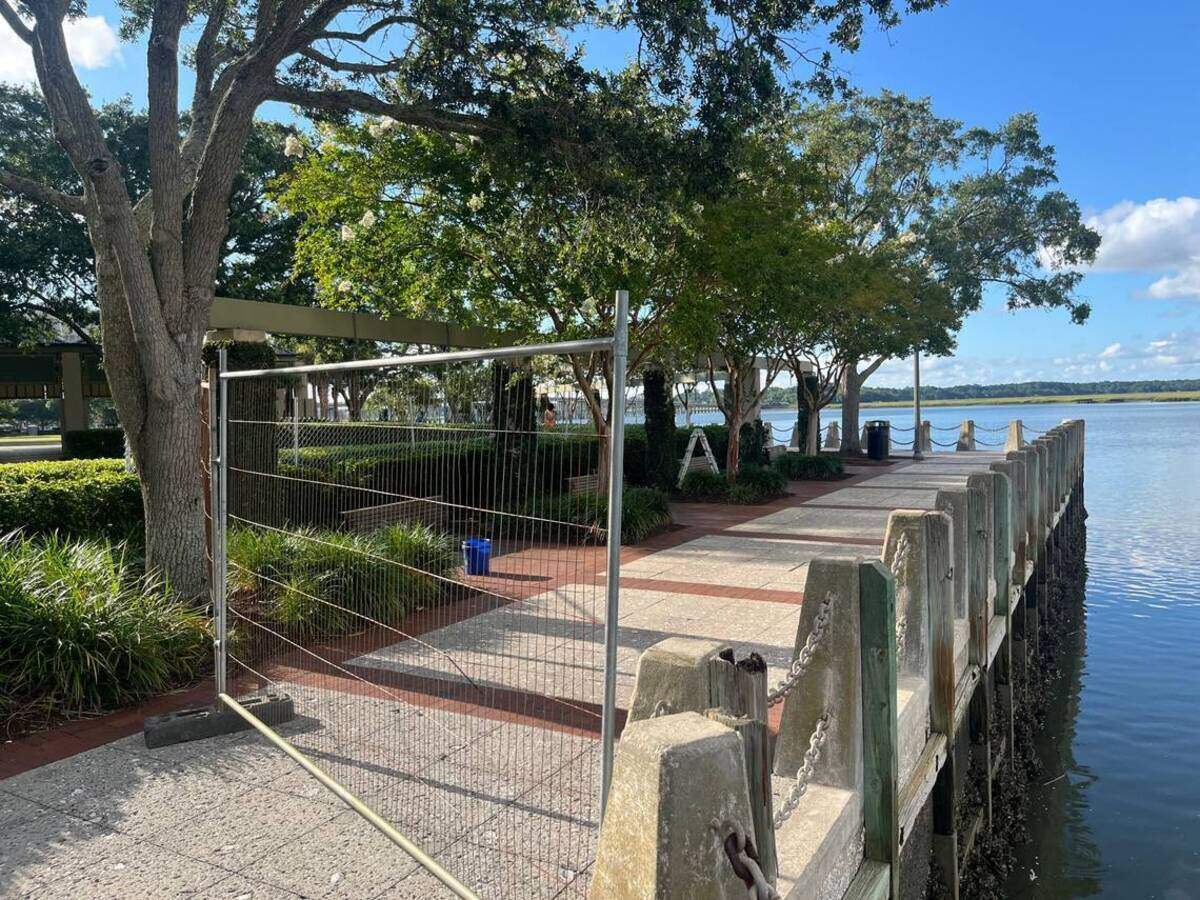
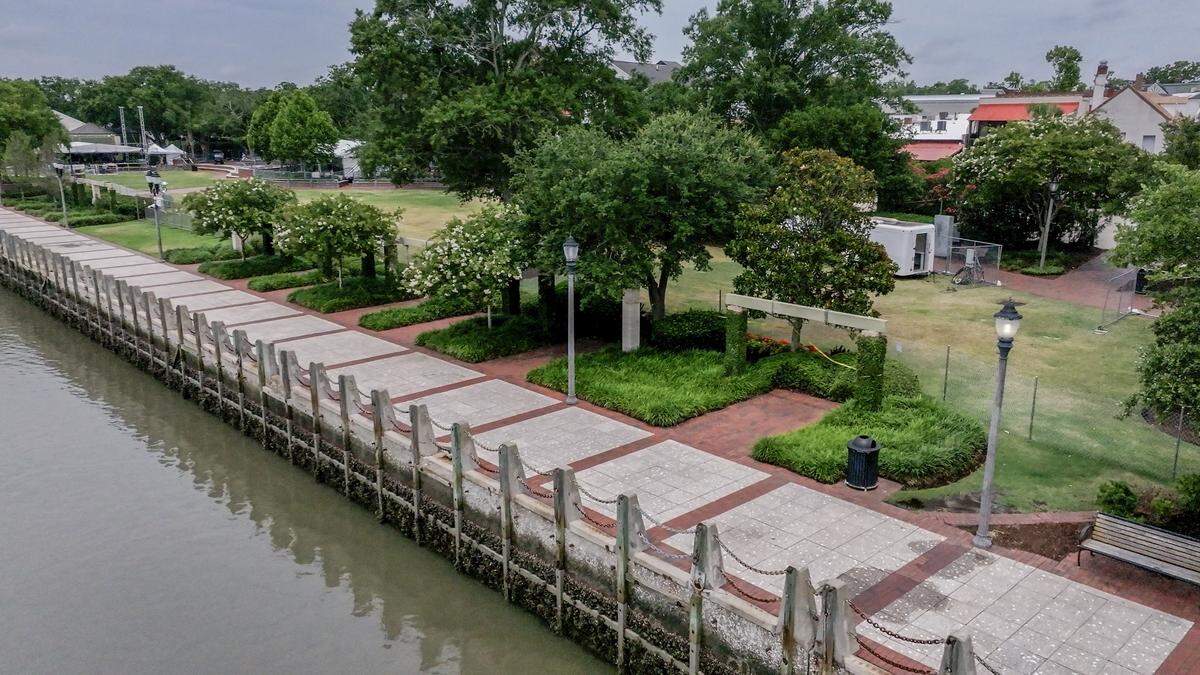
The answers to those key questions will determine how the city fixes its 50-year-old front porch, the popular promenade rimming Henry C. Chambers Waterfront Park, which has been closed to the public for three months. The path along the river will remain closed, possibly for up to 5 years, until the deck on which it sits, called a relieving platform, is replaced or repaired.
Local capital projects don’t get much bigger. While consultants say they can’t provide hard numbers at this stage, City Manager Scott Marshall has said previously that a triple-digit price tag of $100 million or more isn’t out of the question. Beyond finances, the park and the promenade are central to the city’s riverside identity and economy.
“It’s huge,” Bill Barna of McSweeney Engineers, a city consultant, says of the scope of the project.
Barna’s comments followed a nearly three-hour meeting on Wednesday when members of his consulting team presented eight options for fixing the waterfront to the City Council and a Waterfront Advisory Committee.
City officials agreed to narrow the focus to three of those alternatives. One is rebuilding a new relieving platform. A second option calls for building a seawall instead. A third would have the city getting creative and coming up with a hybrid structure that could involve floating docks. Barna and his team will now study those options and return at a later date to gather public input and ideas.
Here’s the problem
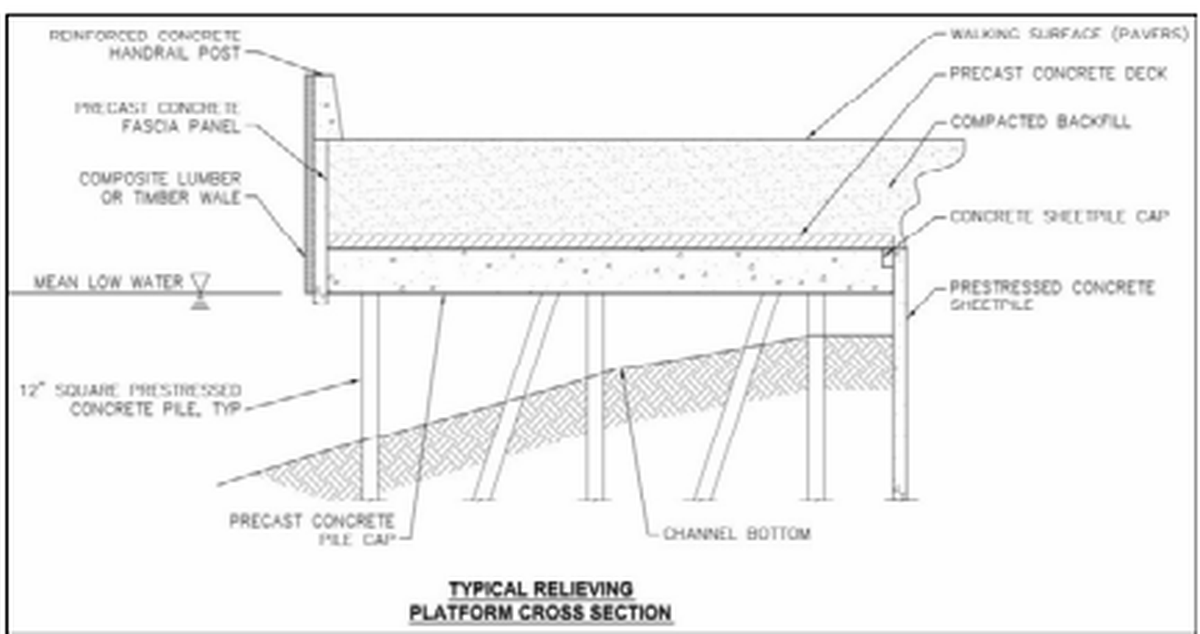
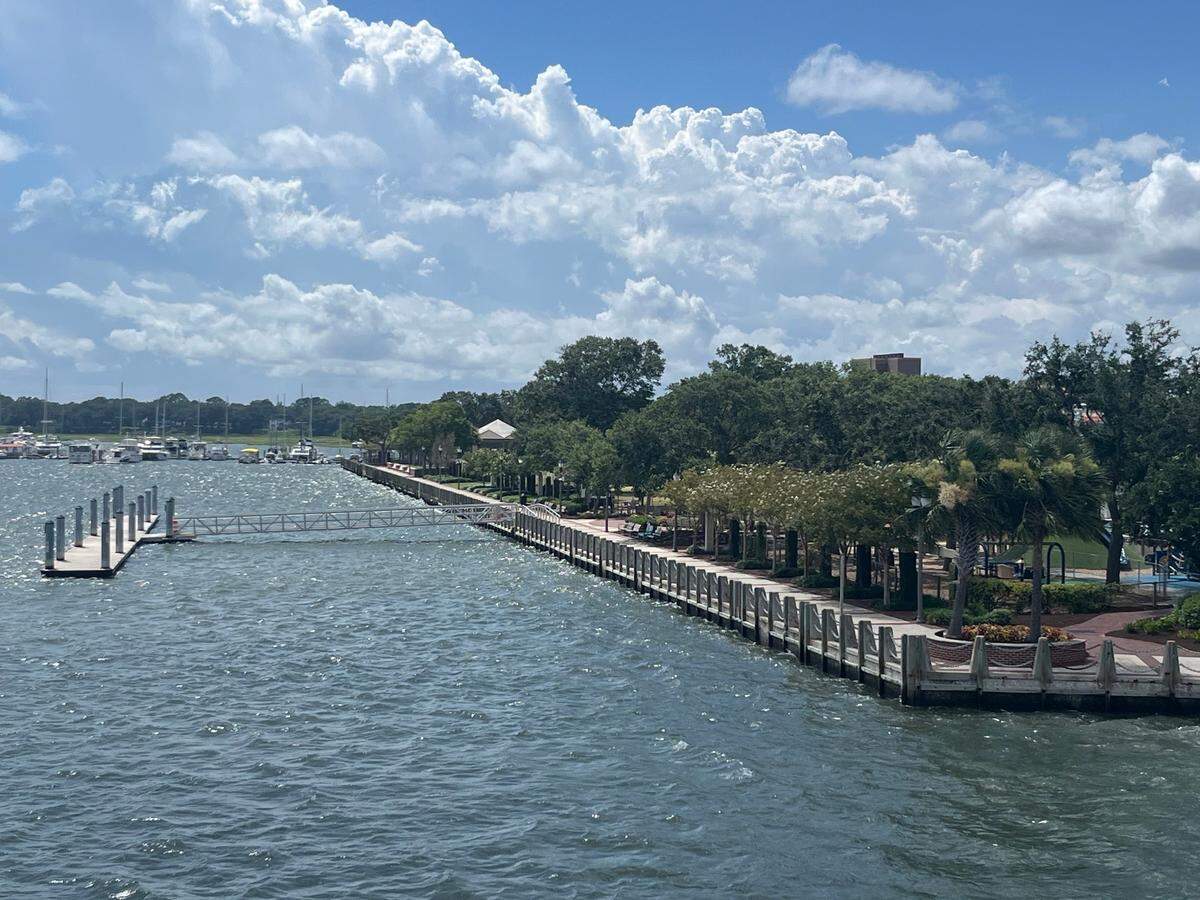
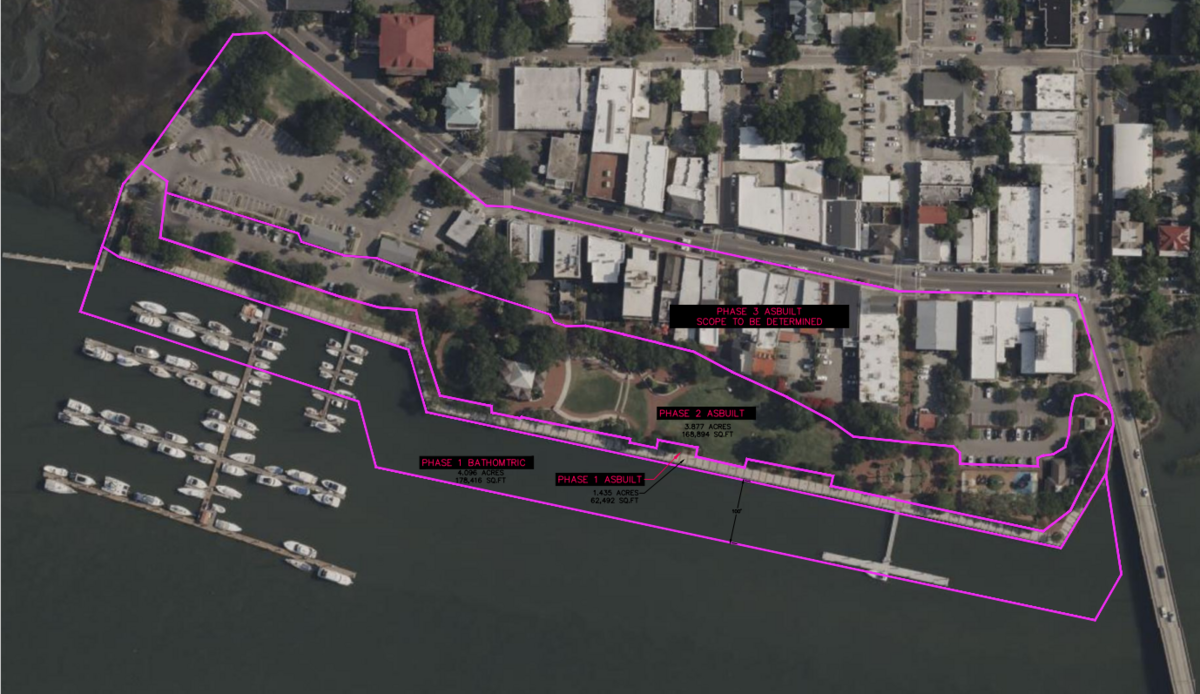
In April 2024, an inspection showed that many of the 570 concrete piles holding up a 36-foot-wide relieving platform underneath the 1,200-foot-long brick promenade were failing, putting the public at risk. Located just above the water, the relieving platform is a concrete deck covered with 6 feet of soil. Although it can’t be seen from above ground, it supports the promenade.
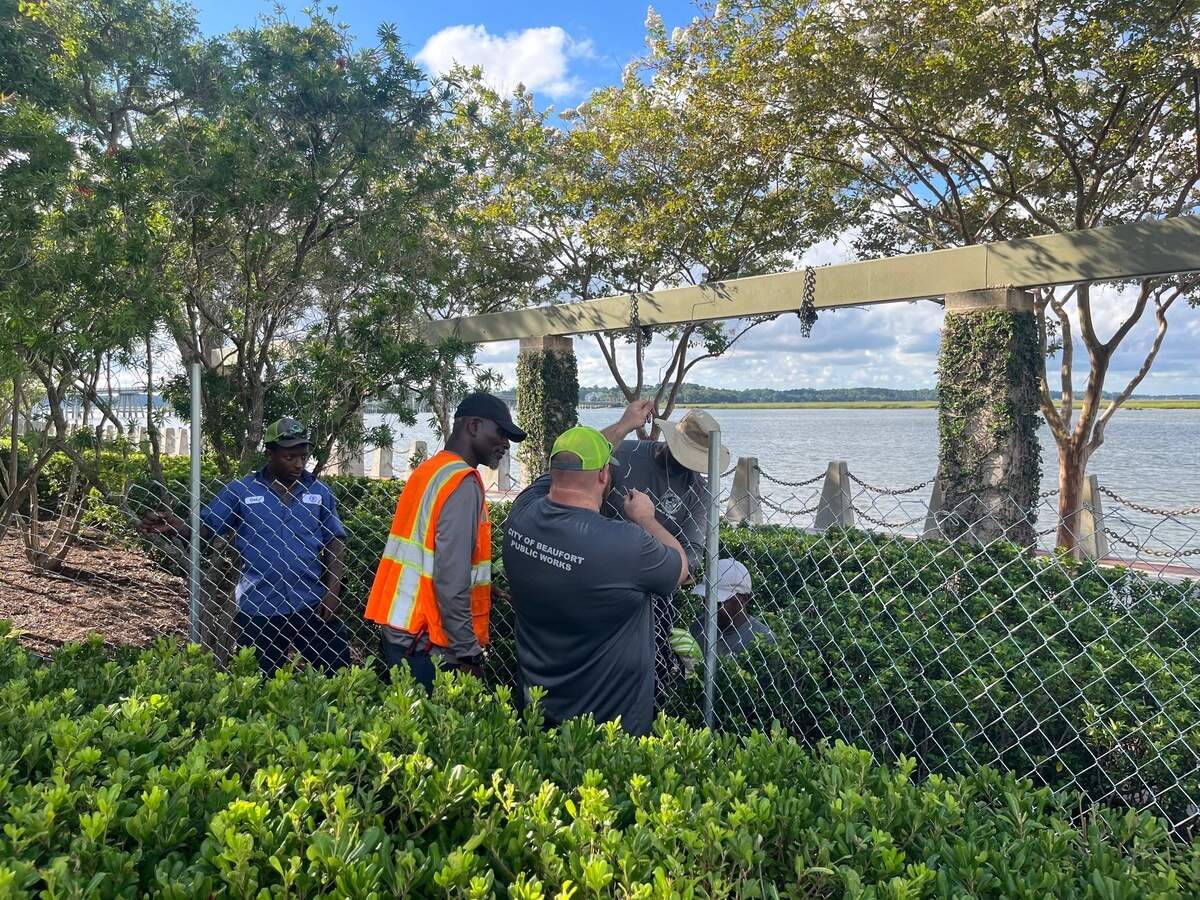
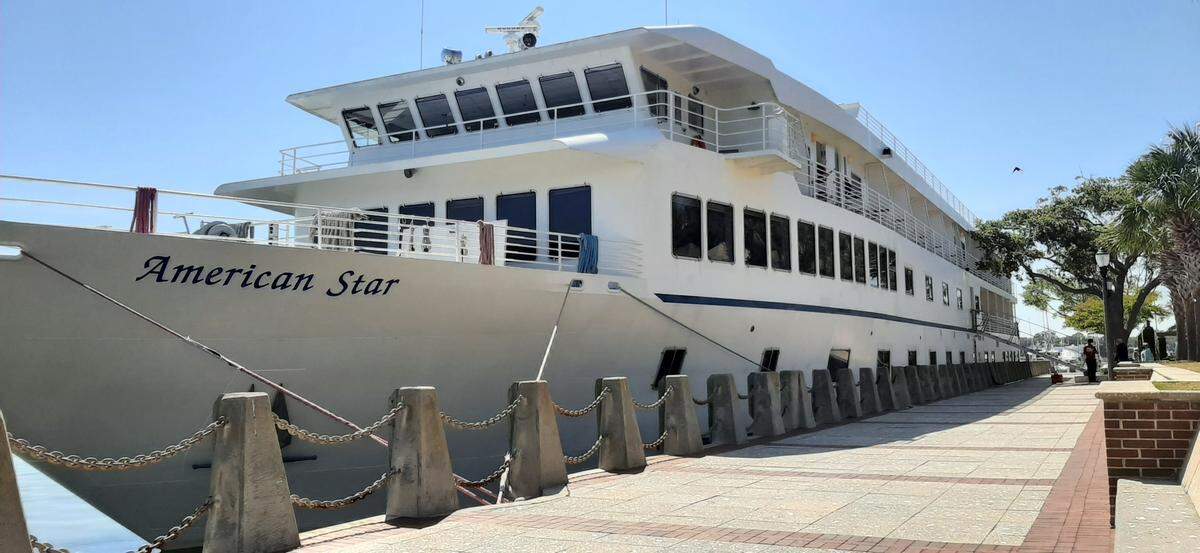
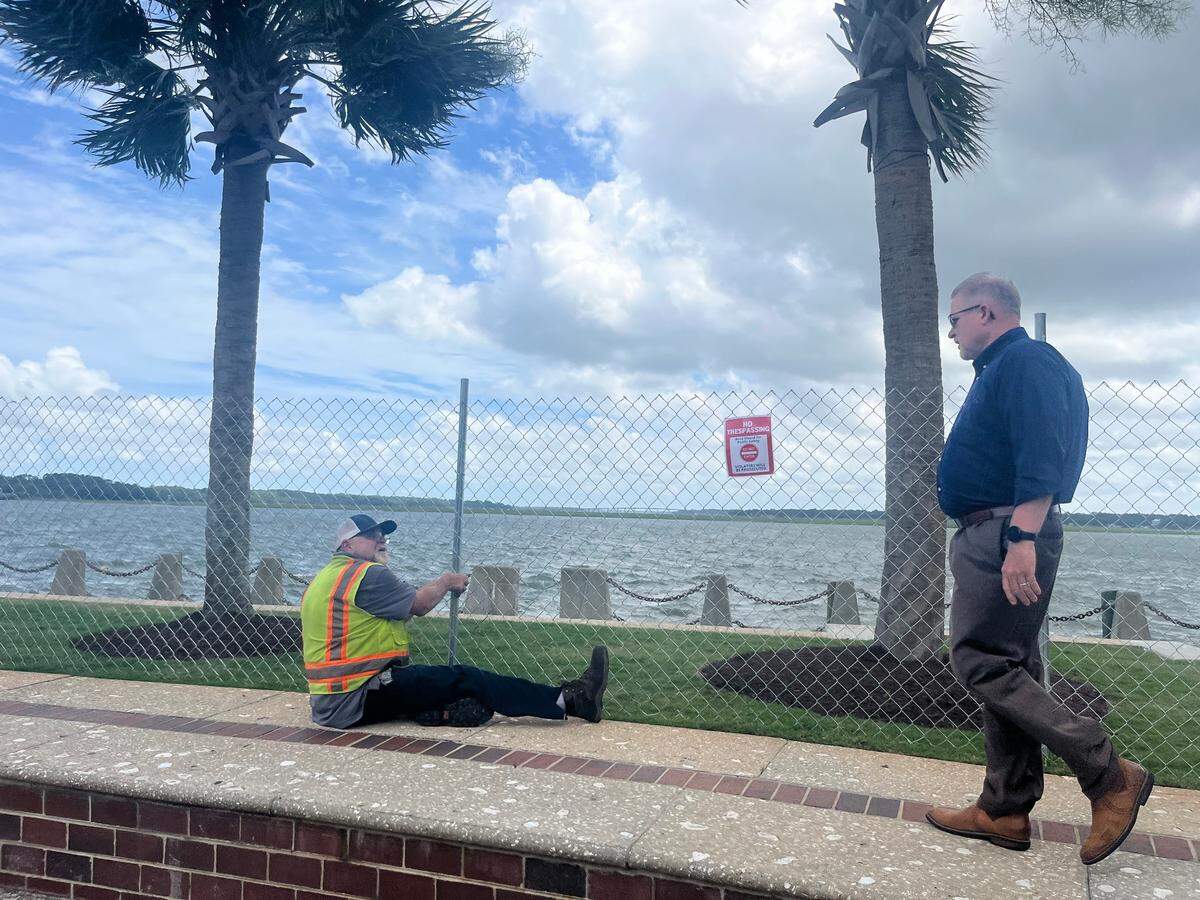
In July, on the advice of its engineers, the promenade was closed, blocking the public from one of the city’s most prominent downtown tourist attractions between Bay Street and the Beaufort River. The city previously ended docking by cruise ships because of the structural concerns.
The rest of the 7-acre park is constructed on fill and remains open to the public.
While the enormity of repairing or replacing the massive platform under one of the city’s best-known assets is a challenge, it is also an opportunity to consider fresh ideas for the above-ground features while better preparing for flooding events and rising sea levels, city officials were told.
Possible solutions
Barna and his team presented eight options Wednesday:
- Do nothing. Barna admitted it isn’t much of an option. “It’s just going to get worse,” Barna said.
- Repair the relieving platform. That idea isn’t getting traction either. Some repairs of concrete pilings have been made over the years. If those repairs had not been made, localized failures already would have occurred, Barna said. But additional repairs are almost impossible because of continual shoaling under the platform, which makes accessing pilings difficult and sometimes impossible, he said.
- Lighter replacement material. Replacing the existing backfill covering the relieving platform with lighter material to ease the pressure on the pilings. That option, Barna noted, would still be limited by the life of the piles.
- Demolishing. Removing the existing relieving platform and building a new one the same size and shape. This option would include a cost-benefit evaluation of raising the platform to various levels to combat flooding.
- Rebuilding a platform, but smaller.
- Replacing the relieving platform with a seawall and backfill. This would require an evaluation various water levels. A seawall is a hardened structure along a shoreline to protect land from erosion and storm surge. The relieving platform and the visible fascia panels on the promenade facing the Beaufort River are not a seawall, although many people mistake them for one, Barna says. In fact, says Barna, the relieving platform is located in front of the seawall, which is located out of sight farther inland. When Waterfront Park was constructed in 1974, the relieving platform was built to push the promenade farther out into the river to accommodate shrimp boats, Barna says. The promenade and supporting relieving platform was later used for cruise ships.
- Replacing the platform with floating structures.
- Building a hybrid structure that would have fixed and floating docks to maximize its use and access. JMT Coastal Solution’s Chris Mack noted that the city could get creative with floating dock structures and canals, which can be aesthetically pleasing and environmentally friendly. “You don’t have to be limited to what you have right now,” he said.
Does the city want cruise ships docking downtown?
Going forward, deciding whether to continue to allow commercial vessels like cruise ships and shrimp boats to dock at the waterfront is a key decision because it will affect the design and cost of the waterfront improvements, the consultants said.
There are differences of opinion in the city on that question. Business interests generally support the visits because cruise ship travelers disembark and may shop and eat downtown. Others question the economic benefit and also don’t like the ships blocking the view.
“That will drive alot of the solutions you look at,” Marshall, the city manager, said of the cruise ship question.
Allowing for 100- and 200-foot-long vessels will affect how stout the waterfront is designed, Barna noted. The current structure, he noted, was “certainly not designed with that type of loading in mind.”
What gets built will affect the entire area, including the downtown businesses and the parking lot near the marina. “We have to look at the park as a whole really and then determine what can we do all the way up to Bay Street,” Barna said.
How much flood protection is needed?
Sea level rise and the level of flood defense the city wants to provide and pay for are two additional key considerations, Mack said.
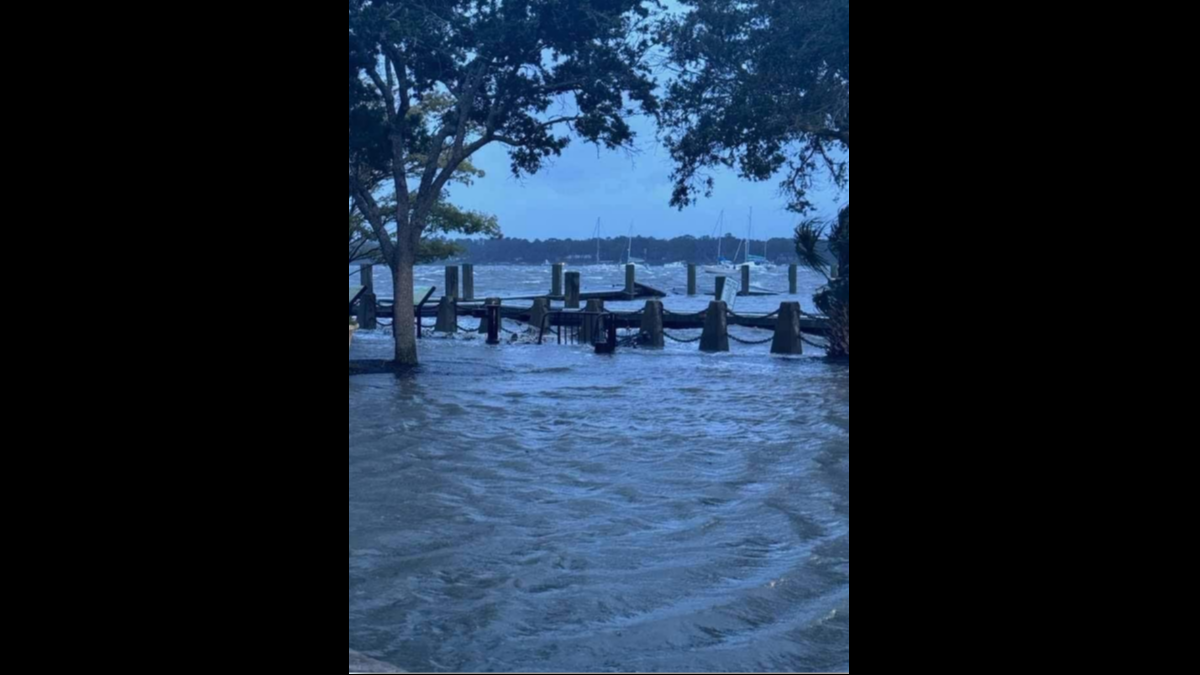
“About 9 feet, the entire platform is completely inundated and flooded over and local businesses south of Bay Street are getting flooded,” Mack said.
Designing a waterfront that’s 11 feet would put it 5 feet above today’s platform, he said.
Currently, even spring tides can cause flooding on the waterfront, where the elevation is 6 feet.
“The Atlantic Ocean is now in downtown,” Barna said. “That’s the way you have to look at it.”
The city, the consultants said, must decided where it wants to put its line of defense, at the water’s edge or farther back near the back of the Bay Street businesses adjacent to the park.
What will park look like in the future?
Members of the Waterfront Advisory Committee said they support more study of the option calling for building a seawall and backfilling the area where the current relieving platform is located.
“I haven’t spoken to anybody who didn’t want 6,” said Mike Sutton, a member of the Waterfront Park Advisory Committee, referring to the number assigned to that option.
They also asked for additional information about demolishing the relieving platform and replacing it. That option would include a structure with different levels of flood protection that would affect the existing park.
A third option that will be studied is the hybrid that would feature floating and permanent structures.
Whether the current promenade survives the reconstruction isn’t clear at this point and will depend on what option is chosen, Marshall said.
“I can’t say what you see there now is absolutely going away,” he said. “There are decisions that need to be made that will drive and influence what it’s going to look like.”
But, Marshall added, “we’re still going to have a great Waterfront Park that will still draw tourists and still draw locals.”
Cost is scary
Duncan O’Quinn of O’Quinn Marine said the public will decide what it wants the park to look like and whether to allow boats, but the team of consultants and engineers need to move forward with what gets built underneath. The cost, he added, “scares me to death as a taxpayer.”
But Marshall says Beaufort residents will not be expected to bear the cost alone, whether it’s $100 million or $150 million. The city, he said, will need to rely on grants. The city, Marshall added, also has had discussions with Beaufort County officials about adding Waterfront Park repairs to a future county penny tax referendum. Marshall believes it would be a “prime” project for inclusion in a capital projects referendum.
Would the capital project be the most expensive ever in Beaufort? Marshall isn’t sure but says it might be in absolute dollars.
It’s clearly one of the largest in recent memory.
If the waterfront project ends up costing $100 million or more it would be more expensive than the $77 million bridge over the Harbor River, which opened in 2021. At the time, the state said the 3,000-foot-long, 65-foot-high bridge was its largest project in its 10-year bridge replacement plan.
It would also be larger than the $60 million project to improve 5.5 miles of Ribaut Road, which Beaufort County is considering.
City planning new access for boat dock
While the consultants plan to get to work on gathering additional information following Wednesday’s meeting, the city has a more immediate concern: Restoring the access to a 200-foot day dock that can only be reached via the promenade.
The popular dock opened to boaters and paddlers in 2018 giving them a place to tie up and visit downtown Beaufort at no cost but it’s been off limits since the promenade closed.
It will likely take 3 to 5 years to replace the current waterfront infrastructure or repair it, Marshall says, and the promenade will remain closed during that time as long as it is deemed unsafe for pedestrian traffic.
“It doesn’t mean we’re happy with the timeline but it’s a realistic timeline I think,” Marshall said.
To restore access to boaters during that period, the city is exploring reopening the dock by building a temporary access over the promenade, Marshall said. Engineers are currently studying the design. The cost, he says, will likely be below $200,000.
What’s next
Barna’s team has members from JMT Coastal Solutions, a water and environmental firm; Davis and Floyd, a civil engineering company; geotechnical engineering F&ME Consultants; and O’Quinn Marine Construction.
At this point, the three alternatives include no dollar figures or renderings. Barna’s team is tasked with adding meat to the bones and returning to the city with additional information for vetting and public input..
This story was originally published September 25, 2025 at 1:30 PM.