Finally, Spanish Moss Trail will cross Ribaut Road and bring users into downtown Port Royal
Dean Moss remembers when the Spanish Moss Trail was just an idea. Today, ten of the original scenic 16 miles envisioned by early enthusiasts like him 20 years ago have been constructed.
There’s still ground to cover to reach the finish line. But the end is in sight, especially with the start this fall of two additions that will carry users into downtown Port Royal and Beaufort for the first time. One will bring the trail across busy Ribaut Road, a dangerous crossing. Together, the projects will cost $1.3 million.
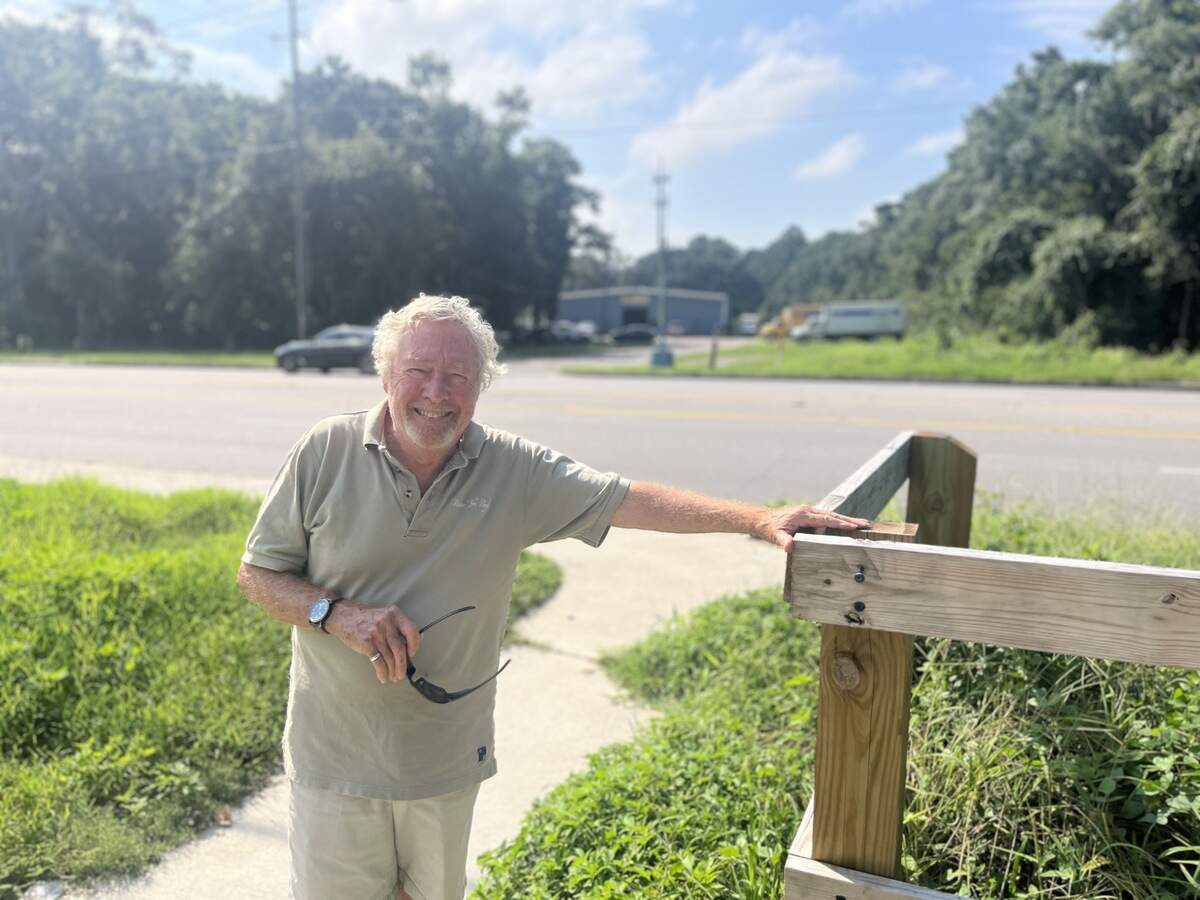
Seeing the beginning of the Ribaut Road crossing, hung up in a dispute for years, is particularly satisfying to Moss. He was one of the people who led the charge to build the trail all those years ago, and at 79, he’s still on the front lines promoting its completion.
“It’s probably the most rewarding thing I’ve done,” says Moss, the executive director of the Friends of the Spanish Moss Trail.
Why it’s a hit
In 2025, the trail that was once a dream now draws 100,000 trips annually, and it’s easy to see why.
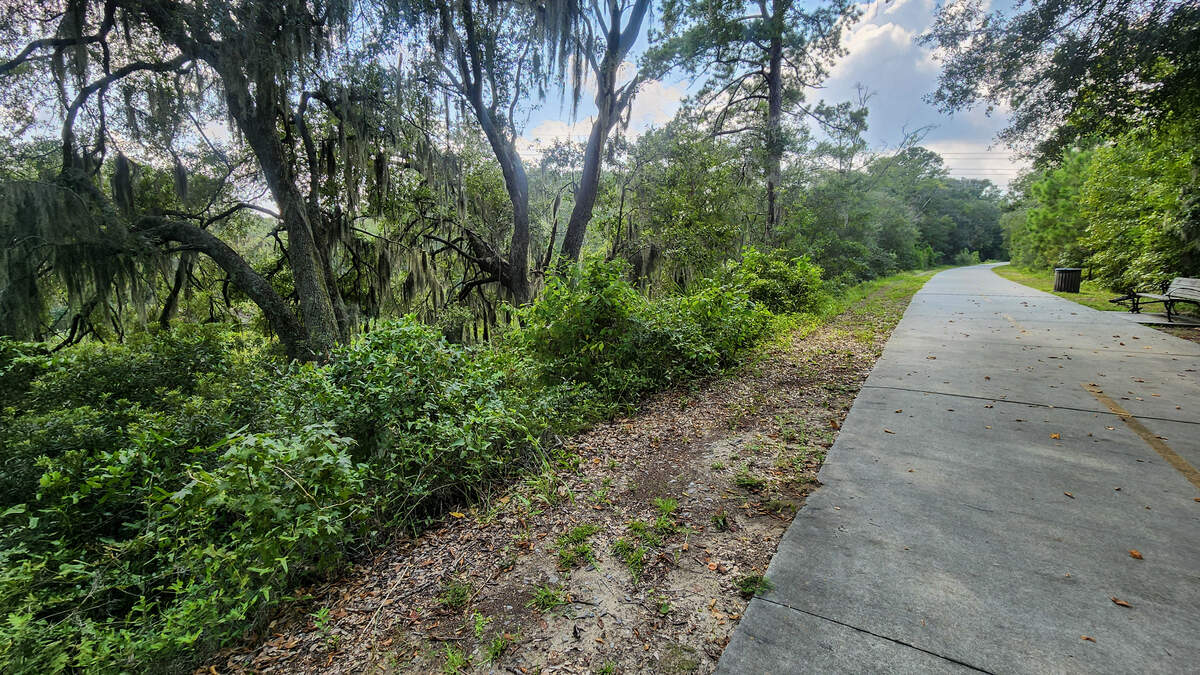
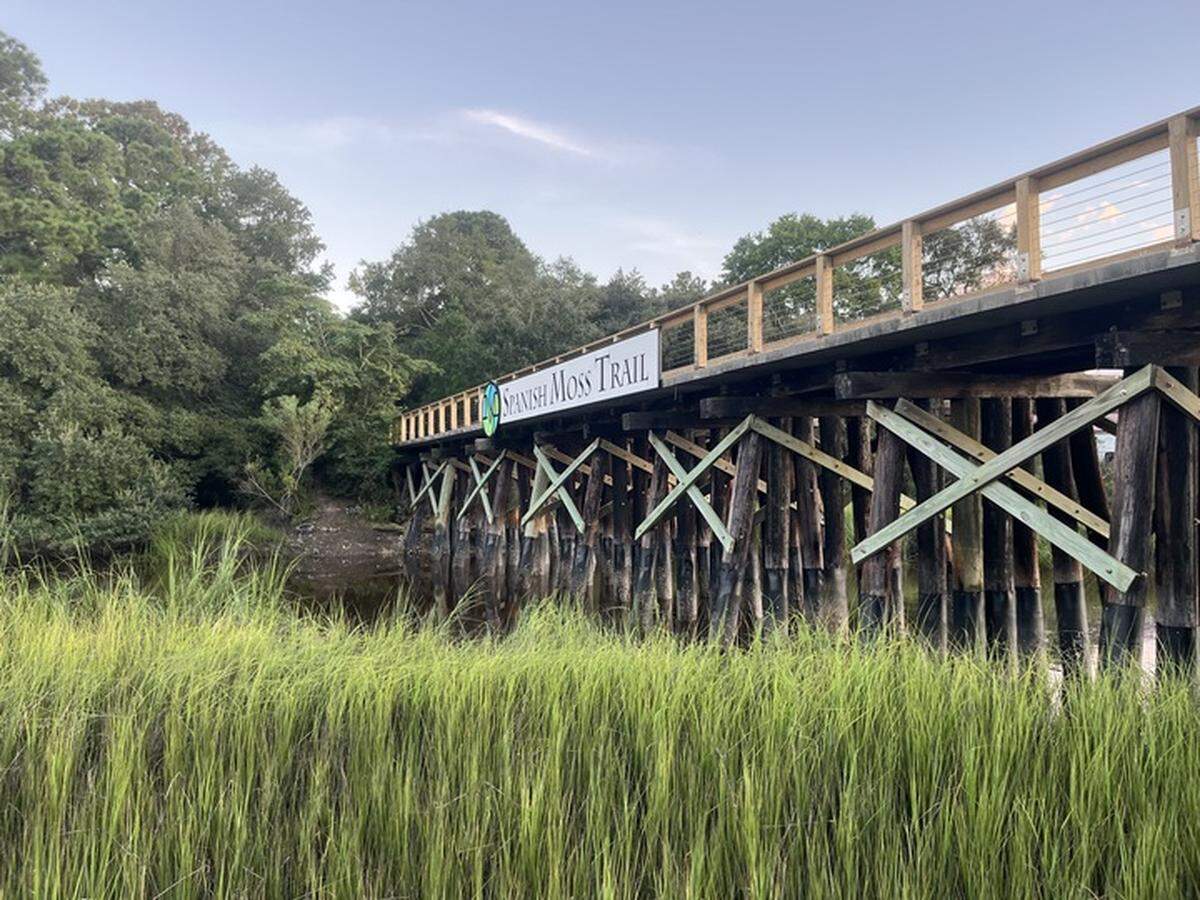
Following the path of the former Magnolia Line railway between Yemassee and Port Royal, the trail cuts through the heart of the Lowcountry’s landscape, past creeks and rivers and salt marsh and forests, which little by little are disappearing across Beaufort County. The old railway, which was established in 1870, ceased operations in 2003.
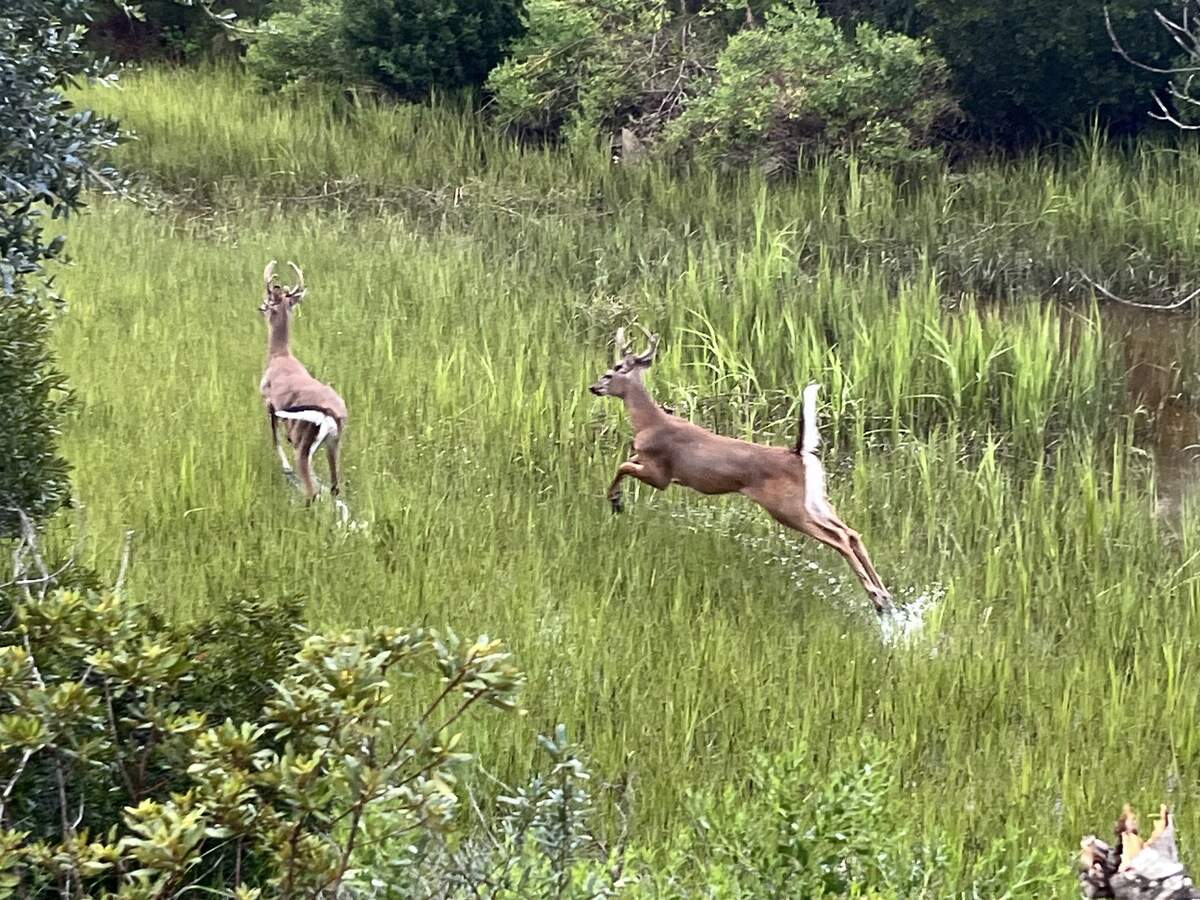
Along some sections, seeing a white-tailed deer bounding through the woods is not out of the ordinary. Some lucky visitors have spotted a bottlenose dolphin cruising through Battery Creek at high tide.
“For most of it,” says Moss, “you are kind of secluded.”
‘It’s pretty cool’
One day in August on the northern stretch of the trail north of Beaufort near Albergotti Creek, the sound of singing cicada insects surged as ducks in a backyard pen quacked and pans of food sat in a row along the side of the path for wild cats. As his daughter watched, a father, hoping to catch dinner, heaved a shrimp trap into the creek. Minutes later, a bicyclist outfitted in specialized cycle wear emerged from the shadows of a forest before quickly disappearing. By contrast, a mother inched forward on the path to accommodate two toddlers whose hands she held.
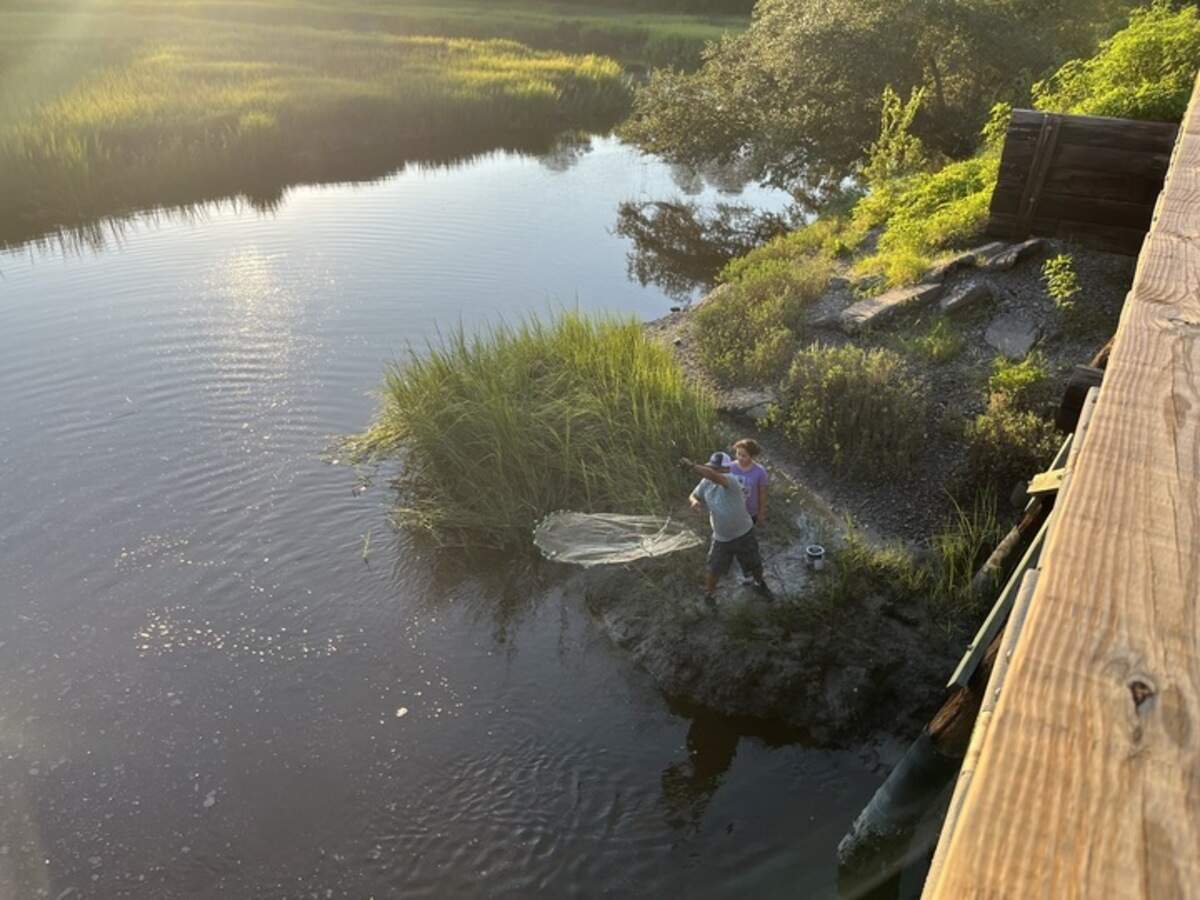
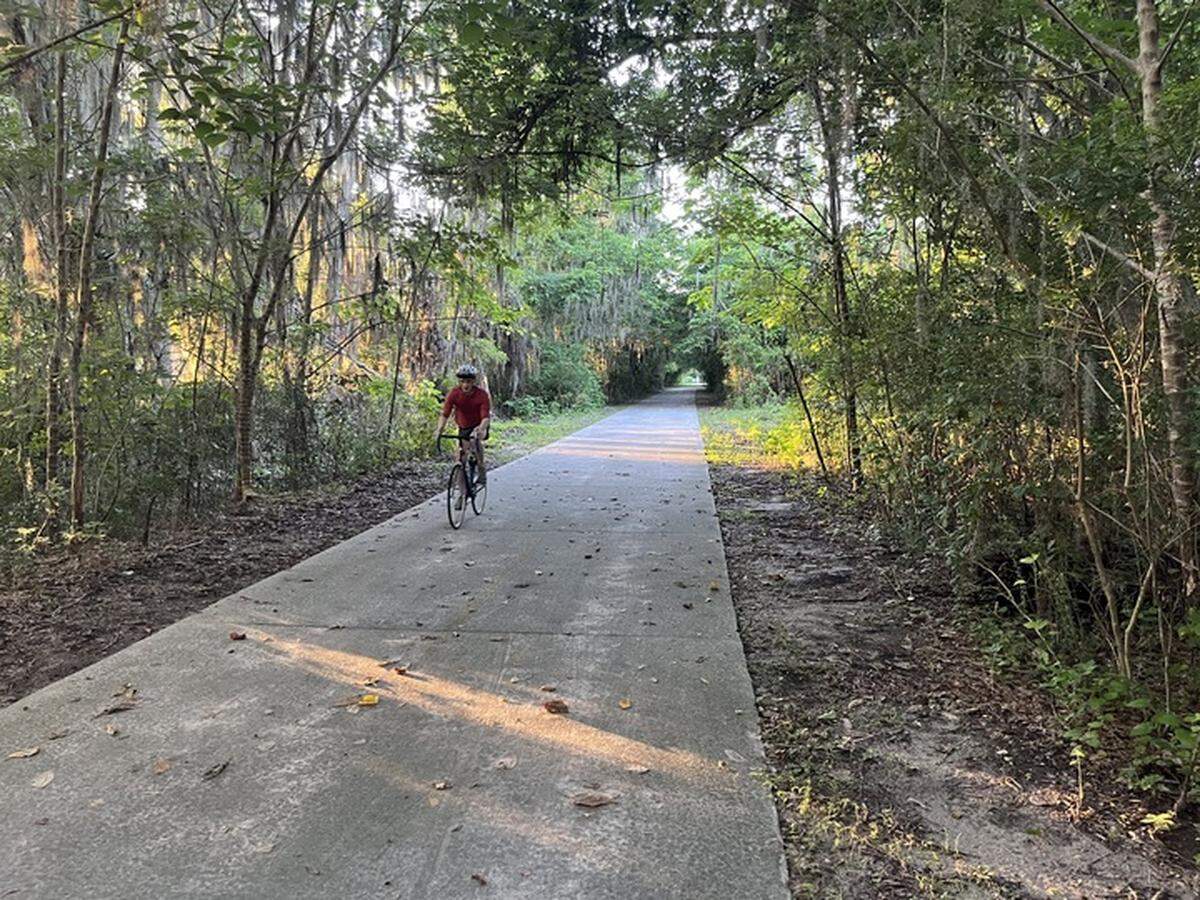
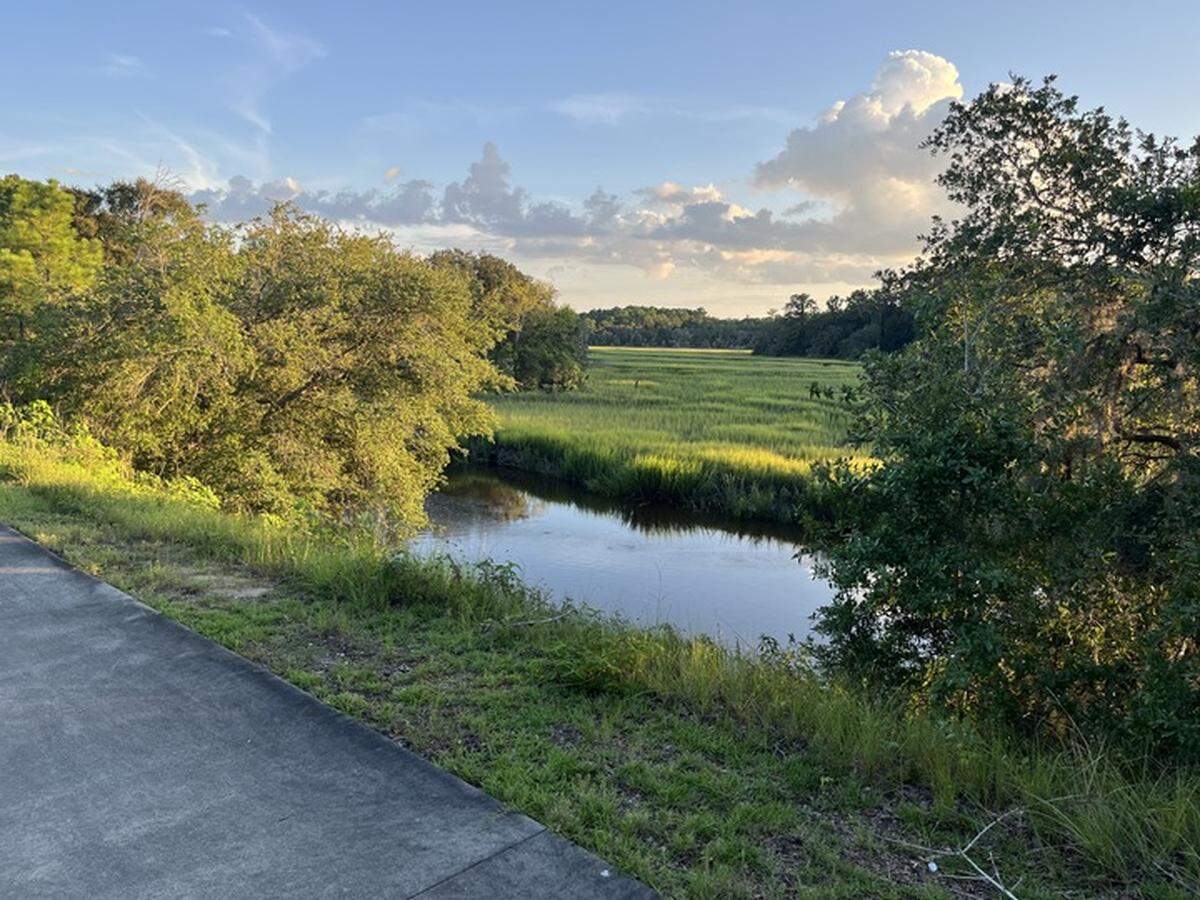
The mish-mash of people had their own reasons for visiting, but they all arrived via the trail, which is 12 feet wide and provides front-row seats to stunning views of the rich green salt marshes and thick forests of northern Beaufort County.
“It’s pretty cool,” says Christel Bernal, who was enjoying the last few minutes of daylight with her family as the sun’s rays set on the salt marsh. “We come to relax here.”
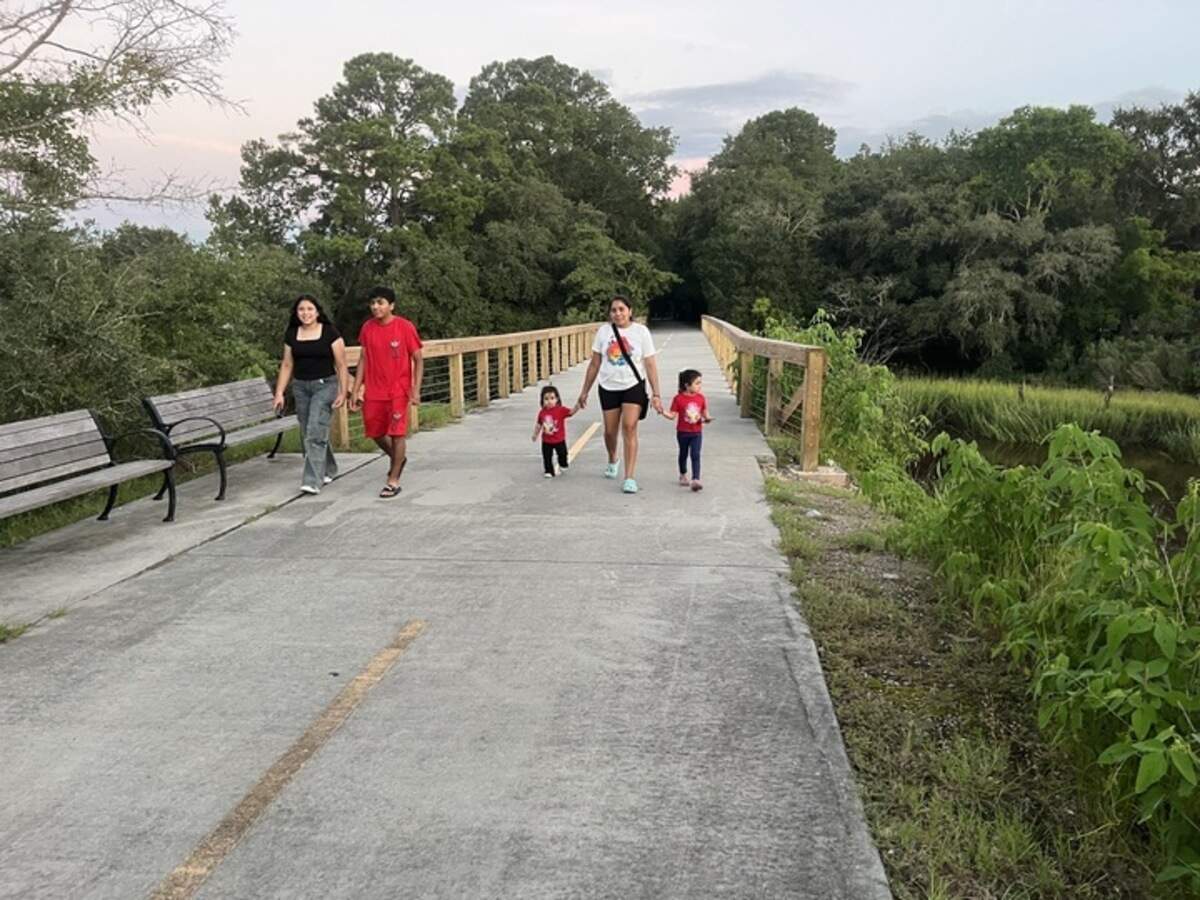
The trail, now part of the 3,000-mile East Coast Greenway running from Maine to Florida, is gaining fame beyond the borders of Beaufort County. A photograph of the trail cutting across the marsh graces the cover of the current “Rails-Trails Southeast,” a guide to multi-use trails in Alabama, Georgia and the Carolinas.
Trail also runs through the city
Stretches in more populated areas are just as notable, as they provide safe passages through clogged intersections or along highways teeming with traffic. Other segments pass behind quiet residential backyards, connecting neighborhoods and bringing users to popular destinations such as the Technical College of the Lowcountry, Beaufort Memorial Hospital, fishing spots and even the new Publix in Beaufort.
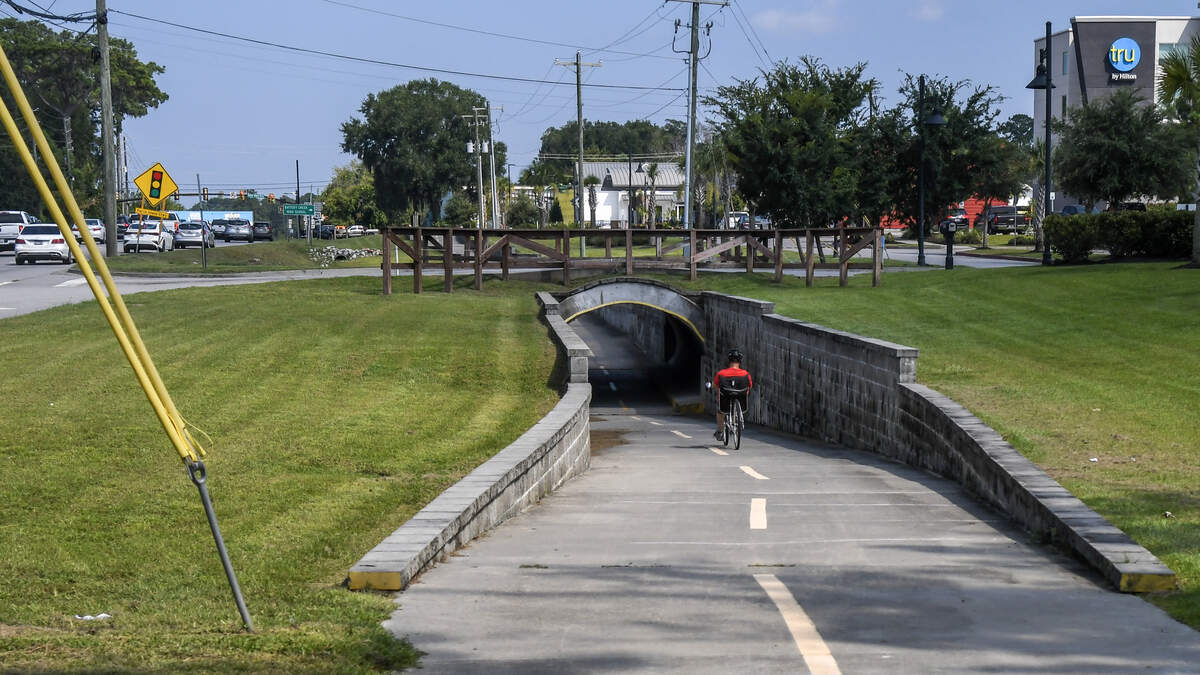
“It’s an amazing amenity,” says Joe DeVito, Port Royal’s former mayor and chairman of the Friends of the Spanish Moss Trail board.
DeVito says the trail connects neighborhoods like Mossy Oaks and Hunter Pines that were traditionally separated by the marsh.
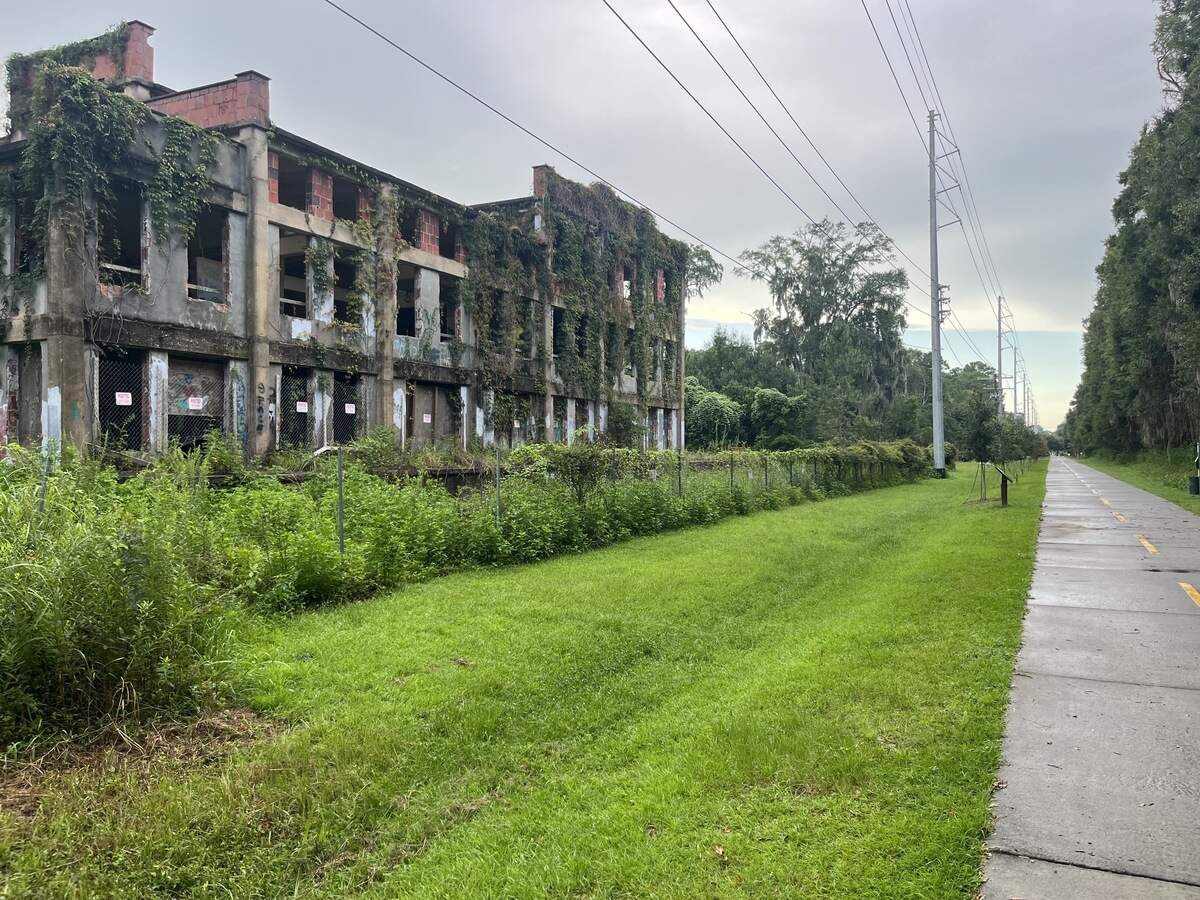
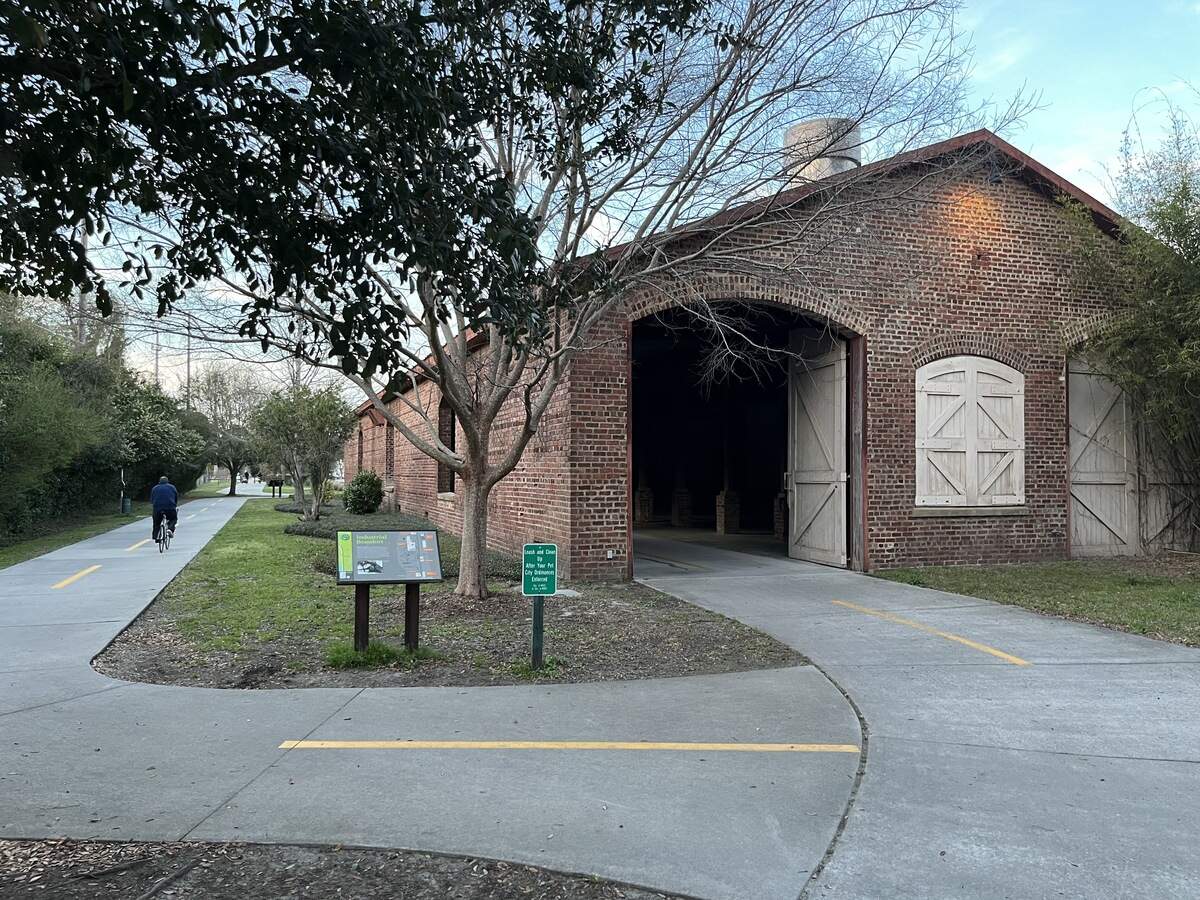
It also connects walkers and bikers to the area’s history, like the curious three-story brick building standing prominently along the trail at Dill Drive. The structure, which dates back to the 1920s, once housed a pickle-packing plant.
Key extensions planned
Construction will begin soon on two highly anticipated new sections that will extend the trail into the historic downtowns of Port Royal and Beaufort.
One $777,444 project, which Moss describes as “critical,” will include a signal light controlled by pedestrians and bicyclists, allowing them to safely cross the four-lane Ribaut Road near Pender Brothers in Port Royal.
Since 2015, the trail has been blocked on north side of heavily-trafficked Ribaut, which has a speed limit of 40 miles per hour. Once the new signal is installed, the trail will be extended south of Ribaut to Ritter Circle in Port Royal, maintaining the stretch. The crossing and extension will give Port Royal residents a new access point to the trail and link it to popular destinations like Sands Beach. Beaufort County’s Public Facilities Committee awarded the contract in June to KTC Enterprises to construct 1,150 feet of trail from Ribaut to Ritter Circle and install the pedestrian beacon signal.
The second major project involves Wildwood Contractors Inc. building about a third of a mile of new trail along Depot Road, between the trail’s Depot Trailhead to Ribaut Road in Beaufort. This extension allows trail users to easily reach Bay Street and the scenic downtown waterfront. The county’s Public Facilities Committee approved the $550,000 project in August, and assuming the full council signs off in September, work is expected to begin by late fall, said Hannah Nichols, a county spokesperson.
The initial work could begin as soon as late August and is expected to be completed by late December or early January.
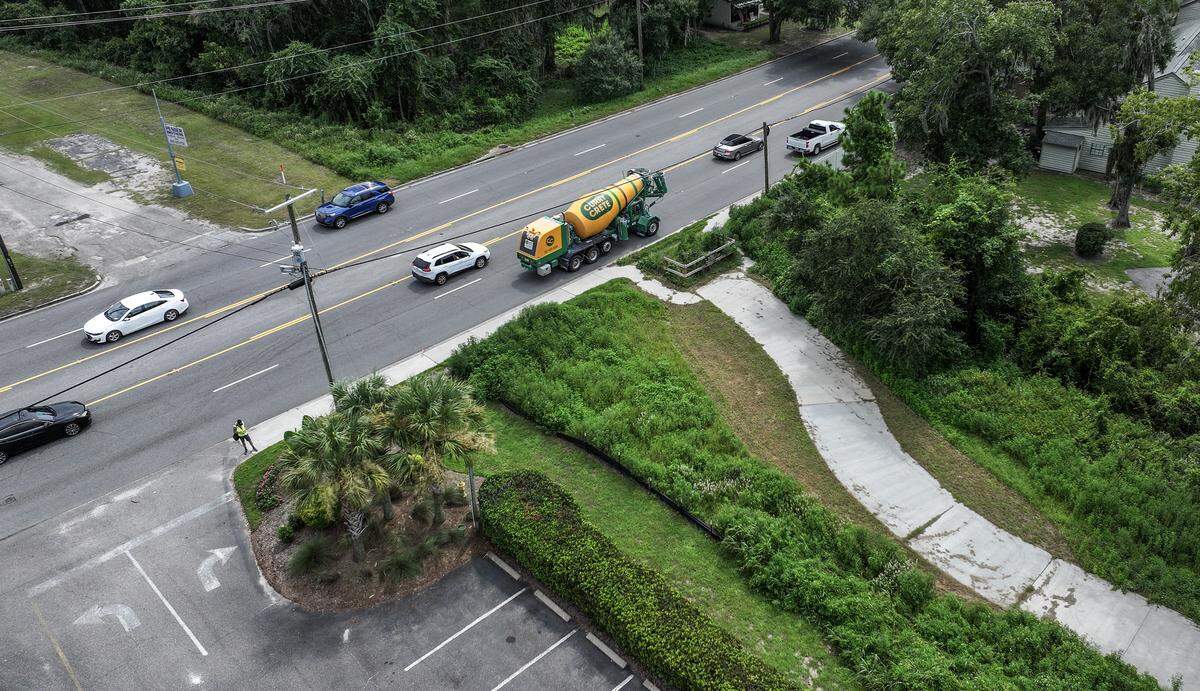
“I’ve been trying to get this done for five years,” says Moss, as cars on Ribaut Road zipped past.
The big picture, says Moss, is the two projects will link the area’s most prominent urban areas: The old village of Port Royal on Battery Creek and Beaufort’s Bay Street on the Beaufort River.
“It’s the evolution of what the trail’s all about,” says DeVito.
How the trail began
The trail’s beginning came in 2009 when the Beaufort-Jasper Water and Sewer Authority secured the right-of-way.
At the time, Moss was BJWSA’s general manager. DeVito was the director of BJWSA’s operations.
Both avid bikers, DeVito and Moss and others recognized a chance to develop a world-class walking and biking path that could connect the neighborhoods of Beaufort and Port Royal.
After acquiring the right of way, BJWSA granted a surface easement to Beaufort County so it could own and develop 16 miles of the rail corridor as a recreational trail from Sands Beach in Port Royal north to the Whale Branch River north of Beaufort.
_fitted.jpeg "Spanish Moss Trail Master Map (1_fitted (1)_fitted.jpeg")
“There were a lot of people excited about this project,” Moss said.
Staying active after retiring
After Moss retired, he founded the not-for-profit the Friends of the Spanish Moss Trail to promote its completion. He continues to serve as the executive director, volunteering his time. Sissy Perryman, a contractor, handles grant management, marketing and fundraising.
“We’re the group that pushes them along,” Moss says of the Friends of the Spanish Moss Trail.
The group initially partnered with the PATH Foundation of Atlanta, an organization with more than 30 years of experience building trails in the greater Atlanta area, to come up with Spanish Moss Trail plan.
The first mile was constructed with funding from the Cox Foundation, the charitable giving arm of the Cox Enterprises, the Atlanta-based global communications and automotive empire. Cox’s recognized national brands include Autotrader, Kelley Blue Book and Cox Homelife, and the company’s former chairman, Jim Kennedy, is an avid bike rider who owns property in the area.
The end is in sight
Progress can be aggravatingly slow, says Moss. The Ribaut Road crossing and the trail extension in Port Royal are just two examples, he says. The project was ready to go for a few years, but it got caught up in what Moss calls a “knife fight” between the town of Port Royal and Safe Harbor Marinas over a trail easement crossing Safe Harbor’s land.
“Every piece of this has been a little bit of a different deal over time,” says Moss.
But mostly, he adds, working on groundbreaking trail has been fun and satisfying. And the finish line is in sight.
The next hurdle is a 3-mile extension on the trail’s northern reaches from Clarendon Road to the Whale Branch River. Talks are underway with property owners about getting the necessary right of way, Moss says.
On the southern end of the trail, in Port Royal, Moss said he wants to see the trail extended all the way to Sands Beach, just as it was envisioned in the original plan.
“If you get those two ends done,” says Moss, “it’s done.”
This story was originally published September 1, 2025 at 5:00 AM.