
Broad River salt marshes are failing. Could electricity and oysters spark comeback?
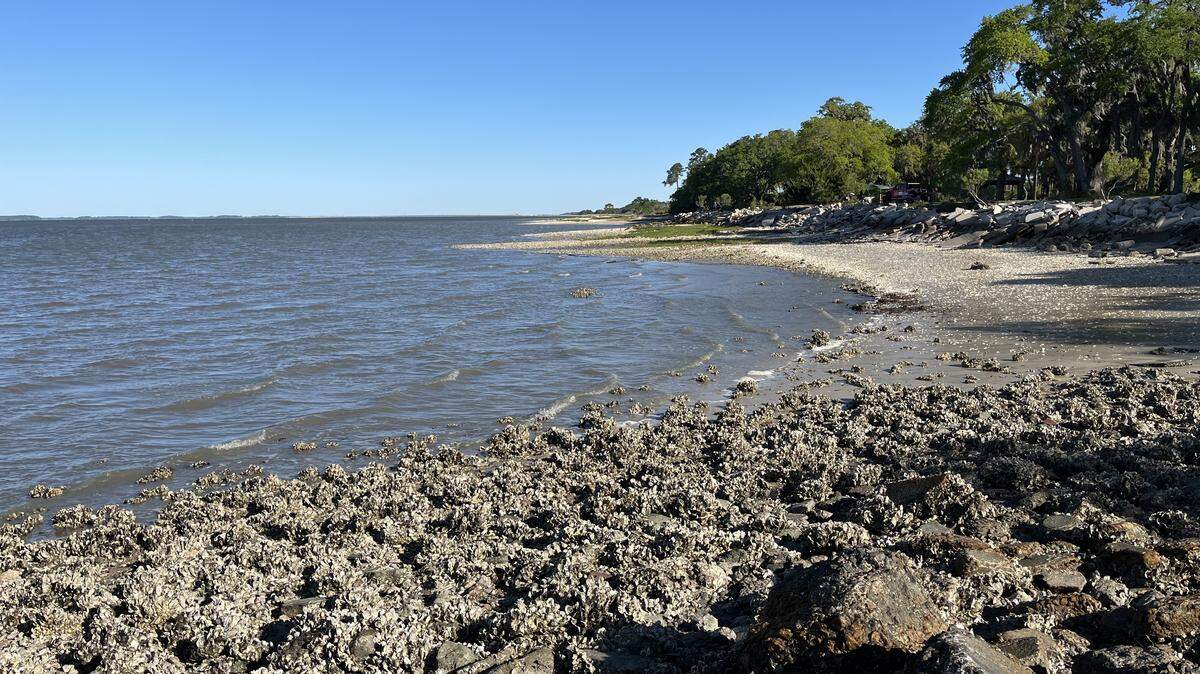
The mighty Broad River, a wide finger of the Atlantic Ocean, carries the sea’s energy into Port Royal Sound and the South Carolina Lowcountry. Increasingly, that force, which includes powerful waves and currents, is wiping out fragile salt marsh on the southwestern shores of Parris Island, where half the Marine recruits in the county are trained.
“The marshes,” says Paul Gayes, executive director of Coastal Carolina University’s marine and wetland studies center, “have largely peeled back and are gone.”
The disappearance of vital salt marshes along the Broad River including near the base is leaving a stretch of the coastline defenseless against erosian, storm surge and rising sea levels.
But Gayes and a team of experts are fighting back with an experimental counteroffensive that’s attracting worldwide attention to Port Royal Sound, the estuary for several tidal rivers including the Broad River, its largest, which spans more than 1.5 miles wide in some locations.
The work involves combining electricity, oysters and massive concrete blocks to build a more natural artificial reef to stem the tide of erosion and marsh loss. Gayes is hopeful the work will lead to a resurgence of marshland near an island where Marines have trained for 110 years. In recent years, rising sea levels and increased flooding have led to discussions about the future viability of the base.
The new approach, if successful, he adds, could lead to applications elsewhere.
“The things that used to work are not going to work in the future,” says Gayes. “Can we recover marsh where traditional approaches have failed? It’s a pretty significant challenge to do it.”
The location of the experimental shoreline work is Elliott’s Beach, a popular recreation area on the base located along the southwest shoreline of the island.
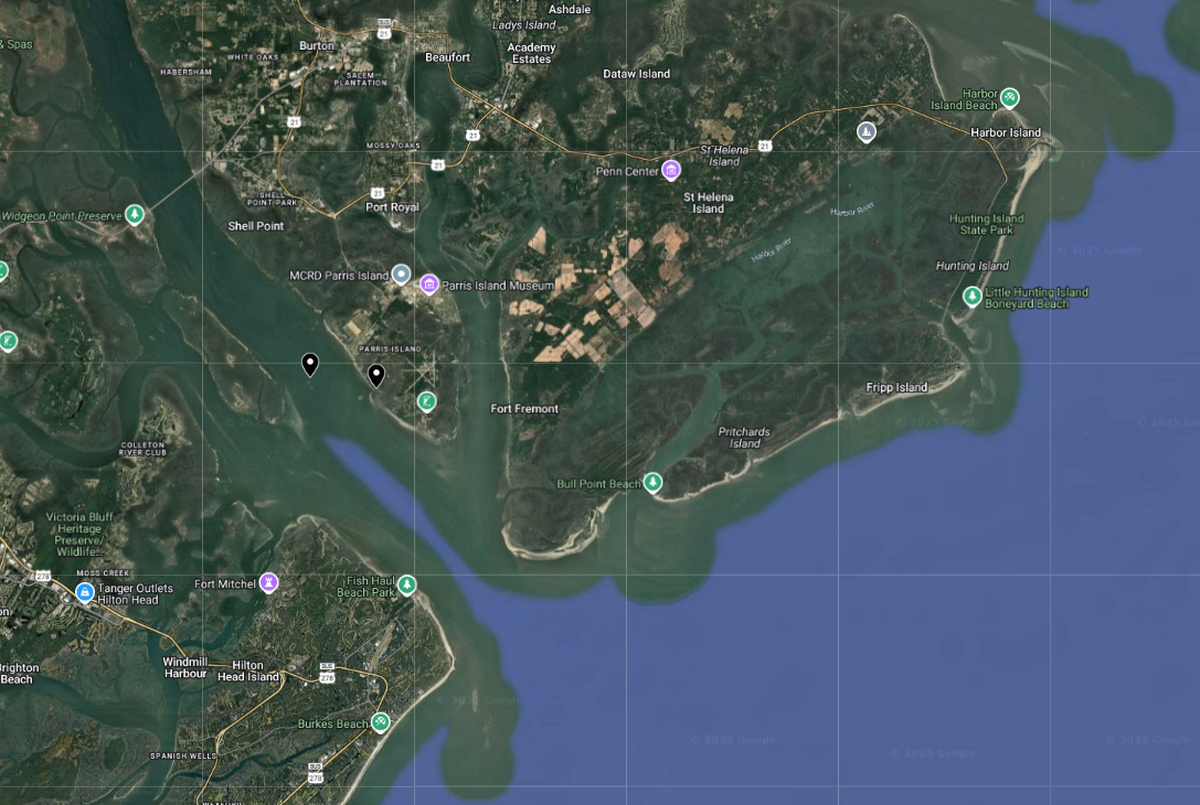
Across this entire area, says Gayes, “Sand is cascading away.”
“That whole system is in failure,” he says.
Gayes team is using a reef-building method called Biorock, sometimes called seawater electrolysis, and the strategic placement of 7,000-pound concrete transportation barriers (contributed by the Marines), to save the marsh.
The work is part of a broader, multi-year project to bolster the shoreline of Parris Island to better protect infrastructure from storm surges and erosion, restore marine habitat and improve water quality and fisheries. It is being funded by an SC Department of Veterans Affairs grant to the town of Port Royal.
Biorock, which has been around since 1976, uses low-voltage electrical current emitted underwater that prompts marine life to secrete shell material that then attaches to large structures. The technique has been successfully applied to revive dying corral reefs, maybe most notably in India.
“That (electrical) field helps corals precipitate their skeletal material to make the reef,” Gayes said.
The same process, says Gayes, can be applied to mollusks, which include oysters, which thrive in the state’s waterways. In this instance, electricity will be applied to accelerate the growth of oysters that will attach to steel frames attached to the large concrete barriers. “It’s forming a structure designed to impede the waves,” Gayes says.
Organic secretion from the oysters will follow over time, increasing the build up on the barriers. That, in turn, will make the barriers larger and, eventually, more natural than man-made barriers.
“We’re hoping to build a reef that looks looks and function slike a natural reef,” Gayes said.
The structures will be placed “near shore” to break up the erosional pressure on the marsh.
With some luck, says Gayes, the buffers will allow sediment to built up again so marsh can grow in the future.
“We should be able to reclaim marsh over a long stretch,” from Elliott’s Beach to the ocean, a distance of a copule of miles, Gayes said. “That whole system is in failure,” he says.
One day this week, a flotilla of boats from Gayes’ team of experts from Next Marine Solutions, Global Eco Adventures and the South Carolina Department of Natural Resources departed from White Hall Boat Landing on Lady’s Island and headed for Elliot’s Beach on Parris Island, where the $2 million shoreline restoration project is centered.
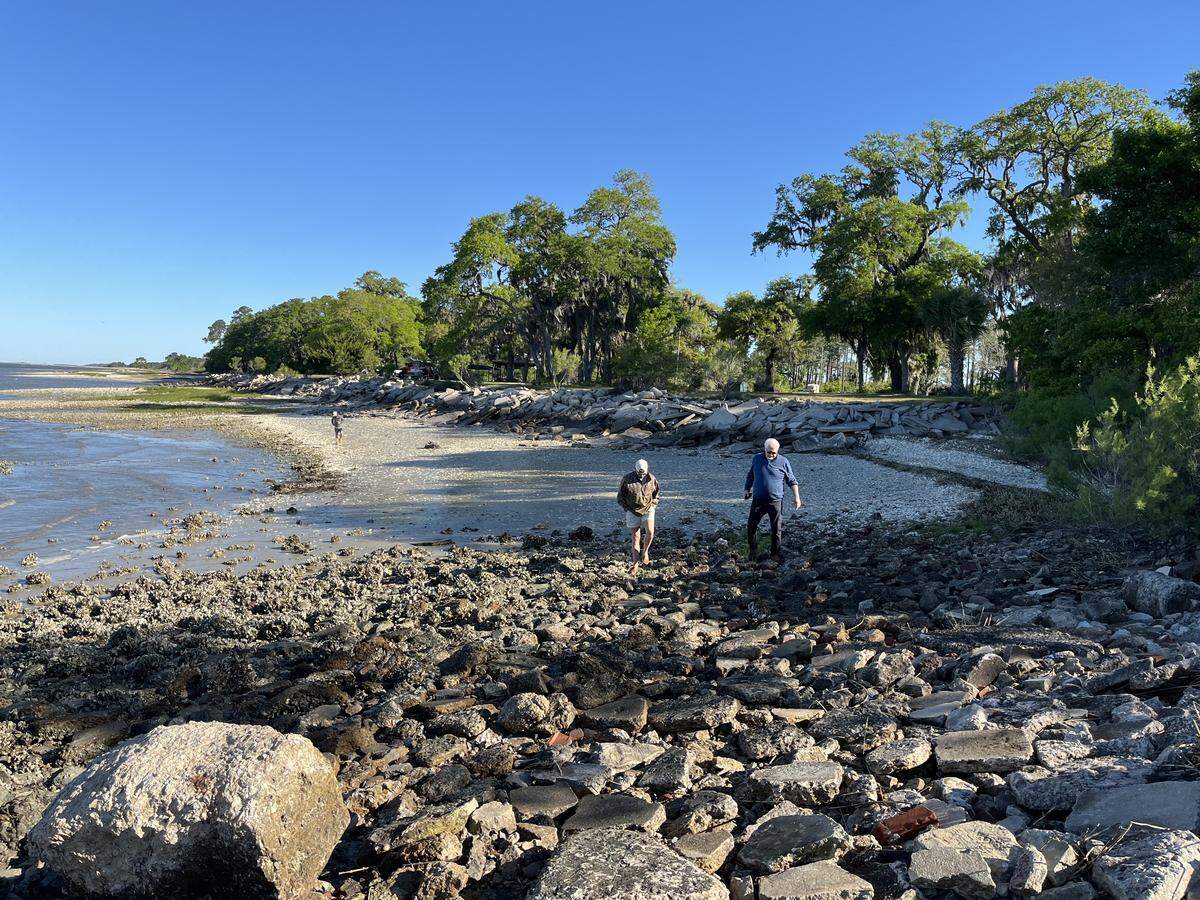
But Gayes says the powerful waves and currents of the ocean-powered Broad River are causing so much erosion that another solution is required which is prompting the experimental project.
“It’s an intense area. The sea keeps coming up,” Gayes said. “The land isn’t very high. As a result, those forces are hitting further and further up the system.”
A 16-by-12-foot floating platform with an array of environmental sensors and a hydrokinetic turbine has already been deployed. The turbine, placed in the water for the first time this week, will emit the electrical currents to spur the growth of oysters on the blocks.
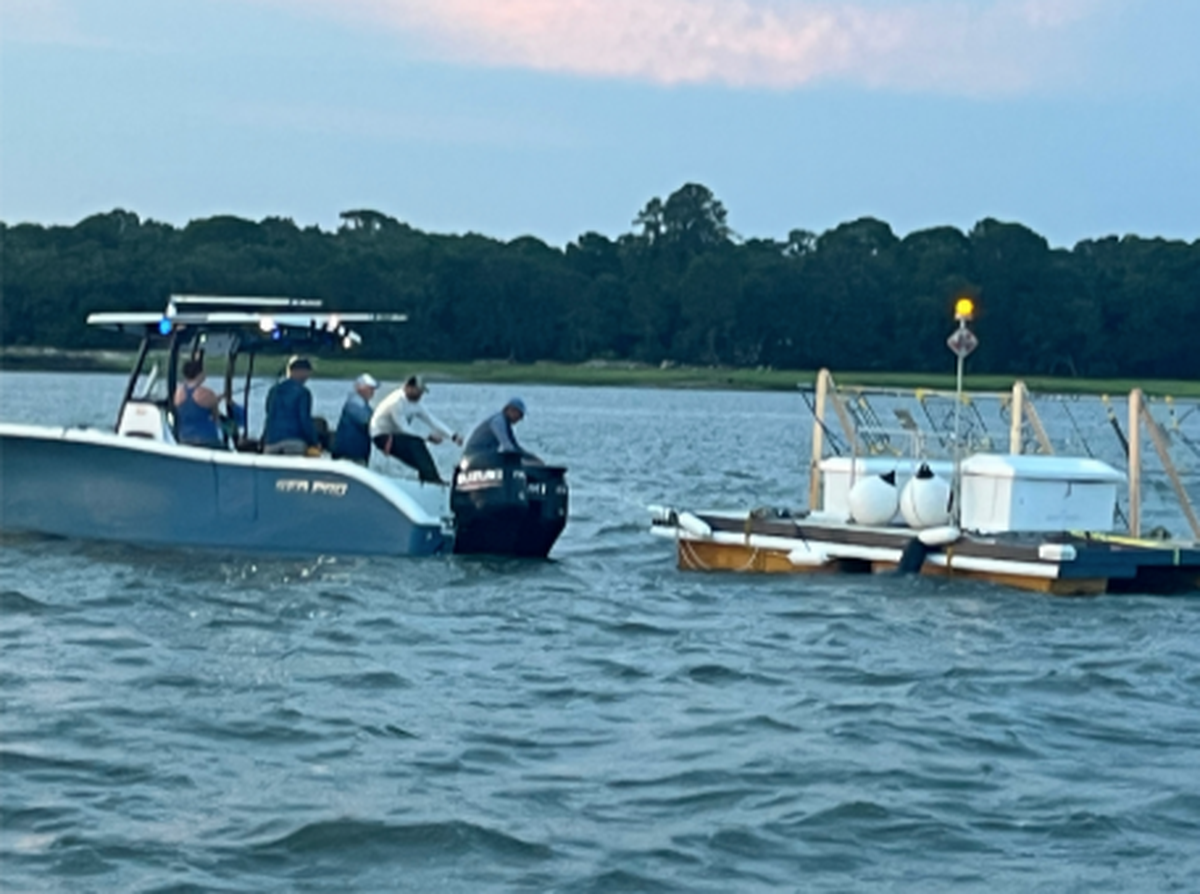
The concrete blocks are not scheduled to be placed in the water until the winter. For the past year, high resolution mapping has been underway to optimize the placement of the blocks. Instruments that can collect scientific data on the near-shore conditions are planned as well.
Tom Mullikin, director of the South Carolina Department of Natural Resources, says there’s a large gap in coastal data which is critical in predicting flooding and other weather events and the impact on structures on land.
“Now we’re seeing storms that blow up into a Category 5 (hurricane) in 24 hours,” Mullikin said. “That wasn’t happening before. In these areas, so flat, the water goes every which way.”
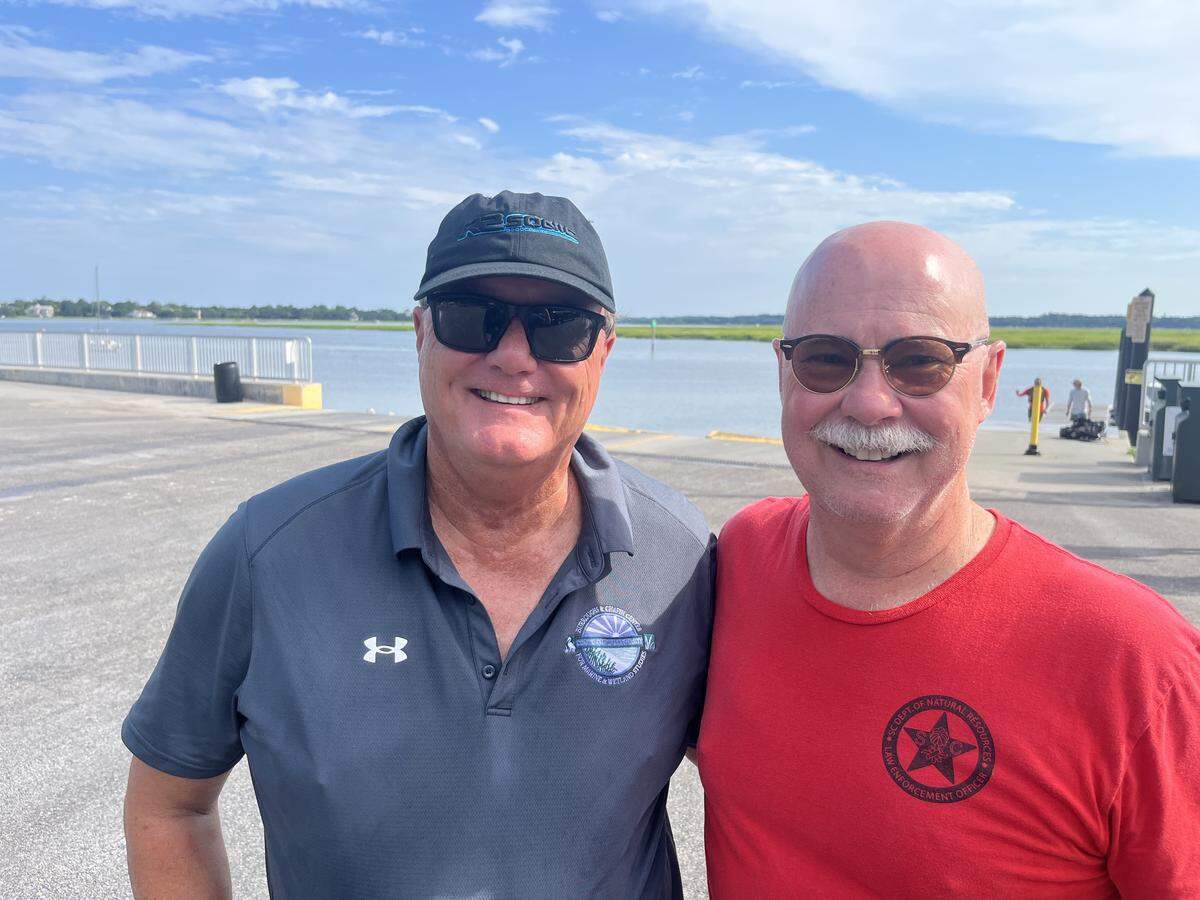
Calls are coming in from all over the world about the project because of concerns about sea level rise and coastal erosion, Mullikin said.
The Port Royal Sound area has become a hub of research for educators and professionals from across the southeastern United States, Gayes says, because “you have a very different kind of drainage system here.”
Its tidal rivers, for example, go “hypersaline” on occasion, meaning they become saltier than the ocean.
“There’s no real freshwater system of note that comes in,” Gayes says. “It’s hot. It evaporates. So it’s an unusual estuary on the East Coast in that regard.”
.jpg "unnamed (4).jpg")