A Lowcountry radio legend retires. How he learned to love country music (and Beaufort)
_fitted.png "Mark Robertson, the instantly recognizable and trusted radio voice of 98.7 The River, is retiring. His last time on air will be Friday morning, July 11.")
Mark Robertson, a trusted radio voice who delivered critical news and weather information along with pop songs and personal stories including those of dogs and cats, is retiring from 98.7 The River after nearly five decades on the local airwaves.
Robertson, who lives in Bluffton, brought a personal touch to morning radio and it earned him legions of loyal listeners with his voice being one of the most recognizable on local radio. He’s been on the air locally for nearly 48 years, spinning country, rock and pop songs. The Brooklyn, N.Y. native spent the past 29 years at The River, the soft rock radio station based in Savannah with a large following in Georgia and South Carolina including Beaufort County. Robertson says it’s unlikely any Lowcountry radio personality has been on the air longer than he has.
But at 6 a.m. Friday, the 72-year-old Lowcountry radio legend completed his final on-air shift before hanging up his headphones for good.
“It was the only thing I really wanted to do,” says Robertson of a career in radio, “so once it happened it was like a dream come true.”
The idea developed when he was a teenager as he listened to local disc jockeys on a small transistor radio tucked under his pillow, thinking, “If I could just be that guy.”
‘People crave local’
Robertson was that guy in the Lowcountry for parts of six decades.
He credits his longevity and reputation to his local focus and the fact he lived in the Lowcountry. His show is no “morning zoo,” he notes. What he did best, he says, is share stories about local news or events, reflecting this community. Over the years, he’s helped to raise thousands for needy kids during Christmas and been part of teams providing around-the-clock coverage during hurricanes. He doesn’t recall the radio station ever evacuating during any of the storms he covered.
“We never got political but if there was a major issue like widening of a highway or a penny sales tax we would talk about it,” he says.
Robertson might have been best known for his love of animals and sharing stories about them and he was quick to publicize missing cats and dogs on air. “I was just being me because I care about them,” he says.
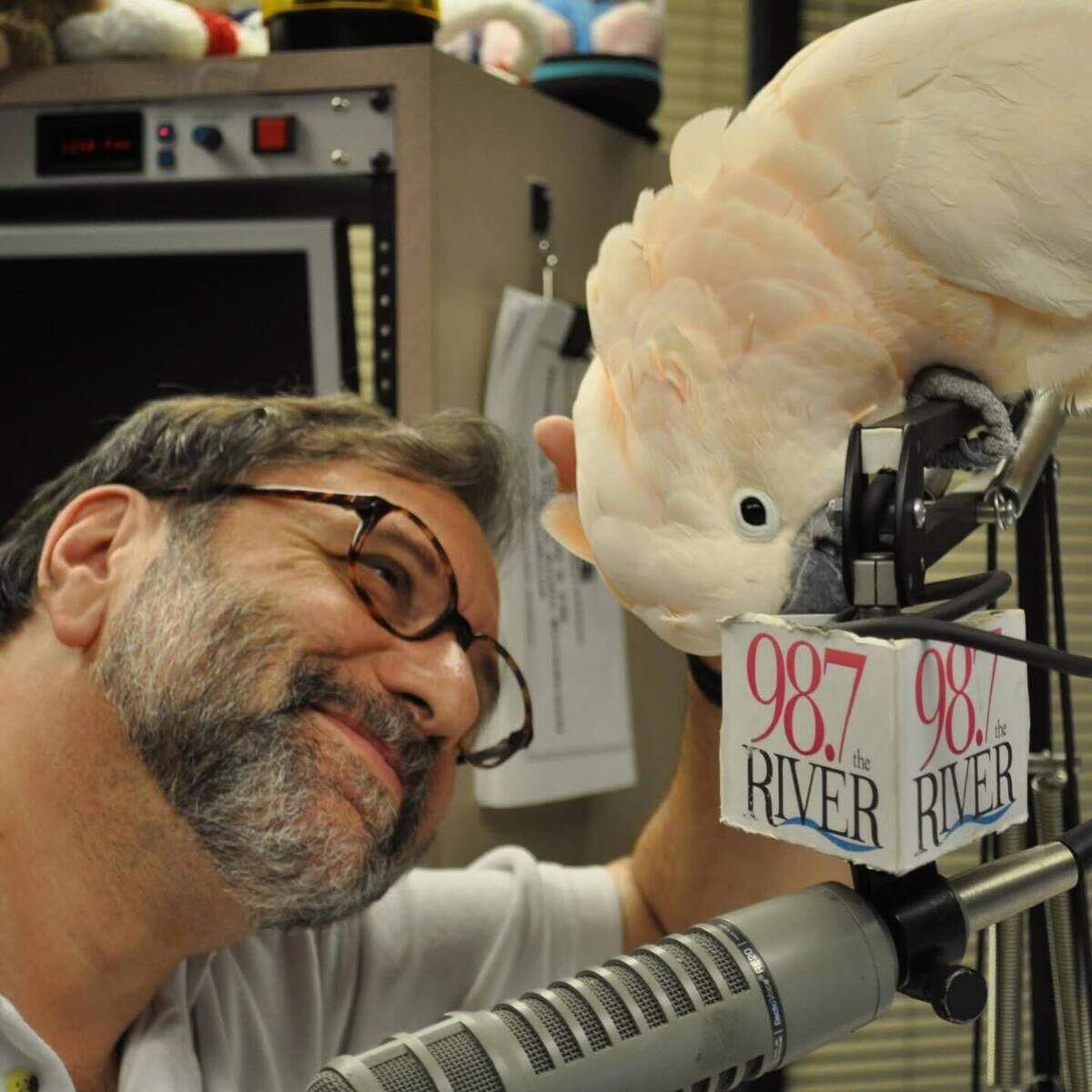
He once had the seemingly brilliant idea of bringing animals into the studio because they are such a big part of his life. Listeners, he added, responded to stories about missing pets or horses. Ultimately, however, the decision to feature animals live in studio was squashed because, after all, “It’s radio,” Robertson says.
Robertson knew how to have fun on the job and old-timers still remember some of his gags.
Once, as part of an April Fools joke when Robertson was working at WBEU in Beaufort, employees went on strike, telling listeners that management was insisting that they buy their own toilet paper. “We’re not going to take it anymore,” they protested. The disgruntled workers even took the complaint to the streets, picketing downtown and asking for donations. Listeners, including those contributed, eventually were let in on the joke: The protest was part of an effort to raise money for charity.
Some people think local radio will go away because of the prominence of satellite radio and the disappearance of local ownership but Robertson disagrees.
“People,” he says, “crave local.”
Surviving country music
Robertson first began working in radio locally in 1977 at WBEU on Boundary Street in Beaufort, a country station. Robertson knew nothing about country music, “Except Johnny Cash and Tammy Wynette, because they were superstars at the time.”
At that first radio job, Robertson began learning valuable lessons — namely hard work, persistence, flexibility, humor and knowledge of local issues and concerns. Those lessons, he said, would help him survive for the next 48 years in a business known for its killer hours and difficult personalities. Although he didn’t like country music personally, for example, he became an expert in the genre, learning the names of all of the performers, not just headliners like Cash and Wynette.
“I actually started falling in love with the music and I never thought I’d say that,” he said.
Surviving South Carolina
When he arrived in the summer of 1977 from New York, Robertson, 24 at the time, was an unlikely prospect to develop into a long-time local radio star.
When he had first been told by a friend about the job in Beaufort, his first thought was, “I don’t want to move to South Carolina.”
At the time, he was working for a company that syndicated television programs as he looked for a job in the communications business. Two years prior, he had graduated from Brooklyn College where he studied Spanish with plans to become a teacher. But a persistent acquaintance from his days working at the college radio station who was already at Beaufort’s WBEU convinced him to move south.
Robertson boarded an Amtrak for Savannah on Aug. 1, 1977. By Aug. 4, he was on the air in Beaufort
.jpg "Mark_8 (2).jpg")
Robertson, harboring negative ideas about life in the South, figured he would hate it and quickly retreat back North. But like his relationahip with country music, he began to fall in love with Beaufort and the Lowcountry.
“Everybody was so nice,” Robertson said. “It was not what I expected at all.”
His employer found him a place to live on Hogarth Street in downtown Beaufort. Being from New York, where he relied on public transportation, Robertson didn’t know how to drive. So each day, he would walk a mile to work. But he had found his lane in radio.
Surviving change
If there’s one constant in radio it’s change, and Robertson became adept at rolling with the punches.
Seven or eight years after he joined WBEU, a new owner, a dentist out of North Carolina, brought in consultants who decided to change the country format to all talk.
Robertson, who was given free reign to have fun and entertain, “Had a blast.”
Later, there was interest in reverting the programming back to country music, but all of the former fans had gone to other stations and weren’t likely to return.
A move to soft rock came in 1987 — and a new location on Highway 170 in Okatie, at the time a two-lane highway. When the owner, Clear Channel, was informed that the widening to four lanes would put the road at the front door of the station, it was then that the headquarters moved to Savannah.
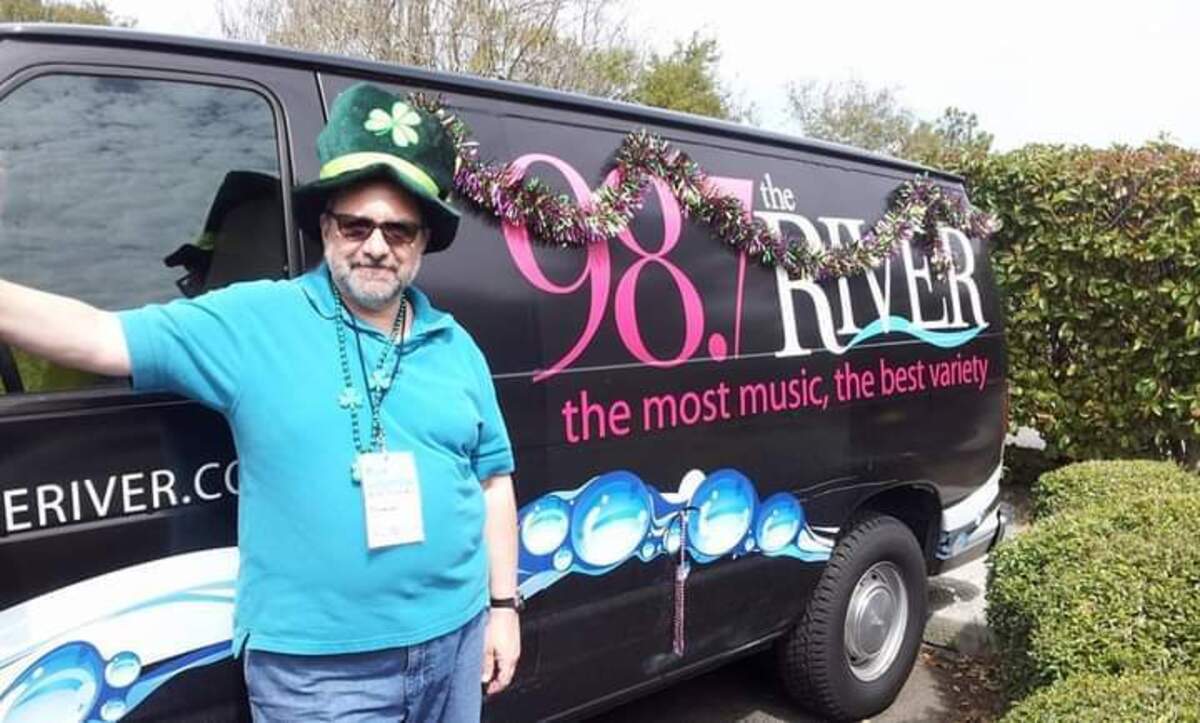
It’s been The River since 1996. Today, iHeart is the owner. The broadcast reaches three South Carolina counties and four in Georgia.
Besides changes in format, technology has changed dramatically since Robertson arrived on the radio scene in the late 1970s. He started out spinning records on turntables and later it was eight-track and reel-to-reel tapes. Today’s technology, Robertson says, is amazing and the sound of the songs is much better.
“You have all kinds of modern technology,” Robertson says. “Now you have music on a hard drive or in the cloud. In many instances, you don’t touch a song at all.”
Surviving for so long
Today, Robertson serves as the program director at The River where he oversees anything that goes out over the air including commercials, programs and music.
Luck and a love for the job, which management seemed to notice, kept him in the business.
“I like to tell people I work cheap,” Robertson says. “I just outlasted everybody.”
A radio job, he notes, is not for everyone. For decades, he’s been rising at 4:30 a.m. to prepare for his early on-air shifts. The work continues after his morning shift when he works on commercials, scripts and promotions.
Robertson also says he’s worked with his share of “not so nice people” over the years. But somehow, he survived the rough patches, periodic rounds of layoffs and the difficult people.
”Now is the time to relax and enjoy life,” Robertson says.
This story was originally published July 10, 2025 at 3:54 PM.