One of Beaufort’s oldest homes is for sale. Here’s what it will cost to own it
A 250-year-old Beaufort house, which was built about the same time the United States was under construction, is for sale as the celebration of the country’s independence rolls around in 2025.
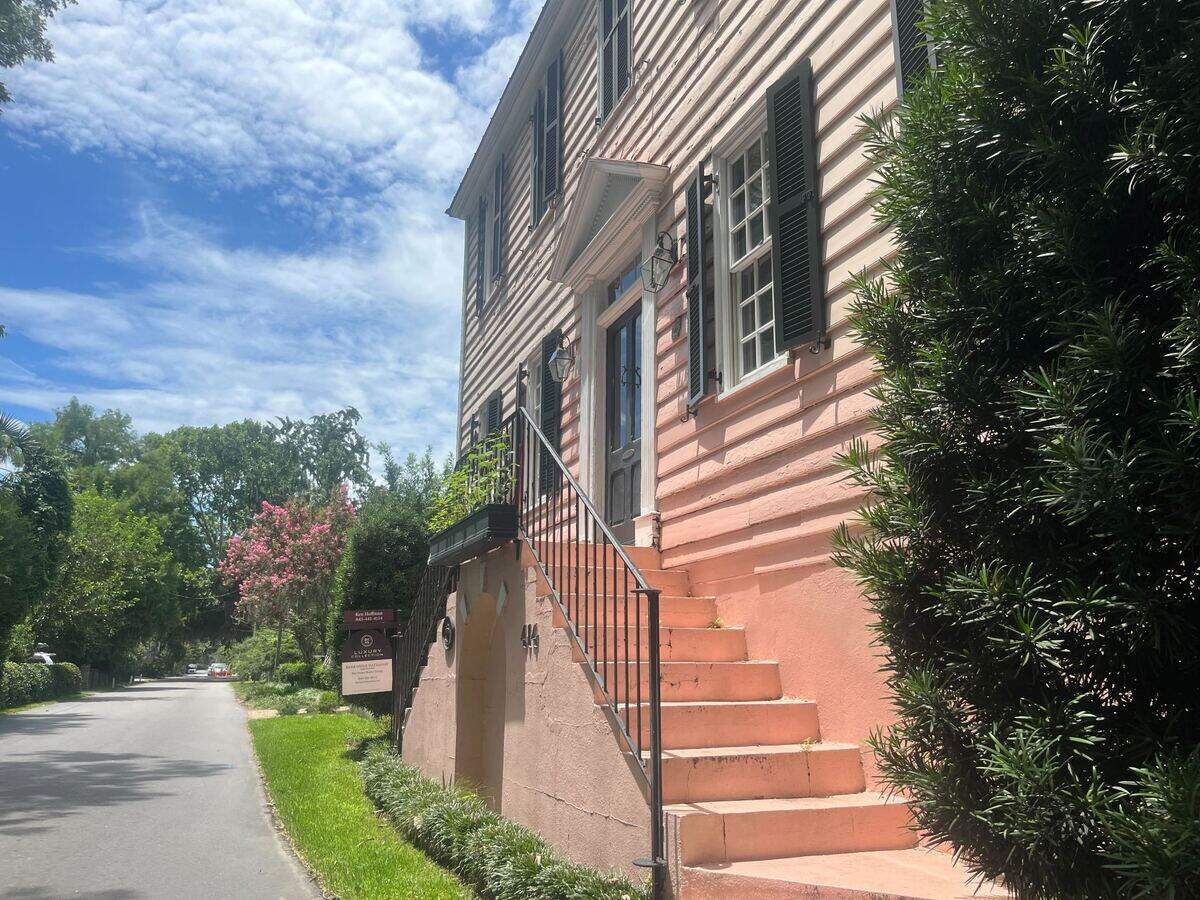
The William Johnson House, as it’s known, is located on 414 New St. in the city’s noted “Point” neighborhood notable for its grand houses near the Beaufort River. The asking price is a little over $2 million.
Even in Beaufort, which dates its founding to 1711, this two-story house, built circa 1776, is long-in-the-tooth. But it comes with all the modern conveniences, including a 72-inch TV with a built-in sound system. They’re just wrapped in Revolutionary War-era architecture.
“It’s definitely one of the oldest houses in the South,” broker Ken Hoffman says.
It’s a perfect residence, Hoffman says, for someone who wants to live in a house that’s been around since the founding of the United States, “literally.”
‘It’s our home’
The 2,556 square-foot home with three bedrooms and two baths stands out not only for its remarkable durability — its survived hurricanes and war as well as the tides of the Beaufort River — but also known for the remarkable historic figures who graced its rooms over the decades and its notable architectural style — marked by practicality.
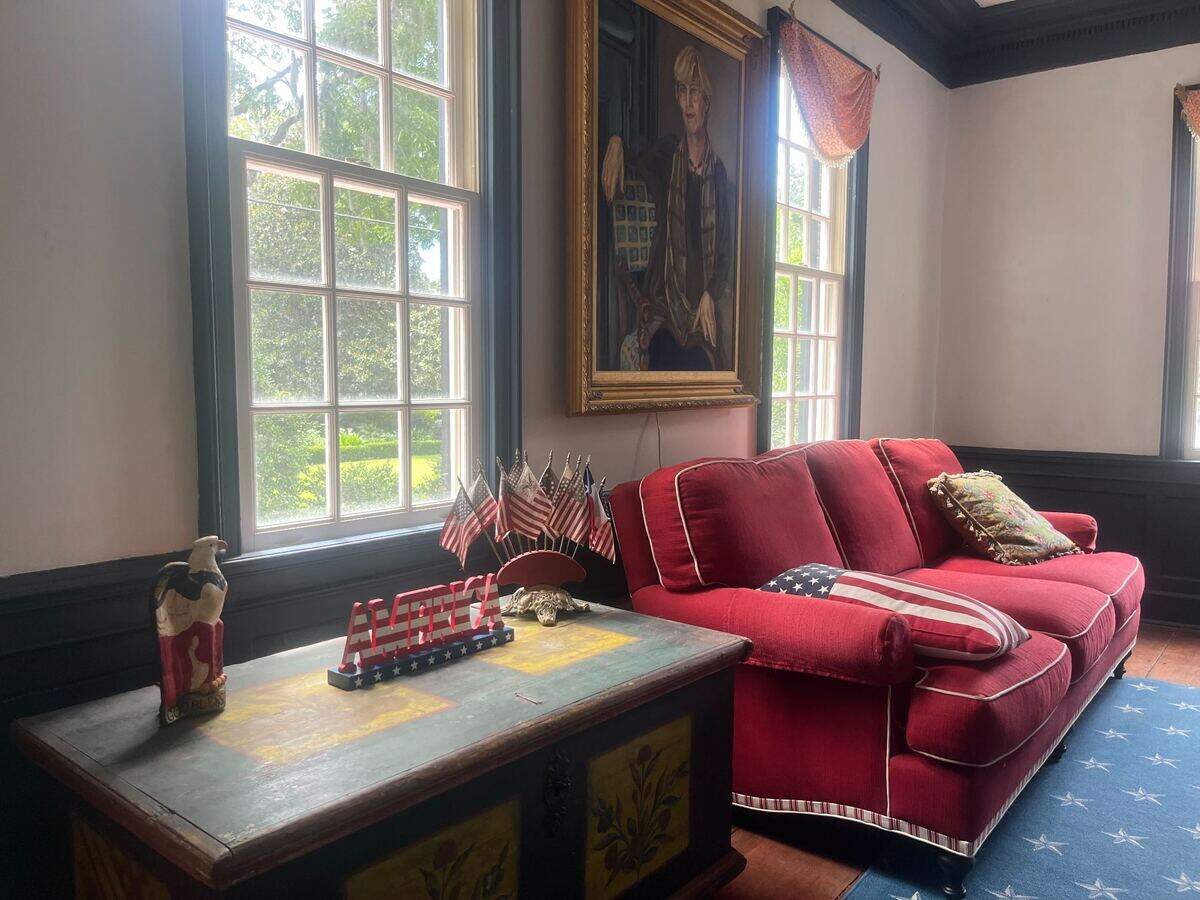
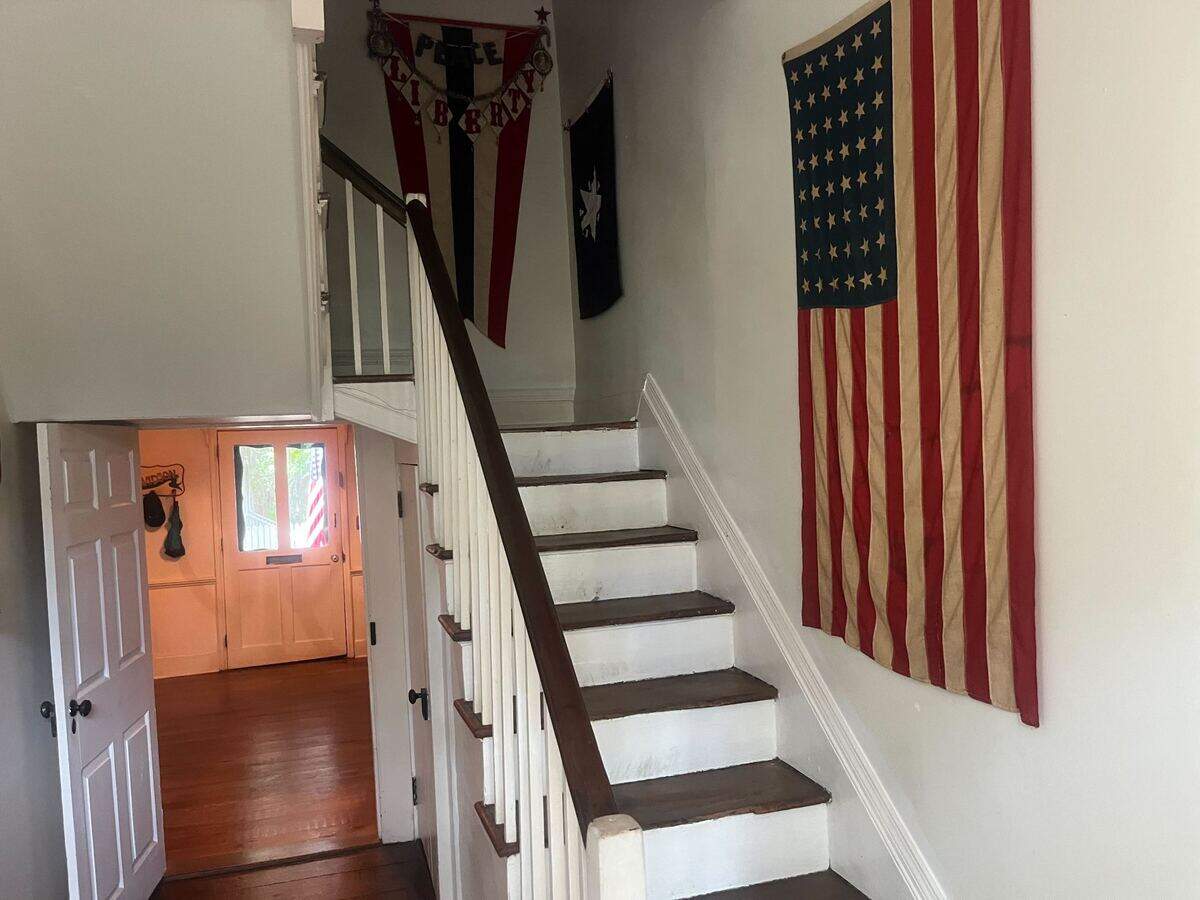
But to owners David and Pam Taub, who’ve owned and cared for it since 1980, the historic structure is more than a historical curiosity. They’ve poured their hearts into caring for, restoring and decorating it. The red-white-and-blue motif in the house’s interior seems appropriate considering it rose in the Lowcountry with the birth of the nation. That was Pam’s touch, says David.
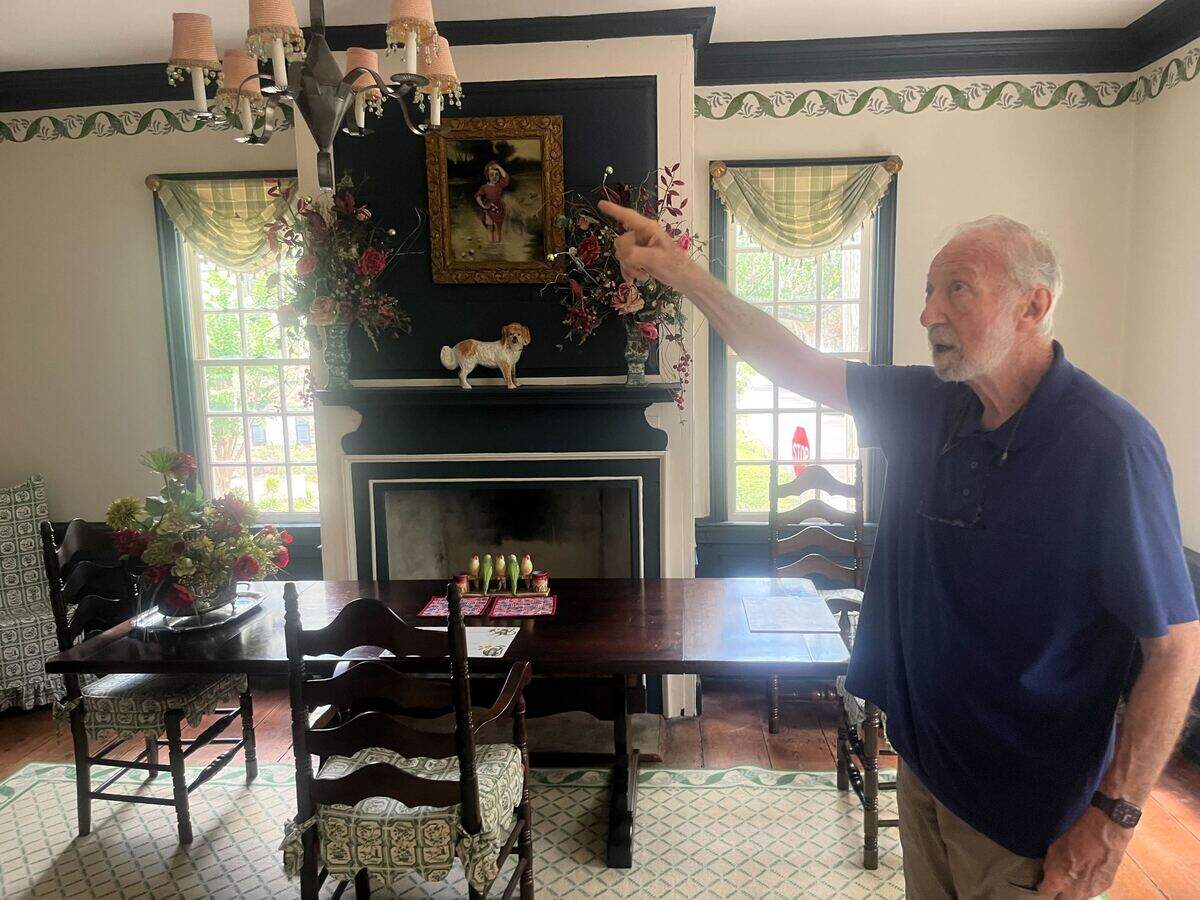
“This is our home,” David Taub said earlier this week as he proudly walked through the rooms and up and down the stairs of one of Beaufort’s oldest structures telling its story. “This is a unique home — as God is my witness.”
One of South’s oldest surviving houses
The William Johnson House is believed to have been built around 1776 although the exact date isn’t certain. One report puts the building date closer to the 1820s. Other records point to evidence that construction actually came earlier than 1776.
There is no question the house is among oldest still standing in Beaufort, Hoffman says. Records indicate it is the fourth oldest in the city. But it’s not even the oldest house in the Point with three others in that neighborhood making that claim, says Hoffman.
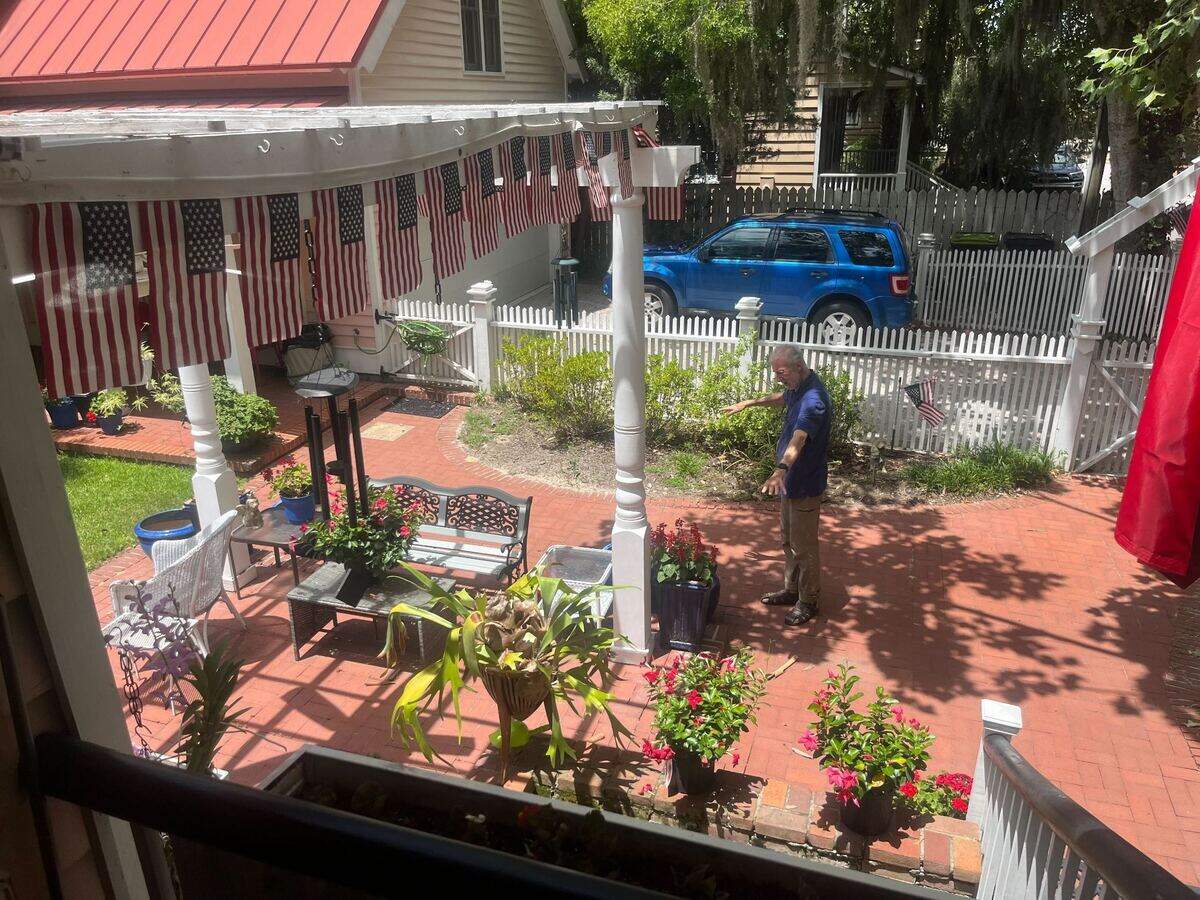
At the time of its construction, no electricity or indoor plumbing was available, and the kitchen and bathrooms would have been located outside, says Taub. Like any homeowner, the Taubs have put their own touches on the house over the years, including building a garage with a guest house above it and adding an outdoor terrace with an open-lattice pergola.
The Taubs bought the house in 1979, said David Taub, who was once the mayor of Beaufort and also served as a magistrate judge. “She wanted this house,” David Taub says of wife Pam.
One of its features is the “heart of pine” wooden floor planks, indicative of the period in which it was built, including the stairs. The 10-inch boards were hand-axed to fit the house.
Taub points them out during a tour. “Can’t get much better,” says Taub.
Physical features
The Beaufort County Historic Sites Survey describes the house as an “important provincial late Georgian style two-store timber-framed dwelling on a raised tabby basement.”
Put more simply, says Hoffman, the original house was a “two over two,” meaning there were two rooms upstairs and two rooms down, each with a fireplace and all identical. “The basic homes were not grand,” says Hoffman.
The Point’s fancy homes didn’t start arriving until after 1850, he says.
From the outside, the house appears to sit almost in the middle of North Street. That’s because the house existed long before the streets were widened.
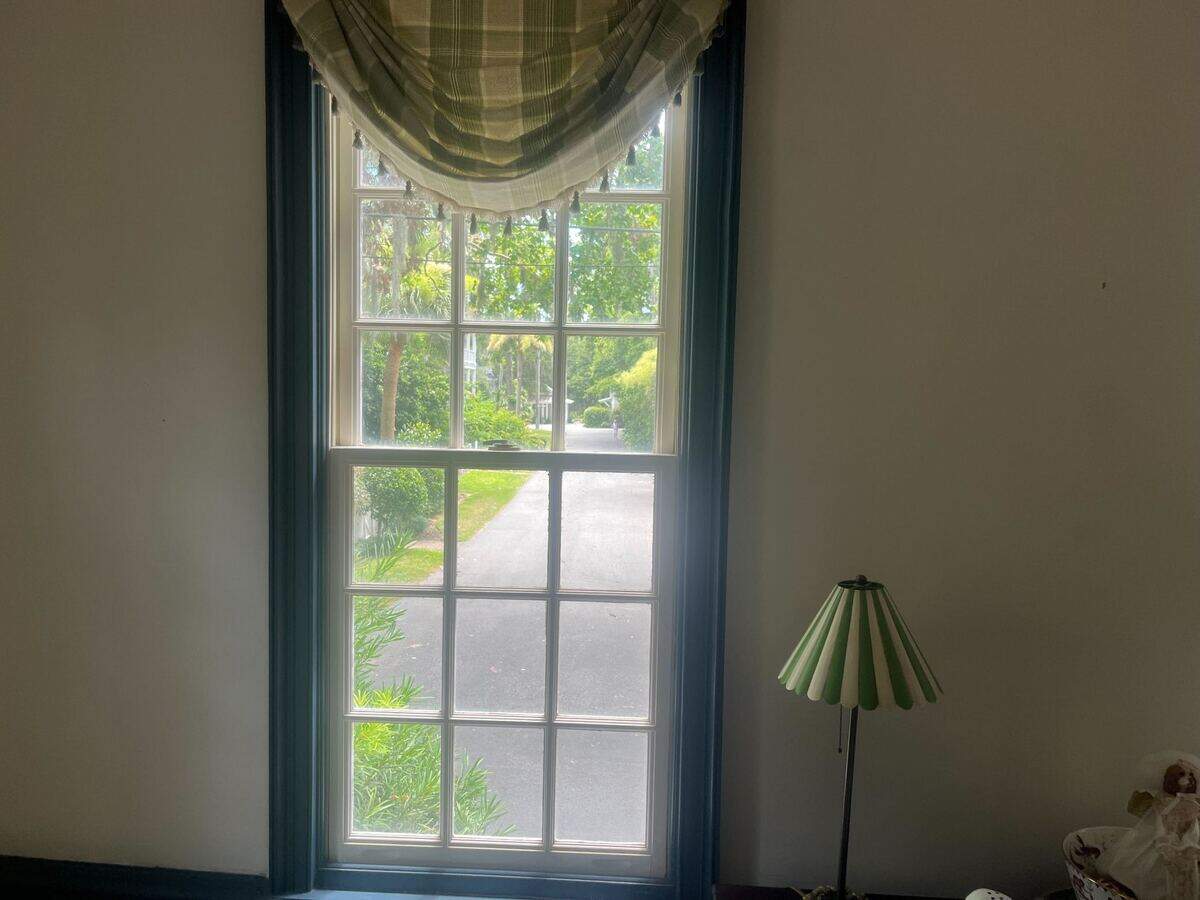
Black shutters punctuate the house’s pink exterior and accent its unusually vertical windows, which stare over a quaint narrow road in the historic neighborhood. After they bought the property, the Taubs installed “9 over 9” windows — double-hung windows with 9 pains on the top and 9 on the bottom — to replicate the originals.
The custom-designed metal roof and shutters were additions after hurricane damage.
Hoffman notes that the property’s elevation is higher than surrounding homes. It was built on higher ground because, at the time, the course of the Beaufort River was much closer to the city than it is today.
Another peculiarity of the property: The house faces east, which is unusual for homes in the Point where the prevailing cooling breezes are from the south.
Some of the tabby foundation — coastal concrete made from a mixture of lime, sand, water and oyster shells — is still intact as well.
Historic figures
The house stands out for the historic figures who lived there as well.
It was built for William Johnson, an attorney who also served as a minister at St Helena’s Episcopal Church. But Johnson made his bones as a Baptist, converting in 1802 and going on to become a giant in the faith. He was elected the first president of the Southern Baptist Convention in the 1840s. He also started the first Baptist churches in Columbia and Greenville and played a lead roll in the formation of Furman University.
Two other notable owners were Samuel J. Bampfield and Lydia Smalls, an African American couple who moved in two weeks after their wedding in 1877. They raised 11 children in the house.
Bampfield was editor of a weekly newspaper called the Beaufort New South and also a state representative, the Beaufort County clerk of court for twenty years, and the postmaster for the last two years of his life. Smalls, the daughter of Civil War hero and Congressman Robert Smalls, served as post master until 1908 following Bampfield’s death in 1899.
This story was originally published July 4, 2025 at 5:00 AM.