Port Royal leaders question removal of 247 trees at federal facility. ‘We’re concerned’
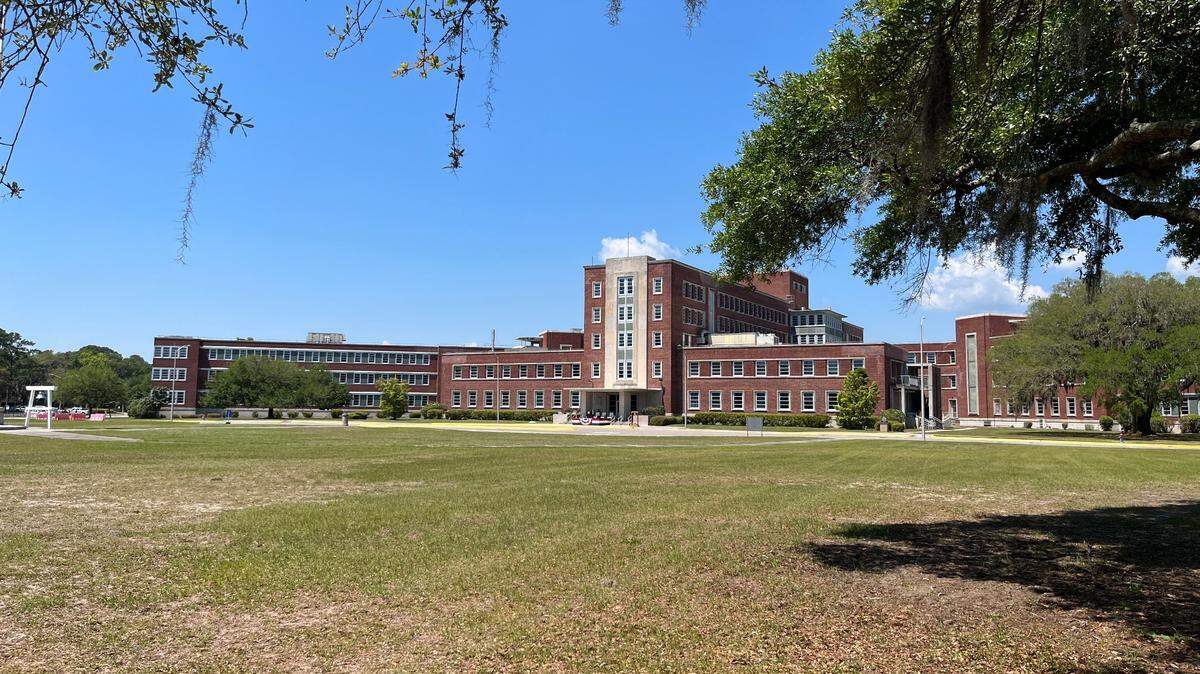
A private company that manages housing units at the landmark Naval Hospital Beaufort has run into strong resistance from the town of Port Royal, where the hospital is located, over a plan to cut down 247 trees it says are a threat to fall down possibly on houses or people.
But officials with the town of Port Royal, which passed a tough new ordinance two years ago to save more trees from development, are questioning the scale of the work and demanding more specifics even though the municipality doesn’t technically have authority to enforce that local ordinance on a federal installation.
“We’re obviously concerned,” Town Manager Van Willis told the Beaufort Gazette and Island Packet.
If a similar plan were proposed in the town, and not on federal land, Willis says, “With our tree ordinance in place we would have a hard time justifying removal of 250 trees in an existing development.”
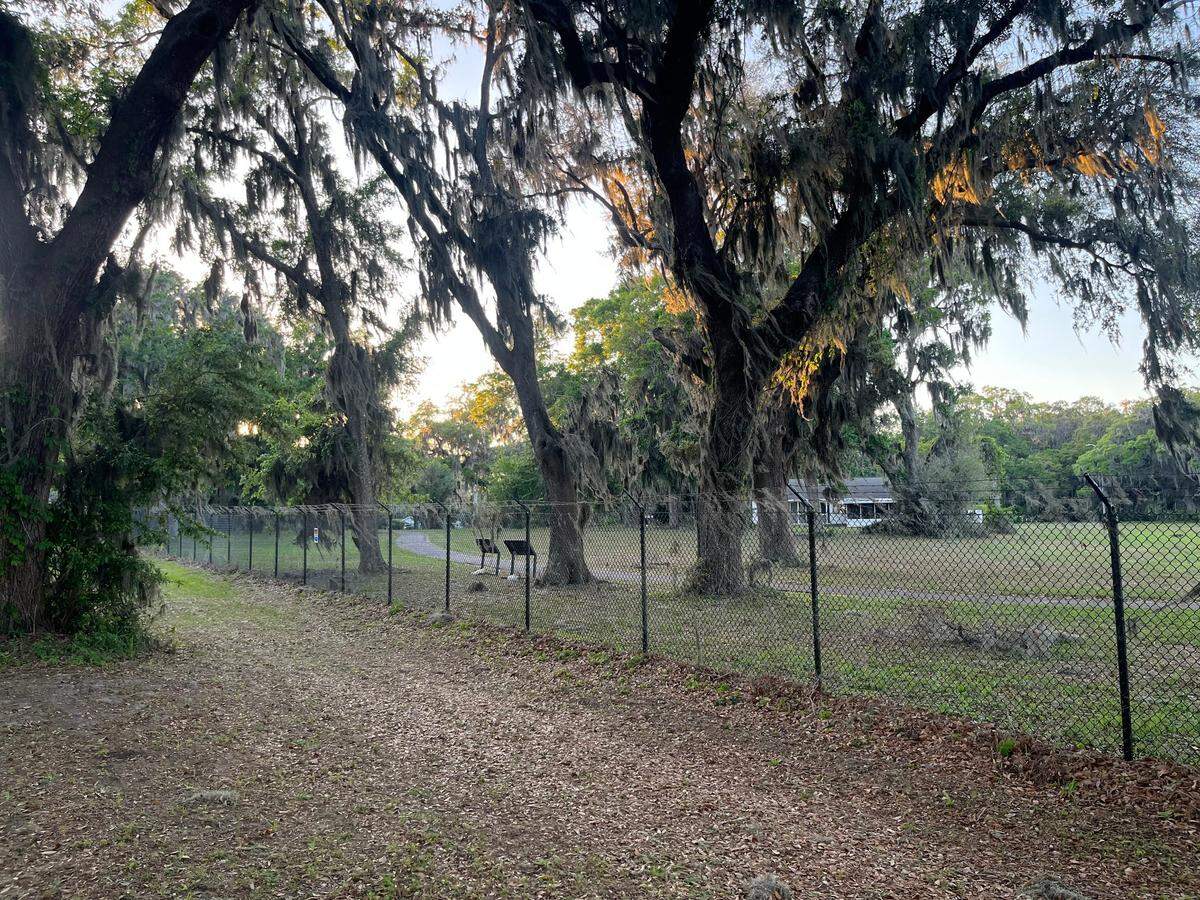
The distinctive Naval Hospital complex, which opened in 1949, is sandwiched between the Ribaut Road and the Beaufort River and is dotted with hundreds of trees, many of them classic Lowcountry live oaks draped with Spanish moss that are decades or even hundreds of years old.
Lindsay Schreiber, a spokesperson for the hospital, confirmed that 247 trees are scheduled to be removed from the property. Their stumps will be ground down. The trees, Schreiber added, are being cut down because they are diseased and pose a fall risk to people living in Naval Hospital housing which includes homes with screened-in porches in addition to recreation areas and walking trails with waterfront views.
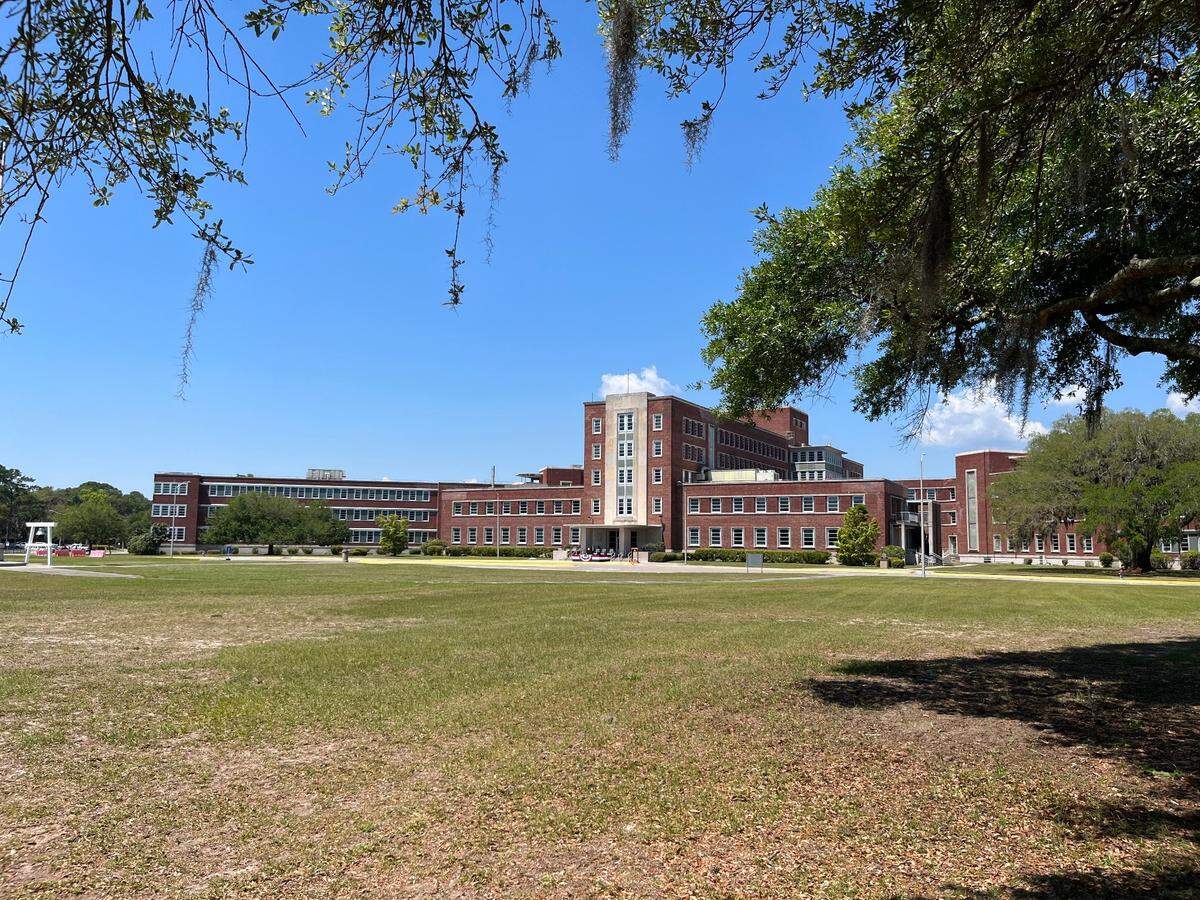
Hunt Military Communities, a private company and the largest owner and operator of military housing in the country, is proposing the tree removal, Schreiber said.
Emails have gone back and forth between the town and Hunt Military communities since December when Hunt first notified the town of the plans, according to emails provided to the newspapers following a Freedom of Information Act request.
The company initially asked the town if it was exempt from the town tree ordinance and for feedback on the work, which it had tentatively scheduled to begin in January.
Emails from the town show concern about the scale the tree removal and the loss of tree canopy, an issue that has loomed large in the community in recent years as it faces more development pressure, and seek more specific information about the locations of the trees.
On April 3, Jason Collins of Hunt Companies wrote, “Noah (Krepps, town planning director), This project is set to start soon. Following up to see if you can provide feedback regarding my question below,” a reference to a March 19 email in which Collins asked, “I’m trying to find out if this project is exempt since it is on federal land. Can you shed light on that please? We have already received an email from Beaufort County stating we are exempt.”
Krepps replied: “Jason, The project is exempt from our regulations because it is on federal land, but it will result in a significant loss of tree canopy in the heart of the town. The trees on the property are directly across the street and visible from residences outside the hospital property as well as the Town’s largest park. We are just trying to get a clear understanding of the scope of work and impact on our urban tree canopy, so we can brace for impact with questions.”
Willis joined the email thread: “The fallout publicly from removing 247 trees is going to be tremendous. If this were being done anywhere else in town, our town council and mayor would be overrun with comments and concerns. There is a federal exemption, but I cannot support the wholesale removal of that many trees. I understand pruning and removing of arborist documented diseased trees.”
Mayor Kevin Phillips also joined the email conversation: “I completely agree. Isn’t the Emancipation Oak in there?”
Collins of Hunt Companies answered: “We are only addressing trees that are around structures that pose a risk to them should they fall. We’ve had several trees fall and damage structures. Luckily, no injuries or deaths have occurred to date. We are staying away from any open areas to include where the Emancipation oak is perceived to be.”
That’s the tree where a crowd gathered on Jan. 1, 1863 to hear the first reading of the Emancipation Proclamation. The traditional location of the Emancipation Oak and historical marker are located within the boundaries of the Naval Hospital Beaufort. Right next door is Fort Frederick Heritage Preserve, a Beaufort County-run passive park, which dates to British occupation of the area and later became Camp Saxton, a Civil War garrison. It’s part of the Reconstruction Area National Park.
Port Royal approved a new tree ordinance in 2023 that imposed some of the highest financial penalties in South Carolina for taking down “specimen” and “landmark” trees. That action followed complaints from residents about large old trees with large canopies being removed for new housing developments.
The scope of work that the company provided to the town included a list of numbered trees scheduled for removal but Willis says the the plans did not include a topographic map showing the exact locations or an arborist’s report justifying it. Without that information, he said, the town won’t support removal of that many trees, particularly since the property includes areas of historic significance including the Emancipation Oak.
“We have yet to see very specific information about the removal of he trees,” Willis said. “The explanation is they pose a hazard to neighboring buildings and potentially people but without a specific site plan about where those trees are located we have nothing to go on.”
Trees will not be removed in the Emancipation Park area on Naval Hospital property or the Fort Frederick Heritage Preserve, said Schreiber, the hospital spokesperson.
Michael Murphy, an master arborist and tree consultant for local communities, says the “tree canopy would take a big hit” if the removal proceeds at the Naval Hospital. “It’s just important to keep an eye on the reason the Navy might have for removing the trees and get back to them with some sound alternatives for their goals to retain as much canopy as possible,” he said.
The plans come at a time when Port Royal and other communities across the state are beginning to survey or planning to survey tree canopies. Tree canopies can help measure growth in a community and its health, Murphy says. “There’s a certain percentage of tree canopy healthy towns would have,” Murphy says. “It is important to have them surveyed, especially with growth Port Royal has seen.”
This story was originally published April 16, 2025 at 3:03 PM.