6 months after storm Helene, boats litter Beaufort shore. Who will take responsibility?
A breeze brings instant relief at David Maw’s blissful backyard, which overlooks the Beaufort River where marsh grass is beginning to turn vibrant green and the glassy water is smudged only by the reflection of clouds and moored sail boats. Lawn chairs facing the river provide a front-row seat to what might be the best view in Beaufort.
But when two battered sailboats — one 42 feet long, the other 30 — lodged on Maw’s dreamy back doorstep in September after a tropical storm dislodged them from the local marina, it was the beginning of a long nightmare for him and his neighbors. Six months later, five of the dozen boats that broke free from the marina continue to infringe on the picturesque shoreline, much of which is in private hands. The pair of boats stuck in the mud directly behind Maw’s house sit tilted toward each other with their masts crossing like dueling swords. One is partially beached on Maw’s property.
“It’s just taken forever,” said a beleaguered Maw who is frustrated somebody has not stepped up to remove the boats by now.
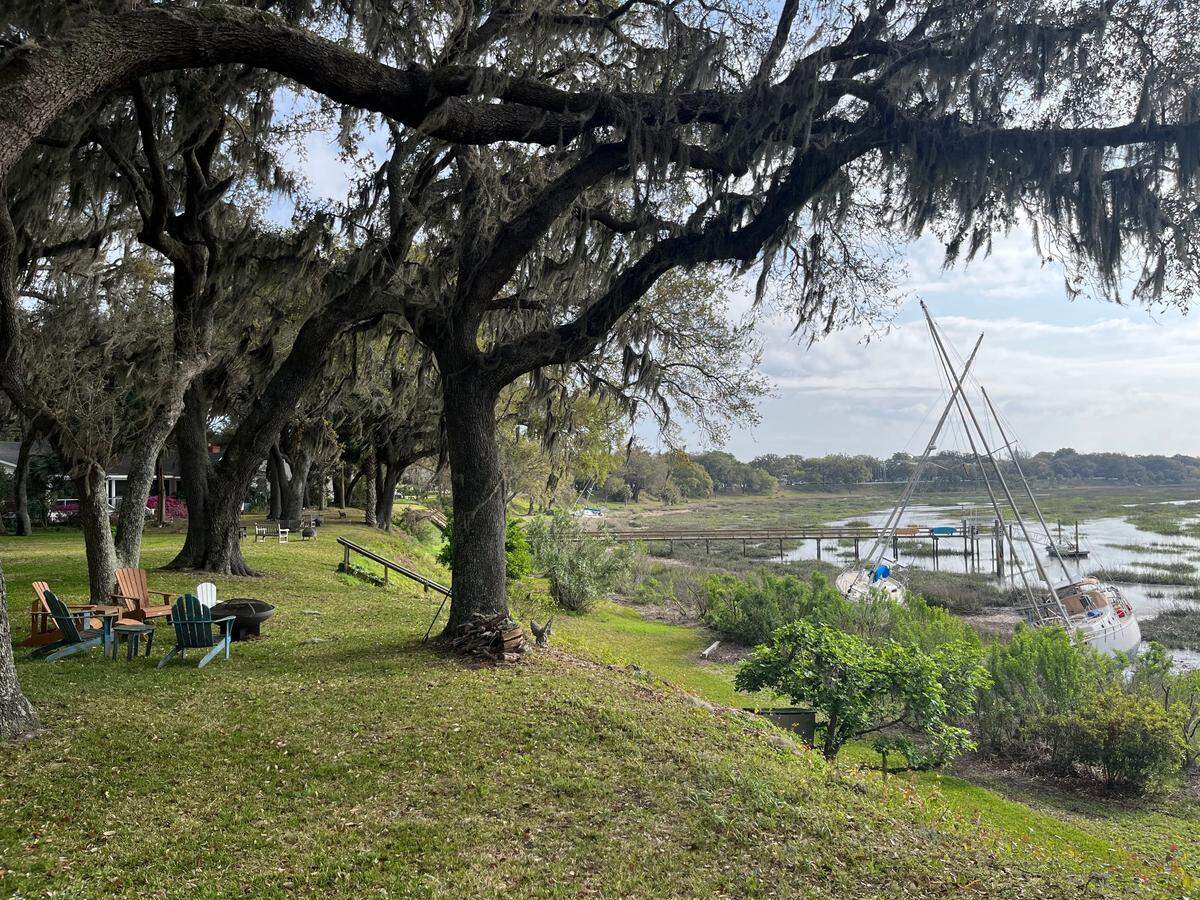
The case of the uninvited visitors highlights a long-standing problem in coastal South Carolina: Abandoned or unattended vessels littering shorelines. While the boats are ultimately the responsibility of owners, the reality is many get left behind because of the inability or refusal to pay for their removal, leaving private or state agencies with limited resources of their own to respond. The delays can leave property owners like Maw enduring months of hassle. Meanwhile, local municipalities can be forced to deal with the problem as they would any public nuisance.
The drama over the beached boats in Beaufort has played out as state lawmakers in Columbia are considering three pieces of legislation that would make it easier to remove abandoned or unattended vessels and raise money to get the work done.
What makes the Beaufort case stand out is the prominent location of the vessels, which are behind homes tucked between Bay Street and the Beaufort River. But while that stretch of real estate is the home address for locals like Maw, it’s also the city’s showpiece. Thousands of tourists walk under towering oaks lining Bay Street and past high-end and historic homes glancing at the Beaufort River. Now it is littered with 140,000 pounds of fiberglass that isn’t only contaminating the views but also poses potential pollution problems.
“Beaufort is a tourist town and Beaufort should not have trash — large pieces of trash — lying on their shoreline,” says Rudy Socha.
Socha is the CEO of a Wounded Nature-Working Veterans, a not-for-profit whose mission is removing large debris from coastal areas including 220 boats over the past seven years. Frustrated Beaufort residents reached out to the group and local and state representatives when they felt as if they were being ignored by local and state governments.
“Sometimes that’s what it takes, just the pressure on the city administration, county administration, just to get things going,” Socha said. “And I think that’s worked in this case.”
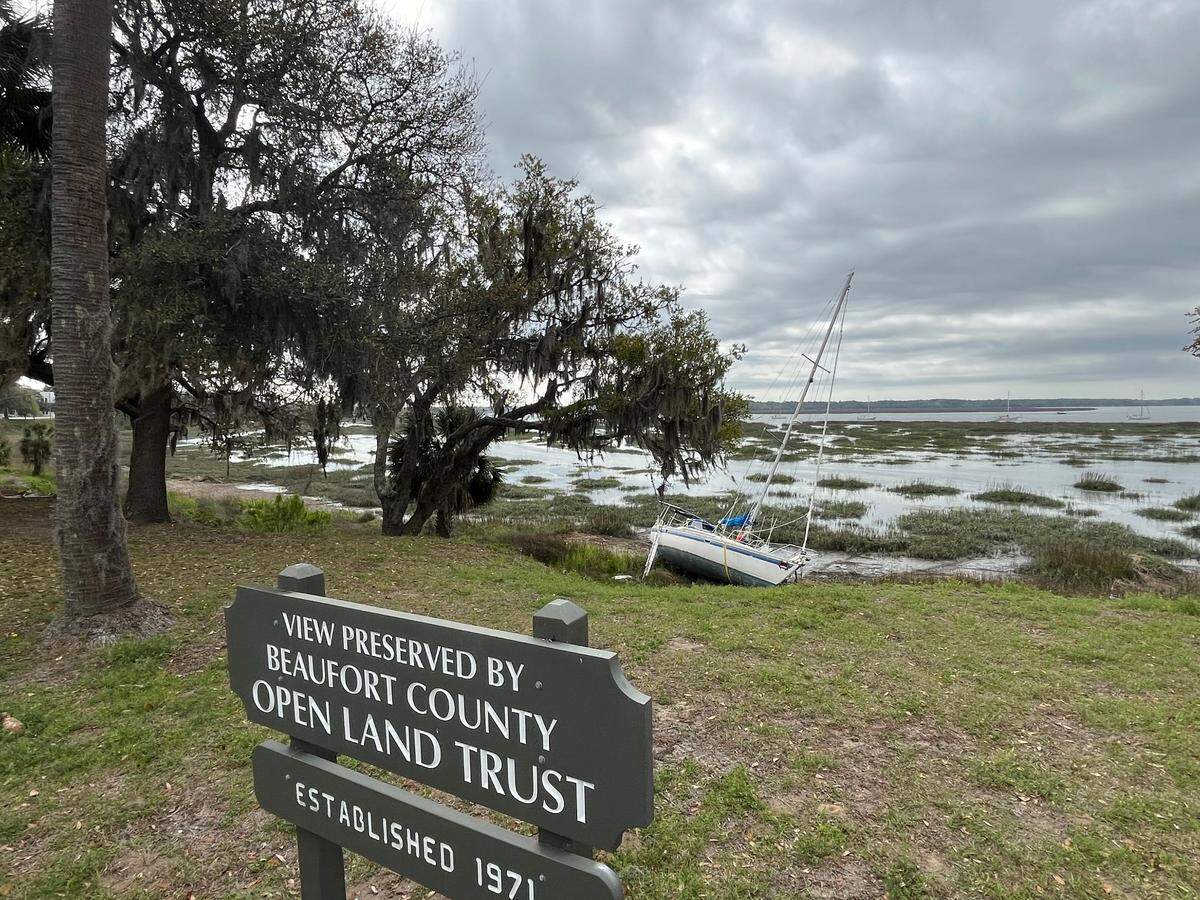
City may finance removal
City Manager Scott Marshall says the city does not have the authority to address abandoned boats.
“Essentially, you have a boat that’s private property in water the city has no jurisdiction over,” he said.
However, Marshall said Thursday, he’s been in discussions with the South Carolina Department of Natural Resources (SCDNR) about removing the vessels, with the city paying for some of the costs, because local officials want to see the issue resolved.
“At this point,” Marshall said, “it’s becoming a public nuisance.”
What the cost will be for the city isn’t known at this time, he said, as details still are being worked out before a deal is finalized.
The main issue is making sure that the boat owners turn over title of the boats to the SCDNR. “Otherwise, I’m removing private property and that wouldn’t be fair to boat owners who did have boats removed,” Marshall said.
“We’re getting significantly closer to resolution,” Marshall added.
SCDNR has shown patience with the boat owners, who are ultimately responsible, says Socha. If they don’t allow the boats to be removed, he added, they could face a $10,000 ticket, which would trigger a 14-day deadline to remove the boats or possibly face more penalties.
“We give them as much time as deemed reasonable but this has gone beyond that point down there in Beaufort,” Socha said. “I know the property owners are totally frustrated.”
If an agreement is reached, Socha also expects his group to be involved in the removal.
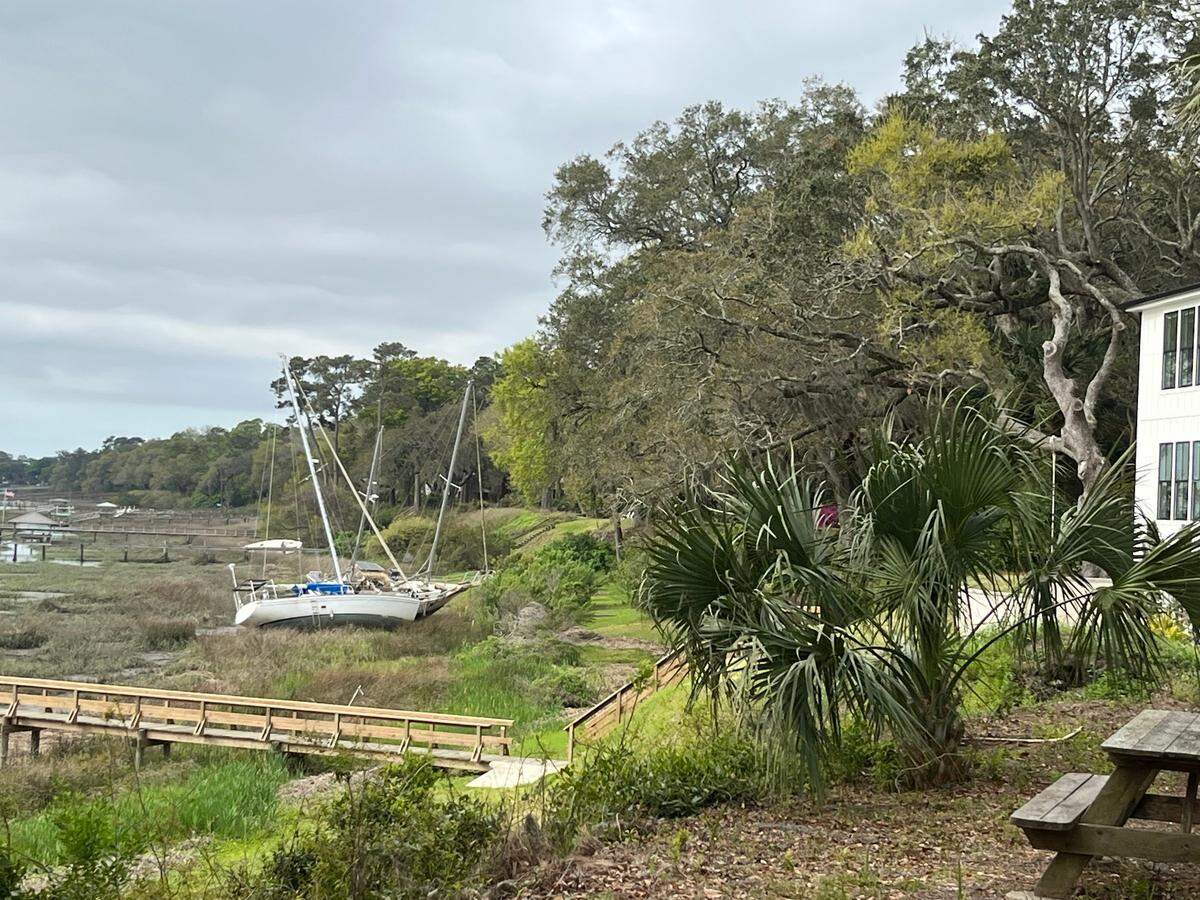
Cost and location delay removal
Two primary reasons have led to the delays in removing the boats, Socha said.
One is the cost. “It’s not cheap, that’s for sure,” says Socha, “otherwise they would be gone already.”
The second reason involves the shallow water — even at high tide — in which the boats are sitting. Some of the vessels have deep keels that are dug 3 to 4 feet into the mud.
As a result, a very long line will need to be tied between the salvage vessel and the boats on shore to pull them off the ledge. And because the boats are so entrenched, they might pull apart as they are being towed.
“They have to be dragged sort of on their side out into deeper water and being pumped the whole time because they are going to be taking on water as they are moved,” Socha said.
Using boats of their own, Wounded Nature-Working Veterans and the SCDNR previously tried to remove some of the beached boats but were unsuccessful. “We didn’t have enough horsepower between all of our boats combined,” Socha said. “Now we’re going to have to call in some bigger guns.”
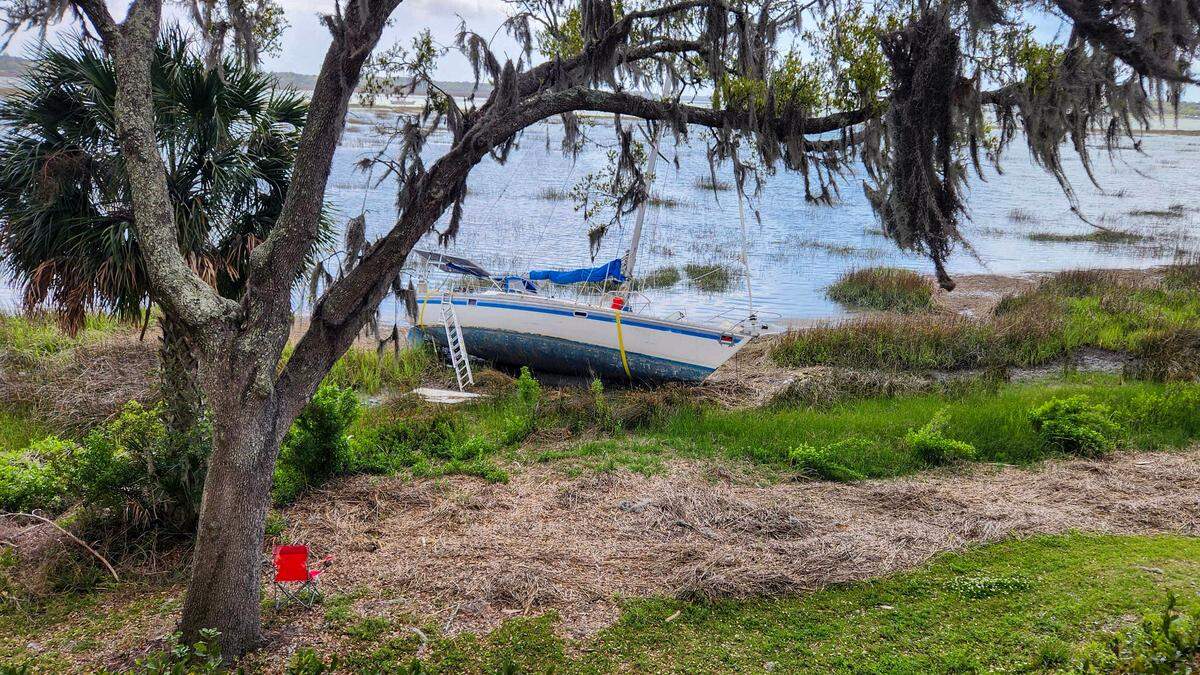
Environmental issues
Time is of the essence when removing “abandoned, derelict vessels” because they frequently contain fuel, oil, lead paint or other hazardous chemicals that can leach into the water as they deteriorate, said Lt. Charlotte M. McKee of SCDNR Law Enforcement Staff Operations, which assists in removing these lost vessels from waterways.
But current laws are outdated, requiring a minimum of 90 days after an investigation before action can be taken, she said. This delay often allows vessels to deteriorate further, making cleanup more time-consuming and costly.
SCDNR is supporting a new bill proposed by state Sen. Chip Campsen, R-Charleston, aimed at streamlining the removal process and deterring future boat abandonment, which McKee calls a significant problem statewide but especially on the coast. The bill would expand the criteria for classifying a vessel as abandoned and allocate funding, which should lead to more boats being removed in the future.
Property rights affected
In September, high winds from Tropical Storm Helene ripped several boats from their moorings in the Beaufort Marina and deposited them nearly in the backyards of several Bay Street homes. Several were removed by the owners but five still remain, four of them clustered in the same vicinity.
Maw says his property rights have been affected by the two boats behind his home. For one, if he wanted to sell his home now he couldn’t because of the boats. Also, he can’t get a permit for a dock with the boats in the way.
“You make a large investment in your property and all of a sudden someone has infringed on your investment,” he says. “The right to our deed has been taken from us.”
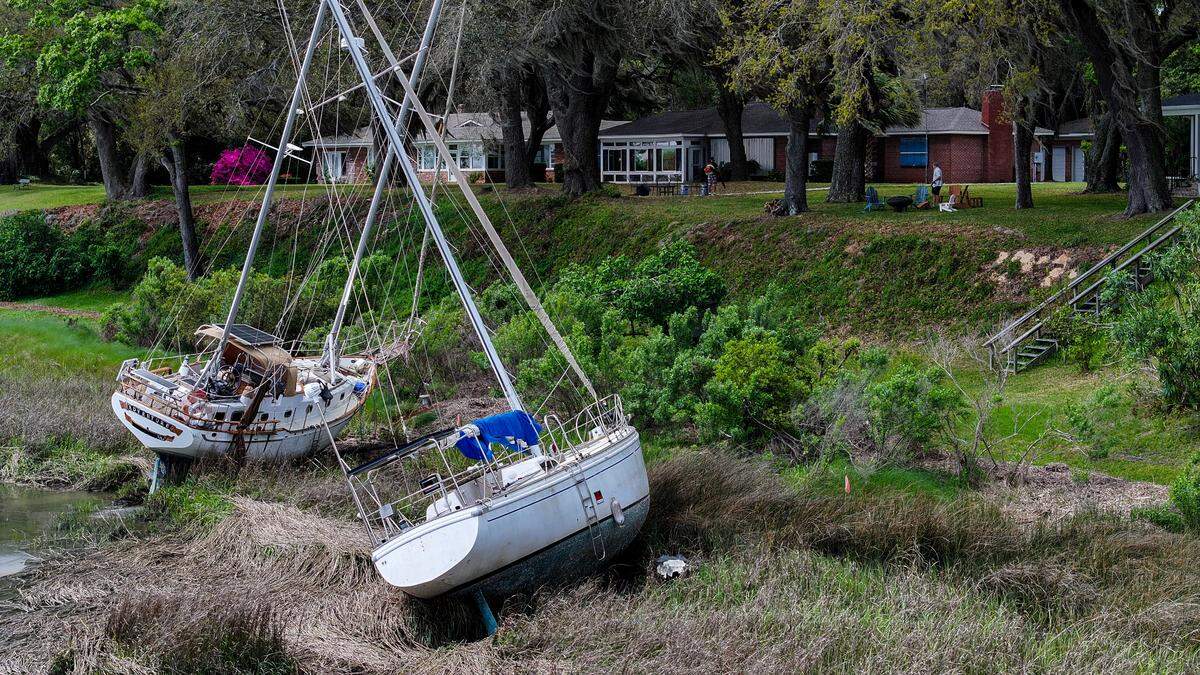
Maw and his neighbors are frustrated by the experience of dealing with the boats and the bureaucracy. They’ve talked to officials with the city, state Department of Natural Resources and Safe Harbor, which runs the marina. They’ve talked to the owners of the boats and even state lawmakers. Still the boats remain. In Maw’s view, everybody seems to be pointing fingers. Meanwhile, property owners feel ignored and like they don’t have much recourse. A car on private property could be towed away, says Maw. If he tried to have the boat that is partially on his property moved, Maw said, he could be held responsible for any damage.
“The thing is,” says Maw, “no one wants to take responsibility because it’s expensive.”
This story was originally published April 4, 2025 at 8:27 AM.