Monster gator named after ‘Munsters’ actor is star on Parris Island. ‘He goes where he wants’
A monster alligator named Fred — after the star of the old TV sitcom “The Munsters” — is a celebrity himself at a golf course on Parris Island, home of one of the toughest military training bases in the country.
The big gator throws his weight around and rules with an iron jaw.
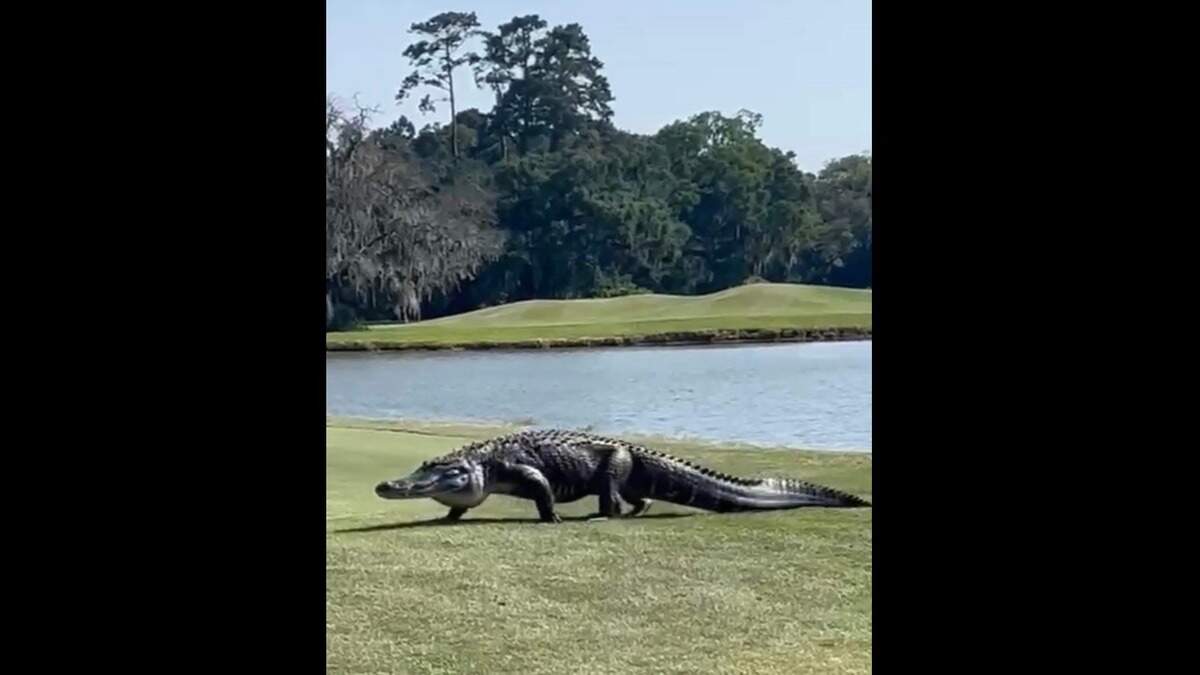
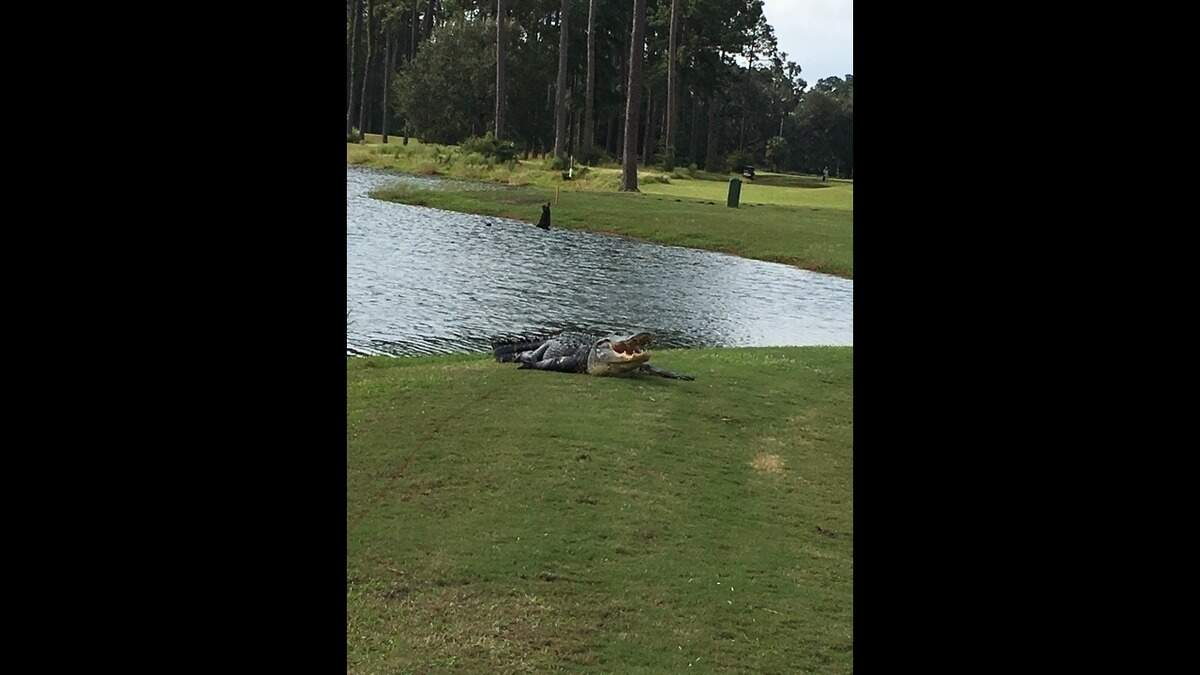
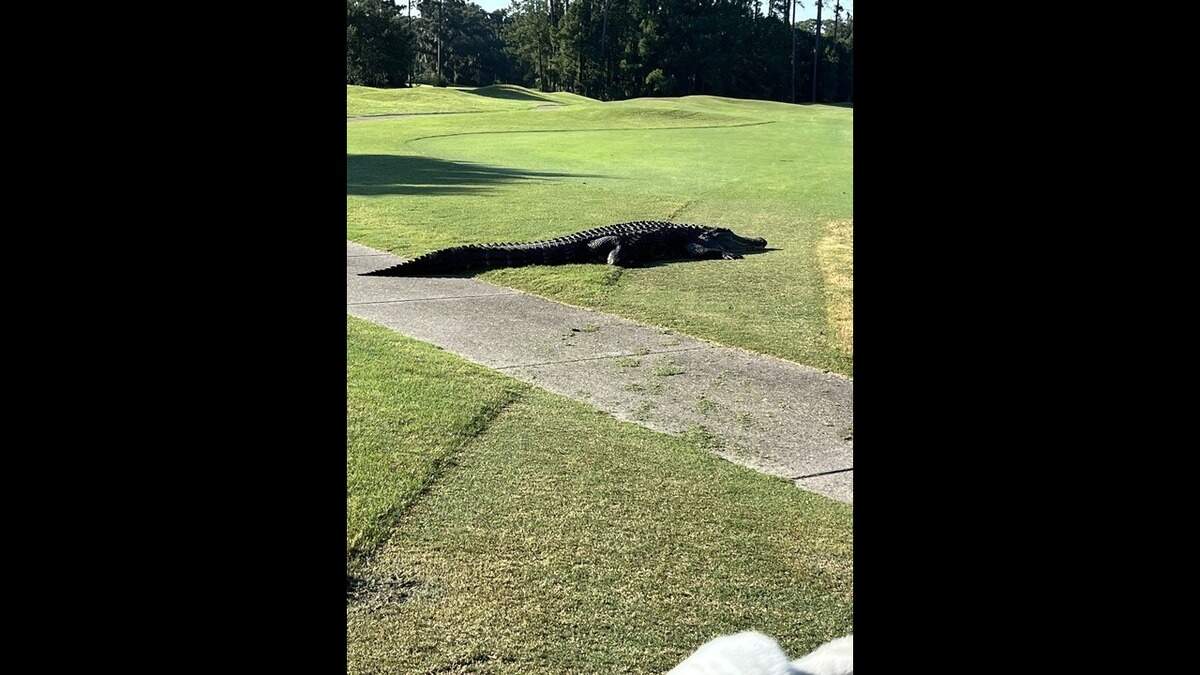
At the age of 40-something, the gator has attained revered status at the Legends at Parris Island Golf Course. Golfers always give him ample room, giving up their ball if it’s in his vicinity and marveling as he swaggers across a green or fairway, dragging a tail the size of a log with his jowly, massive head swaying right to left.
“He’s a big ol’ boy,” says Morgan Hart, alligator project leader for the South Carolina Department of Natural Resources, when shown photos.
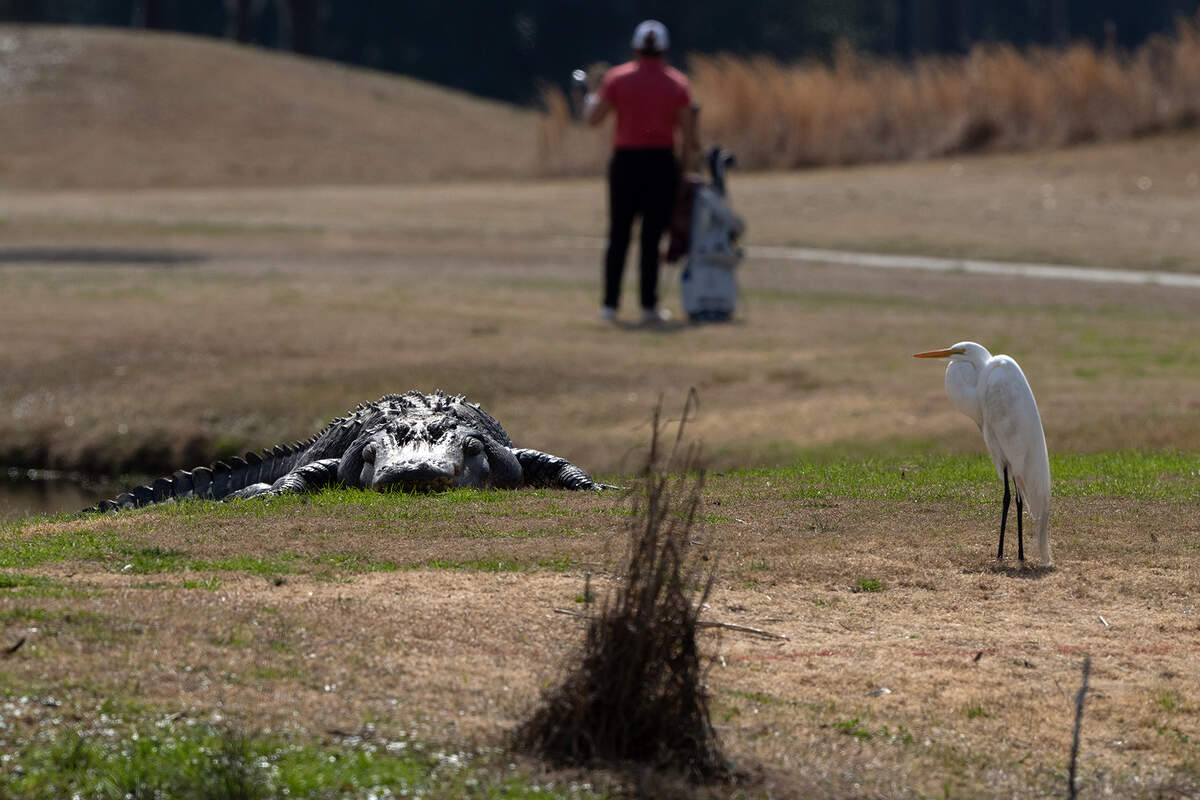
Without verification, Hart can only guess Fred is at least 12 feet long and weighs around 600 pounds. That makes him a very large male but not a record-breaker.
“This would be a dominate male,” Hart says of Fred. “The territory, he controls. He’s sort of in charge of it. He’s probably got multiple females he visits.”
Patrick Turso, who’s been watching Fred in action for years, suspects Fred is even bigger but he’s smart enough not to attempt a measurement. He’s witnessed Fred gobble down a raccoon in a single bite.
“He’s so wide,” says Turso. “I could fit in him and I’m a 200-pounder.”
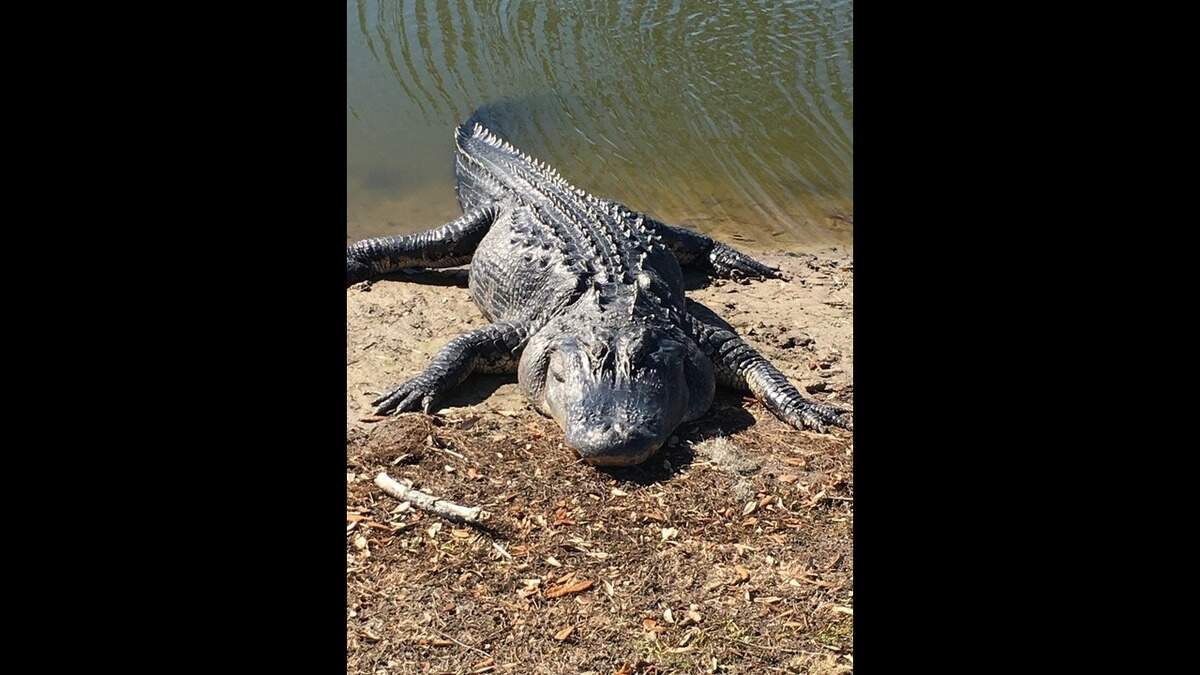
Fred’s tail, Turso notes, is longer than his wife, who stands 5-foot-5.
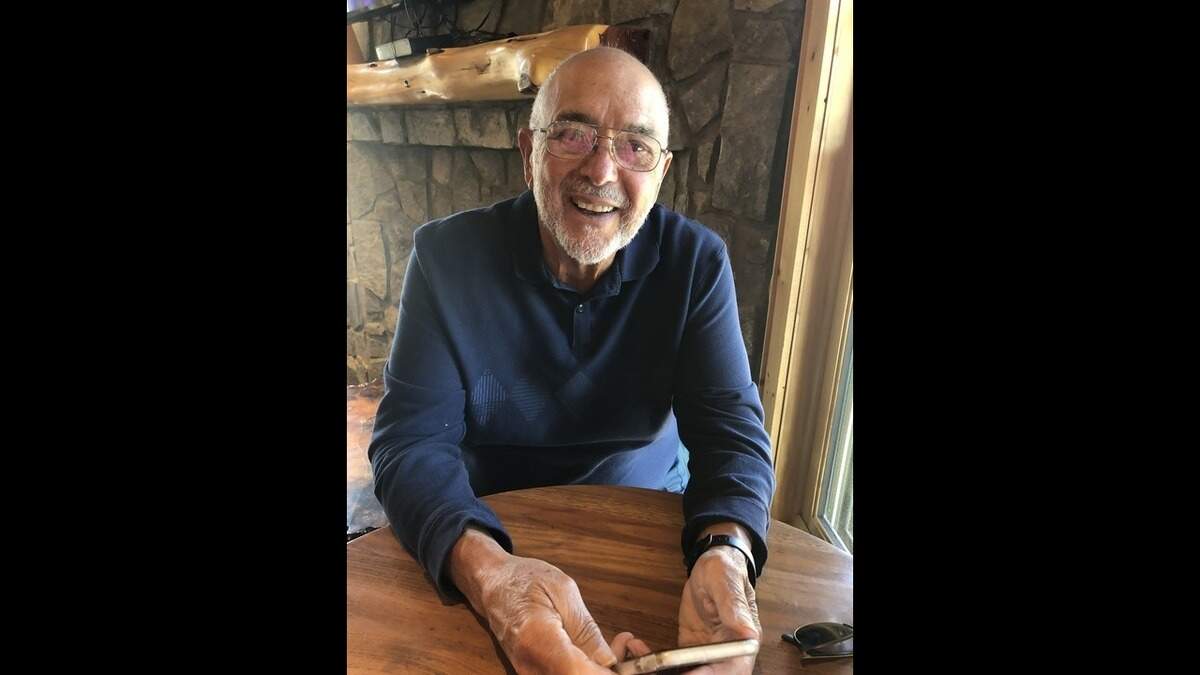
Turso, a native New Yorker who now lives in Beaufort, takes credit for naming the impressive alligator after seeing it for the first time while golfing in 2015. “I said, ‘Look at the size of that gator,’” recalls Turso, who watched the brute grab a 6-foot gator in his jaws — alligators have a stronger bite force than a lion — and fling it 3 feet into the air.
Turso snapped a photograph and put it on Facebook and named the giant after the biggest man he had ever met — Fred Gwynne, who starred as the jovial giant Herman Munster in “The Munsters,” the 1960s TV sitcom about a family of wacky but friendly monsters.
In the 1970s, while living in New York, Turso encountered Gwynne on the racquetball courts of an athletic club where both were members. The experience of trying to maneuver around the 6-foot, 5-inch Gwynne left a lasting impression on Turso. “He was so big on the court,” Turso says.
A half-century later, when Turso saw the big gator on the South Carolina golf course, he instantly recalled Gwynne.
“I never told anybody it was Fred Gwynne,” Turso said of how he chose the name for the now-famous Parris Island alligator, “but that was how it happened.”
Fred’s rise to fame
Fred gained fame through Facebook pages of Turso and the golf course and countless other social media posts.
The 8,000-acre U.S. Marine Corps Recruit Depot is located on Parris Island. It’s where recruits from across the eastern half of the country go through basic training. Signs at the Recruit Depot boast “We Make Marines.”
But the island, known for its steamy temperatures and low-lying, marshy terrain, also is a perfect habitat for another ultimate fighter — alligators. Many of those gators roam the 18-hole golf course on the island, which is run by Marine Corps Community Services and open to the public. Other bruisers, such as “yellow tail,” the second largest gator on the course, sometimes are mistaken for Fred but they’re just pretenders.
“He’s the largest gator on the property,” Jeff Harris, the course’s head golf pro, says of Fred. “People do sort of talk about him and look for him and tell stories of having a golf ball ending up next to him and not wanting to venture close enough to get their ball.”
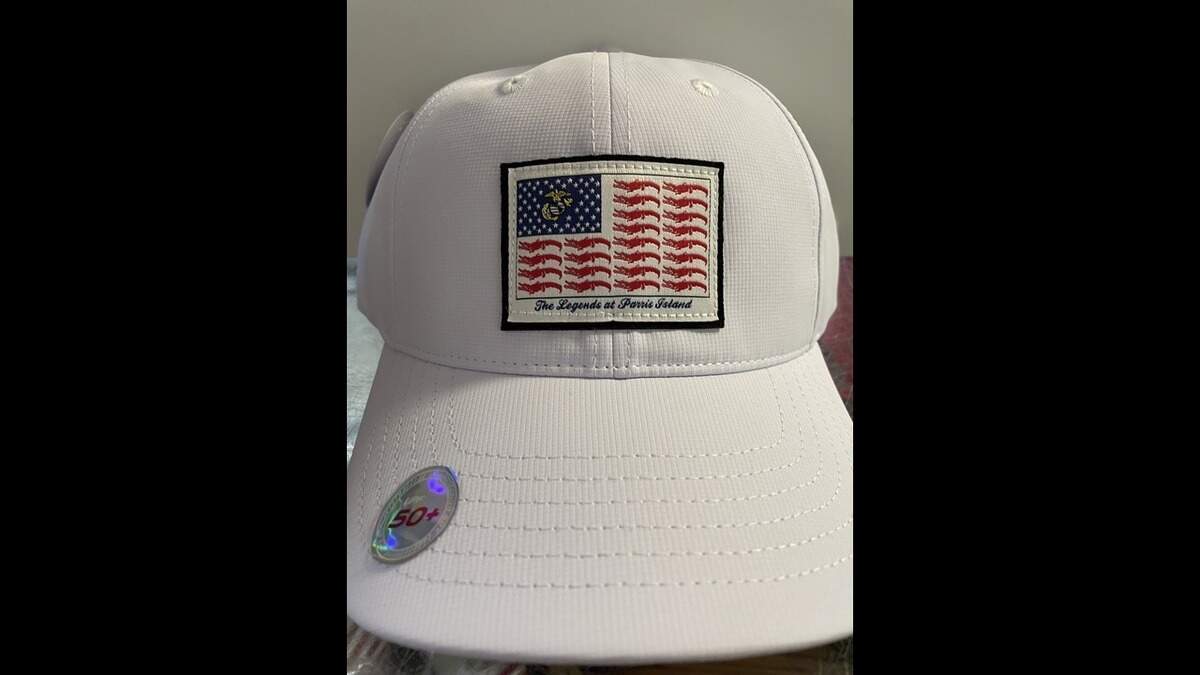
The course even designed a golf cap in his honor. The hat features an American flag that’s been modified with red-colored alligators in place of the stripes. It’s affectionately referred to by pro shop staff as the “Fred cap,” Harris says.
“It sells very well,” Harris says. “The word has spread around a bit and people come and ask for it at times.”
Turso, 75, used to work at the golf course and drove around it regularly. He continues to golf four times a week. As a result, he’s witnessed Fred in action many times since that first encounter 10 years ago but a glimpse of the gator is never guaranteed. “You see Fred when he wants to be seen,” Turso says.
A few years back, Turso watched Fred eat a raccoon with one bite. “He threw his head back and it was gone,” Turso said.
One time, after a vulture descended on a pond looking for an easy meal of floating dead fish following a die-off, Turso watched as Fred seemingly came out of nowhere “and ate the vulture right in the air.”
“He’s an institution,” Turso says of Fred.
Hart estimates Fred’s age at 35 or 40 but he could be as old as 80. Alligators typically live until at least 60.
Fred is big, but not the biggest
While Fred is big, he’s not he biggest. Especially large gators can reach 1,000 pounds and grow to 10 to 13 feet, Hart says. Once they reach their maximum length, they keep growing outward, getting “fat and happy” as they pack on more muscle and fat especially around their head, Hart said.
According to the AZ Animals website, South Carolina’s biggest alligator catch was 13 feet 6 inches and 1,025 pounds caught by Maryellen Mara-Christian of Fitchburg, Mass. in Lake Moultrie in 2010. While alligator hunting is allowed in the state, it’s prohibited at Parris Island.
Alligators of Fred’s size tend to be targeted by hunters because they are considered trophies, Hart said, which makes the ones that do survive special creatures.
“It’s always nice to see one of the big ones that’s not the object of being killed just because it’s big,” Hart says.
Hart, who has been on the back of a 13-foot alligator, continues to be amazed by their power after years of fitting them with tracking devices used in studies of their movement, growth and population.
“It is incredible,” she says. “When they breathe, it lifts your knees off the ground.”
The alligator population in South Carolina is about 100,000, with the highest concentrations along the coast in places such as Parris Island.
Even though Fred is a named friend of the golf course, Hart worries that people will get complacent around him and they shouldn’t. “Alligators are wild animals that can kill you,” she says.
And even though hunting is not allowed on the island, people can still pose a threat to gators like Fred. Turso notes that a “fed gator is a dead gator” meaning they must be removed from the population if they lose their fear of people after receiving food rewards. “You don’t want to do that,” Turso says.
This story was originally published March 20, 2025 at 11:40 AM.