Landmark Beaufort grocery site on Duke Street replaced by new building and mission
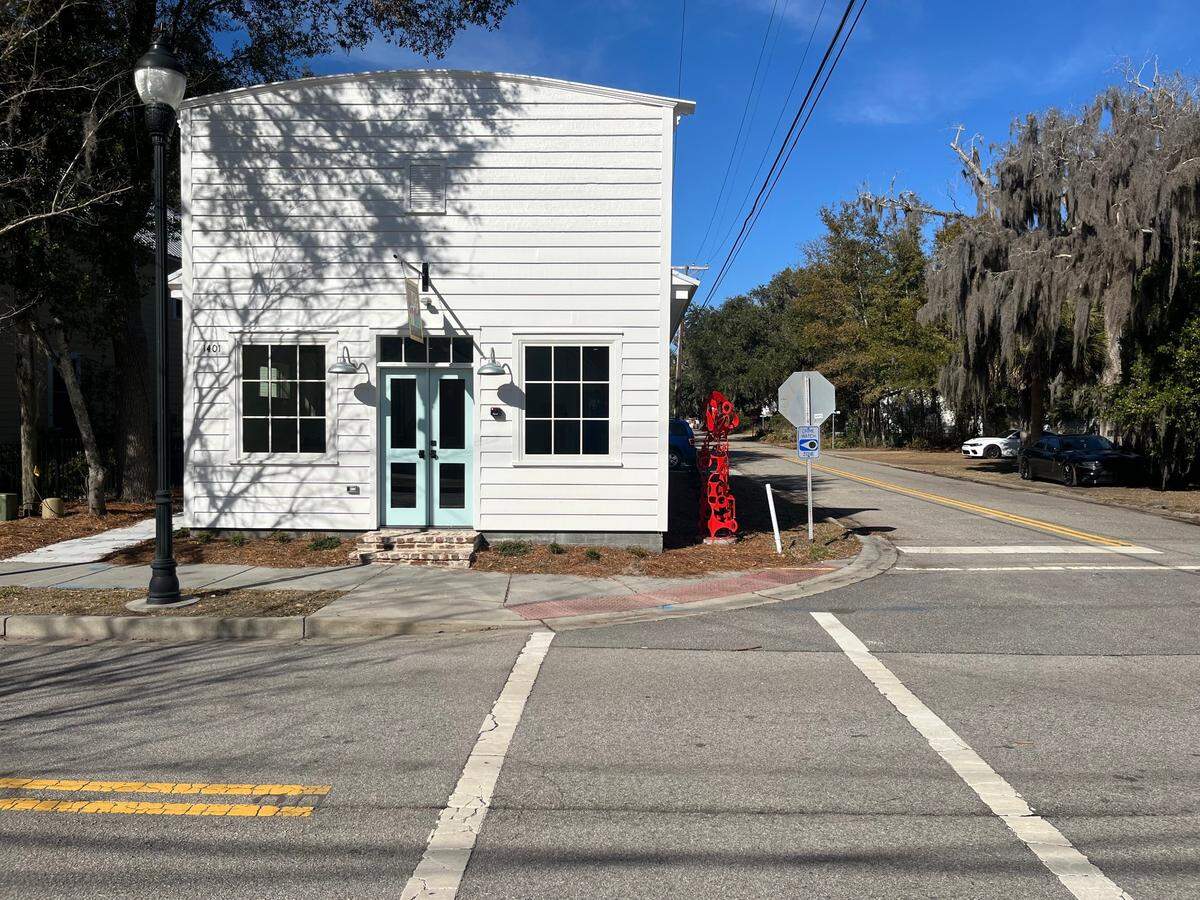
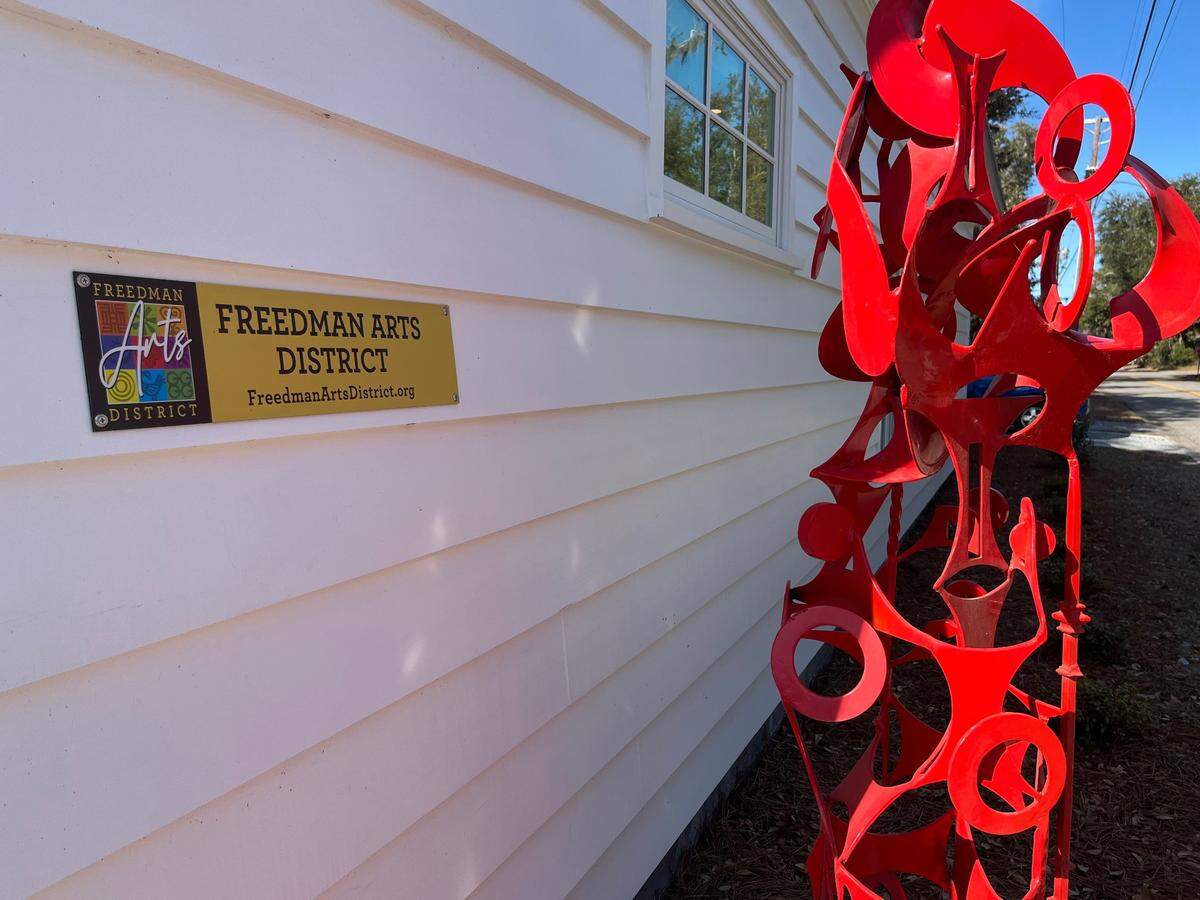
The Freedman Arts District, a not-for-profit that promotes the arts and preserves historic buildings in Beaufort, has constructed a new building to serve as its headquarters and it opened recently at 1401 Duke St.
The simple-looking white structure with a false facade looks remarkably similar to the building that occupied the corner of Duke and Wilmington streets for more than a century. Mimicking the style of the historic structure was by design and a nod to the fascinating 125-year-old history of the original, which sheds light on the evolution of the Northwest Quadrant, one of the city’s historic Black neighborhoods.
For decades, the narrow 39-by-25-foot one-story building on Duke Street, built with salvaged lumber, served as the go-to grocery for residents of the neighborhood. Sometimes, children traded pecans for penny candy. An immigrant from China was among the multiple merchants to ply his wares in the building over the years while one family that owned the property hailed from Denmark.
Unfortunately, the original was in such poor condition that it could not be saved and it was demolished in 2023, says Cherimie Weatherford, the executive director of the Arts District.
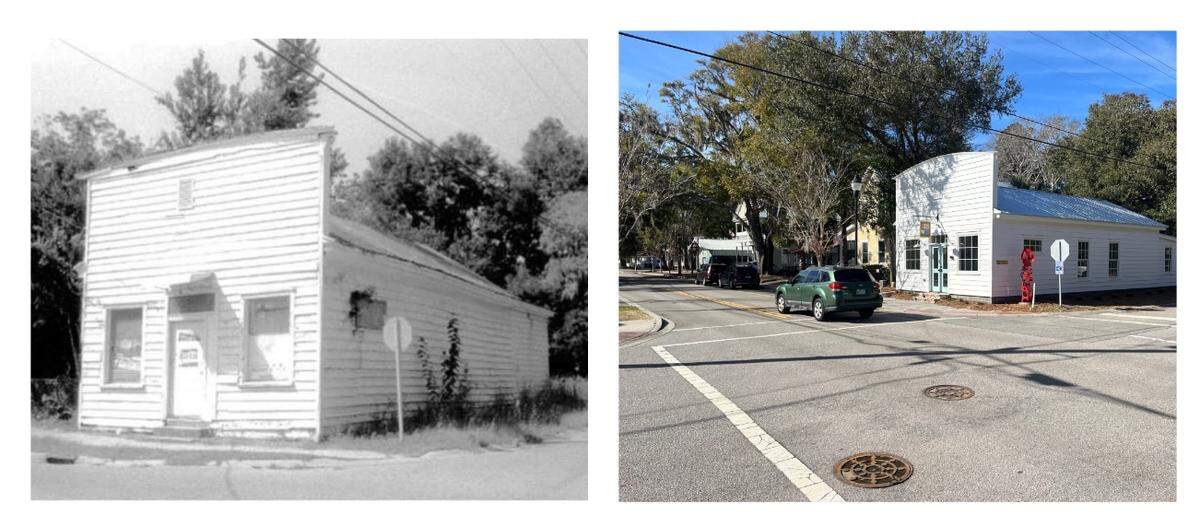
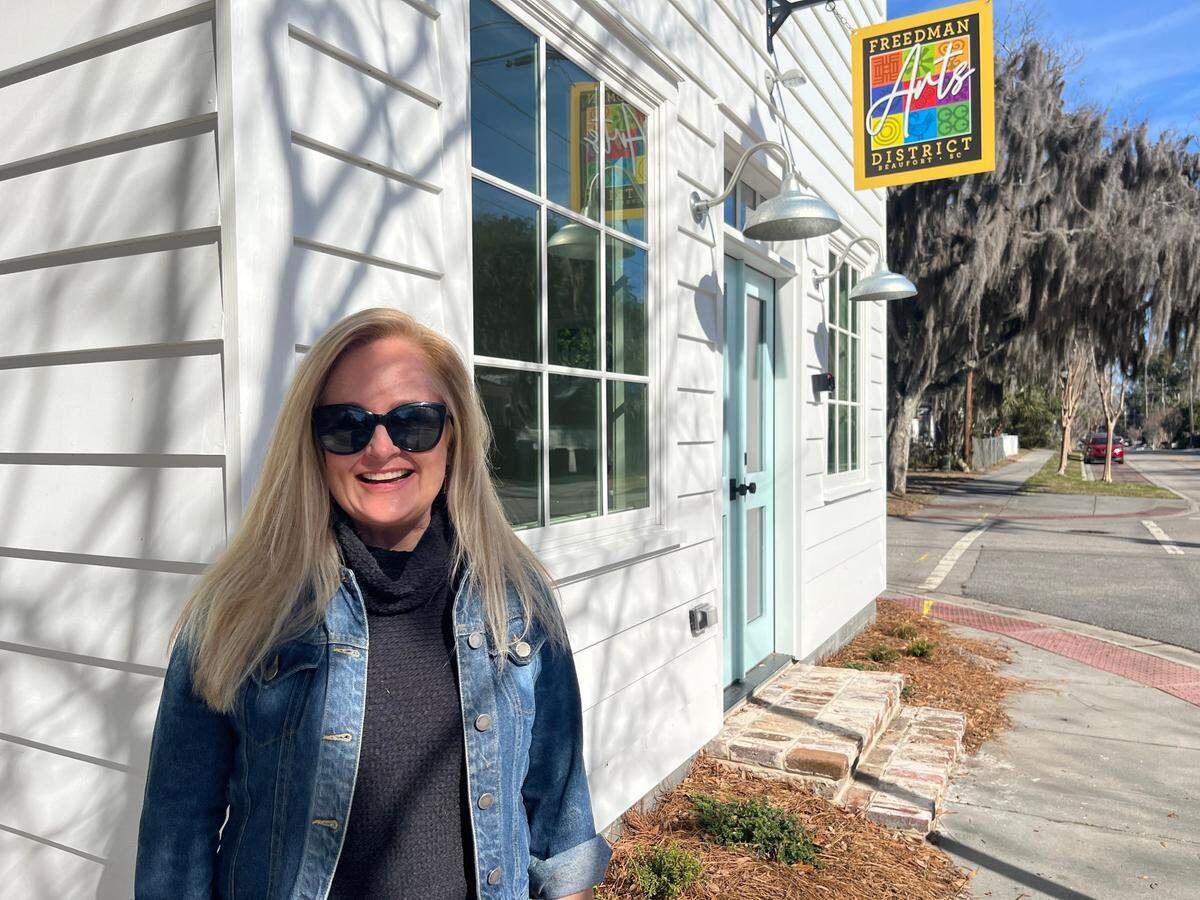
“We did our very best to build something that was respectful to the history of that building,” she said of the new building that was constructed in its place that will serve as the organization’s headquarters.
The group is now striving to serve the neighborhood in a different way by promoting the arts and artists who live in the neighborhood and restoring old structures before it’s too late to save them. The group was launched in November 2022 with a mission of marrying arts promotion and history preservation.
“We feel like it’s right in the middle of the district we want to preserve,” Weatherford says of the new headquarters on the historic site.
The organization hired historian Nick Linville to research the property’s history which revealed the original building was constructed around 1900 although the property dates to the Civil War era.
Multiple grocery stores occupied site
The store would become a landmark, supplying the families of the growing African American neighborhood known as the Northwest Quadrant, for three quarters of a century. Martin’s Grocery, Lawson’s Market, Dobbs Market, the Corner Store and J. & M. Market were among the stores that occupied the site over the years.
“The store was a site that helped anchor a thriving community,” Linville says in his report.
Its later descent into decay is an example of how corner stores in residential areas are becoming relics, he adds.
O. ‘Chaw’: Chinese merchant lives at property
O. Chaw, a Chinese immigrant who lived in and operated the store in the 1910s, was just one of several merchants who sold groceries at the venerable corner store over the decades.
His name as it appears in census records, notes Linville, is probably a misspelling. He was a 72-year-old naturalized citizen who immigrated to the United States in 1878 who could speak and read English.
The Christensens: Denmark natives
The property was in the hands of the Christensen family by 1926. Records show that brothers Niels and Frederik Christensen consolidated the property with other parcels under N. Christensen and Sons. The brothers were the sons of Niels Christensen, Sr., a native of Denmark who immigrated to New York prior to the Civil War and first visited the Lowcountry as a Union soldier. Before Christensen’s service ended, he led an infantry of U.S. “Colored” Troops and was married to renowned suffragist, folklorist, and educator Abbie Holmes Christensen. After the war, he settled in Beaufort where he established a large hardware company in the 1870s and served as keeper of the National Cemetery.
The Christensens likely leased the store to merchants such as O. Chaw.
Charles A. Martin sells fireworks and ice cream
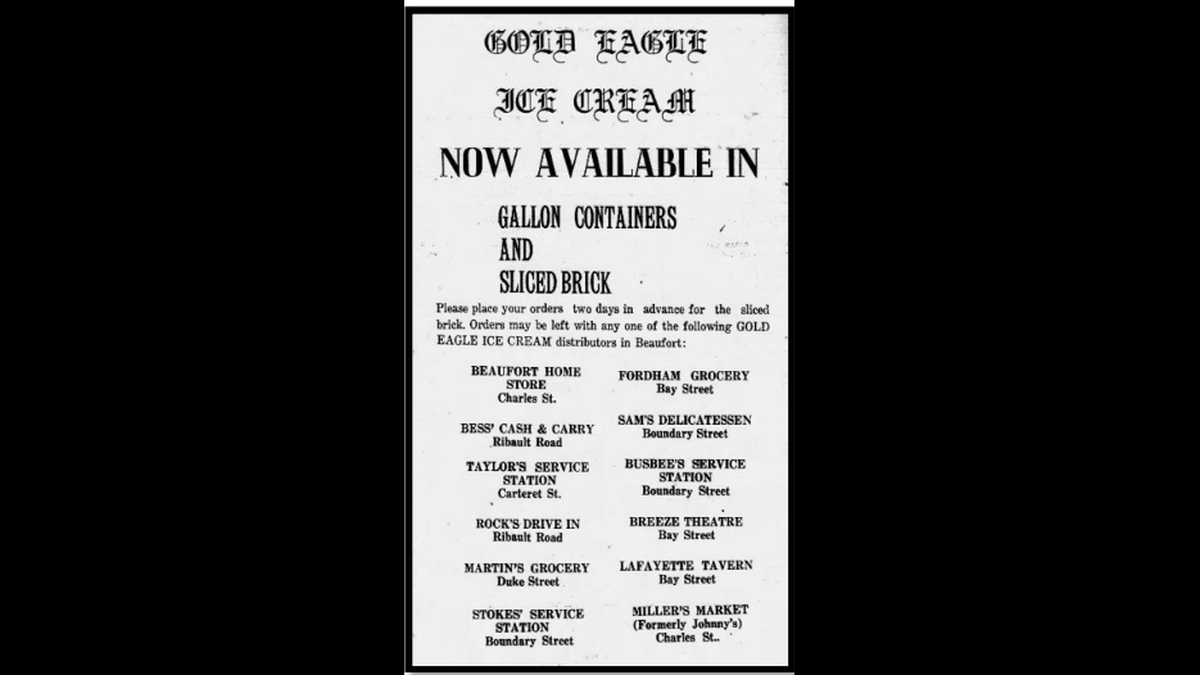
Charles A. Martin ran a store from the building from 1949 to the late 1950s. An advertisement in a 1949 edition of the Beaufort Gazette noted the grocery was selling Gold Eagle ice cream and urged customers to place their orders.
Longtime resident Beekman Webb told Linville, the historian, that he grew up about six blocks away from the store and recalled an old man running it during this period. That man, Linville said, was probably Martin.
“The man sold Webb and other children fireworks and penny candy,” Linville says in his report.
Mary G. Lawson: Treated folks with respect
Mary G. Lawson was the manager of a store at the property in the late 1950s and 1960s.
As a teenager in the mid-1960s, Johnny Holmes lived with his family at 1403 Duke Street, the home directly west of Lawson’s Market. Holmes remembered that the small store had all sorts of items, including fresh meat, and that Lawson’s extended credit to patrons.
Holmes recalled children collecting pecan nuts that fell from trees and bringing them to the store to trade for candy or other items.
“Holmes described Lawson’s Market as a good store for the neighborhood that treated residents with respect,” Linville wrote in his report.
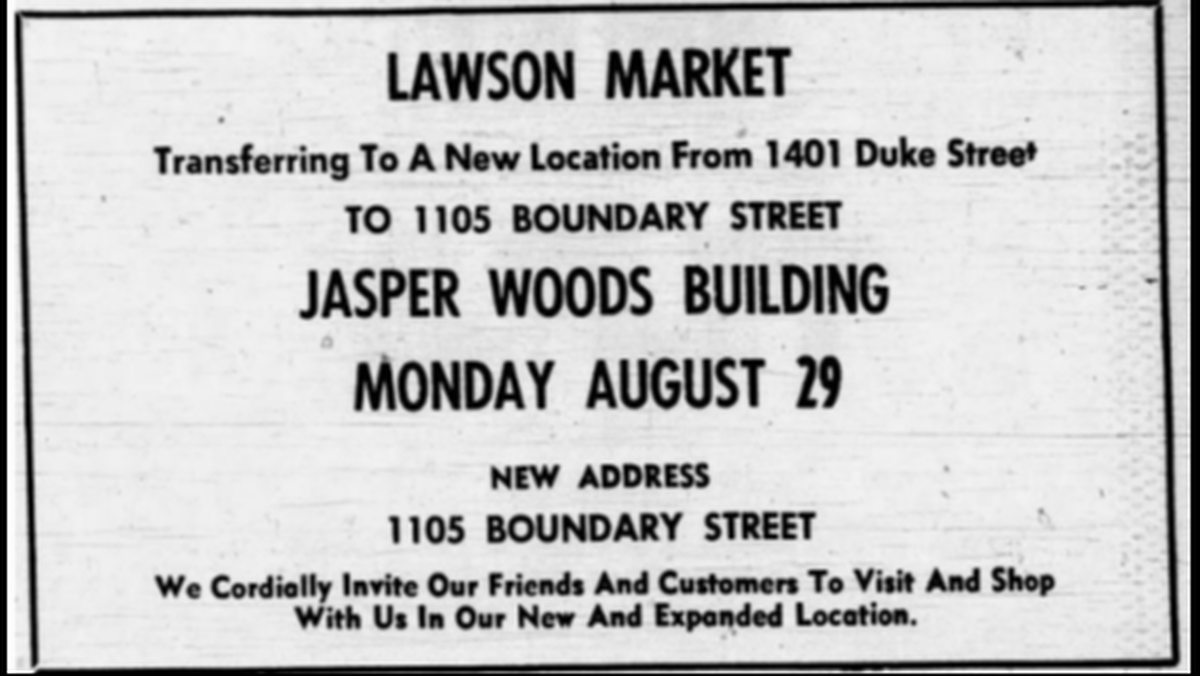
Lawson’s Market announced in a 1966 Beaufort Gazette advertisement that it was moving to a new location at 1105 Boundary Street.
Store’s condition declines
By the 1970s, the report says, the store was one of several that violated local “blue laws” designed to restrict liquor sales and other activities on Sundays. And in the 1980s, the old store frequently fell victim to burglars.
Vacancies followed and continued into the 1990s except for a heating and air company that briefly operated in the building.
“During the first quarter of the twenty-first century, the historically thriving 1401 Duke Street store stood as a vacant, derelict building,” the report says. “Even though it was in a state of disrepair, the building conveyed its historical function because it had experienced minimal alterations.”
‘Two Beauforts’
The Freedman Arts District, which encompasses downtown neighborhoods, takes its name from previously enslaved people who built the “freedman cottages.”
%20(1).png "Final - Freedman Arts District Map - Beaufort, SC (2) (1).png")
While Beaufort’s historic antebellum houses, built by wealthy planters and other wealthy property owners, often get much of the attention, small timber-framed homes with gable roofs and a piazza, which later became known as “freedman cottages,” are historic, too and scattered throughout downtown neighborhoods. A growing number of these historic houses, and others, need work and may even be vacant with the problem drawing increasing attention from city officials and preservation organizations including the Arts District.
“There’s two Beauforts,” says Weatherford.
Maintaining and improving these structures comes with added red tape and expense because of their location within the city’s officially designated national historic district, which is part of the problem, too, Weatherford says.
“It can be cumbersome and expensive — very expensive,” Weatherford says. “And a lot of times it can be intimidating.”
The district is investing in renovations that allow owners to keep the property and repay the original investment with rental income while promoting area artists and events.
“Art is an economic driver,” Weatherford says. “It always has been.”
What’s next
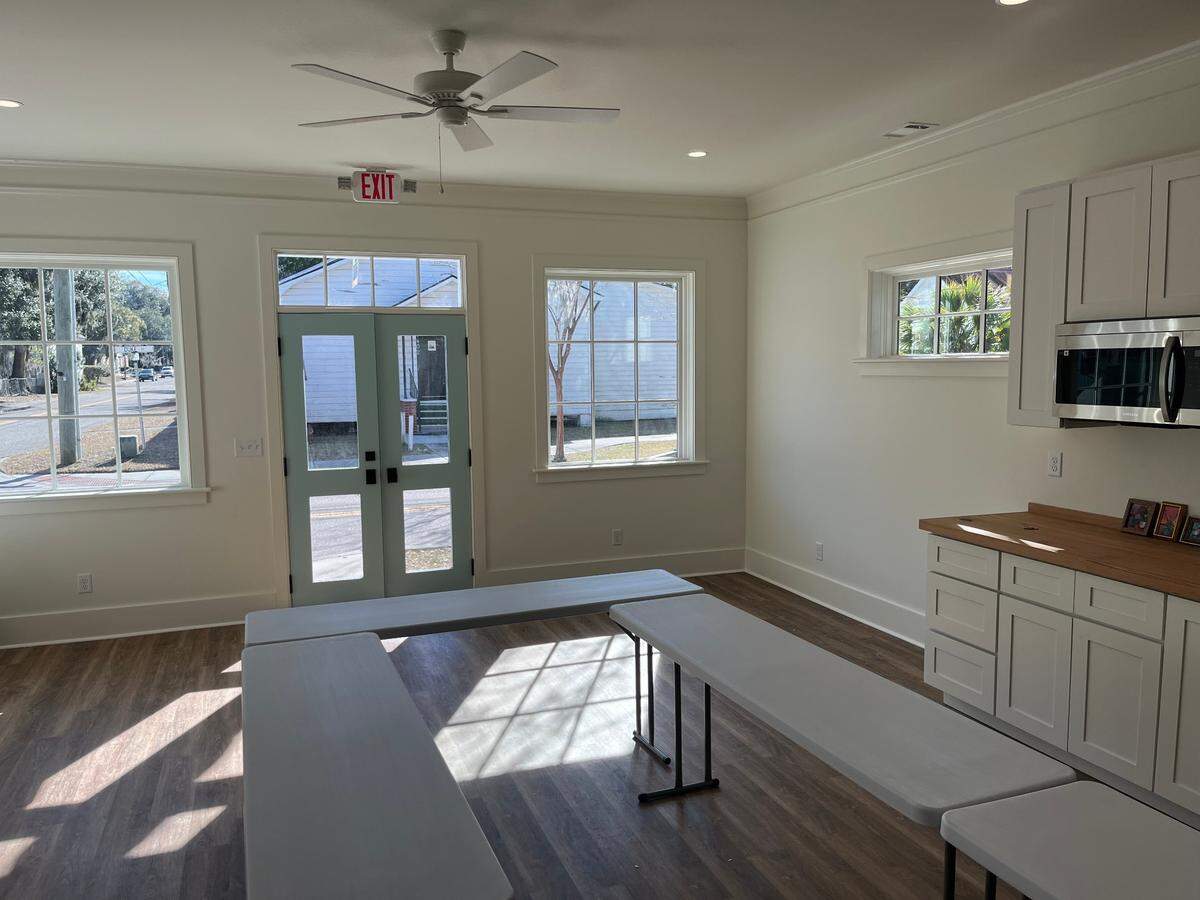
Weatherford envisions the new building at 1401 Duke St. decorated with art and serving as a gathering spot for the growing community of artists living in downtown neighborhoods. An artist in residence program might even be launched.
Plans also call for holding classes about heirs property from the location. Heirs’ properties — a term that reflects properties shared by heirs of the original owners and generally refers to Gullah landowners — are usually passed through families without clear titles or wills. That can create confusion among heirs when it comes to determining who is responsible for taking care of the land and paying its taxes. The properties often end up on tax delinquency lists because no one pays up. The complicated chain of ownership is also one reason why a growing number of houses in downtown neighborhoods are vacant or in need of repairs.
The district is planning to open up a new arts school on Baggett Street as well that will have studios for artists and possibly living space, in addition to a restaurant. It will be located within an old warehouse that will be renovated.
This story was originally published February 3, 2025 at 9:24 AM.