Beaufort City Council’s secret ballot appointments raise transparency concerns, legal debate
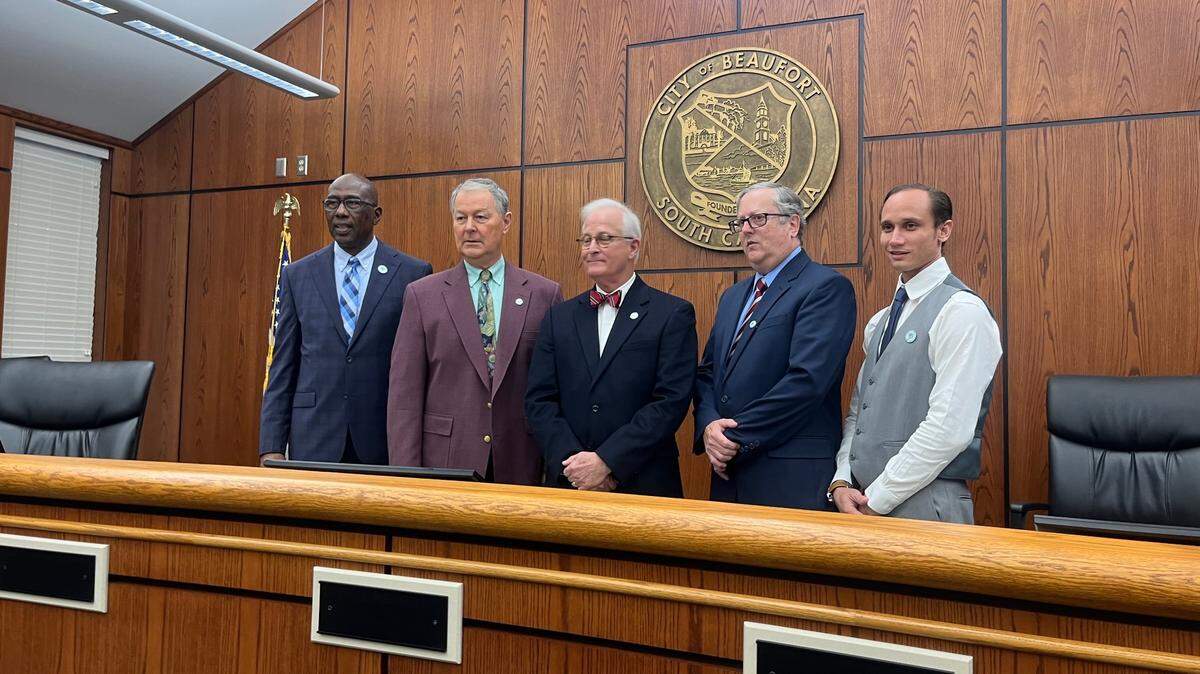
Beaufort City Council’s use of secret ballots to appoint two members to the historic district review board on June 11 has raised concerns among residents about potential violations of state open records laws. However, two attorneys disagree on whether the use of secret ballots is illegal — with one arguing it violates state laws, while the other contends it does not.
During the meeting, the council appointed Mike Sutton to the seat set aside for professionals with expertise in historic preservation, architecture, landscape architecture, history, architectural history, planning, archaeology, or related disciplines. They also appointed Kim Petrella to the seat for someone who either lives or owns property in the Historic District. Unlike in previous sessions where council members announced their votes publicly, this time the votes were cast by secret ballot, tallied by the city clerk and then announced by Mayor Phil Cromer.
Residents who watched the meeting were quick to notice the change, with local resident and Cultural Heritage Partners attorney Will Cook noting that the secret ballot defies South Carolina’s Freedom of Information Act, which he said is designed to uphold government transparency.
“Elected officials are supposed to adhere to the laws designed to keep government open and honest,” Will wrote in a letter to the editor of the Island Packet and Beaufort Gazette. “Public trust in local government hinges on City Council’s willingness to correct its recent Open Meetings Law violation and ensure that all future votes are conducted openly, as required by law.”
Cook cited state law 30-4-70 that governs legal voting conduct at public meetings.
However, Cromer and Jay Bender, a seasoned expert in South Carolina media and open government laws, assert that the council acted within legal bounds. Bender argued that unless the council requested that the minutes include the votes by members and the votes taken by members then secret votes are not prohibited.
Despite the controversy, Cromer acknowledged the public’s backlash to the secret vote. The council in the past used to nominate individuals after executive session leading the public to believe they voted while in session, which is not allowed, Cromer said. To address this, he said the council decided to hold a secret ballot to demonstrate that nominations were not prearranged.
“For transparency purposes, we will probably not do that again,” Cromer said.
The city’s Historic District Review Board (HRB) is charged with vetting applications for renovations and demolitions in the Beaufort National Historic Landmark District, which was listed on the National Register of Historic Places in 1969.
This story was originally published June 24, 2024 at 12:01 PM.