Beaufort’s Point, downtown areas face ‘wicked’ flooding problem. Here’s the plan to fix it
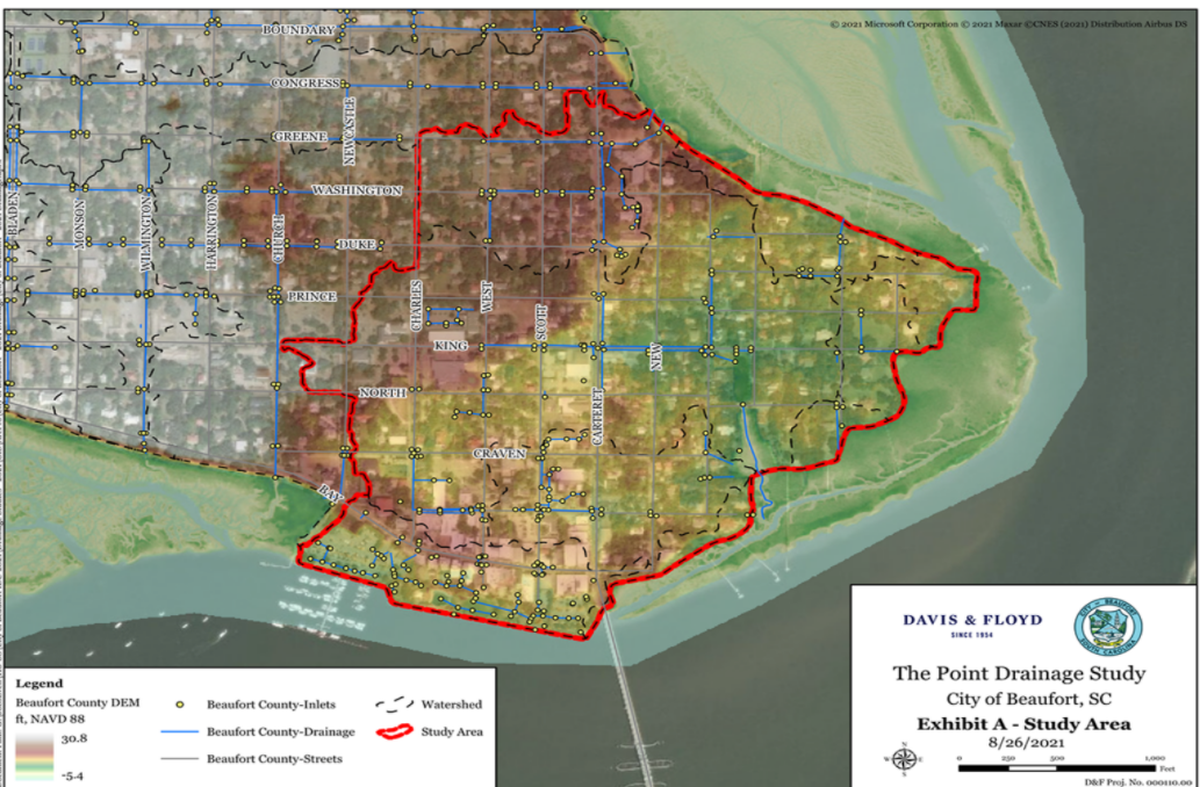
In a 200-acre area in the heart of Beaufort that chronically floods, aggressive action is required, says Neal Pugliese, a former city of Beaufort employee and now a consultant who specializes in the most-challenging infrastructure projects.
That’s why the city is prepping for major surgery to repair aging and inadequate stormwater drains that can no longer withstand hurricanes, tropical storms, rising sea levels or even a hard rain in some areas.
It’s called The Point Project, and it will disrupt hundreds of residents, some of the city’s largest and oldest homes, historic properties, dense neighborhoods and downtown.
“I’ve made no secret about this,” Pugliese says, “this is going to be a significant, emotional event.”
But the work will bring relief from repeated flooding events caused by heavy rains, high tides and storm surges, Pugliese says, although not all of the drainage problems, especially extreme tidal issues, can be fully solved.
Plans to tackle what Pugliese describes as the most complex problem the city has ever tackled are ramping up. A public hearing is planned Friday where residents can learn the results of a $285,000 hydrology study, along with interim and long-term maintenance and repair plans for the area’s drainage systems.
The Point Project is the next step in a multi-million citywide investment in its stormwater systems to better protect property from flooding, which, in recent years, has been exacerbated by major storms and possibly rising sea levels.
Pugliese categorizes the problem with storm drainage in the project area as “wicked” because there is no readily identifiable solution.
Roads, many of them narrow, will be ripped up to reach storm drain pipes. The work will occur in tight quarters in the midst of hundreds of homes and businesses. And more than storm drains are involved.
Once the underground geometry is exposed, other utilities, such as water and sewer lines will need to be reordered, requiring coordination between multiple agencies including the city, the U.S. Army Corps of Engineers, South Carolina Department of Transportation, Beaufort County and the Beaufort-Jasper Water and Sewer Authority. The work is expected to take a few years to complete.
“You just have to pick the solution which is the best of all of the options that you’ve got,” Pugliese says.
Flooding a constant issue
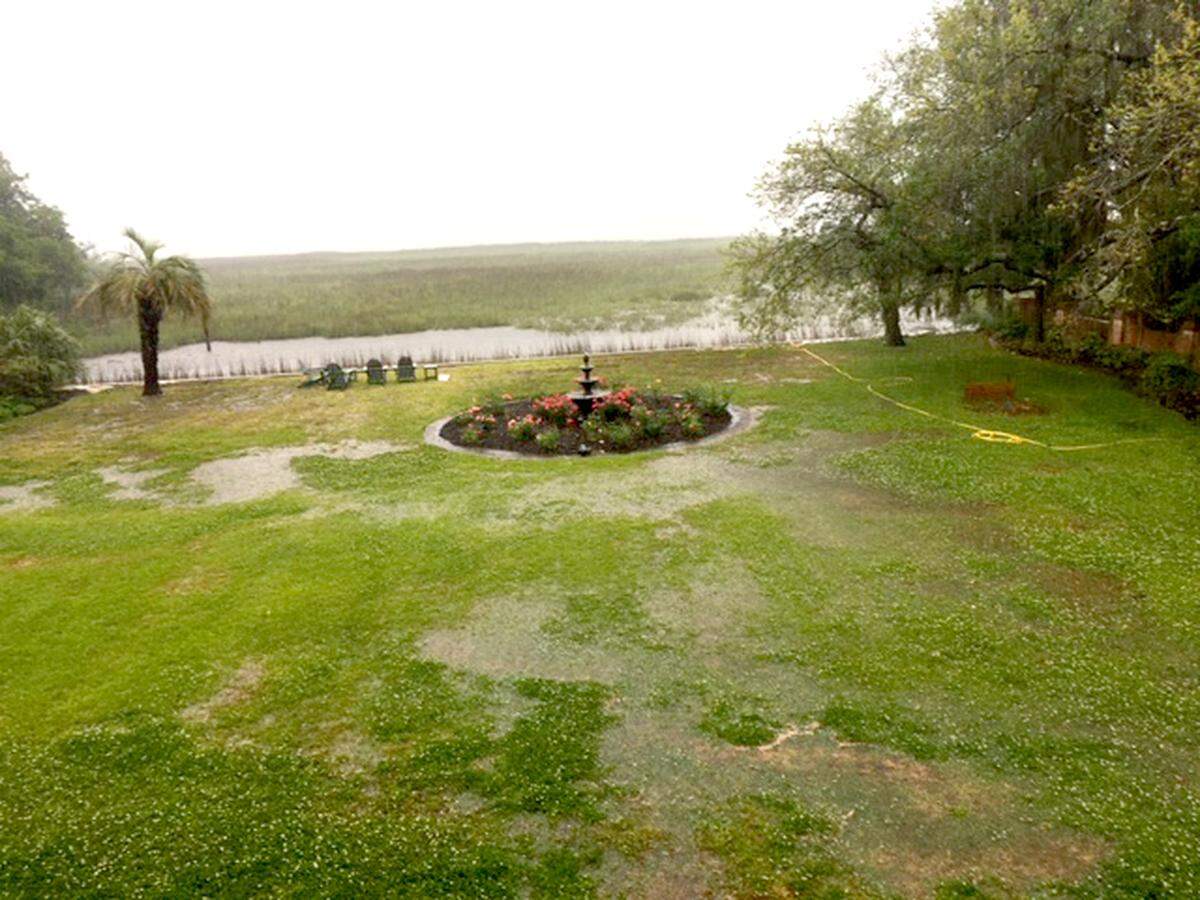
The Beaufort River borders the area targeted for work on two sides. Flooding doesn’t occur only during tropical storms and hurricanes. A hard rain can deluge homes. Just ask Steve Amaro. He keeps pumps, hoses and white boots in his garage at all times so he can quickly spring into action when the water rises. His Point property is under 8-9 inches of water in a good rain, and flooding is much worse and reaches his home and garage during hurricanes.
“It’s going to be really difficult to go through,” Amaro says of the upcoming project, which he supports.
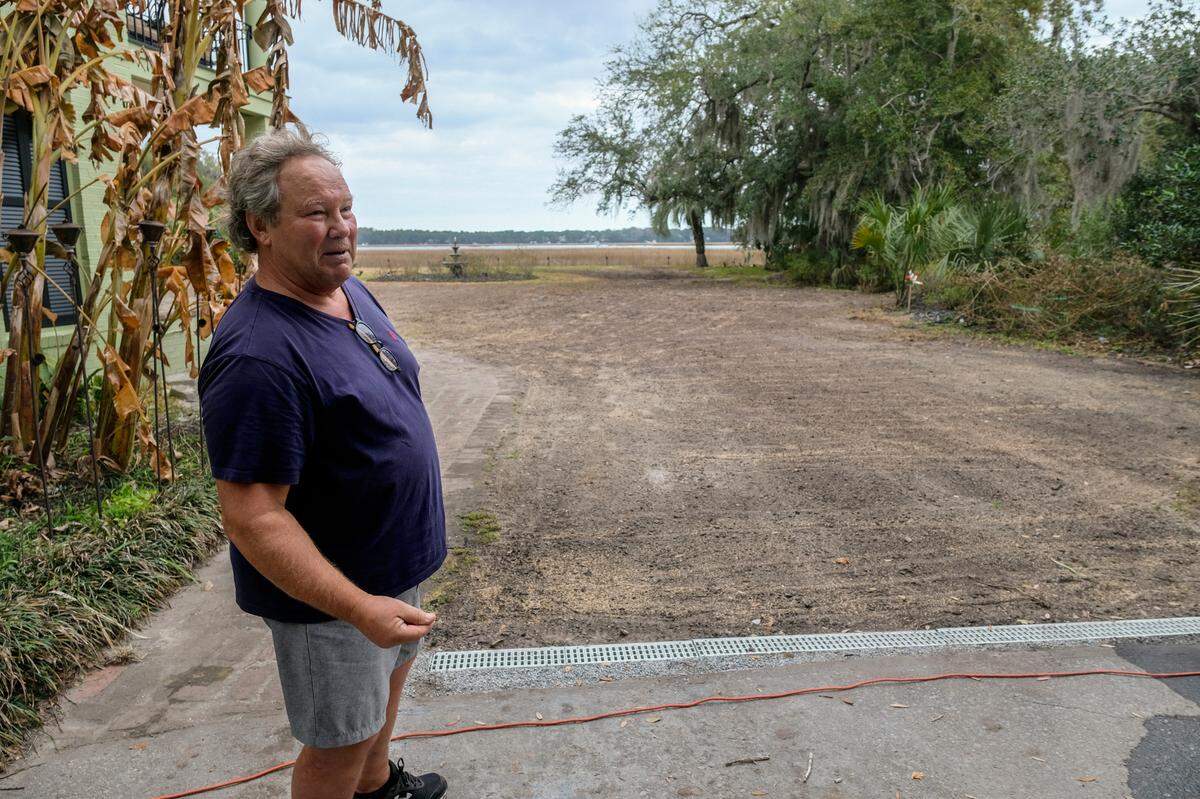
Streets are narrow, he points out, but many residents use them for parking, which will be problematic during construction.
Amaro is president of The Point homeowners association which has about 120 members. He suspects most residents will support the project, but adds, “Most people are going to be upset I’m guessing.”
The retired veterinarian and his wife, Saskia, purchased a three-bedroom, five bath-home with stately live oaks and views of the Beaufort River six years ago. Soon after, Hurricane Matthew hit. Water came over the sea wall separating his property from the river. “I watched the water come up, up up and come into the base of the car,” he said. Several months later, Tropical Storm Irma struck, leaving his entire driveway covered in river grass and baby crabs. But a hard rain will flood his property, too, which is why he recently installed French drains. Most of the storm drains in the neighborhood, he says, just don’t work.
“It needs to happen,” Amaro says of the work.
Pugliese suspects that the disruption in some specific areas could be eight to 10 months.
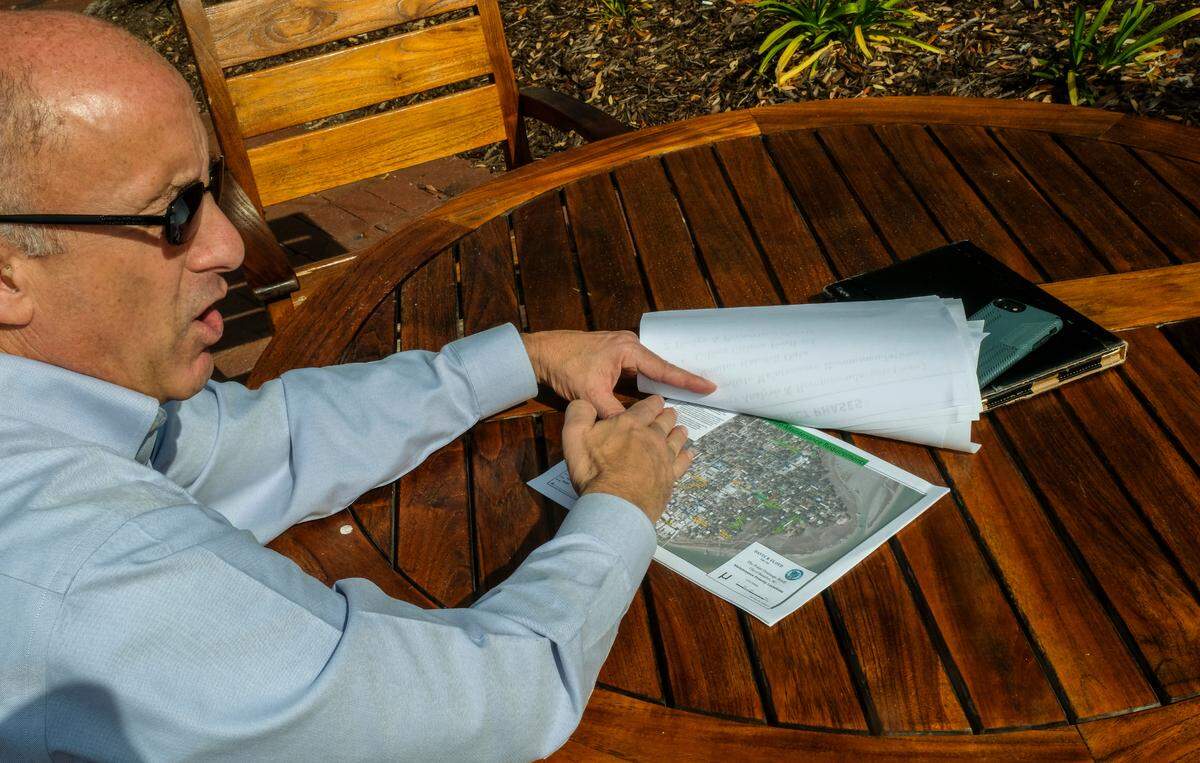
The basic problem is that storm drains are aging and misaligned, causing flooding year after year, Pugliese says. The pipes will need to be realigned so water flows out of the area naturally. The complexity will come if, as expected, the city encounters conflicts with other utilities which it does not own.
“We’re letting the science and the math and engineering tell the tale,” Pugliese said of the solution, which still is in the works. “We’re not coming up with a solution before the analysis is complete.”
Part of larger effort to curb flooding
Pugliese isn’t sure what The Point Project will end up costing but it is the highest priority stormwater drainage fix in the city. And it comes on the heels of the completion in April of the $6.5 million Mossy Oaks Stormwater Project aimed at ending repeated flooding in the 580-acre Battery Creek drainage basin that includes 4,500 residents in Beaufort, Port Royal and unincorporated areas of Beaufort County.
Those two neighborhoods were part of nine problem drainage areas in need of $15 million of work that the city identified after rain and storm surges flooded properties over an 11-month period. The storms included Hurricane Matthew in 2016 and Tropical Storm Irma in 2017.
“It was sort of like, ‘Ok we have to get a handle on all of this stuff,’” Pugliese said.
Pugliese credits “the brave approach” of members of the Beaufort City Council and city staff for taking the lead in investing in the stormwater system to ease flooding issues even though the city does not own all of the infrastructure involved. The city, he said, could have said, “Not my monkey, not my circus.”
In 2017, the city spent $822,236 for stormwater work, up from $337,885. In 2019, it allocated $420,256, and $496 205 in 2020. It spent $7.4 million in 2021 and $200,000 through January.
In 2018, the city borrowed $6 million via general obligation bonds for the Mossy Oaks work, which increased storm drain fees by about $30, but city officials say the residents should not be expected to pay routine tax increases to pay for the large stormwater investments.
“DOT and the state need to be at the table in a much bigger way than they have been in the Mossy Oaks project,” Mayor Stephen Murray said during a Dec. 1 work session on The Point Project.
The city has some additional funding available thanks to the $6.7 million it is getting in federal America Rescue Plan funds to counter the economic costs of COVID-19. It has earmarked $4 million for stormwater projects.
Jared Fralix, Beaufort County’s assistant administrator-engineering, said working with agencies responsible for other utilities and communications systems will be key because “sometimes bigger makes it more attractive for funding reasons. “There are massive amounts of money out there in different pots,” Fralix said.
Is sea level rising in Beaufort?
Part of the hydrology study involved placing instruments in the project area to measure sea levels.
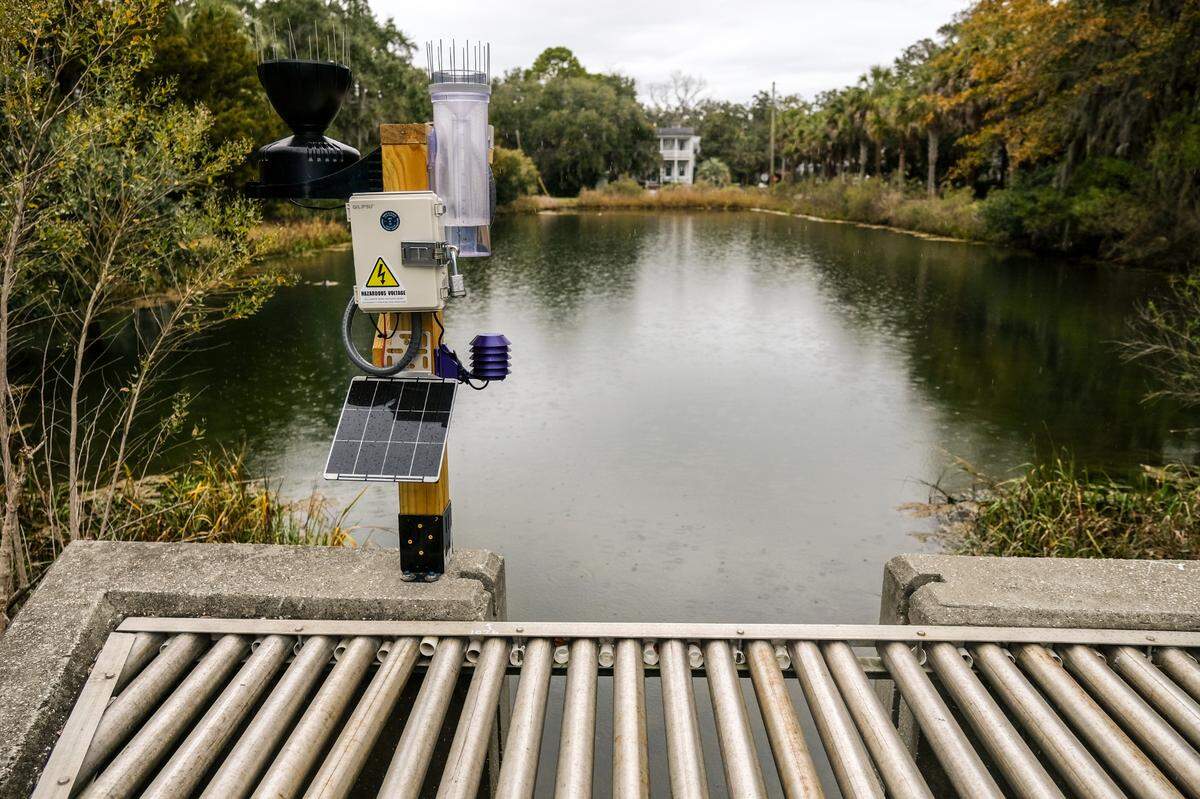
Sea levels in Charleston, Pugliese said, have risen 1 foot over the past 100 years, but the change in Beaufort may be different. Accurate data is critical, Pugliese said, in designing the storm water projects. Additional measures were built into the Mossy Oaks project, he said, to address future sea level rise.
What can reasonably be expected in year-over-year rise over the next 50 years is necessary so residents will know what to expect and the city can prepare.
“When you talk about sea level rise people don’t want to hear about the Arctic,” said Pugliese, referring to ice melt. “People quite frankly don’t care about the Arctic. They know about it if they’ve read about it, but what they care about is what’s happening in their backyards. We need to let people know what’s going to happen in their backyards.”
What’s next
The city of Beaufort will host an informational meeting at 10 a.m. to noon Friday on The Point/Downtown stormwater drainage study in the City Hall Council Chambers. The city also is asking for flooding information in an online survey.
The meeting will be streamed live on the City’s Facebook page, and a Zoom link will be available as well. For more information, please contact Carrie Gorsuch at 843-986-5609, or email her at cgorsuch@cityofbeaufort.org. City Hall’s address is 1911 Boundary St., Beaufort.
This story was originally published February 17, 2022 at 11:30 AM.