Most of sewage from pipeline spill flowed into Battery Creek. Here’s what caused the break
A failed pipeline that leaked 500,000 gallons of sewage in Beaufort earlier this week had been weakened by exposure to saltwater, the Beaufort-Jasper Water and Sewer Authority said Wednesday.
A discharge of at least 5,000 gallons of untreated or partially treated sewage is considered “significant,” under the state Pollution Control Act. Monday’s release was 500,000 gallons. And, because of the close proximity of the failed pipe to Battery Creek, “the vast majority of the spill was unrecoverable,” BJWSA spokesperson Pam Flasch said.
The release of most of the sewage into the creek caused fecal coliform to rise above recommended levels Monday, according to test results of water samples, Flasch said, and the state Department of Environmental Health and Control (DHEC) issued an emergency order closing shellfish harvesting.
By Tuesday, Flasch said, fecal coliform had returned to acceptable levels. Additional samples were collected for testing Wednesday.
People should not be in direct contact with a body of water that’s impacted by a sewage spill until it’s known that bacteria levels within the waterway are within normal range, DHEC spokesperson Laura Renwick said. Once a spill ceases, Renwick added, water quality and plant and animal life typically recover quickly.
BJWSA workers spent Tuesday night and Wednesday morning working on repairs, with the ditch and a wooded area at the busy intersection of Parris Island Gateway and the Savannah Highway illuminated with flood lights. The pipeline repair was completed by 4 a.m. Wednesday, but site restoration work will continue for the remainder of the week, and traffic delays can be expected.
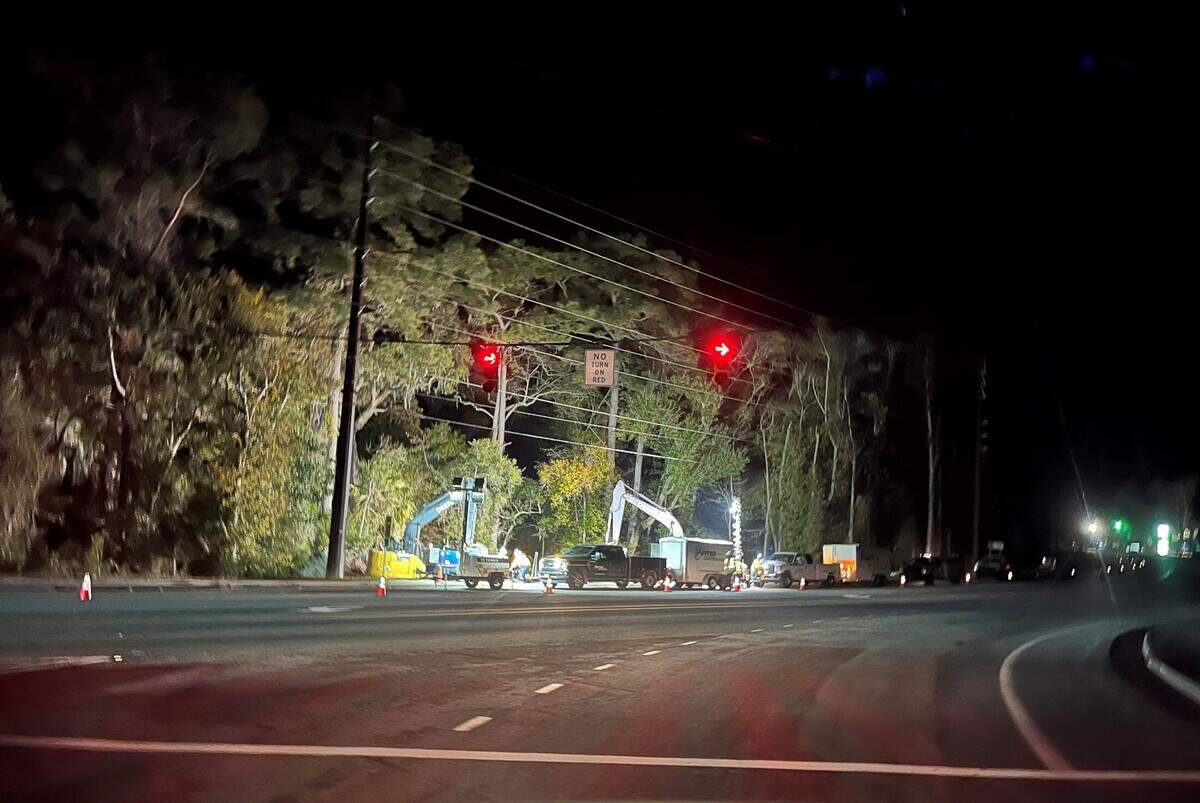
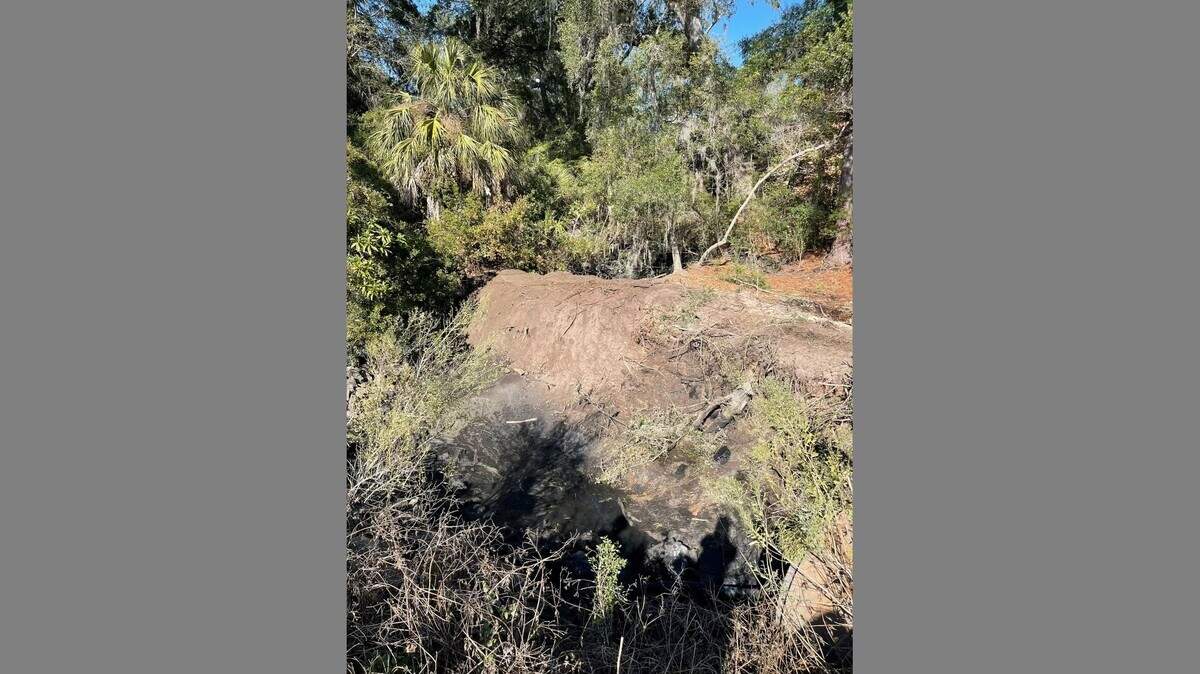
When a resident of the area reported an odor Monday, authorities discovered that the 16-inch sewer main crossing under a tidal ditch had failed, causing the spill.
Repairs involved replacing close to 60 feet of pipeline under and on both sides of the tidal ditch, Flasch said.
The cause of the pipeline failure was exposure to saltwater, Flasch said.
A large storm drain is located over the pipeline, and the discharge from that drain caused soil erosion. As a result, the sewage pipeline was directly exposed to saltwater, which accelerated corrosion and caused the failure.
BJWSA properly notified DHEC of the leak, a requirement for spills of at least 5,000 gallons , Renwick said. DHEC staff responded to the scene to oversaw the work.
DHEC closed open areas of Battery Creek, and portions of the Broad River from the Broad River Bridge south to Archers Creek and east to Malecon Drive in Parris Island, to shellfish harvesting for 21 days due to the sewer line breach.
Jessie White of the Coastal Conservation League did not know the specifics of the spill but said in general the group supports policies that that ensure development does not occur where it causes strain on existing infrastructure. The group also backs stormwater drainage facilities that mimic natural drainage and connecting communities to sewer where it is available.
“We live in a sensitive area with so many waterways,” White said. “We need to understand that what we’re doing on the land isn’t compounding or contributing to some of those failures.”