‘May we meet in a better world’: What a Beaufort church told Lincoln 159 years ago
Thirteen members of a Beaufort Church rang in more than a new year 159 years ago. They welcomed a new era for Beaufort, Port Royal, the Sea Islands and the nation.
Gathering in the sanctuary at Tabernacle Baptist Church, they discussed the Emancipation Proclamation. Then they approved two resolutions that made it to President Abraham Lincoln’s desk. The resolutions — one for God, the other for Lincoln — gave “hearty thanks” for “freeing all the colored people.”
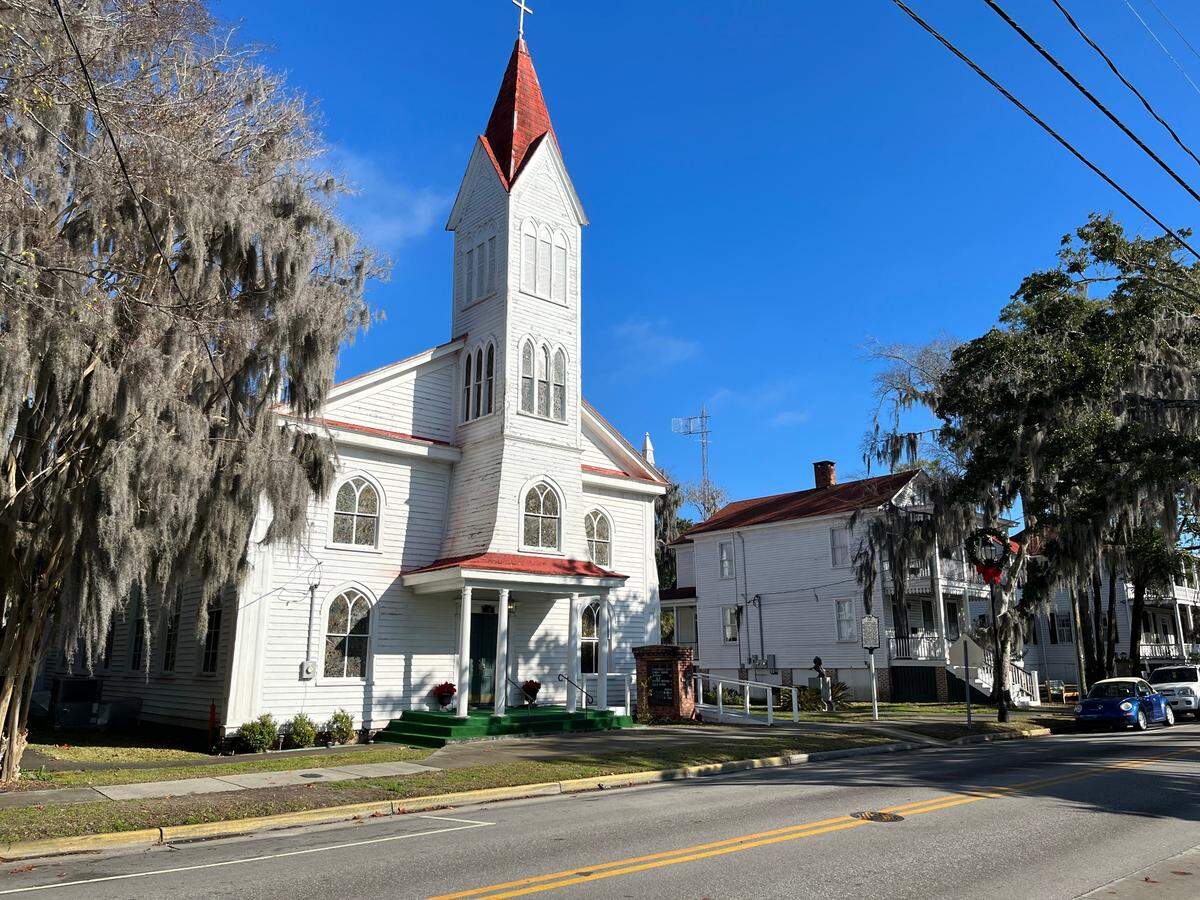
Current members of Tabernacle Baptist Church on Craven Street only recently became aware of that key piece of its history. There’s no doubt the meeting occurred. The documents, written in cursive writing, are preserved in Lincoln’s papers in the Library of Congress.
“It shows that people just up from slavery were far more educated and more aware of the significance of the Emancipation Proclamation,” said the Rev. Kenneth Hodges, church’s pastor, “and had a yearning desire to be free.”
Church officials learned of the New Year’s Day meeting and the passage of the resolutions on March 2, 2020, 157 years after it happened. That’s when Chris Barr of the Reconstruction Era National Historical Park in Beaufort, who was working on putting together training materials, reached out to Hodges and mentioned the resolutions held in the Library of Congress. “I’m sure you’ve probably seen this,” he told Hodges.
“I’ve been pretty excitedly reading these with visitors as I direct them to go to the Tabernacle to visit Robert Smalls,” Barr wrote, referring to the Beaufort-born man who went on to become a hero of the Civil War and a congressman after escaping from slavery, who is buried at the church.
But Hodges had not seen the resolutions passed by the early members of the church. There were no records of the meeting at the church. Some of the church’s early records were destroyed, said Hodges, offering a possible explanation. And historical records, he added, were often kept at the homes of secretaries and may have been lost when they died.
Hodges was “fascinated” when he learned of the church resolutions regarding the Emancipation Proclamation, which he says offer a window into how Black residents felt about the prospect of freedom and shows how the church emerged in the midst of a Civil War.
“They were just members of the congregation,” Hodges said one day earlier this month in the sanctuary of the church where members gathered Jan. 1, 1863, for the momentous meeting. “They would be right in this building.”
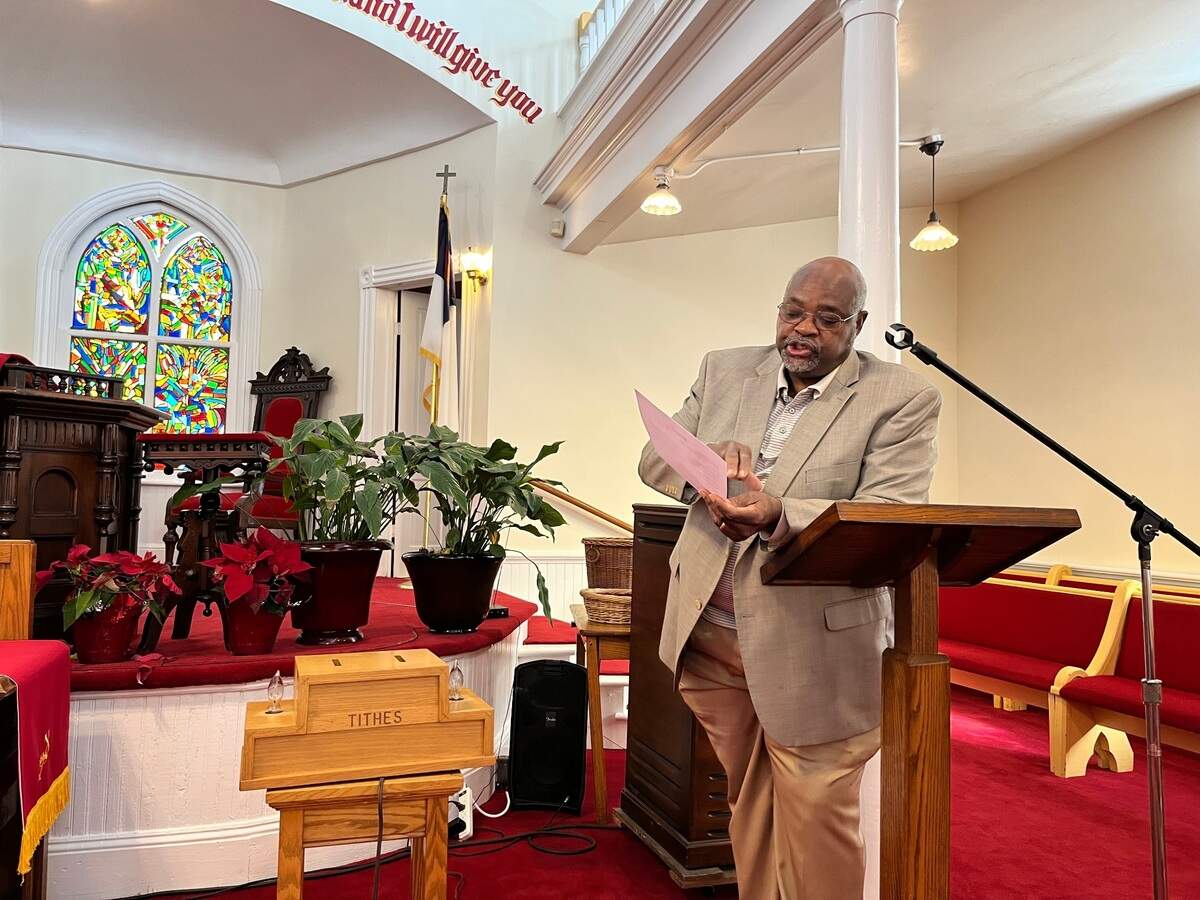
Those present at the “special meeting” were Jacob Robinson, Daniel Mifflin, Joseph Jenkins, Jime Harrison, January (no last name listed), Harry Simmons, Caesar Singleton, Thomas Ford, Kit Green, Charles Pringle, Peter White, Elias Gardner and Moses Simmons. Some of those family names, Hodges notes, are still around today.
At the time of the meeting, the nation was nearly three years into a bloody war. Lincoln had announced the proclamation to his cabinet that fall.
“It seems proper to add, that the members of this Church, now resident on Port Royal and islands adjacent, are, with one exception, people of color proclaimed free this day, and number more than 1,100,” senior Pastor Solomon Peck wrote to Lincoln in a letter that accompanied the two resolutions.
That exception was Peck.
The first resolution thanks God “for this great thing that he has done for us” and for putting it “in Mr. Lincoln’s mind —that all should come to this very stand, according to the will of God, in freeing all the colored people.”
“We have gathered two or three times a week for the last five months, to pray that the Lord might help you and all your soldiers, hoping that the Almighty would bless you in all your goings, and crown you with a crown of glory and a palm of victory,” reads Tabernacle Baptist’s second resolution, which thanks Lincoln for the proclamation. “We never expect to meet your face on earth; but may we meet in a better world than this.”
Twelve of the men signed the resolutions with “their mark,” or an X. One, Kit Green, signed his name.
Blacks living in and around Port Royal and Beaufort had tasted freedom for months before Lincoln’s Jan. 1, 1863, proclamation. Federal troops occupied Beaufort in December 1861 after the success of the Union Navy in the Battle of Port Royal on Nov. 7. Though Lincoln had no power to immediately enforce the declaration in areas held by the Confederacy, Black residents had been anticipating the document ever since Lincoln issued his preliminary proclamation in September 1862, signaling his intent to bring the Union back without slavery.
The Emancipation Proclamation applied only to enslaved people in the Confederacy, and not to those in the border states that remained loyal to the Union. Freedom began at once for parts of eastern North Carolina, the Mississippi Valley, northern Alabama, the Shenandoah Valley of Virginia, a large part of Arkansas, and the Sea Islands of Georgia and South Carolina.
Above all, the documents prove the important role of the early church in the formative years of a people as they moved from slavery to freedom, Hodges says, and also the significance of prayer and praise.
“Here we have a church that emerged in the midst of the Civil War,” said Hodges, noting that many Black churches began after it ended in 1865.
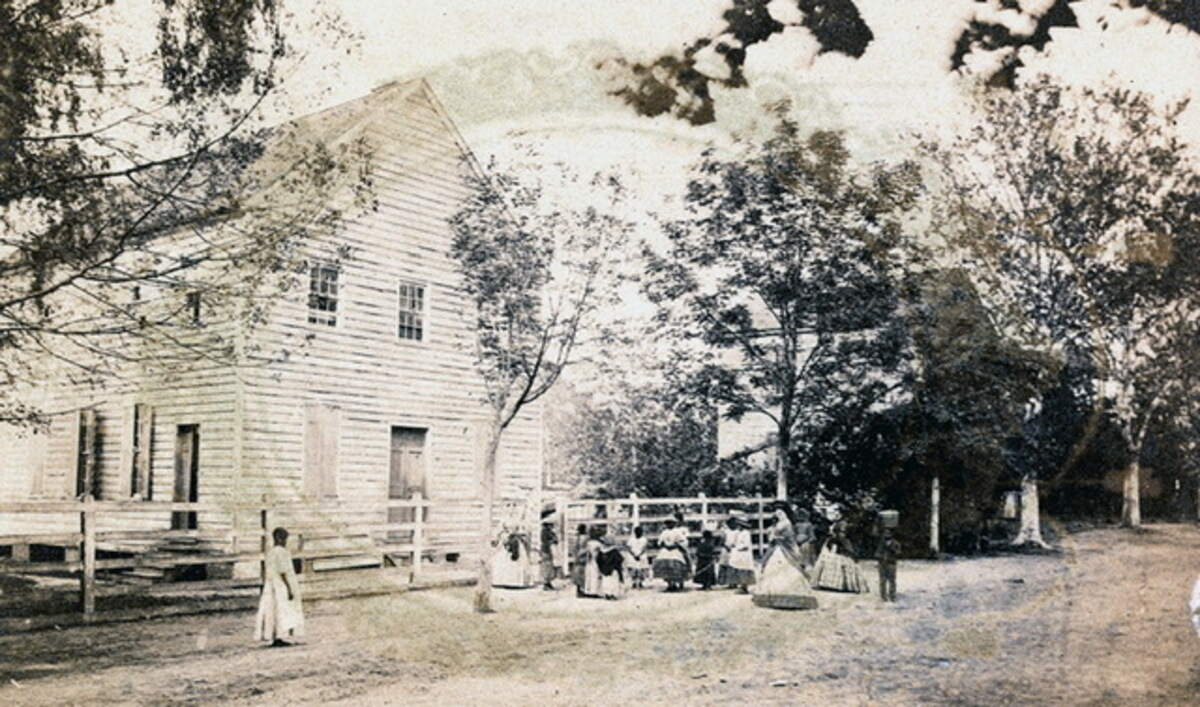
After federal troops occupied Beaufort in 1861 and white residents fled, the Tabernacle became the center for African American religion. The Tabernacle Baptist Church was officially organized in September of 1863.
Saturday, New Year’s Day, will mark 159 years since Lincoln’s proclamation took effect. Tabernacle Baptist, which is still active, has 300 members. They will gather on New Year’s Eve, for a traditional “watch night” service, just as its members surely did at the close of 1862 to ring in the new year — and a new era of freedom.
This story was originally published December 29, 2021 at 11:54 AM.