Water is slowly draining from Port Royals’ bird Mecca, Cypress Wetlands. Here’s why
If you’ve noticed the water level dropping at Port Royal’s Cypress Wetlands — home to hundreds of wading birds, turtles and alligators — you’re right.
The intentional draw-down comes in advance of a project to install water control equipment. That project, the town says, will provide protections for the wetlands’ communal bird nesting grounds and native cypress trees, with only temporary impacts to birds and alligators that live in the swamp.
Installing the new water control structure is the final step in a restoration project. Plants and trees had grown too thick, threatening the birds in the urban rookery in the heart of downtown.
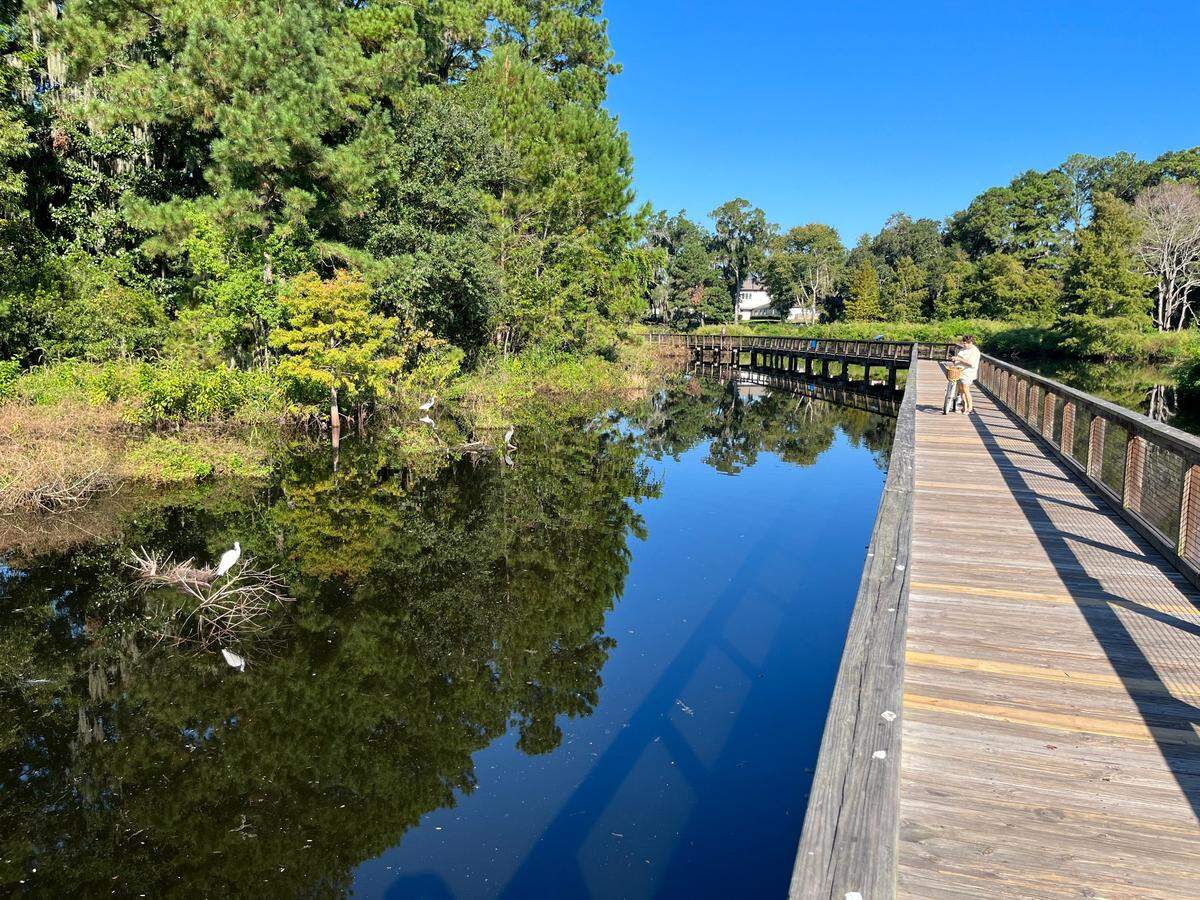
Located right off busy Ribaut Road, the wetland attracts hundreds of nesting wading birds including white ibis, great and snowy egrets and little blue, green, tricolored and black crested night herons. It’s a birdwatcher’s paradise, with a boardwalk providing front-row seats, and you’ll probably see an alligator or two, as well.
It’s the second time in the past 10 months the wetland has been lowered for restoration work.
As of Thursday, the wetland had been lowered 6 inches, said Dean Harrigal, a wildlife biologist with Folk Land Management Inc., which is working with the town on the project. It has another foot to foot-and-a-half to drop before work can begin.
Mud flats will be visible when the drawdown is complete.
“Any negative impacts will be temporary,” Harrigal says.
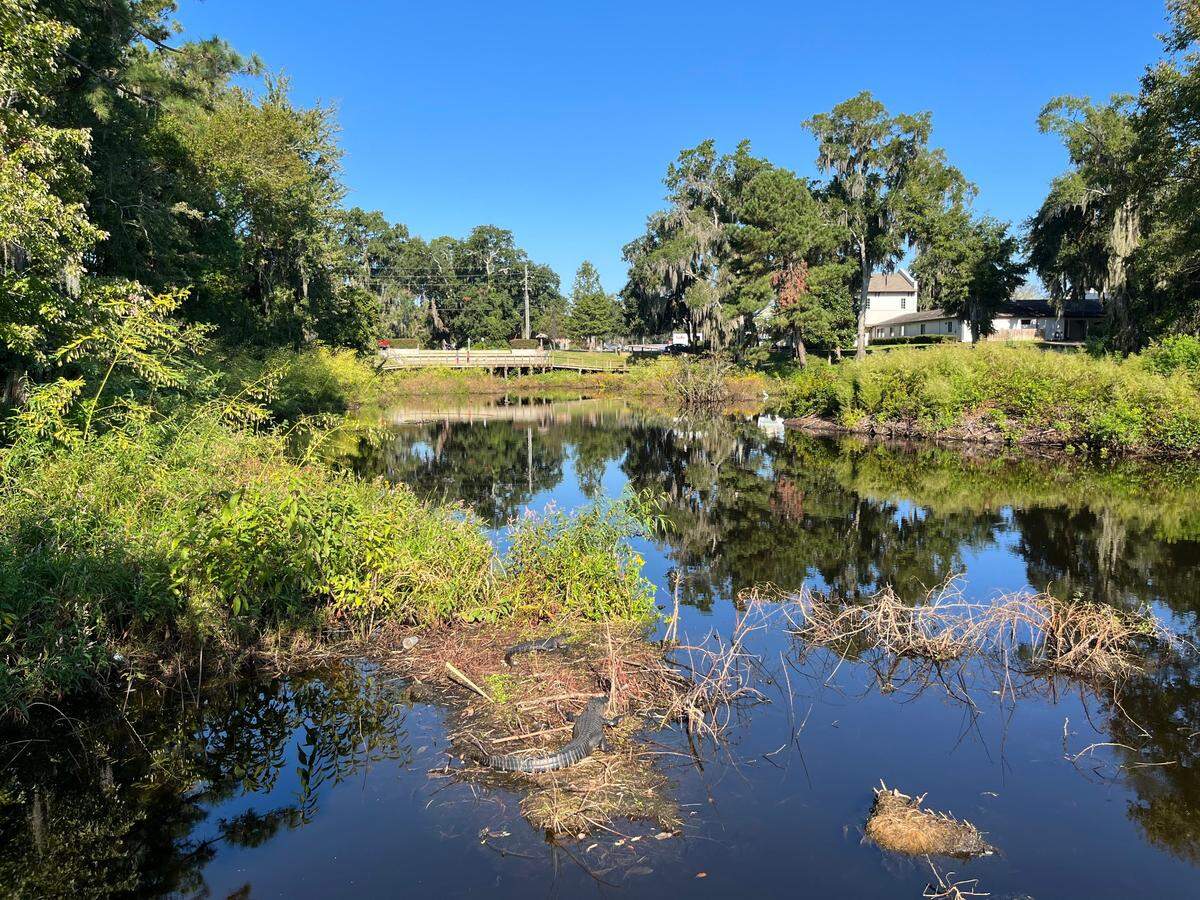
Cypress Wetlands is one of a series of naturally occurring wetland basins in Port Royal used to catch and control stormwater runoff.
About 20 years ago, the town connected the basins with canals and culverts to utilize them as retention ponds. At the same time, work began to restore the wetlands. Islands where birds could safely nest, protected from predators, were constructed. Native tupelo and cypress trees were planted.
“It was a great success,” Harrigal says.
Over time, however, non-native tallow trees proliferated, transforming the island into a dense forest, which is habitat for raccoons that prey on bird eggs. Numbers of nesting birds declined, according to Friends of Cypress Wetlands, a not-for-profit that supports wetlands and rookery. The wetland also became clogged with plants such as swamp loosestrife, slowing the water flow through the basins. In addition, mats formed on the surface. Raccoons used them to cross the water.
In December, the city spent $400,000 in a project to clean out the clogged water. A third island was added.
The last step is installing a water control structure and outflow ditch. With better control of the water level in the pool, the town will be able to increase protection of the bird rookeries, improve water quality and protect downstream cypress trees that need moist conditions but not flooding, Harrigal says.
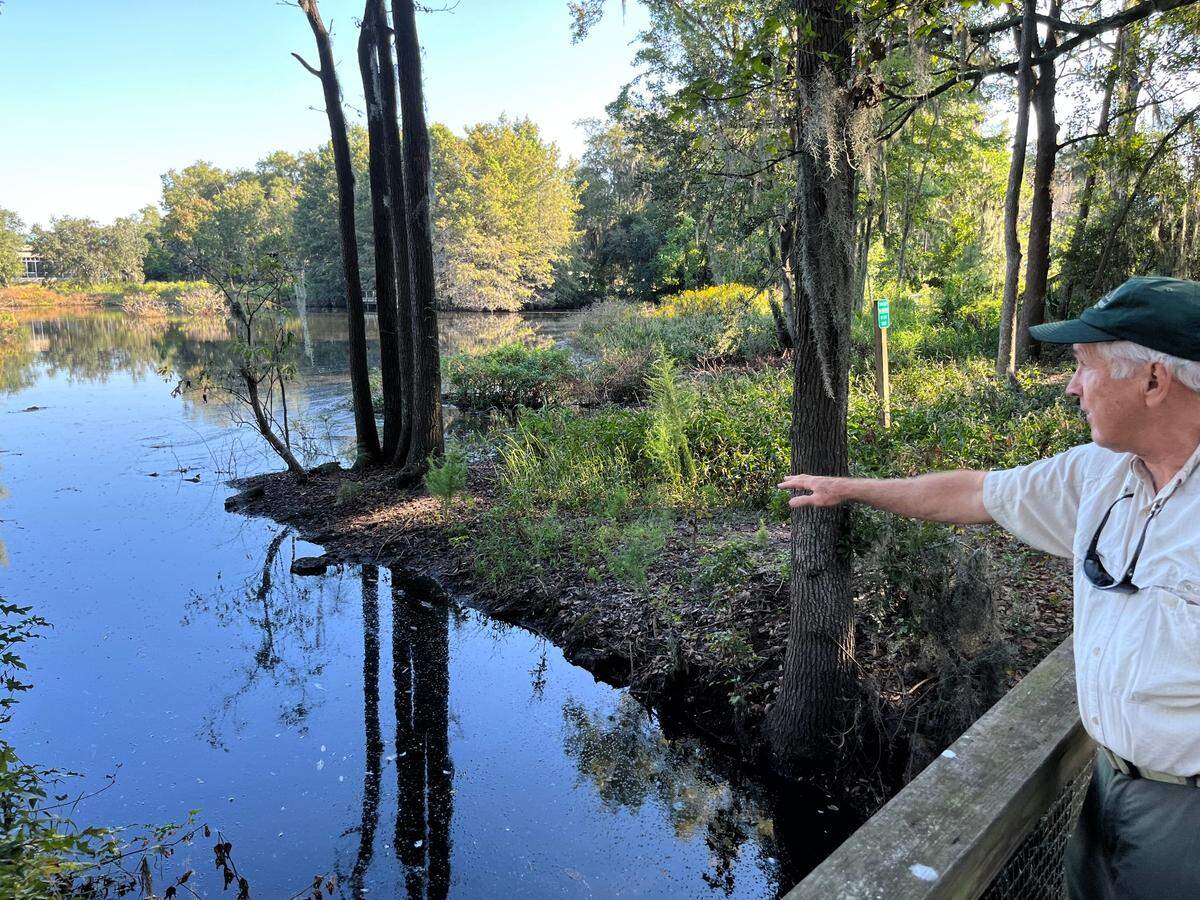
Initially, the work was planned earlier in the year, but COVID-19 delayed the necessary permits, and then birds returned to nest in the spring. The water control work was pushed back “to be prudent,” Harrigal said. “We didn’t want to scare them off the nest,” Harrigal said.
Birds roost in the area in the fall and winter, but don’t nest, he said.
The work, which is expected to begin in a few weeks, will be a disturbance, but he added, “They’re not just going to disappear.” Large numbers of birds will take advantage of the drawdown, Harrigal says, by foraging for food in the exposed mud.
As for alligators, he says, “They’ll just wait it out.” Alligators, he noted, are an unlikely ally of the birds. As alligators patrol waters under nests hoping an unlucky bird will fall out of the nest, they also deter predators from using the water to reach nests.
The goal is to have the water control system installed by the end of the year, Harrigal said.
Town Mananager Van Willis said the final cost of installing the water control system is not known yet, but it will be paid for using stormwater utility fees. Cypress Wetlands will remain open during the work, he said.
On Thursday, visitors strolled on the elevated boardwalk, passing alligators and turtles soaking up the sun. Most bird rookeries, Harrigal said, are located in isolated areas, but the number in urban or suburban areas is increasing. Birds will tolerate people, he said, as long as they are not too close.
“Here, we’ve hit the sweet spot,” Harrigal said of Cypress Wetlands.
This story was originally published October 18, 2021 at 4:30 AM.