How a styrofoam ‘snowstorm’ in Beaufort sparked calls for tougher litter controls
It looked like it was snowing in balmy, subtropical Beaufort.
White particles floated through the air, bouncing off car windshields and collecting in yards, parks and Battery Creek.
“I got several phone calls when it snowed on Boundary Street,” Mayor Stephen Murray said.
But it was not snowing.
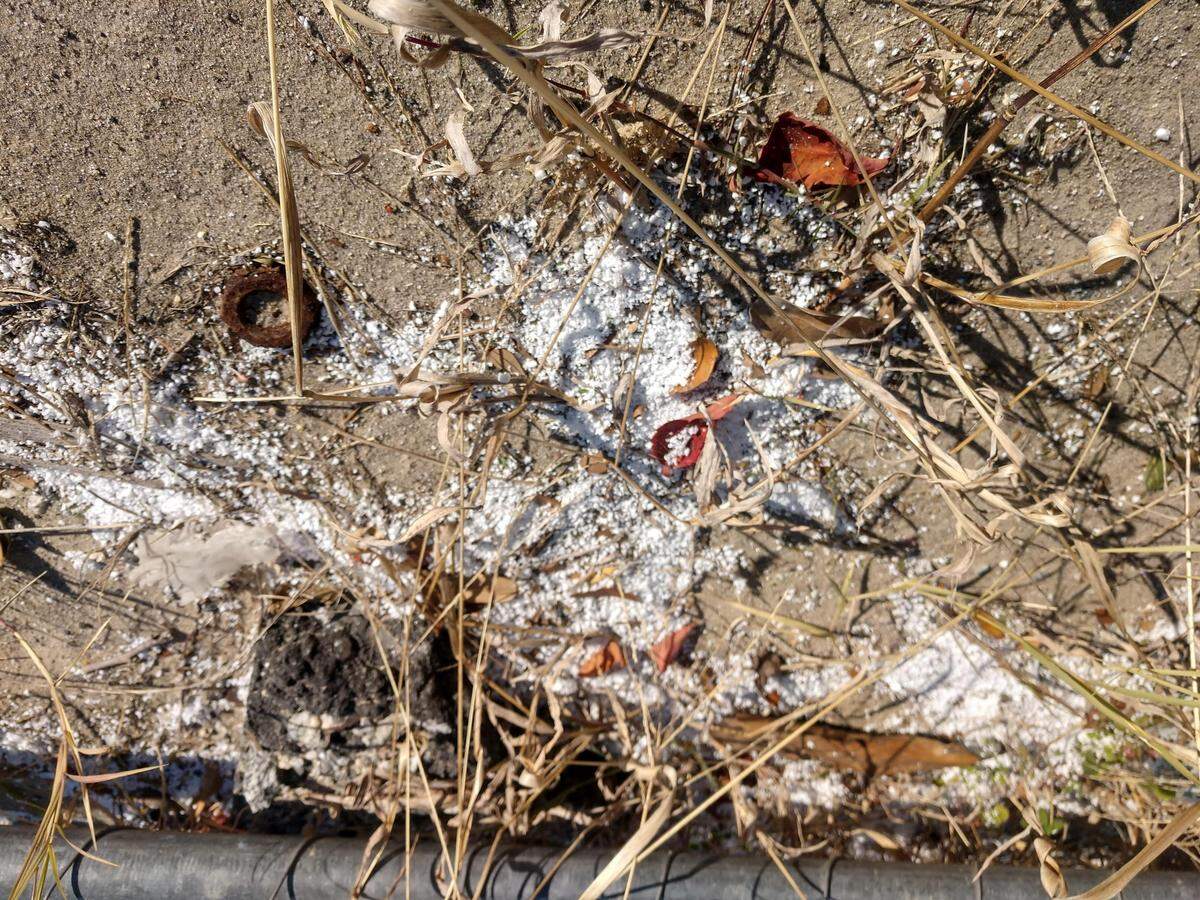
The December 2020 flurry was actually tiny plastic foam particles created by the sanding of insulation board at a Boundary Street construction site.
The so-called “Styrofoam snowstorm” caused a flurry of complaints from residents.
Now it’s prompting a proposed ordinance aimed at preventing construction litter in general, especially involving plastic foam.
The Coastal Conservation League brought the issue of construction litter to the city and has worked with staff on an ordinance to prevent and control litter. The City Council discussed the proposal at its work session Tuesday.
It says the December incident revealed a gap in state and local laws that prevents authorities from taking swift action to minimize damage.
“We learned there was no legal mechanism in place to stop the contamination and require that it be cleaned up,” the Coastal Conservation League’s Jessie White said.
Council members, who don’t vote at work sessions, agreed to hear the proposed ordinance on first reading in a few weeks when they could take a preliminary vote.
White said the main material at issue is expanded polystyrene, or EPS.
EPS is a lightweight insulating plastic foam commonly used to make products such as building insulation, egg cartons and surf boards.
Fine particles escaped when the insulation board was being sanded at the construction site, causing what looked like falling snow. The wind picked up particles and scattered them.
Piles of foam particles were found along the curb, in the street and in the median, in stormwater drains, in business parking lots across the street, in grass of the park and buffer areas planted by the city to protect the salt marsh, and in the headwaters of Battery Creek.
Particles getting into the ocean or rivers is a concern because they do not biodegrade and can be consumed by aquatic and marine creatures.
“The science is pretty clear how impactful microplastics are,” White said.
Fortunately, in this instance, the property owner and contractor cooperated with the city and state Department of Health and Environmental Control to contain and clean up the “Styrofoam snow,” White said.
But with several large construction projects in the pipeline, an ordinance is timely and important to safeguard the salt marshes “and resources that make this City such an attractive place to live, work, and visit,” White said.
Not only will the new ordinance create a way for the city to address construction debris litter generally, it also sets up proactive measures to prevent the particularly problematic expanded polystyrene from being released and entering into the environment in the first place, White said.
EPS is particularly problematic because it is lightweight, making it almost impossible to clean up once it is released into the environment, White said.
The city, White says, currently has no authority to take action when litter escapes a construction site, such as issuing a stop-work order, White said.
The new ordinance would make it unlawful for trash materials to leave a construction site.
It also would give the city the power to declare the sites to be a nuisance and health and safety hazard, which could prompt a stop work order.
Ian D. Scott, president of the Beaufort Area Chamber of Commerce, said he would speak with representatives of the construction industry about the ordinance and relay their response to the City Council.
City officials said the escape of the foam dust was a rare occurrence, but an ordinance might be prudent to minimize the problem.
While generally supportive of the ordinance, Murray said he wanted to hear what the construction community had to say.
The ordinance under consideration was borrowed from rules approved in another coastal city, Jekyll Island, Ga., White said.
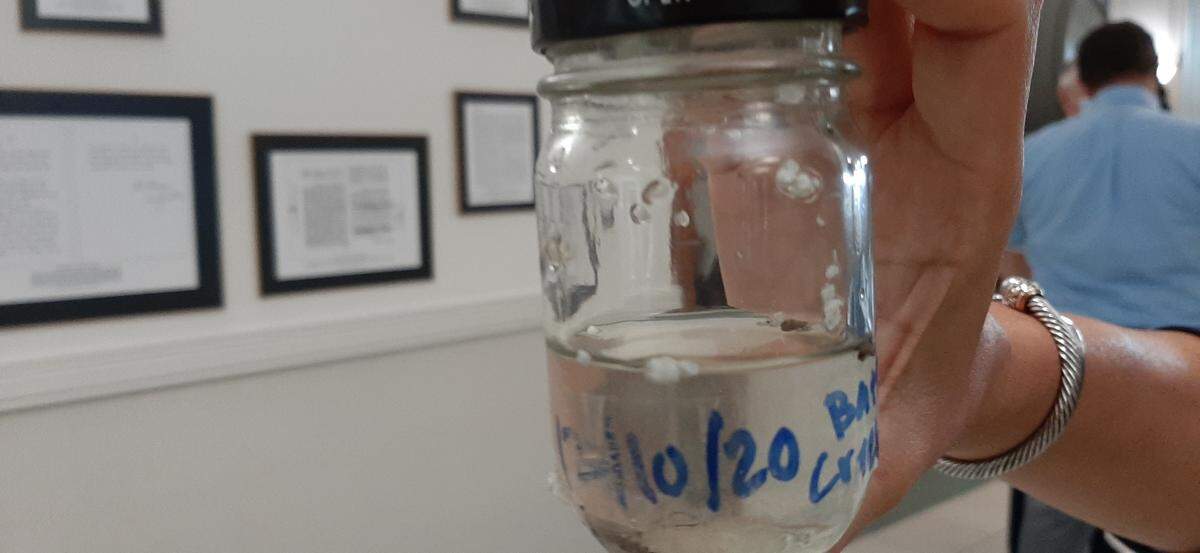
White brought jars of water that the Coastal Conservation League collected from Battery Creek following the December “snowstorm.” Particles floated in the water.
“It really does look like snow,” she said.
This story was originally published May 13, 2021 at 4:30 AM.