For years a booming industry polluted Port Royal. Now an energy giant is paying for it
On the banks of the Beaufort River in the town of Port Royal, the effects of a once-booming industry still linger more than 100 years after operations ceased.
For years during the late 19th century and early 20th century, fertilizer production polluted a large tract of waterfront property and the nearby salt marsh and waterway in northern Beaufort County.
Now an energy giant will pay to help restore marsh and marine life harmed by the pollution at numerous sites along the South Carolina coast.
ExxonMobil agreed in June to pay a $6.6 million settlement for environmental damages caused by pollution from former fertilizer facilities in Charleston and Port Royal, federal court records show. The company assumed responsibility for the cleanup of the sites via a corporate merger in 1999.
Government agencies will now establish a plan for how the money will be used. The money will go to restoring marshes and oyster reefs and paying back state and federal agencies for past work at the sites, according to the National Oceanic and Atmospheric Administration.
Lead, arsenic, copper, mercury and zinc from the old factories are believed to have polluted 100 acres of marsh in the Ashley and Beaufort rivers, NOAA says. The chemicals are slow to degrade and can kill marine life, stunt growth and affect reproduction.
At the site of the former Baldwin Fertilizer Company, at what is now the private community of Port Royal Landing, extensive cleanup already took place more than a decade ago as part of a past agreement between Exxon and state and federal environmental regulators. Work included digging out contaminated soil around homes and in the adjacent marsh and replacing with clean dirt.
It’s unclear the extent of how much contaminated soil might remain in the area. The initial cleanup during the mid-2000s avoided disturbing the structure of homes, paved areas and any work that might threaten the numerous large shade trees in the neighborhood, according to the Environmental Protection Agency.
Contractors are still removing “dirty dirt”
The process to cleanse the area of the past pollution is ongoing.
Homeowners planning yard work still coordinate with an Exxon contractor before installing irrigation or other extensive digging. A builder renovating what will be a new restaurant at the marina first had to wait for Exxon’s contractor to remove 2 feet of “dirty dirt” before digging footings for the building addition.
An orange barrier beneath the new clean soil signals homeowners and contractors not to go deeper.
Property owners and contractors contact Exxon contractor Arcadis when work will disturb the soil.
William Anckner, an Arcadis engineer who residents say coordinates the ongoing cleanup at Port Royal Landing, referred questions to Exxon.
Exxon spokeswoman Sarah Nordin said the company supports state and federal agencies “in restoring any affected natural resources in South Carolina.”
“ExxonMobil takes its environmental responsibility seriously and is committed to meeting its obligations,” Nordin said in an email.
The settlement is the result of a legal complaint brought by the federal government and state environmental agencies in May to recover costs to restore marshes and oyster beds affected by the past pollution. The agreement was based on an assessment of the environmental damage conducted as the sites were being cleaned.
Phosphate mining was big business
Baldwin Fertilizer Co., which would later become Virginia-Carolina Chemical Corporation, opened its phosphate mining and fertilizer production facility in 1895 through 1914, Beaufort historian Larry Rowland said.
The fertilizer operation encompassed 29 acres on the Beaufort River and includes what is now Port Royal Landing on the north side of Lady’s Island Drive, two condominium complexes, an assisted living facility and a northern fraction of the Naval Hospital Beaufort property, records show.
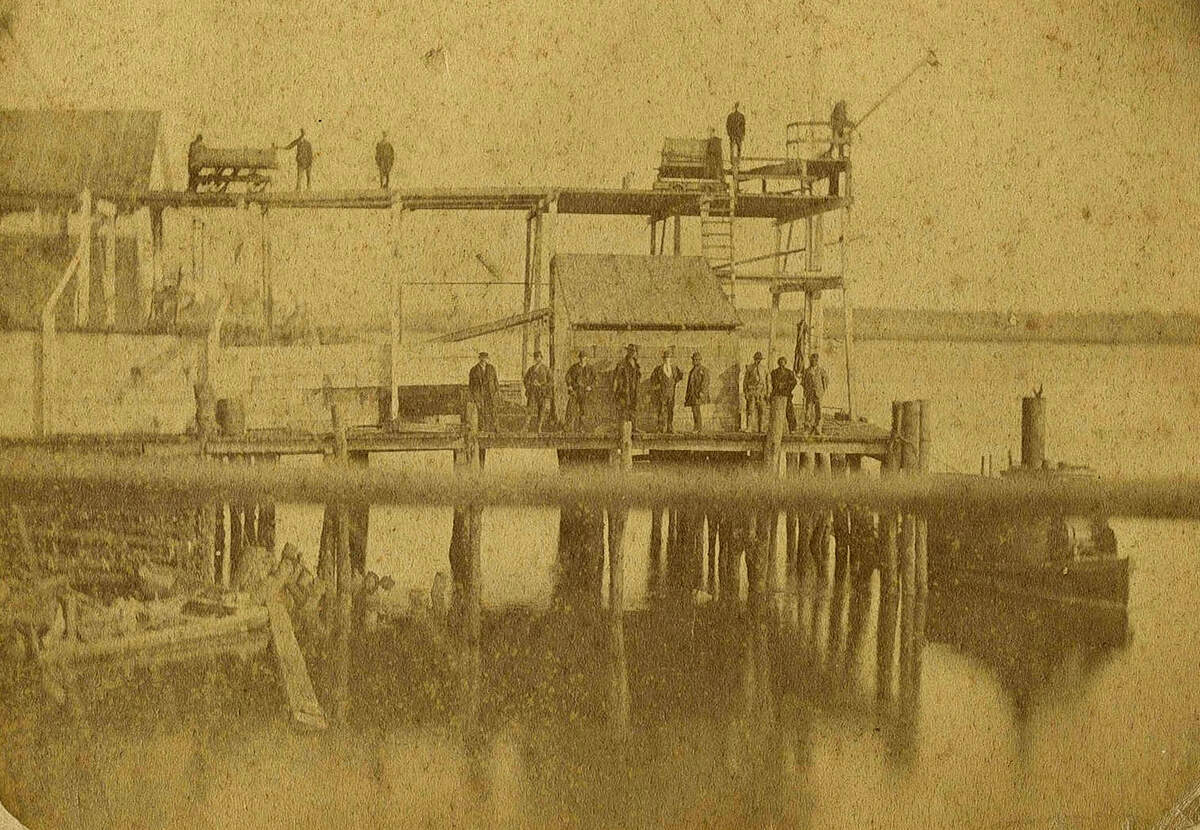
Phosphate mining was big business in South Carolina in the mid-to-late 19th century, with numerous sites in northern Beaufort County. The processing sites included Spanish Point in Beaufort, on Battery Creek, Lucy Creek and the Coosaw River.
“It was the largest mining industry in the history of South Carolina,” Rowland said. “It brought immense prosperity to a lot of people in Beaufort for about 30 years, and then it disappeared.”
Most of the operations only hauled out the phosphate to process and ship elsewhere to be produced as fertilizer, Rowland noted, a process that resulted in little if any contamination from phosphate mines.
Baldwin came along later, as Beaufort County began to lose the industry to phosphate-rich Florida, and was unique in that it also processed fertilizer on site, Rowland said.
The process of producing and storing sulfuric acid for phosphate fertilizer operations produced arsenic and lead that polluted nearby land, salt marsh and waterways, according to NOAA.
Old Sanborn fire insurance maps from the 1890s show the fertilizer facilities of most concern in Port Royal Landing. The area today is shaded by numerous oak trees and includes more than 20 homes, Port Royal Landing Marina and its restaurant under construction — all part of a tucked-away private development near the base of the J.E. McTeer Bridge.
As part of Exxon’s cleanup efforts during the 2000s, a barrier was placed under the new, clean soil to alert property owners and contractors not to dig deeper, multiple property owners said Thursday.
Areas of the nearby marsh were also dug up, new soil brought in and the marsh grass replanted. A series of white pipes protrude from the marsh where Arcadis continues to test.
In the case of larger projects where the soil will be disturbed, cleanup efforts resume.
At the marina restaurant renovation — which will become Marker 244 Tiki Bar — builder Tony Constant pointed out an area where a sidewalk was torn up, old dirt was removed by Arcadis and his company refilled with compacted soil. Nearby, another contractor worked on the foundation of a new home that also required potentially contaminated dirt first be removed.
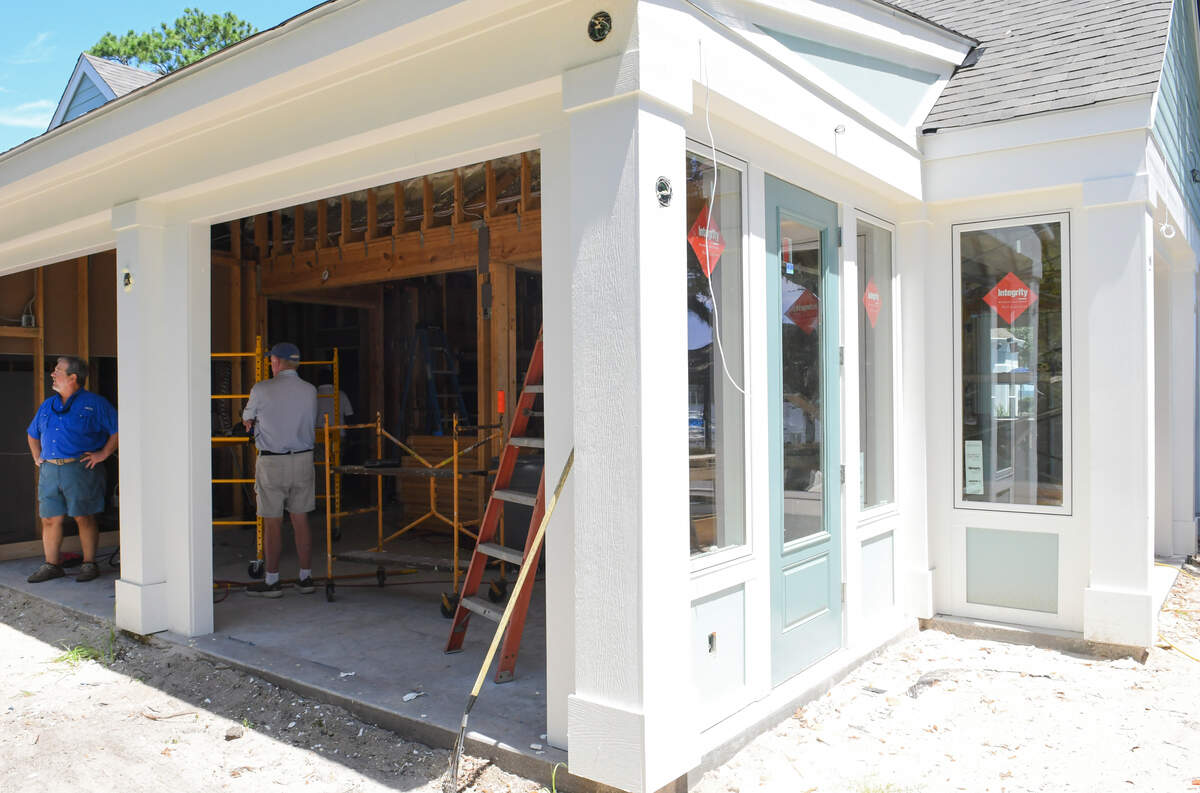
Arcadis also removed soil from under a slab where Constant was installing drain lines for the kitchen, he said. Exxon’s cleanup standards for its contractor are more strict than government regulators, he said.
Once the contaminated dirt was removed several inches deeper than needed for the project, Arcadis installed a mat barrier contractors aren’t to cross, Constant said.
“The maps told them where that dirty dirt was, and we were in it,” he said. “They knew it was here.”