
Native islanders look back in new Hilton Head documentary
Richard Oriage plucked crabs from the Skull Creek mud.
Louise Miller Cohen raced the boys to Fuller Pointe on her marsh tacky.
Mike Cohen Sr. picked corn, okra and butter beans at his father's farm.
These are among the childhood memories shared by a generation of Hilton Head islanders.
In a new documentary, "Hilton Head Island Back in the Day: Through the Eyes of the Gullah Elders," more than a dozen native inhabitants remember life before the first bridge to Hilton Head was built in 1956. They also make the case for preserving their fading past.
"This is our story," said Miller Cohen, founder of the Gullah Museum on Hilton Head Island. "A lot of our stories are oral ... so we just thought we should give people an opportunity to talk."
The film premiered in October at the Arkhaios Film Festival on Hilton Head and has created a local buzz. On Thursday, Outside Hilton Head had to schedule a second free showing after the first one was booked.
Several more screenings are planned in coming weeks across Beaufort County, and producer Carrie Hirsch says she has applied to have it shown at the Atlanta Film Festival.
Hirsch and her husband, director Butch Hirsch, got the idea for the film soon after they moved to the island from New York City in 2003.
Carrie served on the Gullah Museum board and became friends with several native islanders, including Miller Cohen. Butch, a former fashion photographer, was fascinated with Gullah culture, he said.
For more than a century, descendants of freed and runaway slaves lived in virtual isolation. They developed their own lifestyle and language. But no one wrote anything down.
"I realized the story was dying away, so to speak," he said. "I started pushing that we should make a documentary."
Miller Cohen, 71, knew elders took their memories with them when they died. She wanted to safeguard those stories for future generations, she said.
The Gullah Museum helped pay for the film with a grant from the Community Foundation of the Lowcountry. Shooting started in 2013 and wrapped up in September 2014.
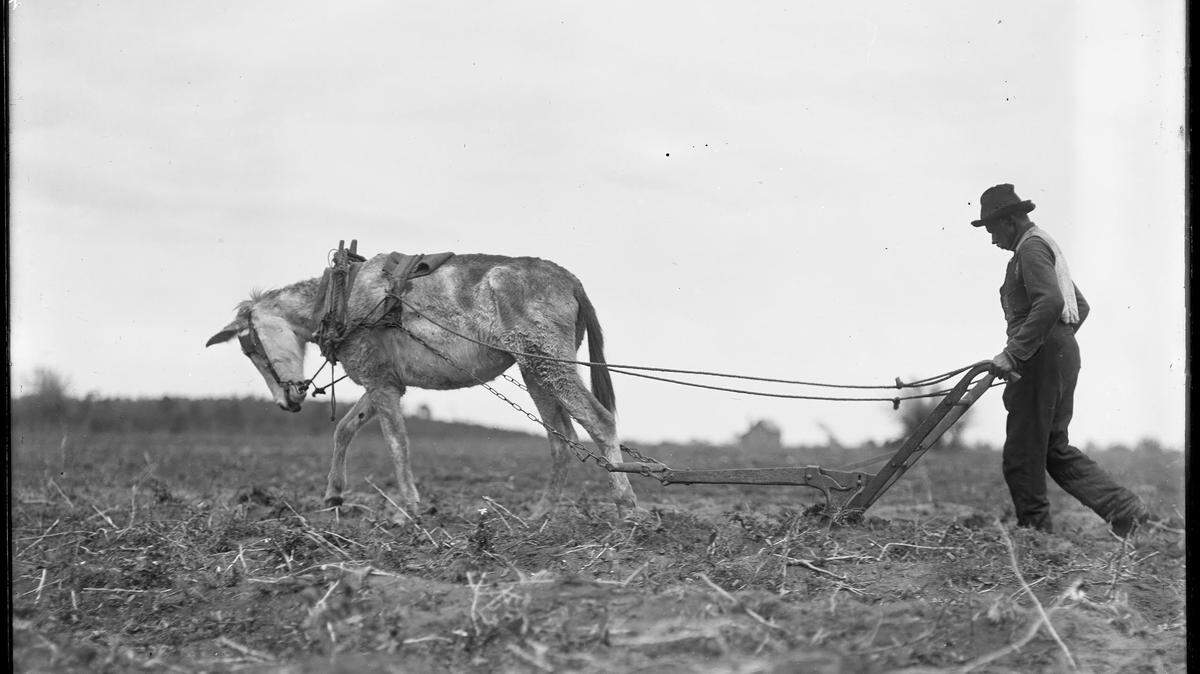
The 54-minute film features first-person accounts of farming and fishing, baseball and boarding school. Special attention is paid to Gullah language and the native islanders' sense of community.
Mostly, the islanders recount simpler days spent amid the undisturbed beaches, marshes and creeks.
"There was so much freedom," Miller Cohen said Thursday. "We would just roam. You didn't need a gate pass to go anywhere."
The documentary also looks at how several national events at the time affected Hilton Head.
Some islanders recall leaving during the Great Migration, when millions of African-Americans left the South for jobs in cities such as New York City and Boston. Others talk about serving in the Korean War.
Newton Greene Jr., whose mother was a native islander, had a unique view of Gullah culture during that period.
Born and raised in Brooklyn, Greene spent summers on Hilton Head with his grandparents in the late 1940s and 1950s.
Greene remembers leaving his Bedford-Stuyvesant apartment and driving 16 hours to rural South Carolina. He'd spend his days working in the fields, hauling firewood and watering plants outside his grandmother's flower shop on Jonesville Road.
"I'd like to think sometimes that it was another world," he said Thursday. "Forget it being part of South Carolina, forget it being part of America ... it was just out there."
The Hirschs did their best to replicate the era.
They used about 20 archival photos from the time period. For the soundtrack, acclaimed pianist Sanford Jones, Carrie Hirsch's father, played several Gullah spirituals popular during that time. Hilton Head gospel group Voices of El Shaddai also sang in the film.
"Everything we used was related to that time in history," Carrie Hirsch said.
The narrative ends shortly after the J. Byrnes Crossing to Hilton Head opened.
With the bridge came modern amenities and better transportation. But its construction also brought a wave of development to the island.
By the 1970s, a torrent of newcomers had flocked to new golf courses, resort hotels and beachfront condominiums, many of which were cordoned off in private subdivisions. Most native islanders were left outside the gates and remain there today.
The Hirschs said that could be fodder for a second documentary.
Greene said he would like to see that story told.
"What I don't think is showcased enough is how the native-island people were incorporated into development," he said. "Some of it was tragic, some interesting, some positive."
Greene, 70, retired to Hilton Head three years ago. He said the documentary is part of what he calls his generation's commitment to preserving Gullah history.
"We're stewards of this," he said. "When my granddaughter visits Hilton Head, I want her to be able to hear its history told from the voices of the native islanders who lived it."
Follow reporter Dan Burley at twitter.com/IPBG_Dan.
Related content
Camera captures the fleeting 'Shadows of the Gullah Geechee'
This story was originally published January 10, 2015 at 7:48 PM with the headline "Native islanders look back in new Hilton Head documentary ."