
Daufuskie slave-home tabby ruins being restored
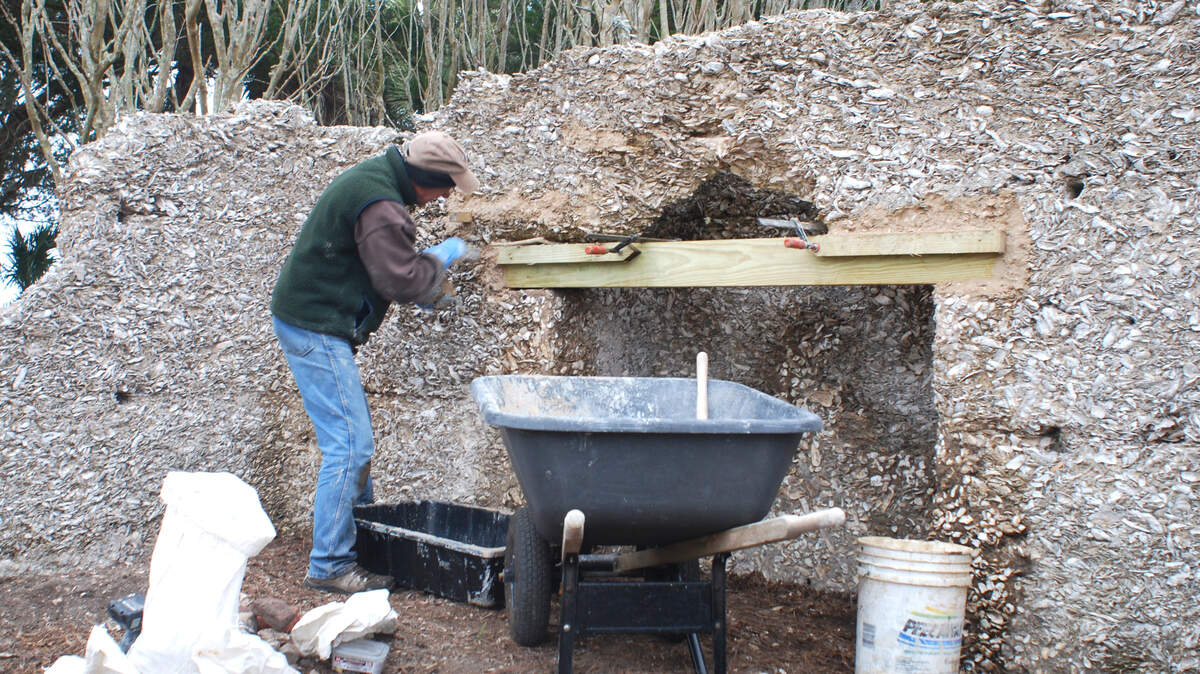
For more than 180 years, Daufuskie Island's tabby ruins have withstood test after test.
The history of the former slave quarters was eroded by each one -- abandonment in the 1900s, the storm surges and winds of Hurricane Gracie in 1959, the encroaching roots of hackberry trees just a few years ago.
Haig Point residents have decided they can't lose any more of the ruins to time.
In mid-February, the community began a six-week project to preserve the structures, which comprise three former dwellings built in the early 1820s or 1830s. Near the Stratchan Mansion, the Daufuskie Island dwellings are the most intact, verified tabby slave structures in the state, according to tabby expert Colin Brooker, who is overseeing the restoration.
The National Register of Historic Places also includes foundation ruins on Dataw Island, Spring Island and Hilton Head Island.
Since the restoration began, craftsman Rick Wightman has been working about four days a week stabilizing the fragile walls and applying a protective coating over the tabby cement, which was created using a North African technique of mixing oyster shells, lime and sand.
The project will cost about $20,000, said Randall Page, Haig Point Club and Community Association general manager. The community and the Daufuskie Island Historical Foundation will hold an event June 7 to celebrate the completed restoration.
"We're just trying to do our part to maintain that part of our culture and history," Page said.
The ruins at Haig Point were "exceptionally" well built, possibly for use by domestic slaves or personal servants, Brooker said.
"And it's not just foundations," Page said. "You actually see something of the living quarters of the people who worked and lived on the island. It's very rare."
For example, visitors can make out a fireplace, windows and doors, Daufuskie foundation president Jo Hill said. It's those details that can help people build connections with scenes from the past.
"Perhaps someone has never really thought about the small space an enslaved individual had to live in," she said. "You can feel the indignity of it. You can feel the history."
Follow reporter Rebecca Lurye on Twitter at twitter.com/IPBG_Rebecca.
This story was originally published February 28, 2014 at 3:34 PM with the headline "Daufuskie slave-home tabby ruins being restored."