Laws allow for big hotels in Hilton Head’s Fish Haul area. Residents are just finding out
More than 40 years after Hilton Head Island incorporated as a town, few undeveloped spots remain on the coast of the 12-mile resort community.
Towering timeshare resorts and short-term rentals are not in short supply on the island, and some Hilton Head residents feel there’s too many of them.
However, there’s one area on Hilton Head that still has untapped potential for large-scale waterfront development, and some of its residents are only just finding out.
Portions of the Baygall and Mitchelville historic Gullah neighborhoods, located near Fish Haul Beach, are zoned for mixed-use, which allows for hotels and timeshares up to 75 feet in height.
Some Gullah business leaders want to expand that zoning, so that property rights are equal on both sides of the street. When Gullah Geechee residents of the neighborhood got wind of the proposal, some spoke out in opposition.
Here’s what to know about the Mitchelville District, how it ties into to fight for preservation for the Gullah community, and why the issues are more complex than the classic “NIMBYs versus developers” tale that typically plays out on Hilton Head Island.
What is the Mitchelville District?
The Mitchelville District is what’s known as a mixed-use zoning district, which allows for both residential and commercial development in the same area. This gives property owners more flexibility, but the commercial activity has the potential to introduce traffic and noise.
In contrast, single-family zoning can only be used for single-family homes. That protects residential neighborhoods from large-scale development such as hotels and timeshares, but it also often prohibits homeowners from running small-scale businesses like fruit stands, bike shops or corner stores.
Zoning can also affect property values. If a piece of property is upzoned, meaning development of greater size, scale, and commercial use is allowed, the value of the property typically goes up. Downzoning, or restricting what can be developed on a property, can cause property values to go down.
Some Gullah Geechee people see an increase in property value as a positive thing, as their property is one of the few valuable assets that they’ve held onto for generations. Others see it as an increased tax burden, one of many reasons Gullah Geechee property owners have lost their land to tax sales over the years.
The Mitchelville District allows for a vast range of developments in size, scale and use. Bed and breakfasts with up to 10 rooms, hotels with up to 35 rooms, and timeshares with up to 12 dwelling units can be constructed, although questions remain about whether such developments would actually be permitted due to limited infrastructure in the area.
Several kinds of businesses are also allowed in the Mitchelville District, including bicycle shops, convenience stores, restaurants, liquor stores, bars, nightclubs and open-air markets. Also allowed are car rentals, boat sales, seafood processing, horse stables and water parks.
The district allows for a maximum building height of 75 feet, whereas in residential districts, the maximum building height is 45 feet. Some have pointed out that that could lead to the development of hotel-sized, single-family homes rented out on the short-term rental market, such as in Bradley Circle.
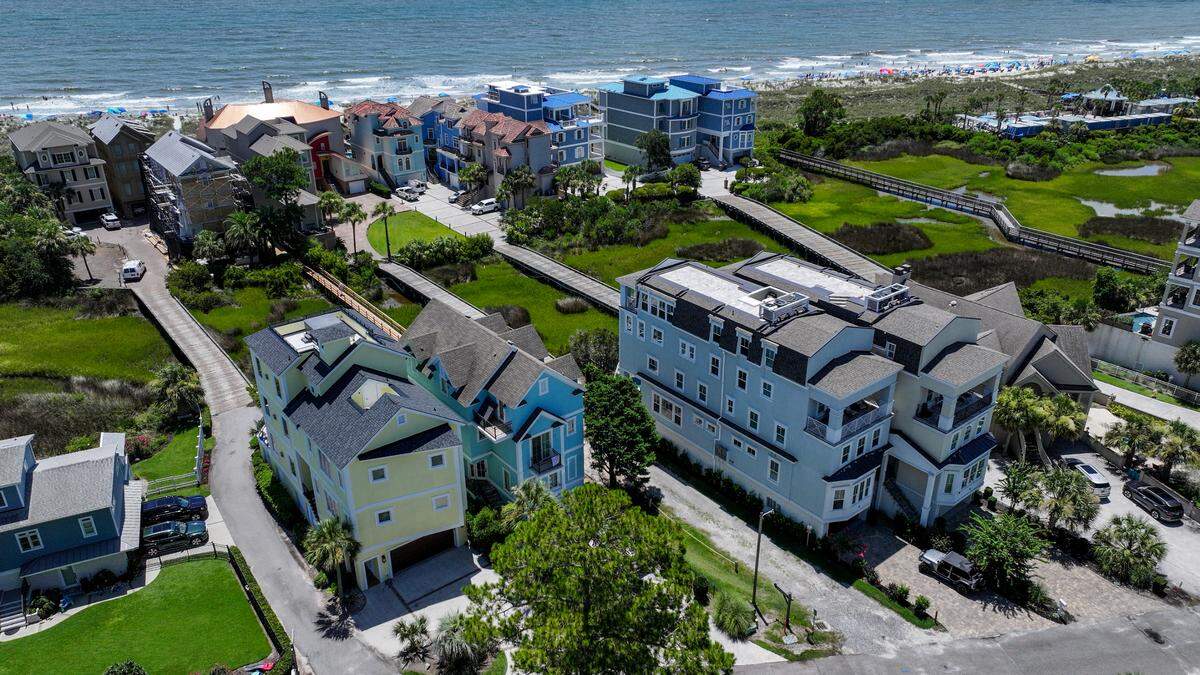
The Mitchelville District also allows for housing to be built at a greater density at 12 units per acre. Across the street, some residential lots are allowed 12 units per acre, while others are capped at eight units for acre.
For some, increased density could be a positive. But not for others.
Many Gullah Geechee landowners are “stuck” at four units per acre, which can make it difficult for land to be divided between children. If a Gullah Geechee landowner wants to pass down an acre of land to their six children, but their property is zoned for four units per acre, there’s no way to give each child a piece of their ancestral land.
On the flip side, many Hilton Head islanders, including Gullah Geechee people, fear that increased density can lead to overdevelopment. If a large-scale developer were to purchase land in the Mitchelville District, they could legally build 12 homes, each 75 feet tall, into an acre of property that sits along a two-lane road with one way in and one way out.
The area around Hudson’s Seafood House on the Docks offers a sneak peek into what a mixed-use neighborhood can look like, if infrastructure allows for large-scale development.
Zoned as “water-oriented mixed-use,” the neighborhood boasts waterfront restaurants, a three-star resort and a boat dealership. In the same district sits a cluster of manufactured homes and a quaint Gullah-owned barbershop.
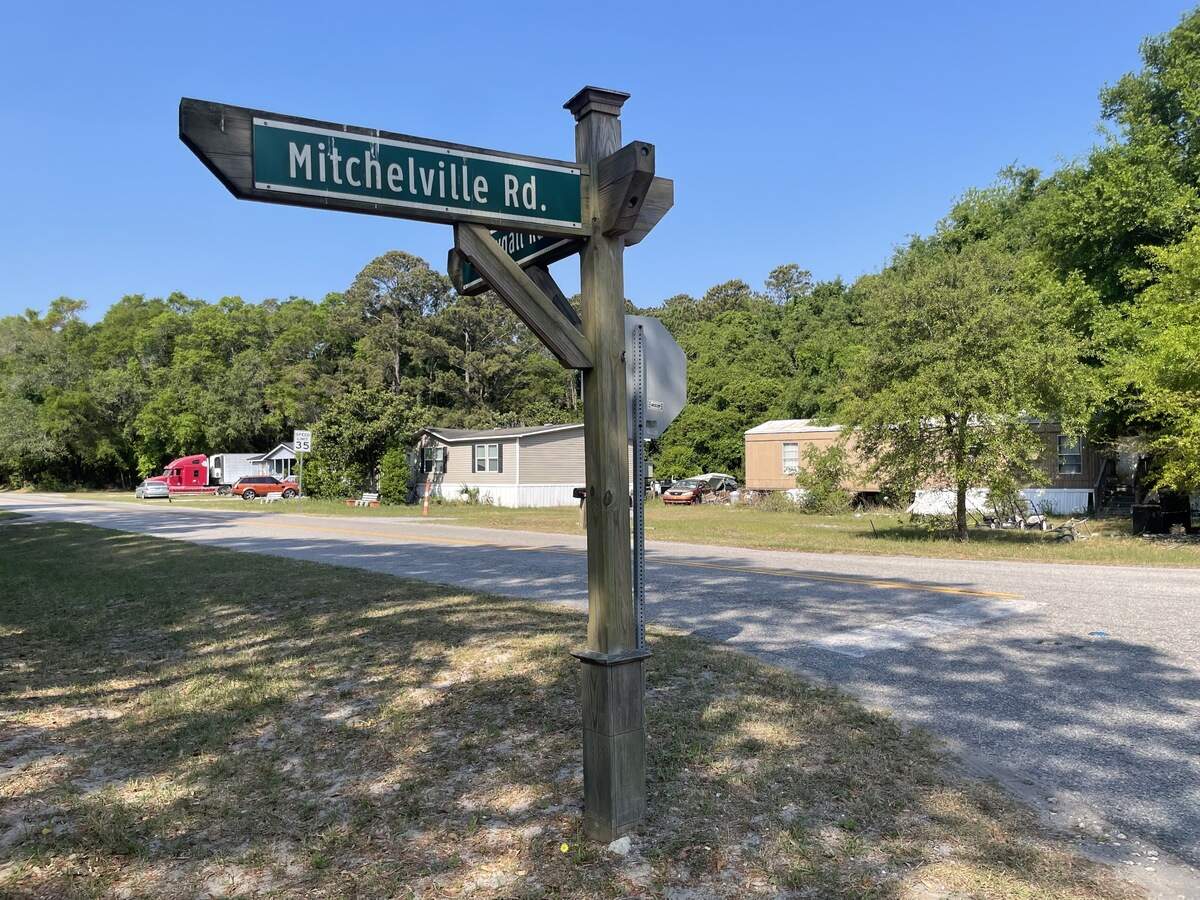
For now, the Mitchelville District is primarily residential, with manufactured homes shaded by a thick canopy of trees. Childrens’ bicycles lay in the front lawns. Feral cats mew at passersby for food. Hidden amidst a cluster of trees is an old Gullah Geechee graveyard, with weathered and broken stones dating back to the 19th century.
Why do some want to expand the district?
Currently, the Mitchelville zoning only applies to two chunks along the waterfront near Fish Haul Beach. Some Gullah leaders want to expand the district, so that it applies to both sides of Mitchelville Road.
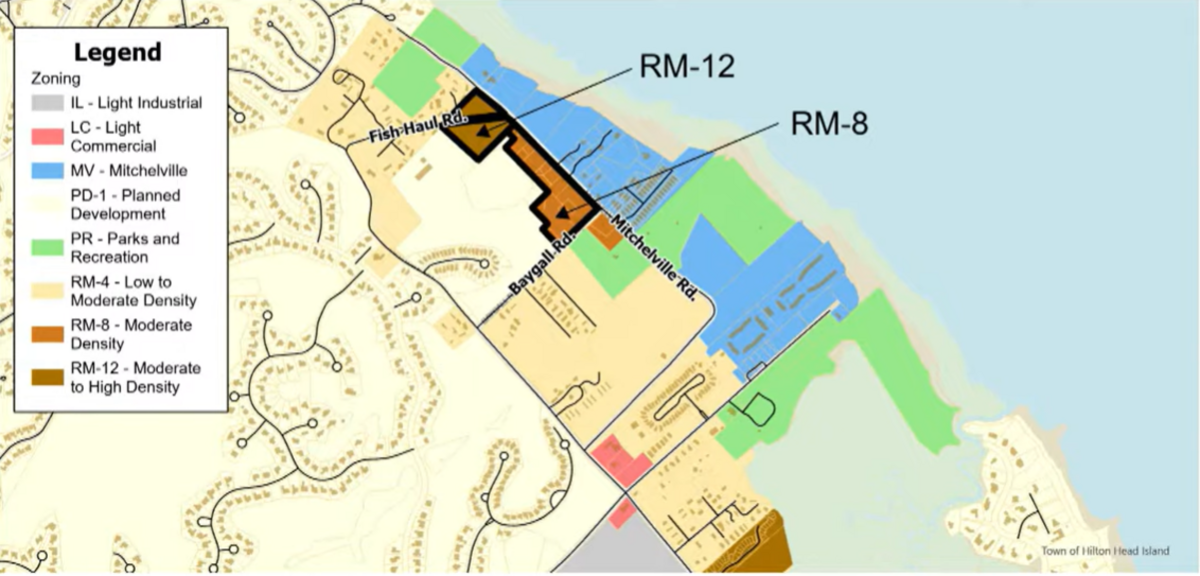
At an April 13 meeting, the Town of Hilton Head Land Management Ordinance task force discussed the proposal. The suggestion came from the Gullah Geechee Historic Neighborhoods Community Development Corporation (CDC), which the town created in 2022 to help protect Gullah culture and promote economic opportunities for Native Islanders. Rev. Louis Johnson, who chairs the CDC, argued that if property owners on one side of the street can build a bed and breakfast, it would be unfair to “constrict” the freedoms of residents on the other side of the street. He raised concerns that rising commercial development in the area would increase property taxes for those living in residential areas without giving them the freedom to tap into economic opportunities in the same way.
“If the land is there and you can build a bed and breakfast, you should be allowed to build it on both sides of the street,” Johnson said.
How did civic leaders react to the proposal?
The majority of people sitting on the land management ordinance task force did not support the proposal in its original form.
Gregg Russell, a local musician and real estate agent, raised concerns about the “laundry list” of items allowed in the district.
“A bicycle shop is far different from a 100-unit timeshare development 75 feet up in a residential neighborhood,” Russell said.
Task force members showed support for potentially tweaking the changes so that some, but not all, of the allowances would apply on both sides of the street. Ward 6 Council Member Steve DeSimone said more research and conversations with residents are needed before potentially rezoning the area.
“We have to be careful what we ask for,” DeSimone said.
How did Gullah residents react to the proposal?
Many residents of the Bay Gall neighborhood are learning about what’s allowed in their neighborhood for the first time, and are strongly opposed to what they’re hearing.
After last week’s meeting, Ward 6 Council Member Melinda Tunner organized a community meeting to collect input from residents. Local Gullah leaders asked residents to discuss what they did and did not want from their community.
The consensus in the room was clear: no timeshares, no hotels, no bars, no clubs, and no commercial buildings.
“This is a neighborhood,” resident Nadine Chaplin said. “That’s the way we want to keep it, a neighborhood.”
Still, some residents pointed out that giving Gullah landowners some flexibility for commercial use, such as food trucks or neighborhood stores, could benefit the neighborhood.
“I hear, ‘keep it the old way,’ well, our ancestors, they did that,” said David White, one of the leaders of the community meeting. “The community of Mitchelville, they had their carpenters, they had their shoe cobblers, to be able to sustain the community. I think with the younger folks, if they’re introduced to that, they may grab on to it.”
Who are the Gullah Geechee people?
The Gullah-Geechee people are descendants of people formerly enslaved people forced to farmed indigo, cotton, rice and sugar for wealthy plantation owners on Hilton Head Island before the Civil War.
After the Battle of Port Royal on Hilton Head Island in 1861, wealthy white residents and plantation owners fled inland, taking as many enslaved people as they could with them, according to Historic Mitchelville Freedom Park.
The Union Army set up a headquarters on Hilton Head, allowing roughly 10,000 formerly enslaved people left behind to begin their new lives working with pay on base. Mitchelville was officially founded in 1862 as the first self-governed town for formerly enslaved people — children were required to go to school and most people worked on base.
The community began to decline after the war ended and the army started to leave; efforts by slave owners to reclaim their pre-battle land made things worse. The last straw for historic Mitchelville was a major hurricane in 1893 — the largest and most powerful to hit South Carolina up until that point.
Still, thousands of Gullah Geechee people continued to live on Hilton Head Island, forming small-scale, self-sustaining communities and living off of the land. In recent decades, since the development of Hilton Head Island into a hotspot for tourism and commercial activity, many Gullah landowners feel as though they’ve been left behind.
In an October 2025 article, The Southern Poverty Law Center spoke with local Gullah business owner Taiwan Scott for an article about the fight for Gullah land preservation. The following paragraph is a direct quote from the article, but a paraphrase of Scott’s words.
“Island taxpayers have subsidized drainage infrastructure expenses for planned unit developments ... Yet Gullah families who want to build new homes on their land must pay upwards of $30,000 to install a fire hydrant or sign a waiver that relieves the town of any liability should a fire engulf their property,” the article says.
What is the Land Management Ordinance task force?
The Mitchelville zoning discussions are part of the Town of Hilton Head’s larger efforts to mitigate growth and development
Town officials refer to this process as the Land Management Ordinance “rewrite.” In addition to adjusting standards for tree clearance, open spaces and building heights, officials hope to clean up the language in the LMO to make it easier for everyday people to understand.
It’s important to developers and property owners, because the land management ordinance sets restrictions on building height, color and use, plus how many trees can be cut down to make way for construction. It’s also important to residents who fear the transformation of quiet, residential areas into commercial hotspots full of traffic and noise.
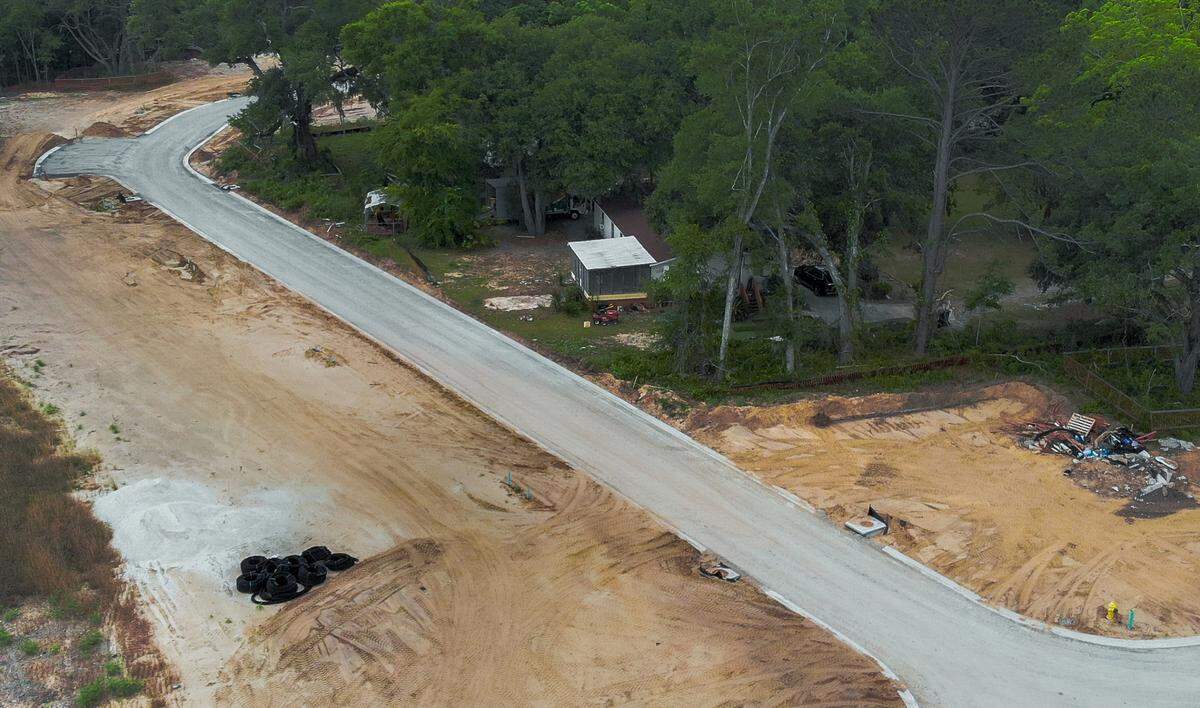
Over the past few years, town officials have chipped away at many key problem areas in the land management ordinance, helping to protect trees and open spaces. Because the policy is so large and affects so many communities, the Town Council appointed a task force late last year of 21 residents, industry representatives and civic leaders to review and recommend changes to land use, subdivision and design standards before proposals head to the Planning Commission and, ultimately, the Town Council.