Hilton Head’s eaglets reach the 7-week mark. How much longer until they fly?
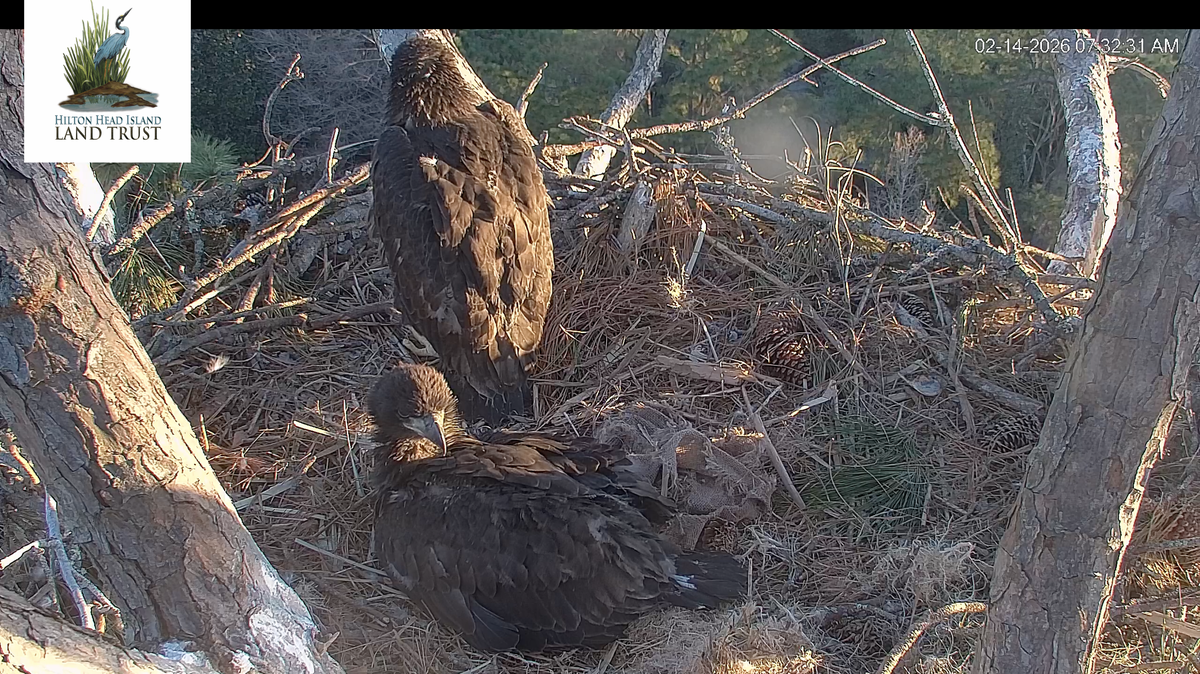
Hilton Head’s famed eagle duo, Gracie and George, are deep into their 14th nesting season — and their growing eaglets are officially halfway to fledging the nest.
This year’s first chick broke through its shell at 4:21 a.m. on Dec. 29, followed by a sibling at 10:03 a.m. on Dec. 30.
Now at nearly 50 days old — hitting the seven-week mark — the pair are in a rapid growth phase, when appetites are high. They appear almost adult-sized, cloaked in dark feathers with slightly drooping wings that hint at how much they’ve developed in such a short time.
And growing they are.
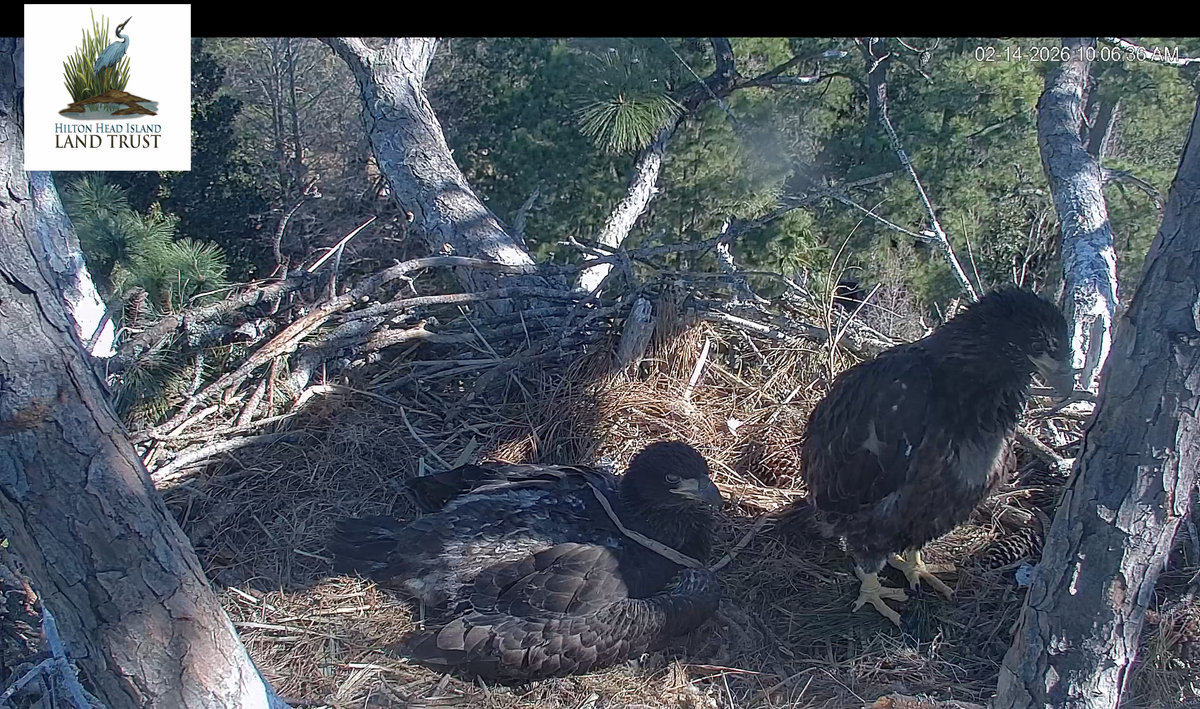
Bald eagle chicks can gain nearly half a pound per week during their first two months. By six weeks, eaglets are nearly as big as their parents, the American Eagle Foundation says.
By weeks seven and eight, their appetites peak — and George and Gracie will hunt almost continuously to keep up. As is typical in eagle nests, the eaglets sometimes engage in mild sibling competition for food, a natural behavior known as “bonking.”
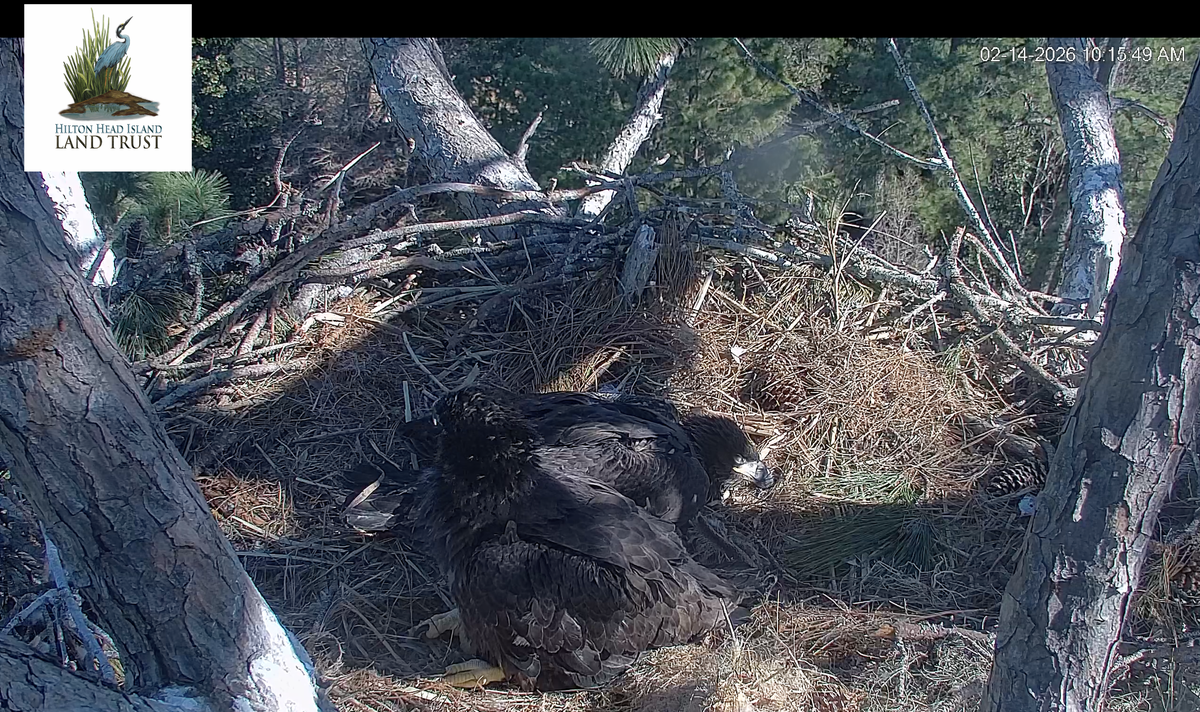
At the nest, the eaglets are standing, exploring, resting, pulling on branches and even attempting to self-feed, the Hilton Head Island Land Trust states.
Around 50 days old, young eagles also become strong enough to tear meat on their own. Recently, the parents have started delivering more diverse prey — including the season’s first eel on Feb. 11, which was caught on camera.
Perhaps the most exciting development for this year’s hatchlings is called “wingercizing,” as the Land Trust states.
This is when the eaglets flap intensely, stretch into gusts of wind and may even attempt hover briefly. This exercise strengthens flight muscles in preparation for branching — hopping to nearby limbs — a critical precursor to fledging.
Within the next few weeks, these hungry and hard-working youngsters will leave the nest. After that, they’ll continue to grow and their head feathers will turn the iconic white color within about five years.
For now, they remain in a delightfully awkward phase: big, bold and soon on their way to the sky.
This marks the second year that Gracie, George and their hatchling have been on camera.
To stay updated with the eaglets’ growth and fledging, viewers can tune into the Hilton Head Island Land Trust’s Live Eagle webcam.
This story was originally published February 14, 2026 at 12:22 PM.