There are more wild pigs in SC than ever & they’re costing millions. What to know
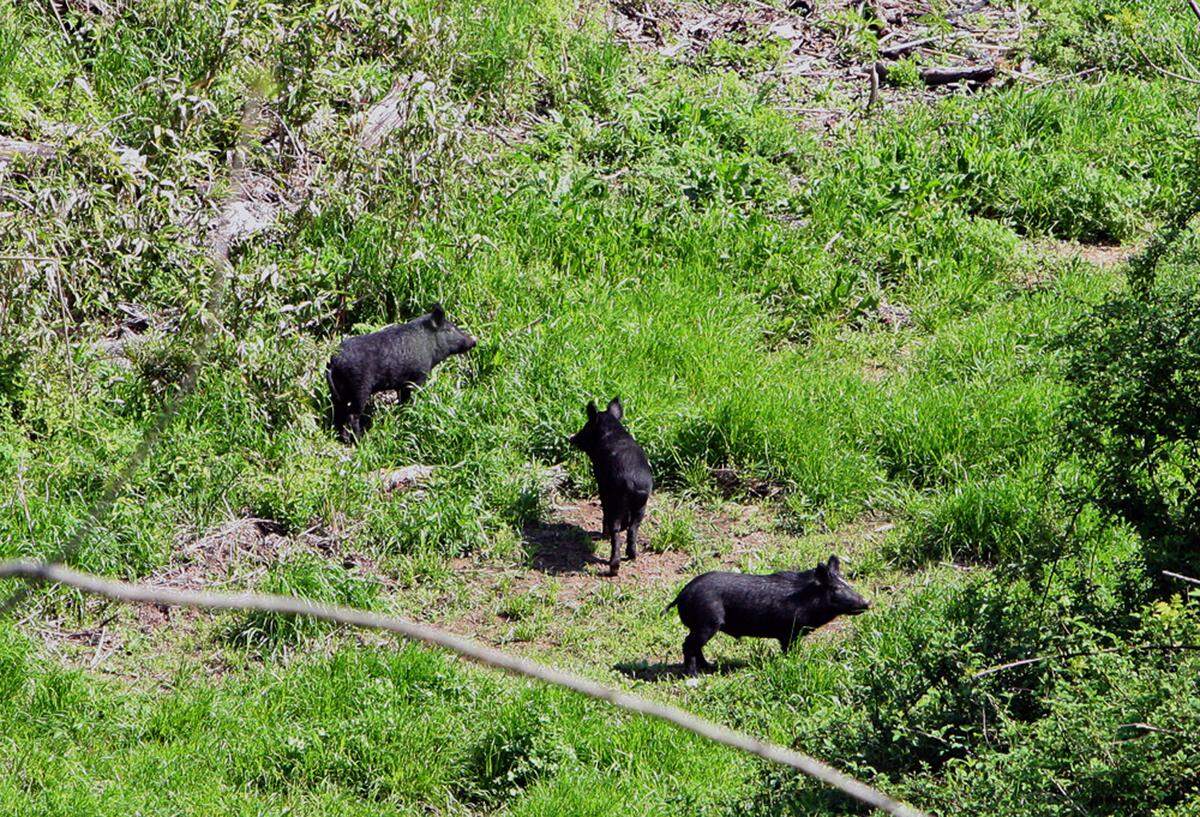
From jumping fences, destroying golf courses and digging up yards, wild pigs — also called wild boars or feral hogs — are one of the most destructive and invasive animals in the U.S.
And while many Lowcountry residents rarely see them, their impact is widespread, costly and growing.
Here’s what to know about their population and impacts on South Carolina.
A long history in SC
Wild pigs have been part of South Carolina’s landscape for centuries.
According to the South Carolina Department of Natural Resources, Spanish explorers first released pigs along the coast in the 1500s. Later, Eurasian wild hogs were introduced in the Upstate in the early 1900s.
For much of history, wild pigs were confined to river floodplains and swamps.
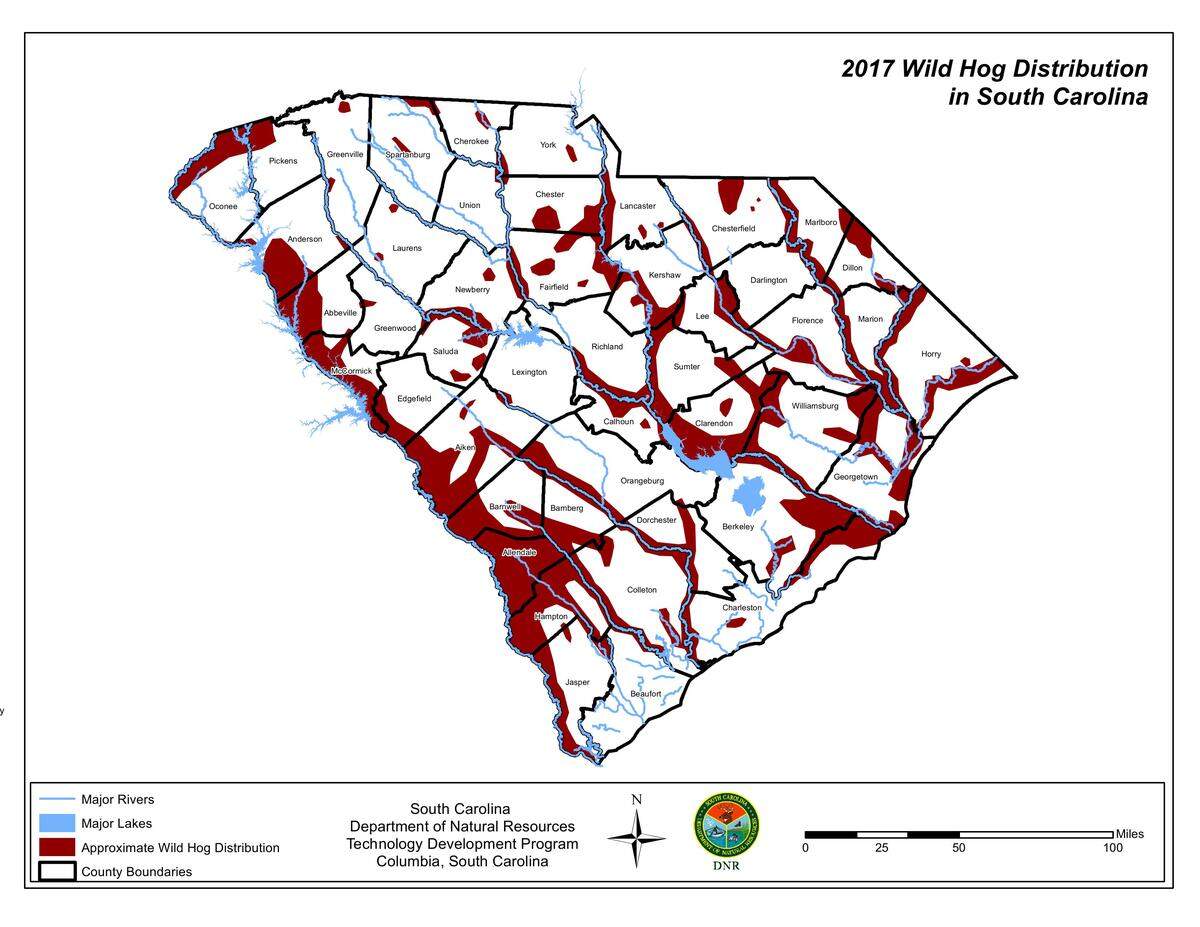
In the 1980s, wild pigs were found in just over half of South Carolina’s counties, but by 2008, they were documented in all 46.
Today, wild pigs can be found from tidal marshes and coastal islands to inland forests and agricultural land.
Has the wild pig population grown?
Wild pigs reproduce year-round and produce multiple litters each year, allowing populations to rebound quickly even when heavily hunted.
According to Dr. Jack Mayer, a feral-swine researcher and manager at the Savannah River National Laboratory in Aiken, the estimated population across the state was 152,149 wild pigs in 2024, a 7% increase from 2023.
Mayer says that since 2002, the trend line for the statewide number of wild pigs has been increasing, but since 2007, their population has hovered around 135,000 animals.
Where are they in the Lowcountry?
While Beaufort County and parts of the Lowcountry have not historically been considered hog “hot spots,” wild pigs are present and do cause issues.
Most have been found near river corridors, swamps, and marshes, including areas along the Savannah, Combahee and Broad rivers. Sightings have recently occurred in neighborhoods and developments as well.
What kind of damage do they cause & what’s the cost?
Adult wild pigs typically weigh up to 250 pounds, with males averaging about 200 pounds and females around 175 pounds.
Because wild pigs are elusive and primarily feed at night, the damage they cause is often the first sign of their presence.
They are notorious for rooting — sometimes called grubbing — as they dig for food, which damages pastures. While plants make up about 85% of their diet, the damage they cause goes far beyond what they eat.
Other damages, according to the SCDNR, include:
- Consuming and trampling crops such as hay, corn, peanuts, small grains, vegetables, watermelons, soybeans and cotton.
- Damaging fences and roads.
- Preying on lambs, goats, newborn cattle and poultry.
- Cause forestry and reforestation problems, particularly for hardwood and pine seedlings.
- Damage suburban communities and neighborhoods by tearing up yards, gardens, landscaping and plants.
- Destroying of golf courses.
Along the coast, wild pigs have even been documented destroying loggerhead sea turtle nests.
Wild pigs are also extremely adaptable. They can:
- Run up to 30 mph
- Jump a 3-foot fence
- Climb or jump 5–6 foot trap walls
- Swim up to two miles of open water
- Turn sharp corners while running
- Travel steep inclines
Mayer says that recent cost estimates on statewide damages caused by wild pigs to crop and non-crop items in South Carolina were found to be around $594 million per year.
Are they more active in the winter?
Wild pigs are present year-round, but can sometimes be seen more often in the winter.
During hot summer months or periods of heavy hunting pressure, hogs tend to remain hidden in shaded wallows during the day. This means that the cooler winter temperatures allow them to roam more freely and for longer periods.
Wild pigs prefer dense cover — such as marsh vegetation, brush or forest edges — but will travel into open pastures, neighborhoods and golf courses in search of food, SCDNR says.
Disease risk & safety concerns
The U.S. Department of Agriculture notes that wild pigs “are known to carry at least 30 viral and bacterial diseases and nearly 40 parasites that can be transmitted to humans, pets, livestock and other wildlife.”
Mayer also notes that wild pigs pose a growing threat on roadways.
Vehicle collisions with wild pigs in South Carolina have been reported since 1968. Between 2015 and 2021, there were 1,595 reported collisions.
Management and SC law
Wild pigs are not protected in South Carolina, and there is no closed season or bag limit on private land, according to the SCDNR.
To prevent further spread, it is illegal to release wild pigs into the wild and/or remove a live wild hog from the wild without a permit.