Old church, new building: Hilton Head church founded in Civil War to expand
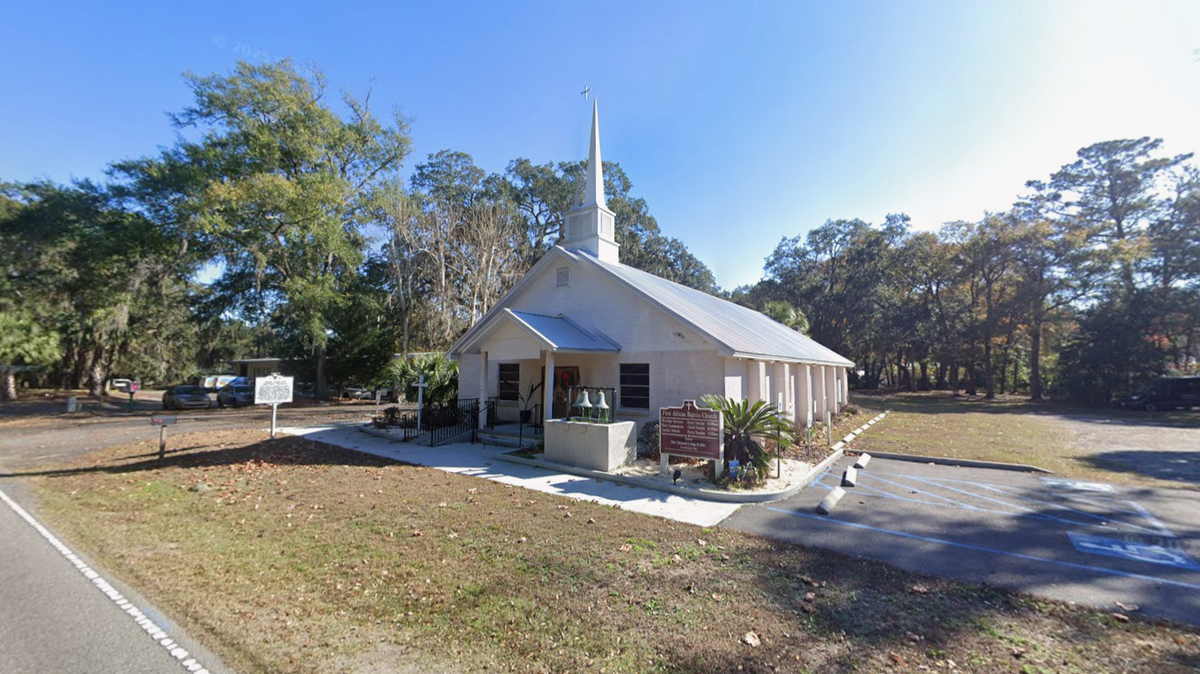
Hilton Head’s oldest church is doubling in size more than 163 years after it was founded.
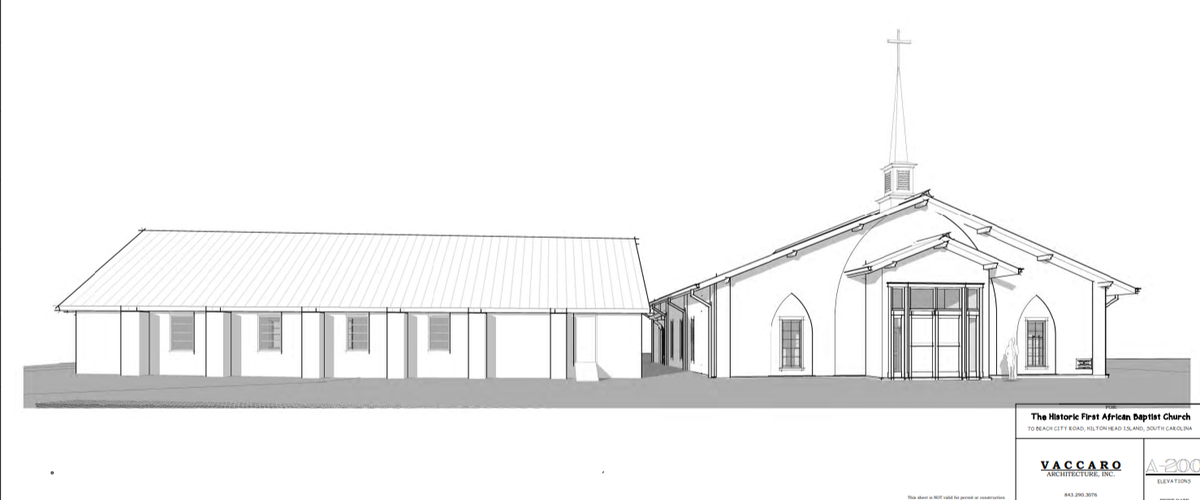
The First African Baptist Church, located on Beach City Road, has submitted designs for a new 4,560-square-foot building next to the existing structure.
The church was founded in 1862 with a congregation of about 120 recently freed people, according to the Heritage Library.
The church began fundraising for a new facility in 2006, according to an Island Packet report at the time. The current structure was built in 1966.
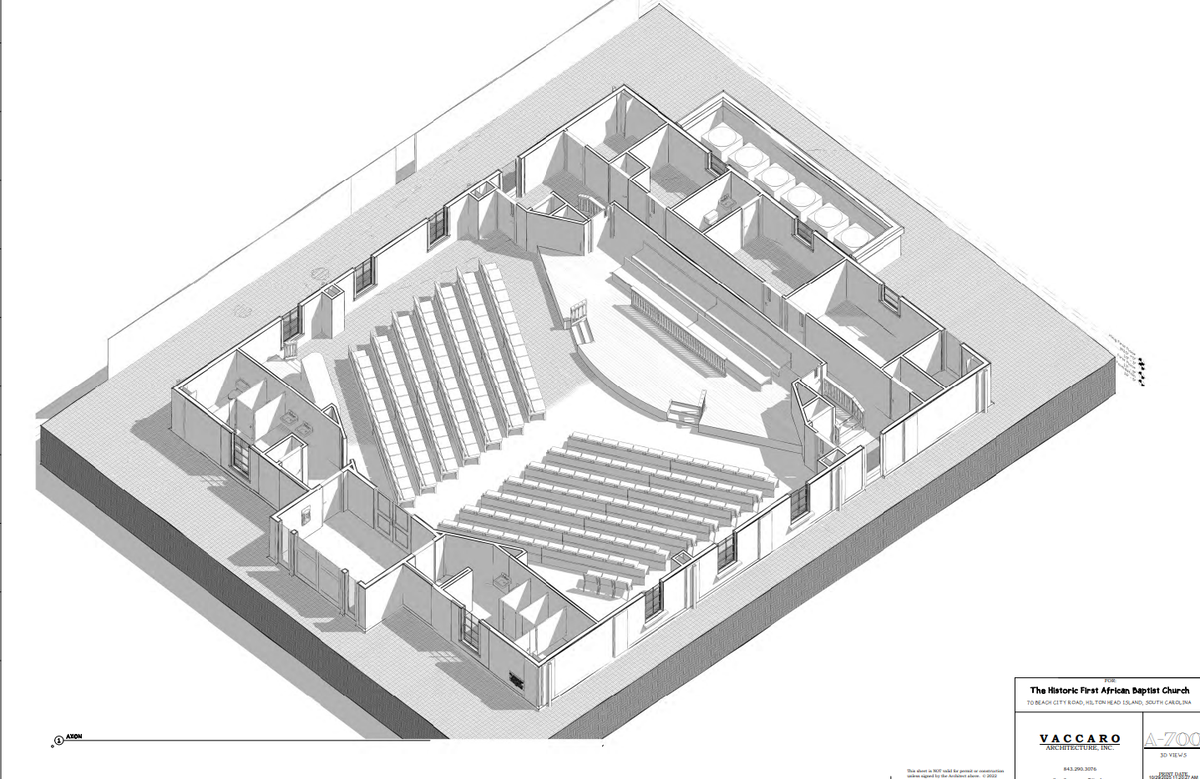
According to design documents submitted to the town, the new building will serve as the main church sanctuary, seating up to 200 people. The building will also house offices and restrooms.
The existing steeple will be removed from the old building, which will be used as a fellowship area after the new building is constructed.
The history of the church
The church’s first ordained pastor was Reverend Abraham Murchinson, an escaped enslaved person from Savannah, who is said to have baptized over 1,000 freedmen during the Civil War.
It was a place of worship for the residents of Mitchelville, a freedman’s town established during the Union Occupation of Hilton Head. At its peak, Mitchelville was home to more than 3,000 freed slaves and had homes and schools. White visitors to Mitchelville needed passes to enter town limits, according to the Heritage Library.
The church was relocated to its current spot in the 1880s, when many residents of Mitchelville began to move and settle in other areas in search of jobs or to reunite with family.
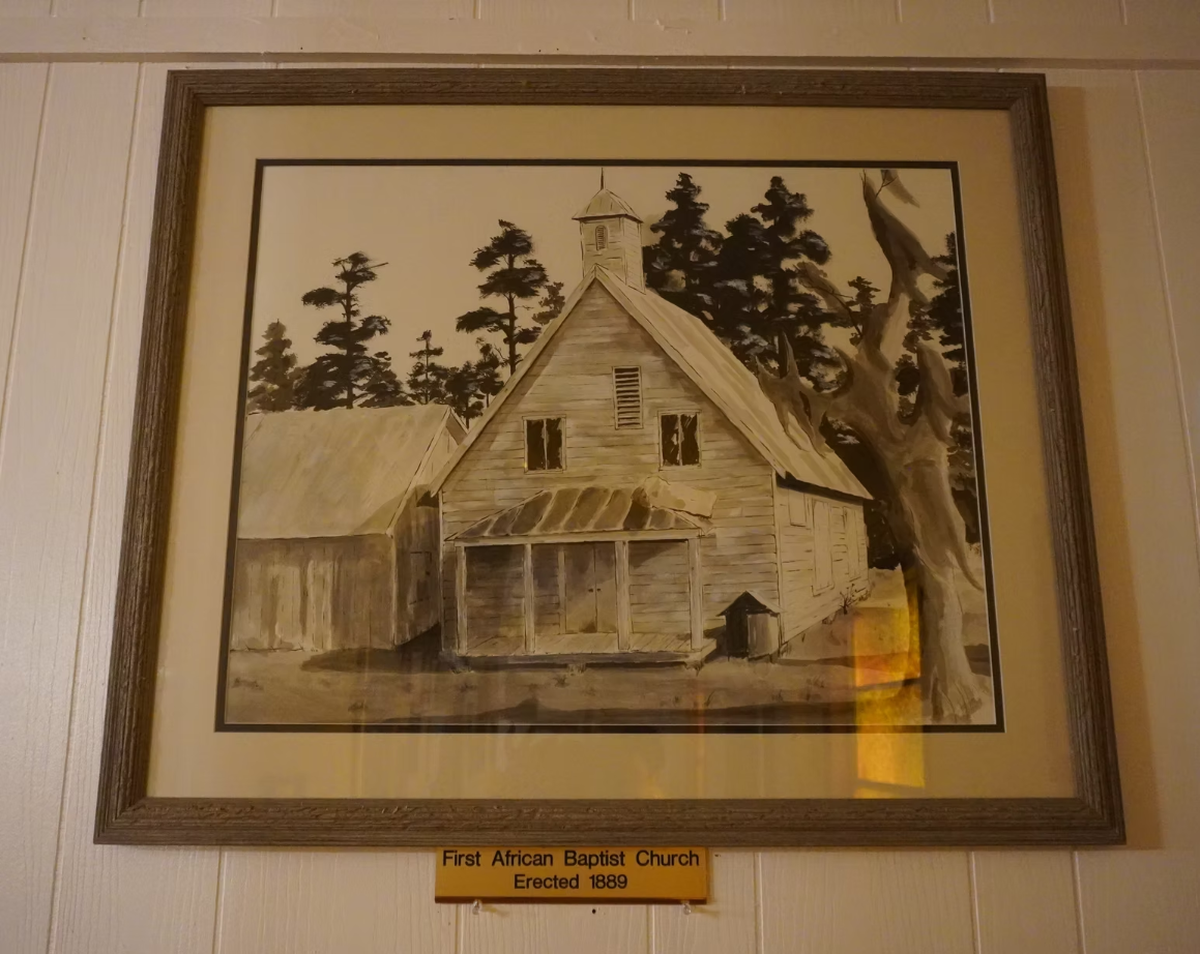
At the church’s dedication in 1862, Union Army Major General Ormsby Mitchel is reported to have given a powerful speech to the congregation, sharing his vision for a self-governing town for freed slaves. A letter published in the New York Times on Oct. 19, 1862 contains a transcript of the speech.
“If you are successful,” Mitchel said, “this plan will go all through the country, and we will have answered the question that has puzzled all good, thinking men in the world for one hundred years. They have asked, ‘What will you do with the Black man after liberating him? We will show them what we will do. We will make him a useful, industrious citizen — give him the earnings of the sweat of his brow, and as a man, we will give him what the Lord ordained him to have.”
This story was originally published December 5, 2025 at 11:58 AM.