E-bike laws in SC: What riders in Beaufort County should know
Taking an evening stroll and hearing a faint buzzing noise? You’re not alone, but where could it be coming from?
No, it’s not a bee or even a faint car in the distance.
Electric bicycles, or e-bikes, are an increasingly popular way to explore South Carolina’s scenic landscapes, including areas of Beaufort County.
While providing an easier way to explore the great outdoors, these electric-powered bicycles do have a few rules for users.
Here’s everything that e-bike riders in Beaufort County should know about both state laws and local regulations and what’s permitted when riding on popular trails.
Classes of e-bikes
Before diving into all the rules, it’s essential to understand how e-bikes are classified. Most e-bikes fall under a three-tier classification system largely based on the top speed and the power of the motor on each bike.
Class 1: Pedal-assist only with a maximum assisted speed of 20 mph.
Class 2: Throttle and/or pedal-assisted to a certain speed, also with a maximum speed of 20 mph.
Class 3: Pedal-assist, but with a higher top speed of 28 mph, and the bikes stop (some with throttle assist) when that speed is reached.
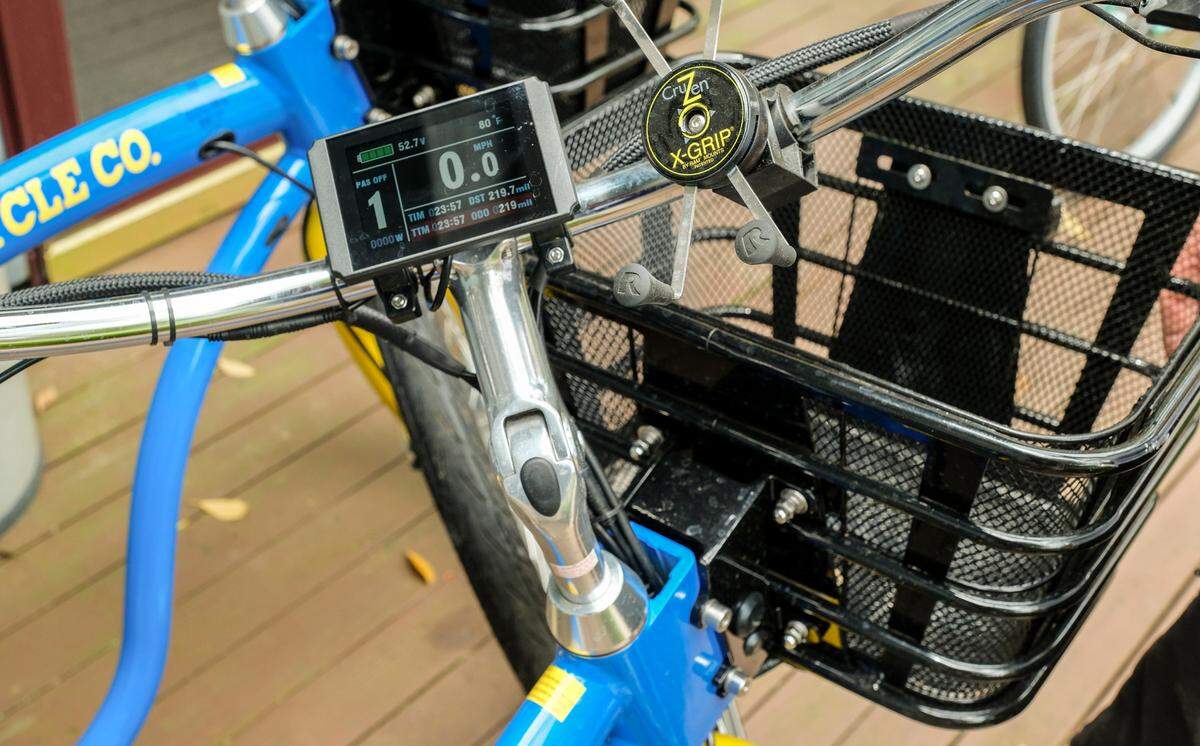
Class 2 e-bikes are the main kind of e-bikes that offer throttle functions, which are similar to those on a motorcycle that engage the acceleration and stopping of the bike.
What South Carolina law says about e-bikes
Under South Carolina Code, e-bikes are treated as “vehicles” and must follow the same rules of the road as traditional bicycles.
To read more about South Carolina’s bike laws and local regulations, click here.
South Carolina defines e-bikes as either “electric-assist bicycles” or “bicycles with helper motors” that hold a low speed and have two or three wheels.
Other rules that e-bikes have to follow under South Carolina law include:
The motor must not exceed 750 watts (1 horsepower). All classes of e-bikes are under 750 watts; anything above that limit is considered a moped.
The top speed under motor power must be under 20 mph for Class 1 and 2 bikes.
E-bikes must stop motor assistance when the rider stops pedaling or applies the brakes.
Every e-bike must have a permanent label indicating its wattage and top assisted speed (applied by the manufacturer).
If a user tampers with or modifies an electric-assist bicycle, changing the speed capability, they must replace the label indicating the vehicle’s wattage or horsepower, but this change may violate local rules for e-bike use.
All e-bikes must meet the requirements of the Federal Consumer Product Safety Code.
While South Carolina does not have any state law regarding helmet requirements for bike riders, the Consumer Product Safety Commission recommends wearing one to avoid injuries, no matter whether the bike is electric or standard.
Do I need to register my e-bike?
E-bikes are not classified as mopeds under South Carolina law, since they have a power output of (or less than) 750 watts.
Due to those power limitations on all classes of e-bikes, they do not require licensing or registration.
If you wish to purchase or use an e-bike that has a higher output than 750 watts or alter an existing e-bike to a higher output, you will then need to license and register it.
Local trail regulations in Beaufort County
Beaufort County is home to two public pathways that have rules regarding e-bikes and the speed limit for both locations for e-bike users is 20 mph or less.
This scenic, multi-use path stretching through northern Beaufort County has the following restrictions:
Only Class 1 e-bikes are permitted.
Riders must maintain a safe, shared-use speed and signal with an audible “On your left” when passing.
Throttle-assisted bikes (Class 2 and 3) are not allowed.
Hilton Head’s public pathway system allows both Class 1 and Class 2 e-bikes, provided riders adhere to local safety guidelines:
E-bikes must display a label with wattage and speed, per state law.
Class 3 e-bikes are prohibited on Hilton Head’s public pathways.
- These rules apply only to public pathways, not private roads or trails, such as in Sea Pines, where e-bikes are prohibited.
Per Hilton Head ordinance, businesses that rent or sell e-bikes must distribute a Town-issued safety pamphlet. A few locations offering e-bike rentals include:
All bikes except mountain bikes can be ridden on the beach.
Where can I ride a Class 3 e-bike?
Class 3 electric bicycles are not allowed on bike paths or sidewalks. In addition, South Carolina State Parks do not have a specific e-bike policy, so check with each location before you decide to ride.
Class 1, 2 and 3 e-bikes are allowed on motorized trails and roads on national forests and grasslands, according to the U.S Forest Service.
Since e-bikes are vehicles, follow all standard road rules for bicycles.
To find trails that are Class 3 e-bike friendly in South Carolina or nearby areas, apps like Trailforks or Strava can help you discover additional trails.
This story was originally published June 18, 2025 at 6:00 AM.