Hilton Head celebrates Juneteenth at site of Civil-War era freedman’s town
Nearly 160 years ago, Major General Gordon Granger arrived in Galveston, Texas along with more than 2,000 Federal soldiers to deliver orders declaring that all slaves were free.
That day, June 19, 1865, is now commemorated with a national holiday.
Crowds flocked to Historic Mitchelville Freedom Park Saturday to celebrate the national holiday with gospel music, food trucks, singing, and local artists and vendors selling handmade goods.
The Hilton Head park has historical significance to the holiday: it was the site of a Civil War-era freedman’s town, where formerly enslaved people were brought to start a new life. Many families who purchased land on Hilton Head during the Reconstruction period still live on the island today.
The start of freedom
To commemorate the end of slavery, speakers recited the three Reconstruction-era amendments to the U.S. constitution that enshrined the rights to freedom, citizenship, and the right to vote for African Americans.
Before reciting the 13th amendment, Melvin Hollis, who serves on the board of the Gullah Museum of Hilton Head Island, remarked that the amendment “has a hole in it that’s wide enough to drive a truck through.”
“Immediately after the enactment and the adoption of the 13th Amendment, all over the south black people were pulled in, convicted of crimes, and put on chain gangs,” Hollis said. “But that is ‘cause you have that exception to the 13th Amendment. And there are those who would argue that that has started a practice that has not ended to this day.”
Handmade jewelry, gifts bring African flair
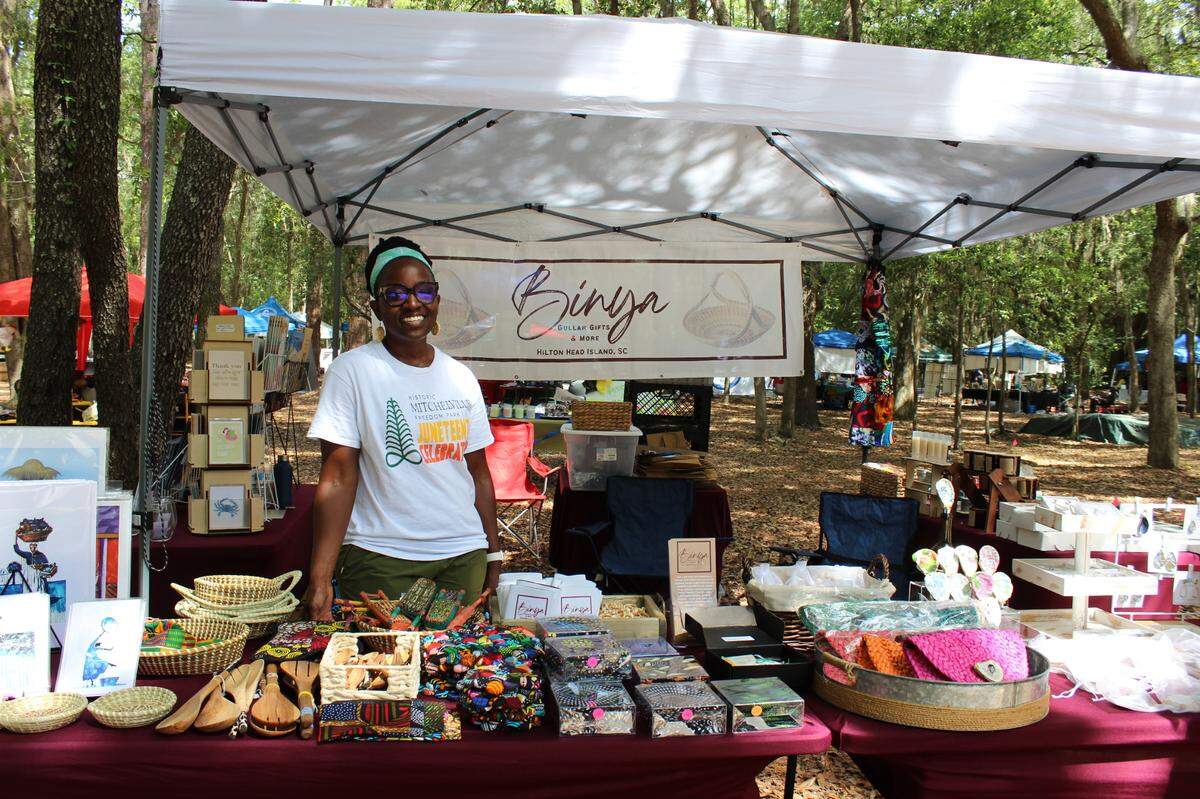
Rows of tents around Mitchelville Freedom Park housed vendors from near and far, selling handmade jewelry, art, and other gifts.
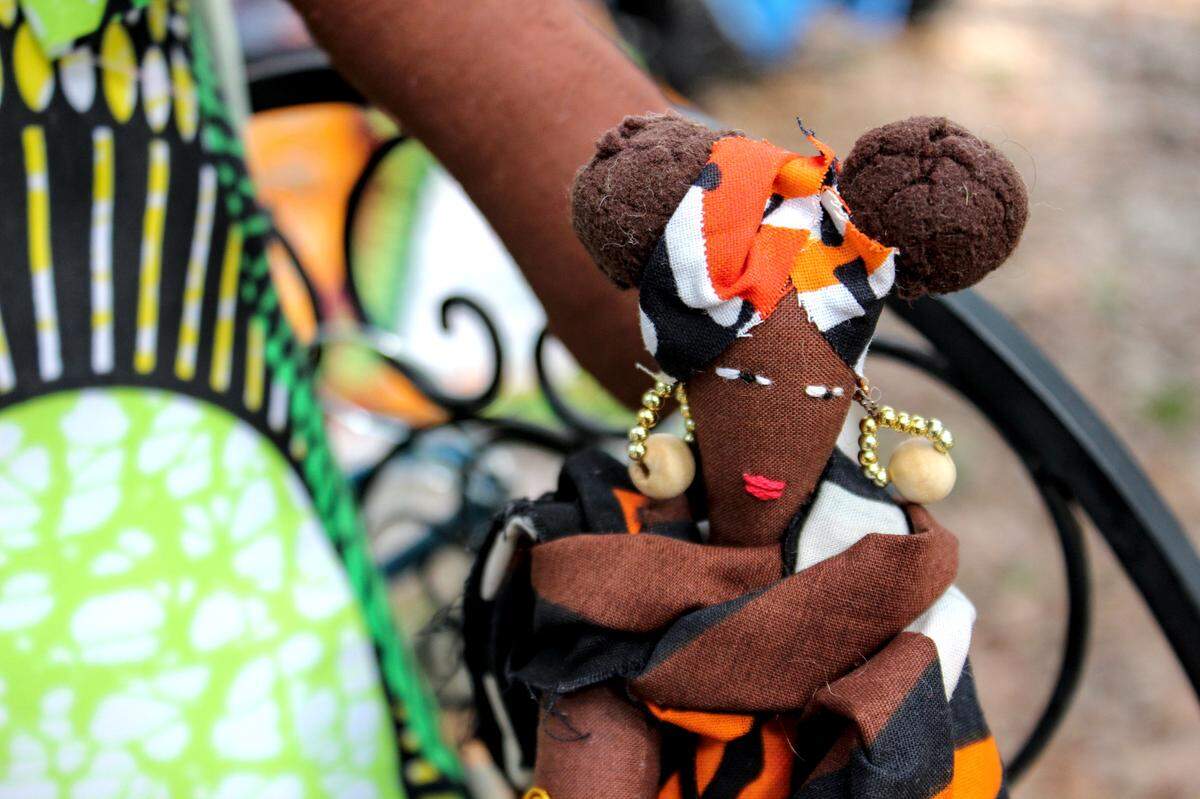
Vendor Patrice Cole, owner of “Sistah-tude,” has been working with African textiles for 30 years, she said.
Cole stitches each doll by hand and gives them unique features, making the dolls one-of-kind. The Abbeville-based artist also sells handmade jewelry and tote bags featuring Adinkra symbols.
Baba Yusef, 83, spent 13 years in West Africa, where he says he learned how to carve wooden bowls and jewelry.
While many vendors traveled to sell their wares at the festival, one merchant can be found on the island year-round.
Gullah native Lola Campbell runs the island’s only Gullah gift shop, located on Spanish Wells Road. She’s a member of the Campbell family, one of the largest surviving Gullah families that have held onto their land since the Civil War.
Before development came to Hilton Head, the island was populated mostly by descendants of former slaves who purchased the land after the Civil War. Many Gullah-Geechee people no longer live on their ancestral land. Some struggle to afford rising property taxes, or are forced to sell through heirs’ property sales. Others leave by choice.
What is Mitchelville?
Mitchelville was one of the several freedman’s towns established during the Civil War. In addition to houses for the formerly enslaved, the self-governed town had churches, schools, and organized trash pickup, Gullah-Geechee consultant Tendaji Bailey previously told The Packet.
Harriet Tubman, who historians say lived in Beaufort for two years, is reputed to have brought 300 freed slaves to Mitchelville, according to Bailey.
This story was originally published June 16, 2025 at 5:00 AM.