Why you should recycle oyster shells after dining at Lowcountry restaurants
Seafood and coastal dining are a given in South Carolina’s Lowcountry.
From blue crab, Lowcountry boils and she-crab soup, the options are almost endless.
But one item on the menu serves more than seafood dinner delights. Oyster shells have shaped the history and environment of the Lowcountry in unique ways.
From plates and protective reefs to ancient homes and modern sustainability, oyster shells are historical building blocks that are crucial to our coastal ecosystem.
So, after you slurp those oyster platters, don’t toss the shells. There are plenty of ways to support the environment while also enjoying a tasty Lowcountry meal.
Here’s everything you need to know about oyster shell recycling, history and why it’s important to the Lowcountry environment.
Why are oyster shells important?
Oysters are a critical component of ocean health, according to the National Oceanic and Atmospheric Administration.
Important functions of an oyster, according to the South Carolina Department of Natural Resources, include:
Filtering water: Adult oysters filter up to 2.5 gallons of water per hour, improving water quality in the process.
Providing habitat: Oysters build reefs, which provide habitat for fish, shrimp, crabs and other animals.
Controlling erosion: Oyster reefs protect shorelines.
According to the SCDNR, the oyster population in the state has only just begun to stabilize.
If there is a shortage of oyster shells, grass beds and reef habitats struggle to support other marine life, including crab and fish, and coastline health dwindles.
How oysters benefit from recycling
When an oyster reaches adulthood, it releases millions of eggs during the summer months, often between April and October in South Carolina, according to the SCDNR.
These eggs then take anywhere between two to three weeks to fertilize into young, free-swimming oysters.
From there, they attach to a hard substrate (ideally another oyster shell) and continue to grow for up to three years.
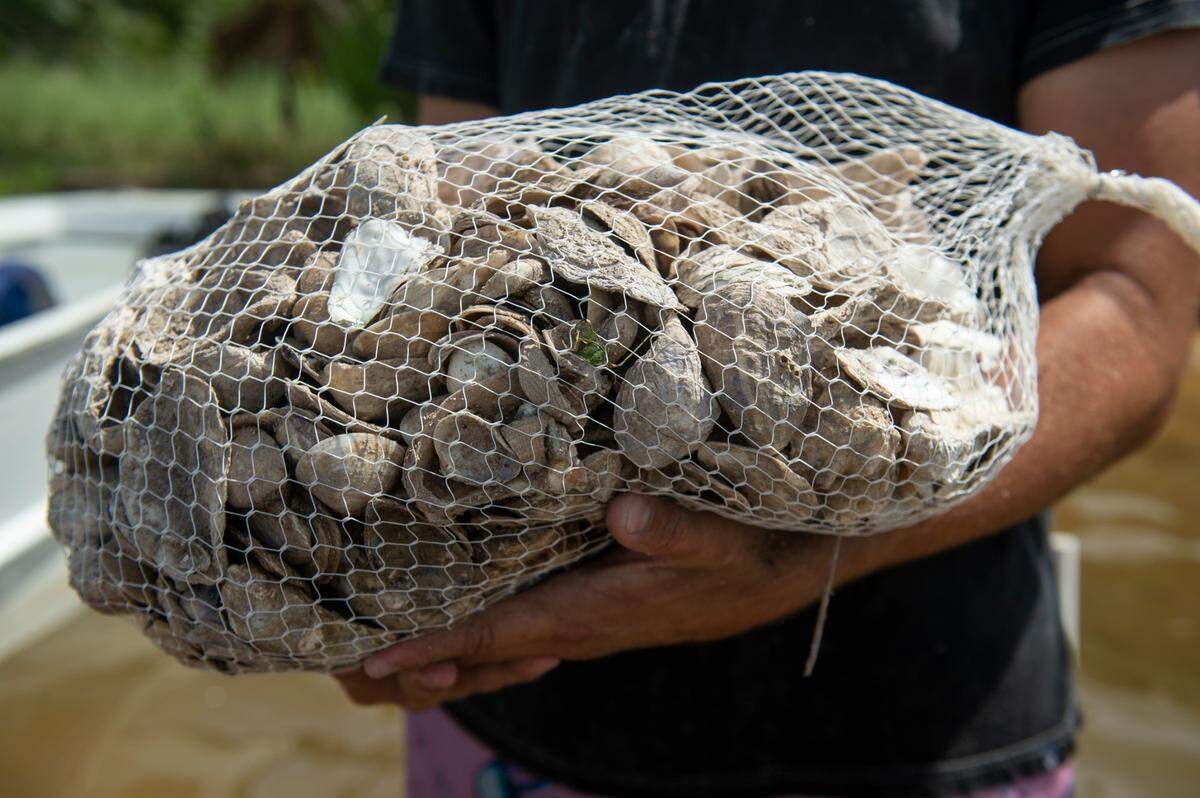
When oyster shells are harvested, it interrupts this natural cycle by removing shells from the system. By recycling and replanting the shells, oysters can use them to build new reefs where baby oysters can grow and continue to support other marine life, according to the NOAA.
To learn more about the life cycle of an oyster, click here to view the SCDNR life cycle chart.
Where in Beaufort County can you recycle oyster shells?
Beaufort County is home to seven recycling bin sites along with 22 restaurant locations that participate in oyster shell recycling.
Beaufort Bin at Beaufort County Public Works
Bluffton Bin at Trask Landing
Hilton Head Bin at Coastal Discovery Museum
Port Royal Bin at Sands Beach Boat Landing
Lemon Island Bin at Edgar Glenn Boat Landing
Hunting Island Bin at Russ Point
St. Helena & Lady’s Island Bin
Participating restaurant locations can be found at the bottom of the SCDNR oyster shell recycling program page.
If you’re looking for something more hands-on, the SCDNR offers volunteer and activity opportunities for oyster reef restoration, which can be found on their volunteer page.
To view all of the oyster shell recycling locations in South Carolina, click here.
How to recycle oyster shells
While recycling shells is beneficial to the coastal environment, the SCDNR has outlined some tips to help:
Do separate the shells from regular trash. Shell mixed with trash is not suitable for recycling. Provide separate containers for shells.
Do keep shells in a porous container to reduce odors.
Do bring your shells to the nearest shell recycling center.
Don’t put live oysters in South Carolina waters. If the oysters you purchased were harvested outside of South Carolina, it is illegal to place them in South Carolina waters. It also creates public health problems and may harm local oysters or other animals.
Don’t put freshly shucked shells in South Carolina waters. To avoid contamination, the shell should be dried for 6 months.
Don’t remove shells from recycling locations. Shells placed in any SCDNR receptacle are South Carolina state property and are illegal to take.
How were oyster shells used historically?
Before reef restorations and Lowcountry boils, oysters had a long history above water.
Believe it or not, oysters used to be material for constructing buildings.
According to the Georgia Department of Natural Resources, a material called tabby dates back centuries and was first introduced in South Carolina in the late 1600s, likely discovered by Spanish explorers.
Tabby is a mix of sand, water, and crushed oyster shells that creates lime. Buildings with this structure were common from Florida up into South Carolina.
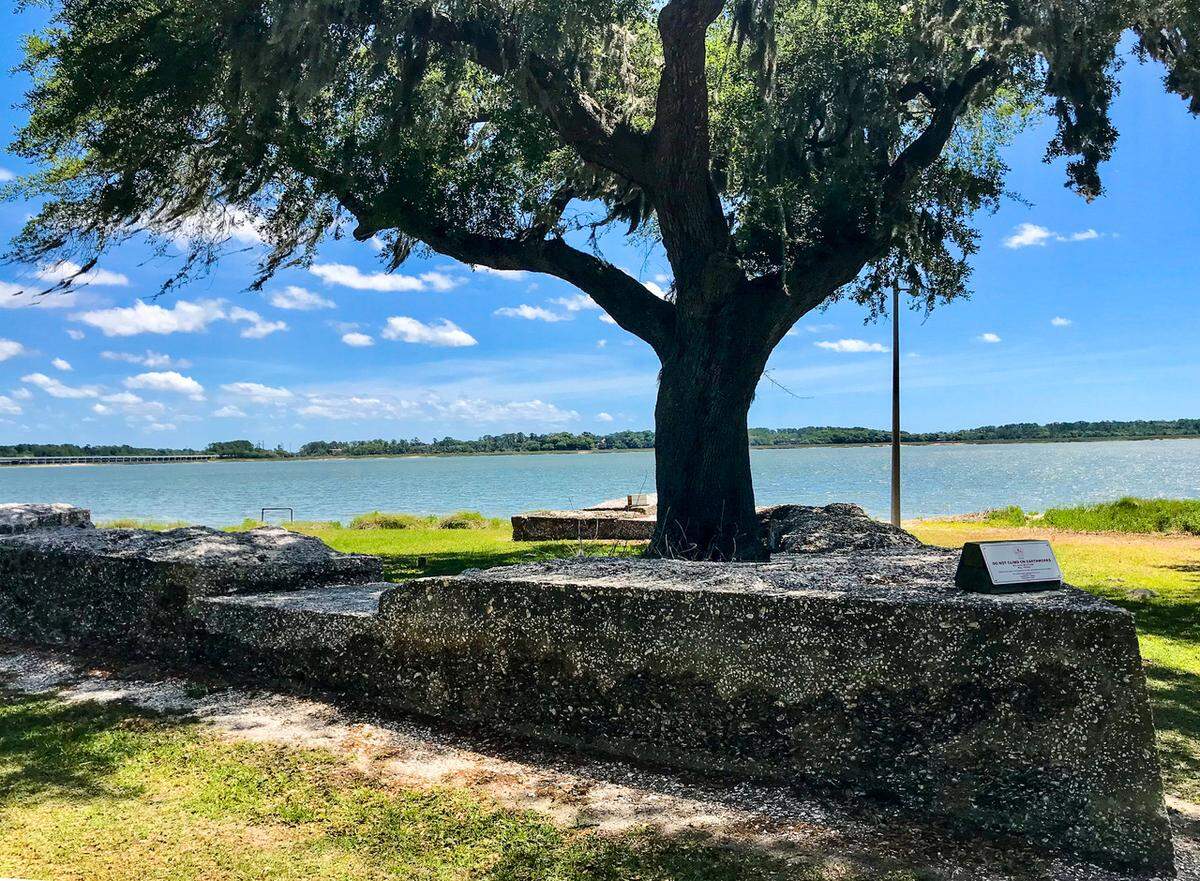
While uses of this material tapered off in the 1800s, many consider Beaufort County to have the highest concentration of tabby in the United States.
A few sites you can visit in the area include:
Stoney-Baynard Plantation Ruins on Hilton Head Island
Fish Haul Plantation on Hilton Head Island
The Arsenal in Beaufort
Verdier House in Beaufort
Tabby Manse in Beaufort
Francis Saltus House in Beaufort
Chapel of Ease on St. Helena Island
This story was originally published May 15, 2025 at 4:35 PM.