Venomous man o’ war seen on GA beach. Are they on Hilton Head? What to do if you find one
While the beautiful but venomous Portuguese man o’ war has begun to wash up on the shores of Tybee Island, the vibrant creature hasn’t yet made an appearance on Hilton Head, according to Mike Wagner, beach patrol director for Shore Beach Services.
The sting from the vibrant blue and purple creature can pack a real punch. If they touch an unassuming beachgoer, the barbed tentacles can cause burning pain and redness, and in some cases more severe reactions.
The creatures have begun washing up on the beach at Tybee Island, Georgia, though no one has reported any stings, according to a Facebook post from Tybee Island Ocean Rescue.
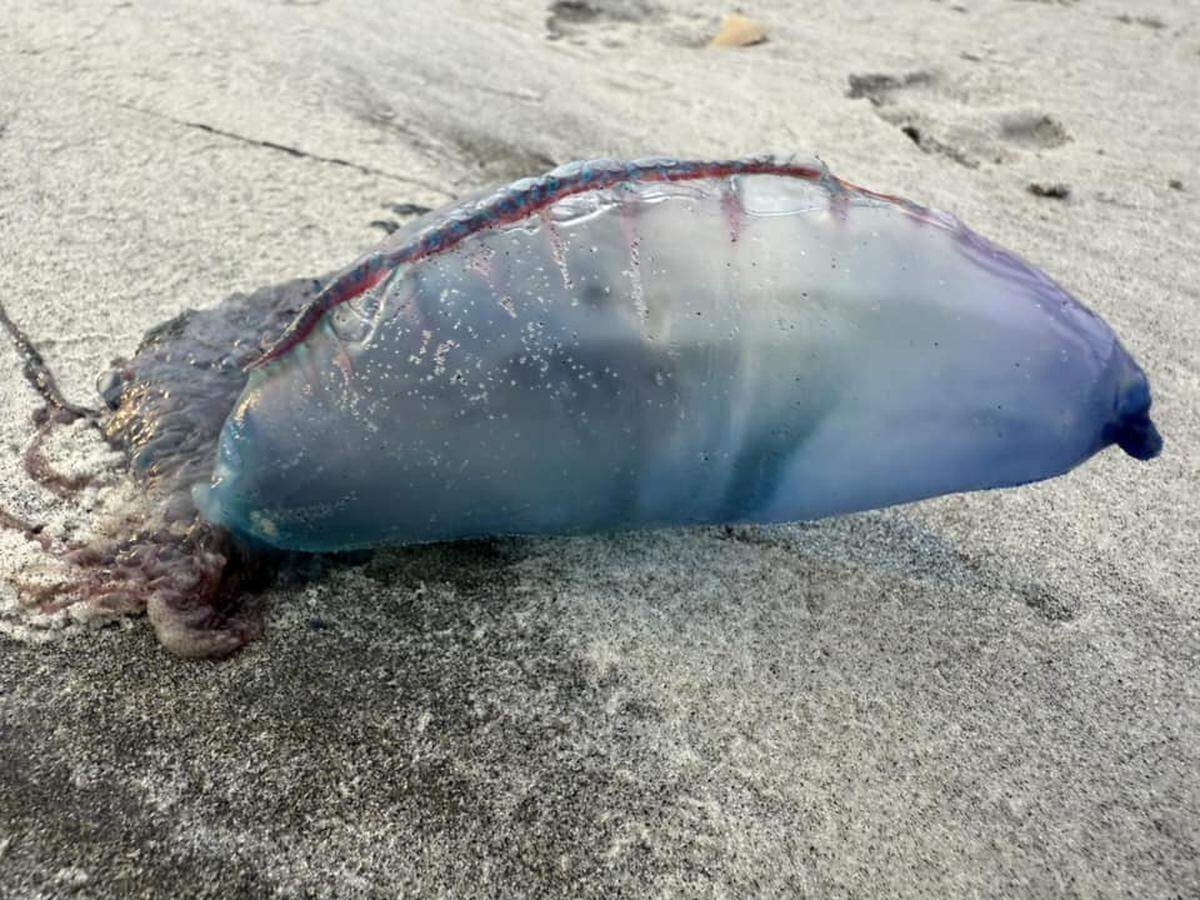
If beachgoers come across the sea animal on the sand or in the water, they should give it a wide berth, according to the South Carolina Department of Natural Resources. Even dead Portuguese man o’ war that look dried up can still cause severe stings.
The best approach to treating a Portuguese man o’ war sting is to remove the tentacles with tweezers, rinse the site with seawater and apply heat to help manage the pain, according to Tybee Island Ocean Rescue.
Though the long tentacles and translucent body resemble a jellyfish, these creatures are actually made up of individual, specialized polyps that assemble to create their final form. One polyp inflates with gas and floats above the water, while others become tentacles, some specialized to feed and capture prey while others reproduce. At their largest, the tentacles can grow up to 30 feet long.
Under ideal circumstances, the Portuguese man o’ war lives its whole life in the open ocean, drifting along with the currents and wind and trapping small fish and plankton in its tentacles, according to the SCDNR. Sometimes these currents can push colonies into the beach, where people are more likely to encounter them.
This story was updated to reflect Mike Wagner’s title, which is beach patrol director, not operations manager
This story was originally published April 29, 2025 at 6:00 AM.