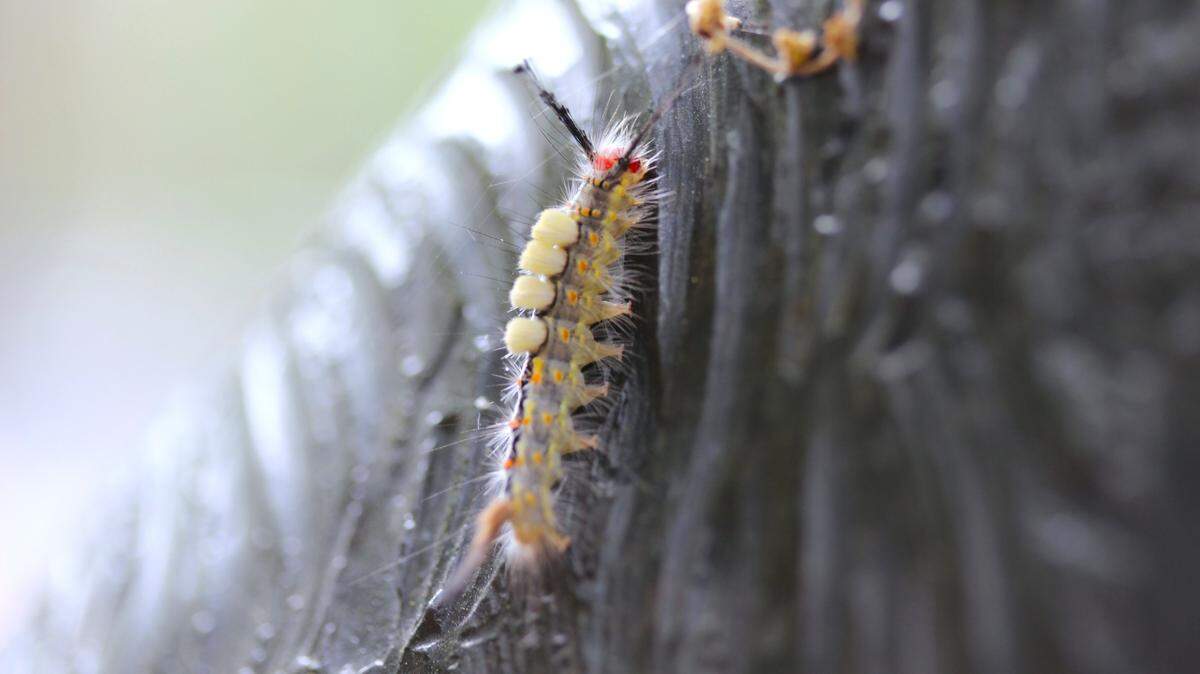
A live oak tussock moth caterpillar, captured at Mitchelville Freedom Park on Hilton Head Island.
Li Khan
Island Packet
If your morning walk or coffee on the front porch has turned into a dance around red-headed, hairy caterpillars lately, you’re not alone.
The white-marked tussock moth caterpillars are back once again, and they’re making themselves at home on porches, patios, palmettos and live oak trees across the Lowcountry.
While these fuzzy insects may look like something out of a Dr. Seuss book, their arrival signals a more irritating reality: itchy rashes, leaf-stripped trees and seasonal backyard invasions.
Here’s what you need to know to navigate tussock season safely (and scratch-free).
SC tussock moth caterpillars
Several types of tussock moth caterpillars are native to North America. In South Carolina, however, the ones found here in the Lowcountry are called white-marked tussock moths (Orgyia leucostigma).
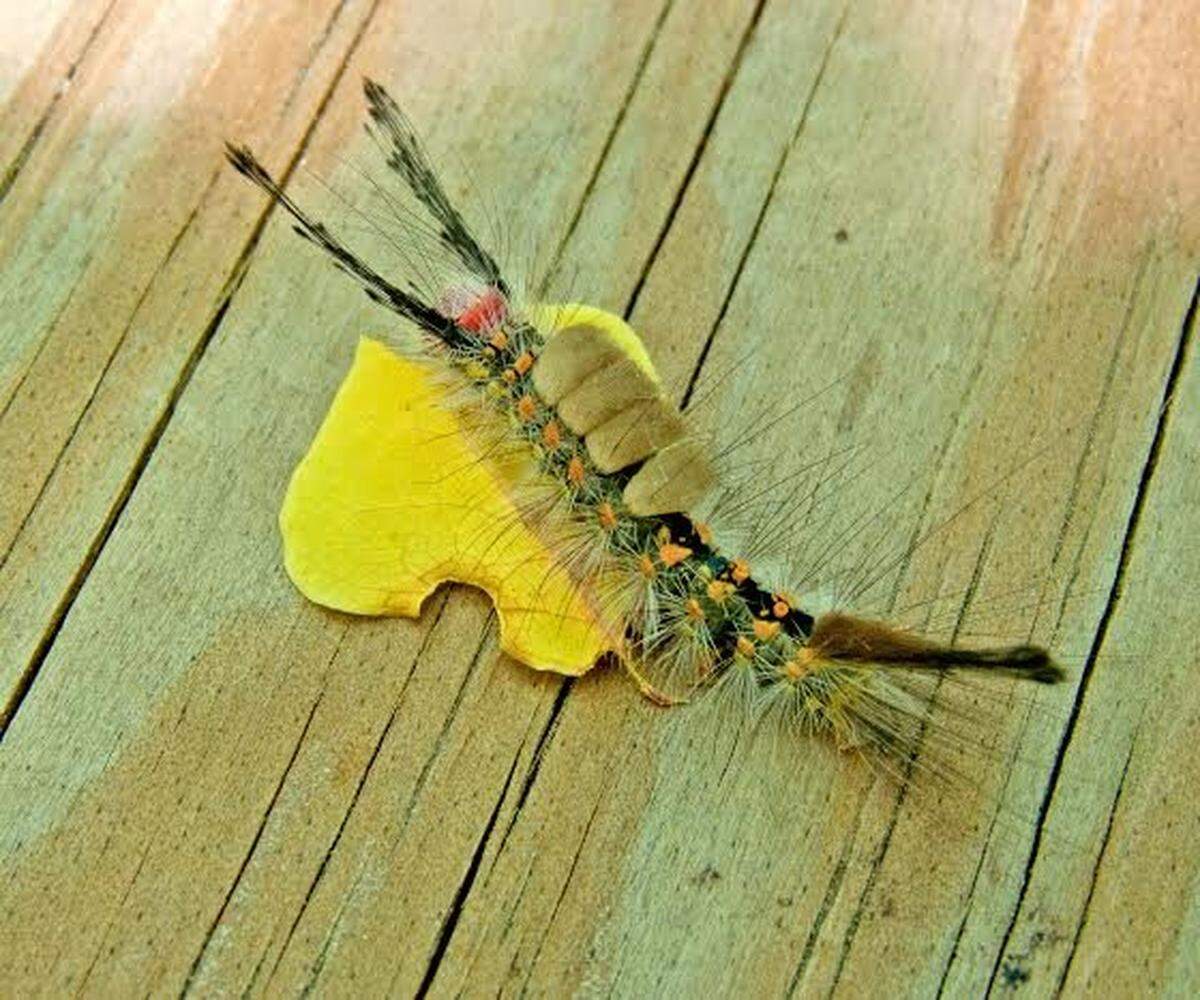
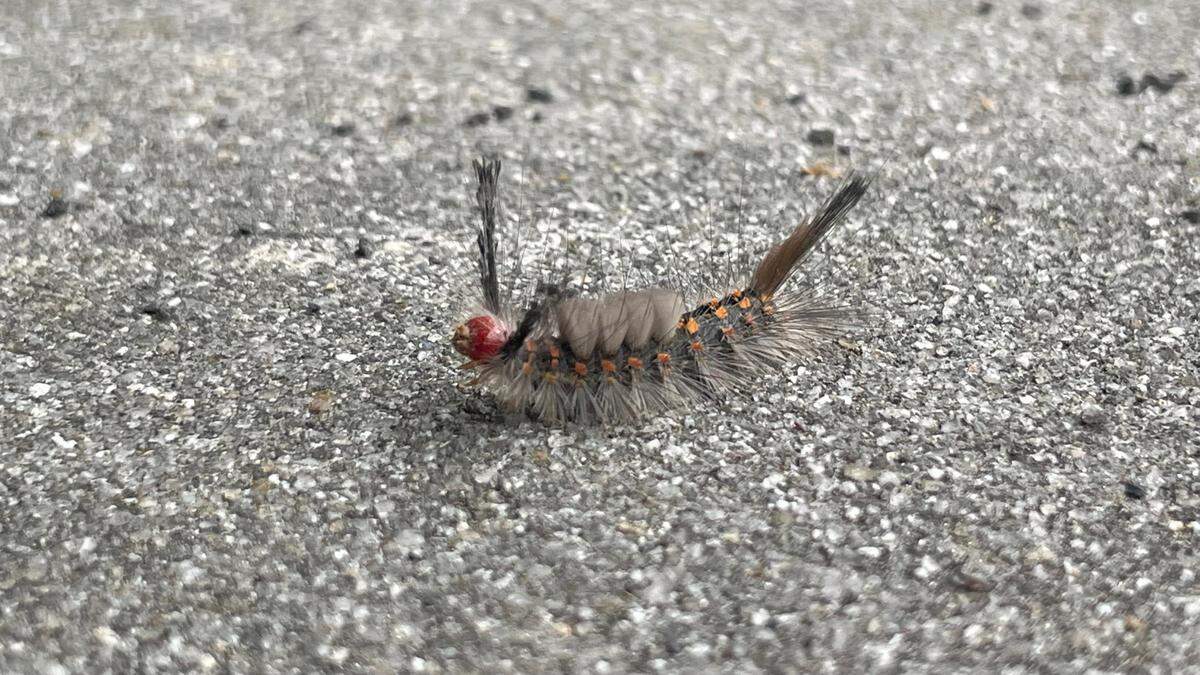
Tussock moth caterpillars are small, brushy caterpillars with dramatic looks: four toothbrush-like tufts on their backs, black spiky antennae and bright red heads.
They’re easy to spot – and best admired from afar.
The tussock moth caterpillars hatch from early spring through early summer. As they continue to develop for the next 30 to 40 days, they grow to about an inch to an inch and a half long and are often spotted in abundance.
Before these caterpillars begin their transformations into moths, they will create and become small, white cocoons that can be seen dotted almost everywhere around the Lowcountry.
This tussock moth caterpillar was photographed by Trudy Cass at Sea Pines Forest Preserve. Submitted photo
In the Lowcountry, they’re especially fond of live oaks, which makes coastal neighborhoods a prime buffet.
They don’t stay put, either. Tussock caterpillars are explorers, crawling onto walls, porches, car windows and anything else in their path. And because they move in swarms, you’ll rarely see just one.
Should I be worried about my trees?
If you’re a gardener or landscaper, it might be smart to keep an eye out.
When an area has a high population of these caterpillars, they can defoliate trees. While most healthy trees bounce back, repeated infestations can weaken them.
If you’re seeing large clusters, you can manually remove the caterpillars or cocoons using gloves, or consider calling a pest management professional, especially if they’re damaging ornamental or fruit trees.
Can they hurt you?
Not exactly, but they can leave a mark.
If you happen to cross paths with these little guys, avoid touching them. The barbed hairs on these caterpillars can stick to your skin and can trigger an allergic skin reaction that ranges from mild itching to painful welts, especially in children.
So while they aren’t venomous or dangerous in the traditional sense, they can definitely ruin your afternoon.
If you or your child comes into contact with one, it is recommended to wash the area gently with soap and water, apply a hydrocortisone cream and avoid scratching. Seek medical help if the rash worsens.
How long will they be around?
The first generation of these caterpillars hatches from April to June. By late spring, they’ll pupate into moths that are brown and tan in color with very hairy legs.
Males fly off in search of mates while the flightless females stay behind, lay eggs on their cocoons and die soon after.
Unfortunately, this isn’t a one-time event.
There are usually two generations each year, with the second starting in late summer. So while the current swarm might fade by June, expect a second wave toward the end of the summer months.
What can I do?
Don’t touch them. Not even the cocoons.
Keep outdoor areas swept or sprayed down. Caterpillars can gather on railings, door frames and patio furniture.
Use gloves when gardening, especially near trees or shrubs.
Educate kids and young ones who may enjoy picking up these fuzzy insects.
A live oak tussock moth caterpillar. Li Khan The Island Packet
The bottom line
Tussock moth caterpillars are part of the Lowcountry’s spring rhythm and are important pollinators. While they may be annoying (and itchy), they’re not dangerous if you keep your distance.
Make sure to appreciate these fuzzy friends from afar: take a photo, skip the petting zoo vibes and leave these critters to do their thing, hopefully far from your porch swing.
Although if you do find yourself surrounded, here are some products you might want to have on hand during caterpillar season:
For prevention & removal
Nitrile or Garden Gloves: Protect your hands when gardening, sweeping porches or removing cocoons.
Yard Spray (Insecticidal Soap or Neem Oil): Opt for natural sprays that are safe for most plants to help manage populations without harming beneficial bugs.
Broom or Hose: A simple way to sweep caterpillars off railings, decks or windows (just avoid direct contact).
For skin irritation
Hydrocortisone Cream: Helps reduce itching and inflammation if you’ve touched a caterpillar or cocoon.
Diphenhydramine Cream or Tablets: For more intense allergic reactions, products (like Benadryl) can help with the itch. Always follow dosage guidelines.
Adhesive Tape: If hairs are embedded in the skin, you gently press tape (like Scotch or Packing Tape) on the area and carefully lift to remove them.
Cool Compress: Apply for 10–15 minutes to reduce swelling and soothe irritation.
Antihistamines: For those prone to allergic skin reactions, having products (like Zyrtec or Claritin) on hand may help reduce the severity of symptoms.
If these critters have overtaken your backyard, causing irreparable damage, you can contact a nearby pest specialist to help.