Holes in the net: Hilton Head marinas safe for fish, but are they safe for people?
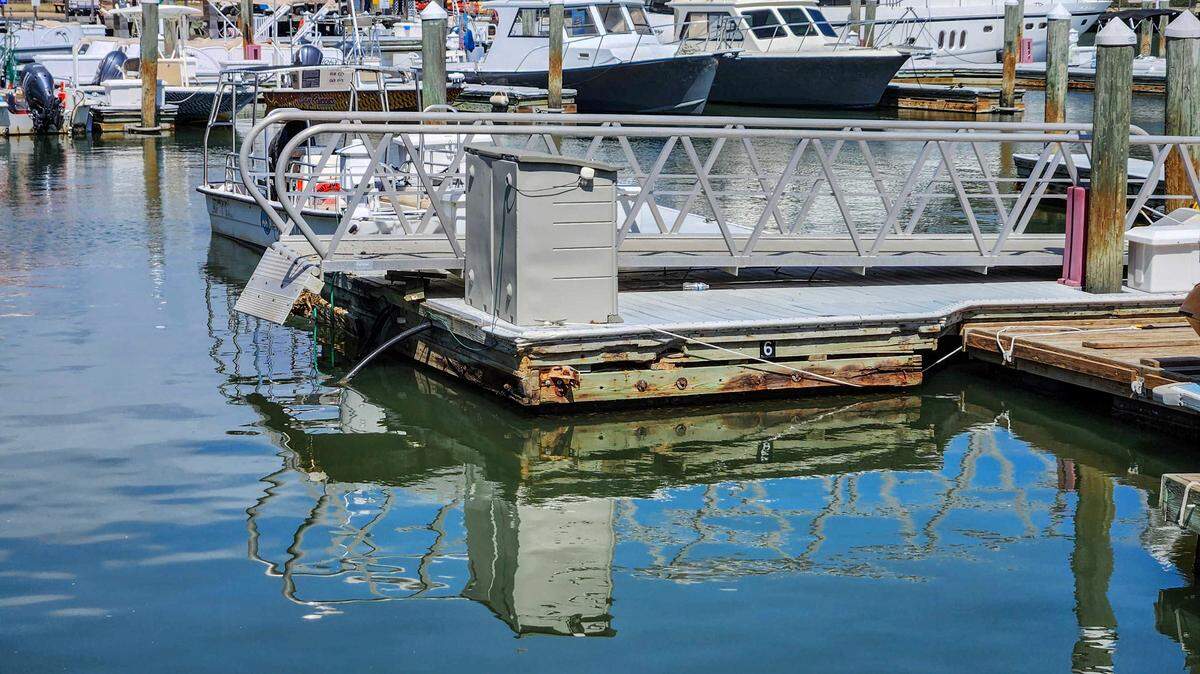
Who is responsible for making sure the tragic collapse of a dock ramp in Georgia doesn’t play out again on Hilton Head Island? Despite a tight-knit net of regulations on developments in coastal areas, the answer is still murky.
Simply put, despite multiple inquiries with local, county, state and federal regulators, it’s unclear what public or private oversight is in place to ensure people’s safety when they are on docks and gangways over the Lowcountry’s coastal waters.
The safety of these Hilton Head’s waterfront developments came under scrutiny last month when an aluminum dock ramp (a.k.a. gangway) collapsed at the Shelter Cove Marina & Harbour, injuring eight people. Although the injuries were minor, according to a police report, a similar incident on Sapelo Island, an island in Georgia about 20 nautical miles south of Hilton Head, took the lives of seven people.
Following the Shelter Cove gangway collapse, town spokesperson Heather Woolwine stated that the town did not have the “jurisdiction” to inspect or review docks and piers.
A number of local, state, and federal agencies oversee these developments. The regulations center around the environmental impacts of waterfront structures, from mitigating water pollution to protecting endangered species in the waters and surrounding areas. Pollution from boats and construction activities can negatively impact native fish, birds, and plants.
While regulations state that marina owners should maintain their facilities, the focus of the various inspections is related to the environmental impacts, rather than to make sure the docks are safe for people to walk on.
Karen Kozemchak, the Director of Marketing for the Palmetto Dunes Resort, has not responded to multiple phone calls. According to town spokesperson Heather Woolwine, Shelter Cove management contracted a third-party to inspect the docks after the gangway collapsed, but town has not received a copy of the report as of, completed after the gangway collapse. Town spokesperson Heather Woolwine stated in an email, “That information will have to be provided by Shelter Cove.”
US Army Corps of Engineers
Who they are: A branch of the U.S. Army that provides a complex array of civil, environmental, and disaster services.
Why they have oversight: The USACOE is tasked with protecting the nation’s “navigable” waterways. They also regulate dredging activities to ensure dredge waste is disposed of responsibly.
Shelter Cove Harbour & Marina is situated along Broad Creek, one of Hilton Head’s many “navigable” waterways.
How they regulate docks: The USACOE issues permits and performs inspections on developments under its jurisdiction. They assess the impact it could have on the waters and the surrounding environment, including any endangered species in the area, explained Erica Stone, branch chief at the US Army Corps of Engineers’ Regulatory Field Office in Conway.
Not every construction is inspected for compliance. If it does get inspected, the goal is to make sure that it was built “as permitted,” explained acting communications chief Dylan Burnell.
“Our role in the inspections is to make sure it was built the way that they said it was going to be built,” Burnell said. For example, developers can’t get a permit for an 8-foot dock, and then turn around and build a 20-foot dock.
That’s largely where the USACOE’s role in inspection ends. Although the permits include requirements that the structures should be maintained, the agency doesn’t perform check ups on the docks’ maintenance.
South Carolina Department of Environmental Services
Who they are: The state’s environmental protection agency.
Why they have oversight: Like the USACOE, the SCDES’s role is related to environmental impacts of development in the state’s “critical areas,” according to SCDES spokesperson Laura Renwick,
How they regulate docks: The SCDES issues permits and performs inspections on developments on coastal waters, tidelands, beaches, and beach/dune systems.
The SCDES “doesn’t have a role in inspecting or enforcing building code standards for docks or marinas,” wrote Renwick in a previous statement.
State regulations require that applicants for marinas must submit an “operations and maintenance manual” with their permit application. The complete copy of the manual, along with the permit, must be “readily available” at the marina, regulations state.
The SCDES is required to review marina operations at least every five years. The agency has the authority to modify the manual “to address any water quality or other environmental problems,” and can require “a reduction in the size of, or a change in the configuration of, the marina.”
Shelter Cove’s most recent SCDES inspection was completed on Feb. 14, 2024. The inspection noted 29 violations, mainly related to “unauthorized” floating docks. The report outlines what structures are present at the marina, including their measurements, but the condition of the structures is not noted.
Other agencies involved
The Town of Hilton Head: The town’s Building Division has the authority to inspect the docks under emergency conditions, such as in the aftermath of the recent gangway collapse. Under normal circumstances, the town does not have the jurisdiction to inspect docks, town spokesperson Heather Woolwine previously stated. After The Island Packet noted that the SCDES doesn’t inspect the conditions of the docks for the safety of marina guests, Woolwine wrote in a statement, “We did not find requirements that place any responsibility on the Town to regularly inspect marinas and/or marina facilities. The Town is responsible for any docks it owns, but not those owned by third parties.”
The Coast Guard: The United States Coast Guard inspects boats, also to regulate their environmental impacts, but they don’t inspect docks.
The South Carolina Department of Natural Resources: The SCDNR is the state agency tasked with managing the state’s natural resources, such as fish and wildlife. They issue fishing and hunting licenses. The department’s Office of Environmental Programs “is charged by state law with the management, protection and enhancement of wildlife, fisheries and marine resources,” but “is not a regulatory agency,” according to the agency’s website. According to spokesperson Stephen Fastenau, the agency “does not perform inspections of all docks and marinas in South Carolina.”