What is the federal employee buyout and what jobs in Beaufort County could see impacts?
Over 2 million federal employees across the United States were offered the option to opt into the deferred resignation program on Tuesday, Jan. 28, under President Donald Trump’s administration.
This program lets federal workers resign from their positions in exchange for continued pay and benefits until Sept. 30, 2025.
The deadline for federal employees to mark their decision was originally set for Thursday, Feb. 6, but District Judge George O’Toole Jr. of Massachusetts put up a temporary block and directed the Office of Personnel Management (OPM) to extend the timeline for federal employees to accept the offer to Monday, Feb. 10.
The employment proposal is part of an overall effort by the Trump administration to reduce and transform the federal government workforce. The deferred resignation program is led by Elon Musk, a billionaire supporter of Trump.
However, not all federal workers were eligible for this offer.
A letter released by the OPM on Jan. 28 states that this “deferred resignation is available to all full-time federal employees except for military personnel of the armed forces, the U.S. Postal Service, positions related to immigration enforcement and national security and any other positions specifically excluded by your employing agency.”
According to the Pew Research Center, almost 2% of the nation’s civilian workforce is on the federal payroll, which is roughly 3 million people.
Breaking that down further, there are roughly 1.3 million active duty military personnel and over 600,000 U.S. Postal Service employees across the nation, according to the Pew Research Center.
With federal employment comprising almost 2% of the nation’s workforce, that makes the federal government the nation’s single largest employer, with even more workers than Walmart, Amazon or McDonald’s.
How many federal employees are in South Carolina?
According to federal civilian employment data available by the OPM and World Population Review, federal employees make up about 1% of the entire South Carolina workforce and as of December 2024, the entire state’s workforce was over 2 million people.
However, based on the criteria for this buyout, the U.S. Postal Service, military forces and immigration or national security employees are exempt.
How many people in South Carolina are employed through those offices
According to the South Carolina Department of Employment and Workforce (SCDEW), the U.S. Postal Service has 5,470 employees in South Carolina.
Military personnel in South Carolina have roughly 35,000 active duty employees across all branches; Army, Navy, Marine Corps, Coast Guard and Air Force. The Army, Navy and Air Force are the three different independent offices working under the federal government umbrella.
The Department of Defense employs over 9,000 people across all departments in South Carolina.
What jobs would be impacted by the buyout?
With those exempt groups making up a large portion of the federal employment in the state, it can be hard to determine what jobs in South Carolina received this offer from the Trump administration.
While the remaining percentage of government employees may be small, their work in these key agencies is important.
These South Carolina organizations and agencies include:
Department of Veterans Affairs
Agriculture and Defense
Congaree National Park
National Weather Service
Savannah River Site
According to the SCDEW, Beaufort County has 2,100 workers who are employed by the federal government.
Here are some civilian federal employment opportunities in Beaufort County that this buyout could affect, according to the SCDEW and USAJOBS.gov:
Veteran Health Administration social service crisis responder
Civil engineers
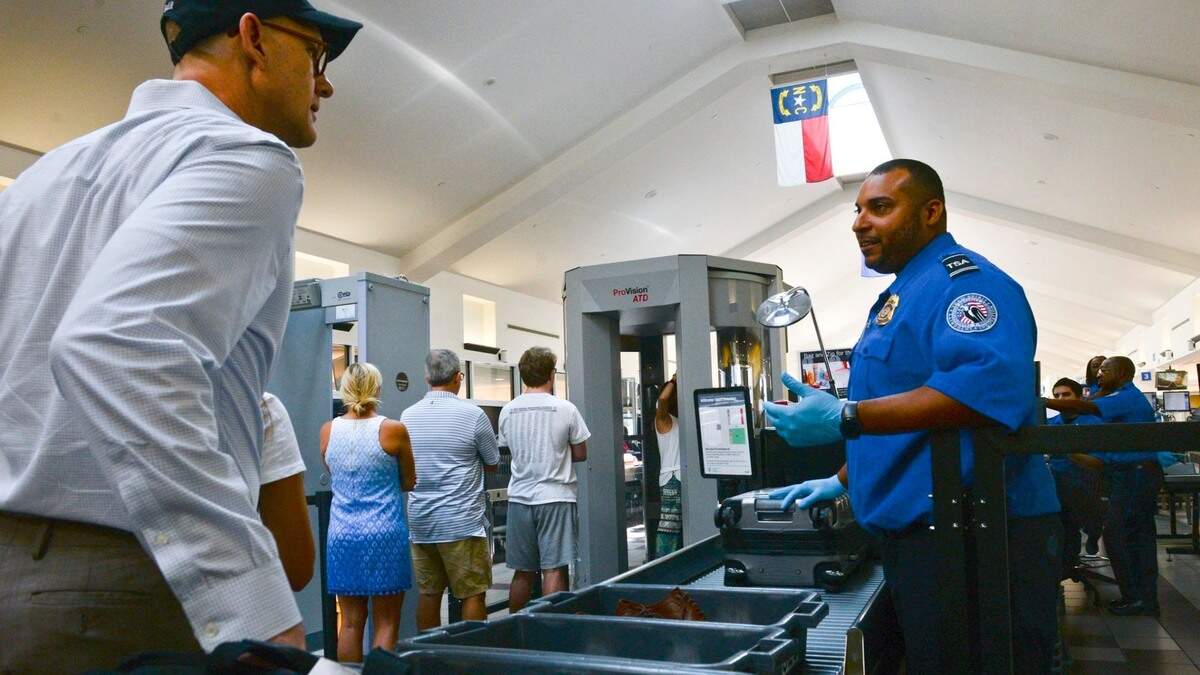
Transportation Security Administration: security officers, warehouse and transportation roles
Naval facility technicians
Department of Defense Education activity maintenance workers
U.S. Marine Corps hazardous material handlers
Nurses of the Department of Defense
Civil employees with the Marine Corps Air Station in Beaufort, including but not limited to: food, hospitality, marketing, warehouse, support and recreation
School support assistants
Retail associates
Alarm dispatchers
Food service workers
Laundry machine operators
Fuel distribution workers
Financial analysts
Park employees and maintenance crews
Naval Facilities Engineering Systems Command environmental program manager and plant workers
Savannah River Site program managers
Department of Transportation drug testers
How many employees have taken the buyout?
Both the OPM and the SCDEW do not have a percentage of the federal employees in South Carolina that have accepted the buyout as of Friday, Feb. 7. With the federal judge blocking this program too, the specifics of this program and implementation are still unclear.
A federal workforce study by the nonprofit Partnership for Public Service found that every year, almost 6% of federal employees resign or retire from their jobs, meaning that some of the employees who are interested in the buyout may have already considered leaving their current position.
An important factor of this potential buyout is the Trump administration’s new in-office requirement for federal employees. This was a key point in the implementation of the program as the administration hoped that alone would prompt many federal employees to accept the offer and resign from their jobs.
Is this legal?
When the letter outlining the deferred resignation offer went out to federal employees on Tuesday, Jan. 28, employees and their managers across the nation were initially confused.
A document that went out with the initial email noted, “the federal workforce is expected to undergo significant near-term changes.”
Labor unions swiftly responded, telling federal employees that this plan was illegal and urging workers to stay in their jobs.
District Judge George O’Toole Jr. blocked the implementation of this buyout program to Monday, Feb. 10, so he could hear arguments from both sides at a court hearing scheduled for Monday afternoon.
If this program does move forward, the Trump administration has stated that employees who choose to stay on could still eventually lose their jobs. This was also noted in the initial email, “we cannot give you full assurance regarding the certainty of your position or agency but should your position be eliminated you will be treated with dignity and will be afforded the protections in place for such positions.”
In a follow-up email sent to federal employees on Tuesday, Feb. 4, it states, “Nothing in the deferred resignation program requires congressional approval.”
When considering if this program is legally binding, the email noted, “The deferred resignation program offers employees who opt in an exemption from any return-to-work requirements and full pay and benefits. Those assurances are binding on the government.”
This follow-up email also included a contract that states if an employee accepts the deal, the employee “forever waives” the right to take legal action against the agency regarding their employment or the deferred resignation offer.
The full extent of the program’s legality and determination of whether or not it will move forward will be determined on Monday, Feb. 10, after the scheduled hearing with Judge O’Toole.
This story was originally published February 8, 2025 at 6:00 AM.