Islanders and council clash as long-debated Sea Pines Circle rezoning passes first reading
Two years of deliberation, conversation — and for some islanders, frustration — came to a head Tuesday evening, as Hilton Head Town Council once again considered a rezoning to Sea Pines Circle that could pave the way for a privately-funded housing project for island employees.
While Mayor Alan Perry asked attendees early in the six-hour meeting to hold their applause, an emotionally-charged council chamber later gave way to choruses of clapping, cheers and jeers, and audience interjections. Votes or opinions shared from the dais that audience members disagreed with were, at times, met with audible scoffs and derision.
For many members of the public that spoke Tuesday, the decision council has long debated was a no-brainer.
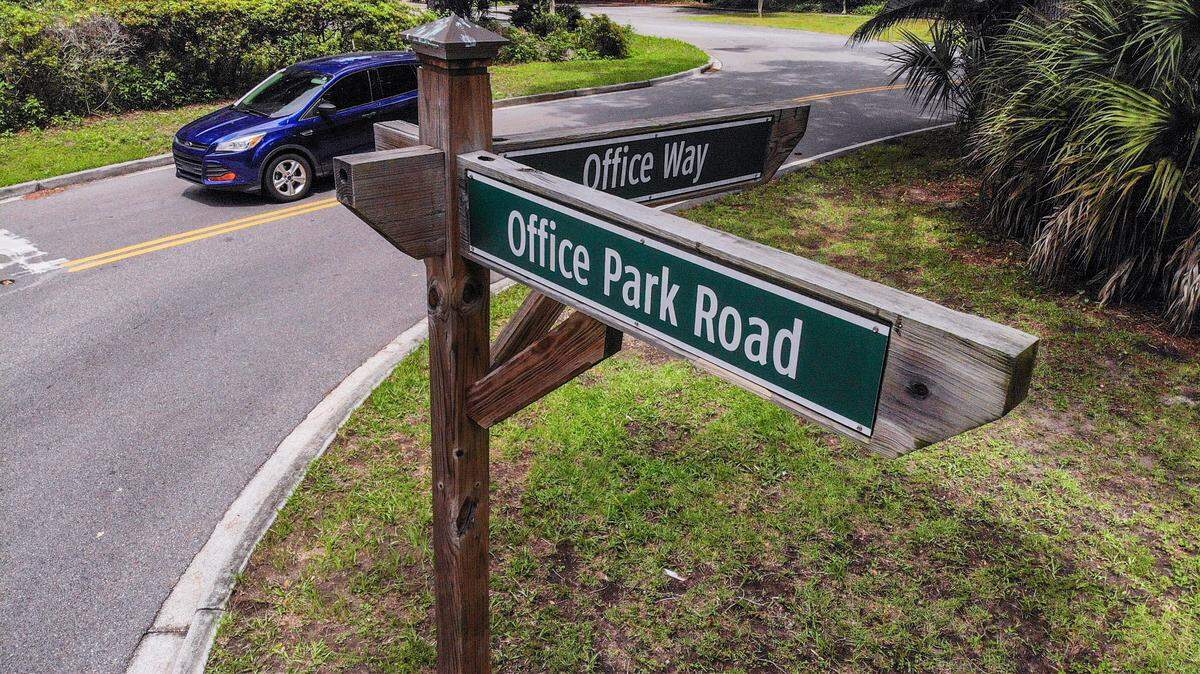
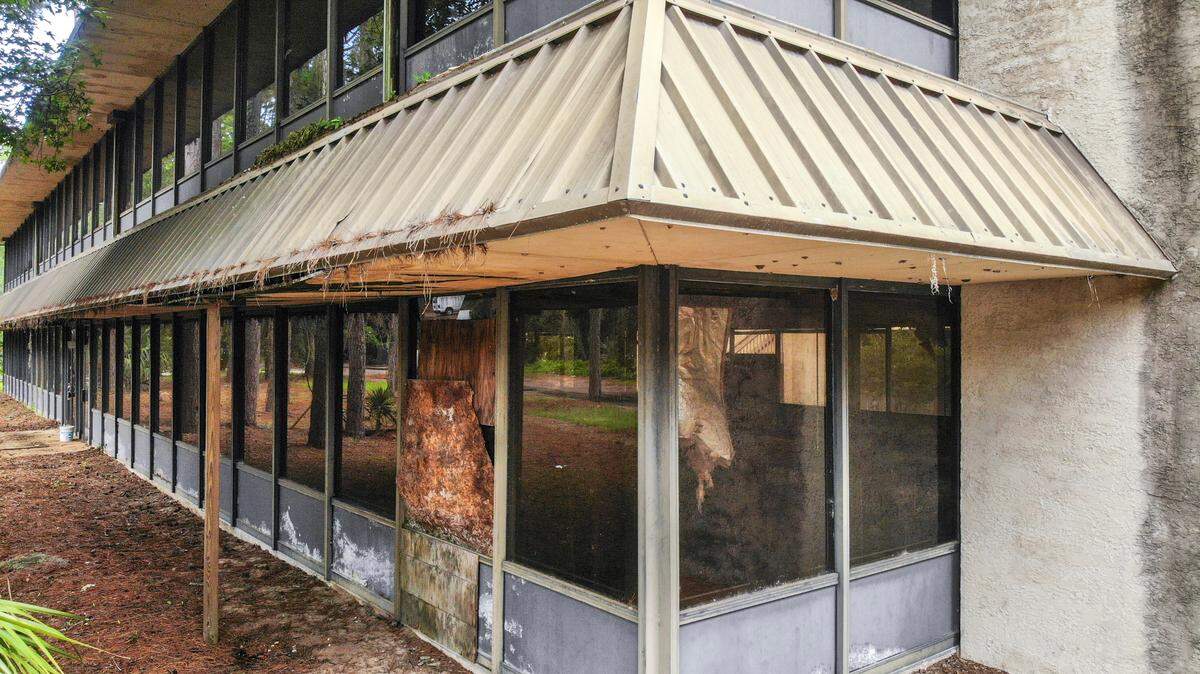
Several major Hilton Head Island employers, including SERG Restaurants and Shore Beach Services, are willing to pitch in their own funds to revamp several decaying buildings along Office Way — without public funds — if the town would change local zoning to allow more leeway for density.
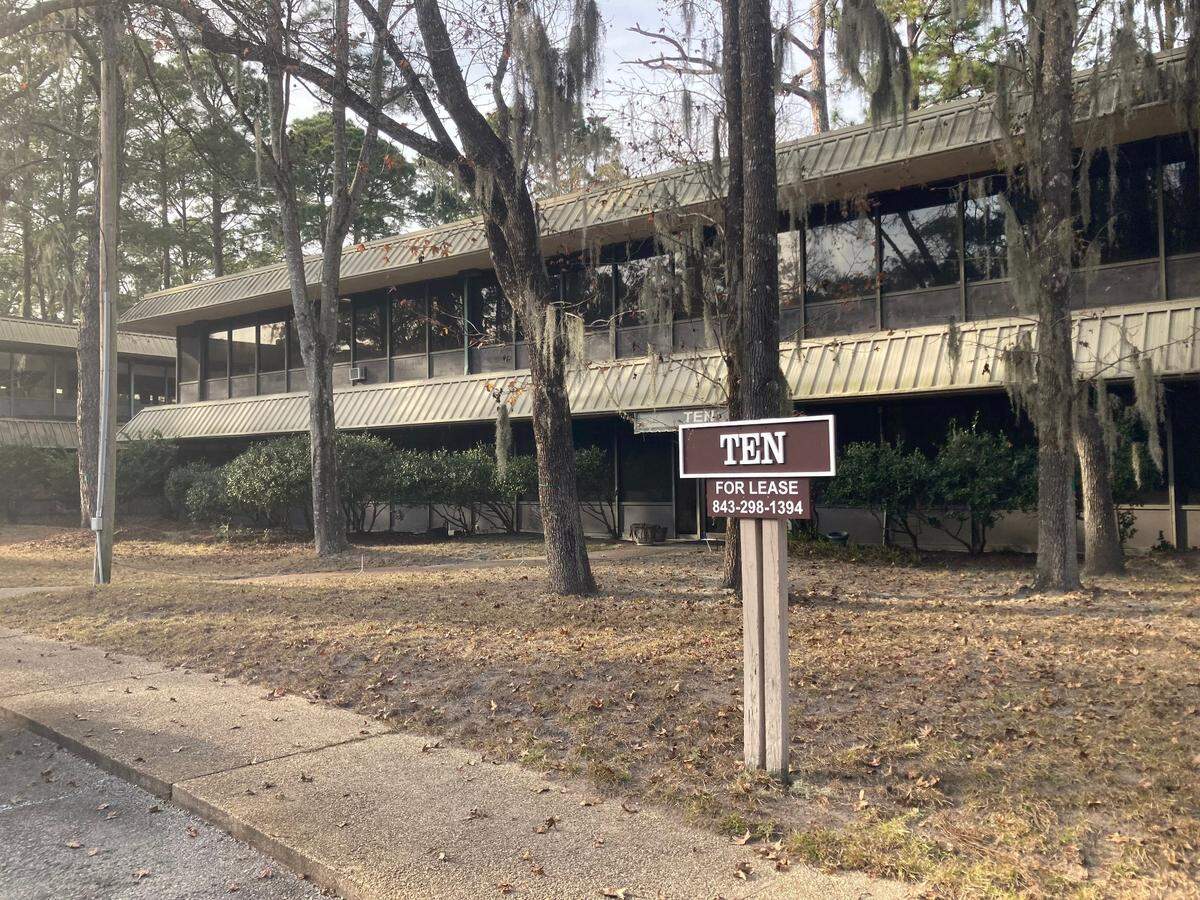
Instead of unused office spaces, the developers promise, there will be rooms for students at the nearby USCB campus and homes for workers that prop up Hilton Head’s economy like servers, lifeguards, and nurses, all of which currently struggle to afford on-island housing. The employers would contract with property owners for rooms to rent to employees.
The Office Way project would also include as shared parking agreement with USCB and 64 beds for students, arranged in 16 quad dorms.
SERG President Alan Wolf said while the number of units hasn’t been finalized, under the current proposal, 20% of them will be dedicated to workforce housing, renting to tenants making anywhere from 60% to 120% of Beaufort County’s area median income as reported by the Department of Housing and Urban Development.
Currently, the Beaufort County AMI is listed as $111,300 on the HUD database.
The current proposal would lock those 20% of units into workforce renting for at least 15 years.
Some on the dais feel the town has been burned by a private developer promising affordable housing before, though. When Gardner Drive’s Aquatera apartments were completed, the town asked that 5% of the complex’s total units be dedicated to workforce housing. While that covenant is still in place, 95% of those units remain market-rate apartments, many of which Ward 5 Councilman David Ames said aren’t serving islanders.
“That was pitched as a workforce housing project, but it did not have a long-term commitment that some percentage of those units would remain as workforce over time,” Ames said. He added that around half of Aquatera’s current residents are out-of-state tenants.
Ames could not be reached for comment before publication.
Council ultimately approved the rezoning’s first read, after a false start 3-4 vote that would have turned down the proposal. The confusion included Ward 6 Councilman Glenn Stanford casting a “no” vote on a motion he said he didn’t fully understand, before moving to reconsider the motion under advisement from town attorneys.
In the final 4-3 vote to approve the first reading, the town inched closer to introducing the new “Islander Mixed Use” zoning category. Ames, Ward 1 Councilman Alex Brown and Ward 2 Councilwoman Patsy Brison were the dissenting votes.
.jpeg "IMG_0095 (1).jpeg")
What changed?
The new use would affect 23 properties within 500 feet of the island USCB campus, including the nearby Wells Fargo, TND Bank, PNC Bank and Fountain Center spa.
Some opponents of the project pointed to the Islander Mixed Use’s inclusion of “undefined density, but limited by applicable design and performance standards such as height and parking” as a slippery slope in the future. Ames compared to the potential density of dwellings in the area to larger urban centers. In one town analysis, the area could host 31 units an acre under the new zoning.
They’ve also expressed concerns of additional traffic at Sea Pines Circle, already a congestion trouble area. A traffic study conducted by the developer projected that daily trips to certain amenities in the area could decrease if the project were to move forward, given the greater number of nearby residents reducing the need for car travel.
The zoning requires a 4-bedroom unit maximum, as currently proposed.
Parking requirements for the zoning would be 1.5 spaces for each dwelling unit.
‘Our employees have gone away’
Before casting the final and decisive yes vote, Perry, whose family once owned one of the now underused Office Way buildings addressed the chambers for the first time, following lengthy comments from his town council peers and the public.
He first acknowledged the town’s previous and unsuccessful efforts to address affordable, workforce and other forms of housing on the island.
“We have seen the average sales price of a home in the past four years, go from about $450,000 to $1.01 million. People that used to come in and purchase properties to put them on the long-term rental market have gone away,” Perry said. “I.e., our employees have gone away.”
Perry also referenced the Aquatera complex, noting the 5% of units promised “didn’t work” either.
One “driving force” of his yes vote, Perry said, was the potential future of the area if by-right zoning remained as-is, particularly the high traffic projections.
He asked the developer to consider only allowing left turns out of the proposed residential area to avoid impacting traffic on Greenwood Drive.
Ames maintained that, while most speakers at the meeting praised the project for its approach to address workforce housing, it is not a true workforce housing project. That, he said, could lead to the same problem reemerging in the future.
“The project is pitched as a workforce housing project, but it doesn’t have language that protects it as workforce housing over time,” Ames said. “This just pushes the workforce housing crisis down the road to another time and council (when the 15-year guarantee expires).”
If approved, the rezoning could face future legal challenges, Ames warned.
“This is spot zoning – pure and simple. From the beginning, and in application. Consequently, it could be challenged in court.”
‘We’ve lost sight of people’
While developers were willing of reducing the high end of the project’s AMI rate from 130% to 120%, and raise the percentage of units dedicated to workforce housing from 15% to 20% for 15 years, the 60% AMI floor has remained steady.
A few members of the public expressed concern that setting the AMI too low could equate the project to Section 8 housing, a federal housing assistance program that landlords are not required to participate in. Some shared anecdotes about living next to or near Section 8 housing in the past, adding they wouldn’t want to see it on Hilton Head.
Of the three no votes, Brown and Brison both expressed concern about the 60% AMI being the floor for islanders eligible to live in the proposed housing.
“I’ve been here all my life,” Brown said Tuesday evening, “and to say that a certain class of people, because they don’t make enough money, can’t participate in your project? That’s bothering me.”
One chart presented to town council Tuesday projected about 63% of Hilton Head workers make below $69,364 a year, about 60% of the AMI, and would not be eligible. Developers argued many of those workers don’t necessarily want to live on the island, and transportation solutions to get them to on-island jobs would be a better option for them.
“I understand that we have to put a cap on the percentage of the AMI so that we’re defining it. I just have a real big problem with capping that at a place that I know a majority of the folks that enjoy Hilton Head, that are working here, aren’t within,” Brown told The Island Packet Wednesday. “We’ve got to be more inclusive as far as the class of people here, just because you earn 40% or 50% of the AMI doesn’t make you riff-raff in the community.”
To support the proposal on second reading, Brown said he’d need to see the project’s scope open to include more working islanders struggling with the rapidly rising cost of living outpacing pay.
“Areas that were once places that people could live that were affordable, not even Section 8 but clean-living, hard-working folks building community here on Hilton Head, those units have transitioned into market rate and above,” Brown said. “We’ve lost sight of people. We’ve got too caught up into definitions and structures, but at the end of the day we’re talking about people. This particular project doesn’t represent that very well, and that’s got to change in order for me to support it on the second time around.”
This story was originally published August 16, 2023 at 12:55 PM.