Ouch! Don’t touch these caterpillars invading the SC Lowcountry. 3 things to know
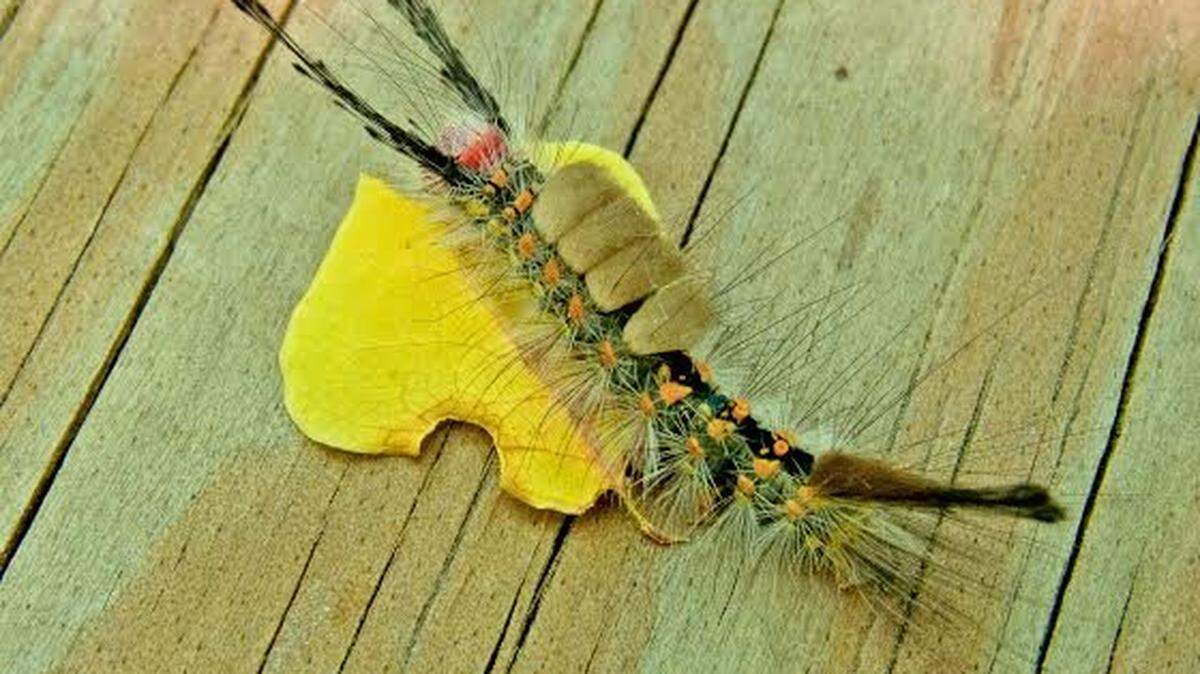
Are you being overrun by furry, red-headed caterpillars down in the Lowcountry? These hairy looking insects are called tussock moth caterpillars and they are raiding the Lowcountry.
What are tussock moth caterpillars?
There are several different types of tussock moth caterpillars. The ones we have here in the Lowcountry are white-marked tussock moths. From the subfamily Lymantriinae, these insects can be distinguished as male versus female by first being able to identify the males. Males have wings like a typical moth, whereas females are wingless and remain as the caterpillars that storm the Lowcountry in the late spring and summer months.
White-marked tussock moth caterpillars are about an inch or two long. They have four brush-like tufts on their backs, which are sometimes described as looking like a toothbrush. They also have two clusters of long black quills, which extend from either side of the head and give the appearance of antennae.
Before the males turn into moths, these furry guys become small, white cocoons that can be found dotted around the Lowcountry everywhere.
The female moths generally stay near their own empty cocoons. They lay their eggs on this cocoon, covering it with a secretion to protect them. The female moth then dies shortly after.
White-marked tussock moths will produce two different generations each year. The first generation of these caterpillars emerge from their eggs in the spring. Once hatched, they feed on surrounding flora for four to six weeks before pupating into their mature stage. After two weeks, the adult moth then emerges from the cocoon. At this stage, they are ready to mate and lay eggs. The cycle is then repeated, allowing for the second generation of the year, according to ThoughtCo.
Where do you find them?
In the Lowcountry, these moths can pretty much be found anywhere.
Live near any live oak trees?
This is a favorite snack of white-marked tussock moths. While live oaks are their preferred choice, they feed on a variety of different plants. These may include oak, cherry, birch, apple and some coniferous trees such as fir and spruce.
In large numbers, these caterpillars can cause significant damage to the local flora and can be found anywhere from palmetto fronds to scouring nearby buildings.
Are they dangerous?
If you happen to come across one of these little caterpillars, do not touch it.
The prickly hairs covering the entirety of the caterpillar are for more than just show. They are the caterpillars’ defense mechanism. They are not poisonous or venomous, but it is important to acknowledge that children are more susceptible to receiving a rash than adults, according to The University of Maine.
This rash can be persistent and painful.
There are chemicals that cover the hairs and coat the skin on contact. This can be when they are picked up or touched by a curious child or adult. Once they are touched, it can cause an allergic reaction in humans. This results in a rash consisting of redness, irritation and welts. Their hairs are barbed, which can make them difficult to remove from your skin, according to InsectIdentification.
Whether male or female, there is no shortage of white-marked tussock moth caterpillars in the Lowcountry. Next time you see one, try to avoid touching it. Although small, cute and furry, it might not be worth the rash. Consider appreciating the insect from afar or snapping a picture instead.