SC’s lawsuit against Jasper Co. trash pile owner is headed to a non-jury trial
The state of South Carolina’s civil lawsuit against the owner of a mound of debris in Jasper County that caught fire in 2019 is headed to trial.
S.C. Judge Bentley Price signed an order this week transferring the case against Able Contracting and its owner, Chandler Lloyd, to the non-jury docket. That means Price, not a jury, will decide whether Lloyd is responsible for the $5 million clean-up costs and if so, how much he must pay.
The case, according to Price’s order, will be ready for trial April 25 or 30 days after the court makes a decision on all dispositive motions, whichever is later. Dispositive motions ask a judge to terminate the case before a trial.
Price’s order for a non-jury bench trial came after a request from attorneys for both sides.
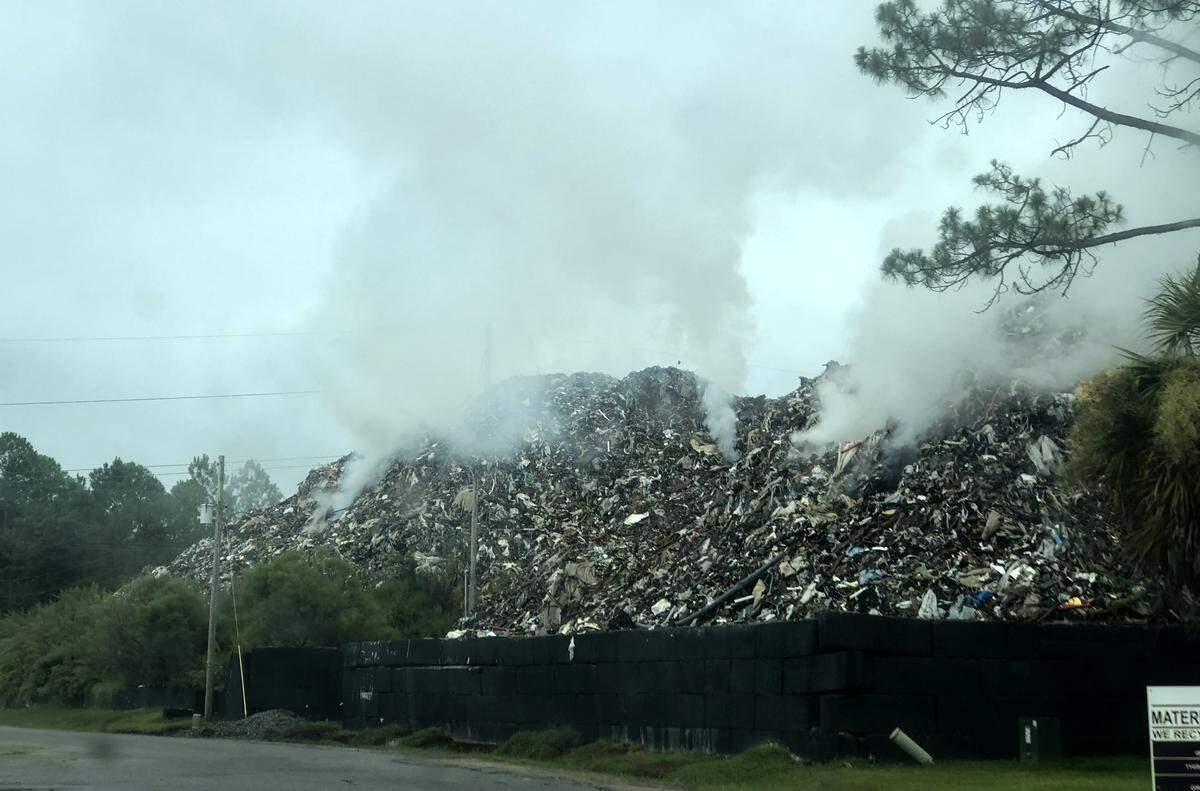
The state and the S.C. Department of Health and Environmental Control sued Lloyd and his two companies in September 2020 and accused them of accumulating over 4 acres of miscellaneous debris in a mound over 50 feet tall. The compacted material in the pile caught fire several times in the summer of 2019 and released “hazardous substances, pollutants and contaminants” into the environment, the lawsuit alleges.
The fires at Able Contracting, which began popping up in June 2019 and burned deep within the pile of construction and demolition debris, caused neighbors to flee their homes and prompted cleanup by federal and state health agencies.
The state’s lawsuit cites as authority the Solid Waste Policy and Management Act and the S.C. Hazardous Waste Management Act. It says DHEC removed 115,138 tons of material from the site by Jan. 6, 2020, and asked Lloyd and his companies to pay the state over $5 million in cleanup costs.
In a response filed last December, Elizabeth Partlow, the attorney representing Lloyd and his companies, blamed Jasper County for failing to respond to a “lightning-sparked fire” in mid-2019.
That fire and actions by the state caused Able Contracting to go out of business, the response said. Partlow also argued that the fire at Able Contracting did not present an “imminent and substantial danger to public health and welfare, human health, and the environment.”
Derrek Asberry, DHEC spokesperson, declined to comment on the judge’s order Wednesday, citing the pending litigation. Partlow, Lloyd’s attorney, did not return a call and email for comment Wednesday.
The state filed the civil suit against Lloyd and Able Contracting after S.C. Sen. Tom Davis and members of the Jasper County legislative delegation called on S.C. Attorney General Alan Wilson in October 2019 to pursue legal remedies to recover “all public funds expended” in fighting the fire and removing the material from the Able Contracting site.
Davis, in a statement to The Island Packet and Beaufort Gazette, said he credited Wilson for diligently filing the civil action.
“Each side will now have their day in court, and that’s how it should be,” the statement said.
Price, in his order transferring the case to trial, also approved a schedule of events parties must follow before the trial takes place. The schedule includes:
▪ All motions that ask a judge to terminate the case must be filed by March 2, 2022, the order said.
▪ A pre-trial hearing, where both parties will present briefs, will be held on or after April 4, 2022, according to the order.
Timeline of the controversy
The mound of construction and demolition debris was housed at Lloyd’s Able Contracting along Schinger Avenue behind Riverwalk Business Park near S.C. 170. Fires deep within the pile had been smoldering, off and on, since June 2019.
Smoke from the fires billowed down the road, causing residents and business owners to retreat indoors, close windows and seek answers.
In 2017, the Packet and the Gazette reported on a state law that allowed Able Contracting to accumulate material that at the time amounted to a 90-foot pile of debris. Lloyd stored used construction materials there before recycling them.
The pile had previously caught fire in 2015, and firefighters spent 31 hours and used more than a million gallons of water to extinguish the flames, according to previous reporting.
Though state lawmakers enacted stricter permitting requirements for such facilities in 2018, the following spring, Able Contracting once again was battling a fire and subsequent hot spots in the debris.
After DHEC set up air-quality monitoring stations in the area, the discovery of acrolein, which is found in cigarette smoke, allowed the U.S. Environmental Protection Agency to devote federal funds to the cleanup efforts.
By early August, residents along Schinger Avenue were evacuated voluntarily — first by Jasper County and later by the EPA — to undisclosed locations, and the EPA began extinguishing the fire and hauling away debris.
In September, DHEC ordered Able Contracting to close, and by the end of the month — seven weeks after they fled — residents were able to return to their homes.
On Jan. 6, DHEC announced it had removed the final load of waste from the mound and was prepared to vacate the site.