Those oysters you ate last night could make a difference in Hilton Head’s future. Here’s how
Oyster shells on Hilton Head Island usually are thrown away — either tossed into spent oyster roast buckets or on finished restaurant plates destined for the garbage.
But those oyster shells can be given a second life, local environmental groups say, if given the chance.
On Sept. 4, 20 volunteers recruited by S.C. Department of Natural Resources and the Outside Foundation loaded 392 bags of recycled oyster shells onto boats to bring to the pluff mud shores of Broad Creek near Shelter Cove Marina.
The vast majority were recycled from Hilton Head seafood restaurants, establishments like Poseidon in Shelter Cove and FISH Casual Coastal Seafood in Coligny Plaza, according to Jean Fruh, executive director of the Outside Foundation.
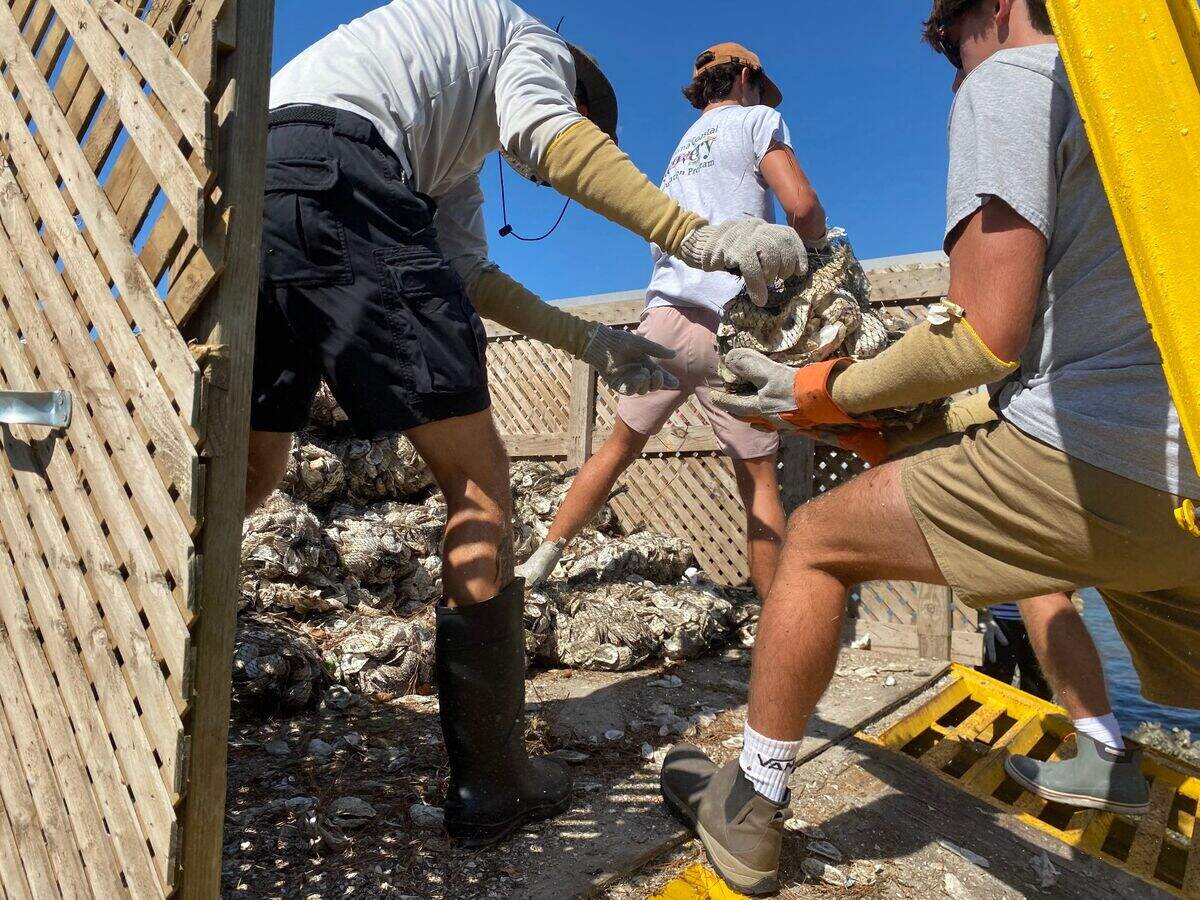
The volunteers laid the bags, each weighing 25 to 30 pounds, across about 60 feet of coastline. The reef helps create a new ecosystem for oysters and establish a barrier to prevent erosion caused by boat wakes.
“Living shorelines are better than buying rock and spending taxpayer money” to keep the barrier island of Hilton Head from eroding, according to Fruh.
Emily Dunn, 17, of Columbia traveled to Hilton Head for the SCORE program (S.C. Oyster Recycling and Enhancement program) on Sept. 4. She plans to study marine biology in college and wants to work for DNR.
“There’s so much trash and bad stuff in the world,” she said, that “bringing back as much good stuff as we can makes me feel good.”
Bill Dickinson, 70, who also serves as Sun City Hilton Head Kayak Club secretary, said he found it gratifying to be volunteering to “keep Hilton Head and this area healthy.”
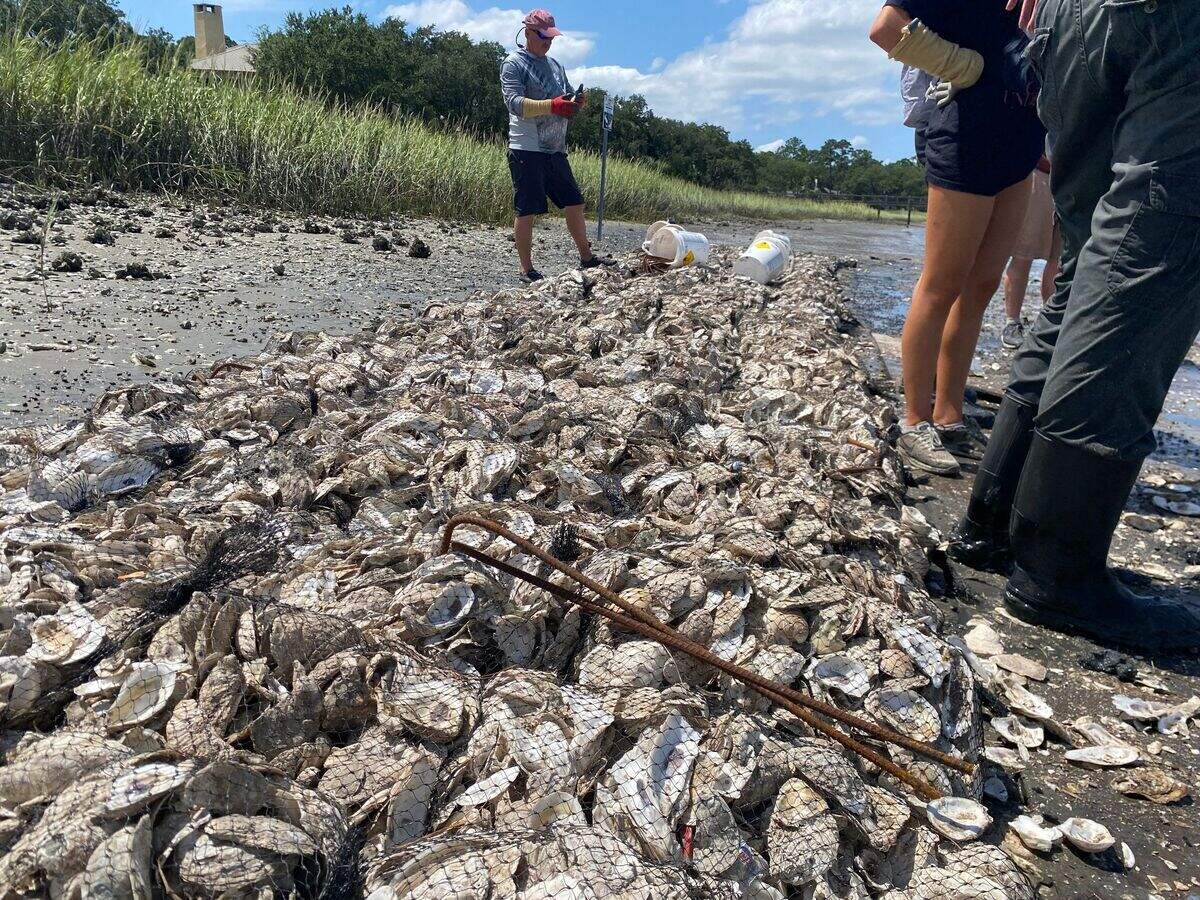
Volunteers spread out on long planks of wood to keep from sinking into the pluff mud. They passed the oyster shell bags from the boats to the coastline like a factory assembly line.
After placing the last bag on the new reef, they let out a group cheer.
Oysters are ecosystem engineers, said Holly Kight Sommers, a DNR biologist and head of the program. She said the new reef makes a home for over 150 different species and serves as a natural water filter. One oyster can filter 2 1/2 gallons of water per hour, she said.
“People think the oyster shell is disposable,” Sommers said, “when it’s needed to help sustain our wild oyster population.”
.jpg "IMG_4427_(1).jpg")
According to Sommers, 300,000 bushels of oysters are consumed in South Carolina every year. DNR will see only 10% of them recycled.
DNR is required by the state to replenish the coastlines with oysters. The problem is not enough places in the state recycle them. Last year, DNR spent $52,000 purchasing and shipping oysters from out of state for the program.
“We have to spend this money, but we wouldn’t have to if we recycled,” Sommers said.
Fruh said it can be burdensome for local restaurants to join the program, because storing oysters can smell — and attract flies — while restaurants wait for the foundation’s once-a-week shell pickup.
But she says stopping the erosion of Hilton Head Island and sustaining the environment are essential to the island’s future.
“It’s building natural infrastructure,” Fruh said. “These simple things we can do as islanders like contributing shells and assisting in bagging and building reefs are super important.”
If you’re interested in volunteering, visit outsidefoundation.org to sign up for a reef-building project. If you’d like to donate used oyster shells to be recycled on Hilton Head, drop them off at the Coastal Discovery Museum on 70 Honey Horn Drive during the week. Find the closest oyster drop-off site in Beaufort County at saltwaterfishing.sc.gov/oyster.html.